
Materials and Tolerances When Ordering Custom Bumper Plates
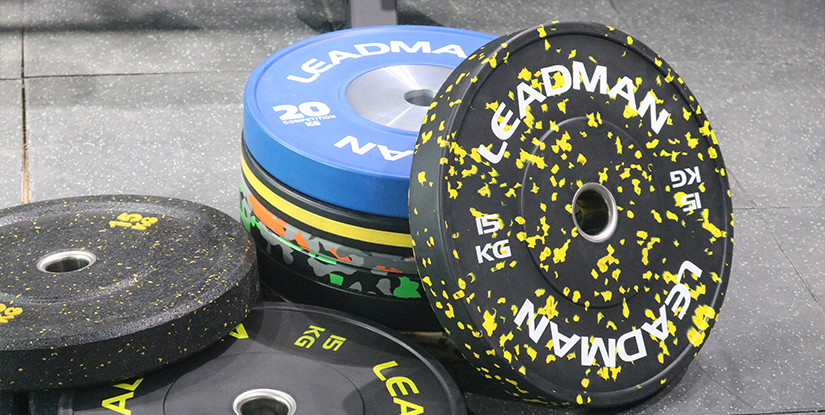
In the world of high-performance strength training, a mismatch between technical specifications and actual production output can result in catastrophic equipment failure or uneven load distribution. Many procurement professionals encounter a recurring nightmare: receiving a shipment of custom bumper plates that appear visually perfect but fail to meet the strict weight uniformity or dimensional precision required for professional competition or heavy lifting. This usually stems from a fundamental misunderstanding of how material density affects final weight and how manufacturing tolerances influence the center of gravity. By understanding the technical nuances of raw material selection and the strictness of dimensional constraints, you can eliminate the risk of non-compliant shipments.
The Core Dilemma: Density Variance and Weight Deviation
The most frequent complaint in specialized procurement is the discovery that a set of "25kg" plates actually varies by several hundred grams per unit. This is not always a manufacturer error; it is often a failure to define the acceptable density range during the ordering phase. When ordering custom bumper plates, the relationship between the raw rubber/polyurethane compound and the internal core is the primary driver of weight consistency.
A common mistake is specifying only a target weight without addressing the density of the material used. If a supplier uses a recycled rubber compound with high levels of debris or variable air pockets, the weight will fluctuate wildly despite consistent molds. To prevent this, you must move from a generic weight request to a density-controlled specification. An effective fix is to require a certified material data sheet that details the specific gravity of the compound used in the production run.
Failure to address density leads to a "skewed bar" effect, where one side of a barbell is marginally heavier or more elastic than the other, compromising athlete safety. Once the material density is understood, the next critical step is examining the structural core that holds this weight together.
Understanding Material Densities in Bumper Plate Production
| Material Type | Common Usage | Typical Density Characteristics | Risk of Weight Variance |
|---|---|---|---|
| Virgin Rubber | High-end Competition | Highly uniform; consistent rebound | Very Low |
| Recycled Rubber | Commercial Gyms | Variable density; higher debris potential | Moderate |
| Polyurethane (PU) | Premium Endurance | Extremely high density; extremely uniform | Minimal |
| Mixed Rubber Blend | Budget/General Purpose | Variable elasticity and density | High |
By selecting a material with a predictable density, you establish a baseline for weight accuracy. This foundation allows for more granular control over the physical dimensions of the plate.
Dimensional Tolerances and the Center of Gravity
Having established the material density, you must now address the physical footprint of the plate. Even with a consistent material, variations in the mold or the extrusion process can lead to uneven thickness or diameter. If the diameter of the plate is not within a tight tolerance, the way the plate rotates and impacts the floor will change, affecting the long-term durability of both the plate and the barbell.
The primary failure mode here is the "off-center weight distribution." If a plate is thicker on one side than the other due to poor molding, the center of gravity shifts away from the center of the barbell sleeve. This creates a wobble during heavy lifts, which can lead to repetitive strain injuries for the lifter. To avoid this, do not simply ask for "uniform thickness." Instead, specify a maximum deviation limit. For example, a professional-grade specification should demand that the diameter and thickness deviate no more than ±1% from the target specification.
A professional buyer should verify these tolerances by requesting a tolerance checklist from the manufacturer. This checklist should include both the inner diameter (the ring) and the outer edge thickness. Ensuring these dimensions are tightly controlled leads directly into the complexities of the inner ring construction.
Critical Dimension Checkpoints for Quality Control
- Inner Diameter (ID) Precision: Must accommodate standard 50mm or 2-inch sleeves without excessive play or tight friction.
- Outer Diameter (OD) Consistency: Ensures uniform impact surface and predictable bounce.
- Thickness Uniformity: Prevents center-of-gravity shifts and ensures even load distribution across the barbell.
- Edge Profile: Determines the durability of the plate edge during high-impact drops.
Once the external dimensions are secured, the focus must shift inward to the structural integrity of the plate's center.
Explore the complete technical specifications:
The Central Core: Precision Engineering for Sleeve Fit
The internal ring of a bumper plate is the most sensitive part of the assembly. While the rubber outer shell absorbs the impact, the internal core must provide the rigid structure that allows the plate to sit perfectly on the barbell. Errors in the materials and tolerances of the central ring are often the hidden cause of "ringing" or rattling during use.
A common mistake in custom orders is ignoring the tolerance of the center hole itself. If the hole is too large, the plate will wobble on the barbell sleeve, creating a noisy and unstable lifting environment. If it is too small, it will be difficult to load and may damage the barbell's finish. The fix is to specify a precise inner diameter range (e.g., 50.5mm to 51.0mm for a 50mm bar) and a specific material for the ring, such as high-density polyethylene (HDPE) or a reinforced steel insert.
The selection of the core material determines the longevity of the plate. A low-quality plastic core may crack under the stress of repeated heavy drops, leading to a complete separation of the outer rubber. To verify the quality, ask the manufacturer about the specific shore hardness of the internal ring material and its impact resistance ratings.
Explore the complete technical specifications:
Impact Resilience and Material Fatigue
The reason the internal core must be so precise is that it bears the brunt of the kinetic energy transferred during a drop. When a bumper plate hits the floor, a shockwave travels from the outer edge through the rubber and directly into the center hole. If the material used for the rubber is too soft or the core is too brittle, the plate will eventually experience structural fatigue.
The failure mode in this scenario is "cracking or delamination," where the rubber separates from the center hole. This usually occurs because the adhesive or the mechanical bond between the rubber and the core was insufficient, or the rubber was not optimized for high-impact cycles. To prevent this, specify a high-rebound, high-durometer rubber. A higher durometer rating indicates a firmer material that can recover its shape more effectively after impact.
To ensure your custom plates can withstand professional use, use the following decision criteria when evaluating the impact resistance of a proposed material:
| Feature | Low Durability Indicator | High Durability Indicator |
|---|---|---|
| Rebound Rate | Slow, 'dead' bounce | Quick, consistent energy return |
| Surface Texture | Soft, easily scuffed | Hardened, scratch-resistant |
| Core Bond Strength | Loose-fitting or rattling | Seamless integration with outer shell |
Understanding the fatigue profile of the material is essential before moving to the final phase of procurement: verifying the finished product.
Explore the complete technical specifications:
Verification Protocols for Incoming Shipments
Even with perfect specifications, the verification of arriving goods is the only way to guarantee that the factory adhered to your requested materials and tolerances. A failure in the inspection process means you are essentially gambling on the quality of your equipment. Professional buyers do not rely on a vendor's word; they utilize standardized testing tools to validate the order.
A common mistake during arrival is performing only a visual inspection. While a visual check can catch obvious surface defects, it will not detect a weight deviation or an off-center gravity issue. The fix is to implement a three-step verification protocol: mass testing, dimensional measurement, and fit testing. Mass testing involves weighing a random 5% sample of the plates on a calibrated digital scale. Dimensional measurement requires using calipers to check the diameter and thickness of several plates. Fit testing involves loading the plates onto a standard 50mm barbell to check for axial wobble or tightness.
The Professional Buyer's Inspection Checklist
- Weight Check: Are the weights within the specified ±1% or ±2% tolerance?
- Dimension Check: Does the diameter and thickness match the CAD drawing or spec sheet?
- Hole Precision: Does the plate slide onto the barbell smoothly without excessive play?
- Surface Inspection: Are there any visible air pockets, cracks, or uneven color distribution?
- Rebound Test: Does the plate behave predictably when dropped from a set height?
Executing this checklist consistently turns a potential procurement failure into a standardized quality assurance process, ensuring long-term ROI on your equipment investment.
Environmental Resilience: Thermal and UV Stability
When ordering custom bumper plates, many buyers overlook the environmental variables that can degrade material integrity over time. Whether the plates are destined for a temperature-controlled indoor facility or an outdoor fitness area, the chemical composition of the rubber or polyurethane must be capable of withstanding thermal expansion and UV exposure. A lack of thermal stability can lead to dimensional swelling, which compromises the sleeve fit.
A major failure mode in outdoor or non-climate-controlled environments is "surface oxidation or cracking." If the rubber lacks adequate UV stabilizers, sunlight will break down the polymer chains, leading to a brittle surface that eventually flakes or cracks. To prevent this, ask if the material includes UV-resistant additives. For facilities with high temperature fluctuations, you should also request data regarding the material's thermal expansion coefficient to ensure the center hole remains a consistent size.
Use this checklist to determine if your material choice is suitable for your specific environment:
| Environmental Factor | Risk Factor | Mitigation Strategy |
|---|---|---|
| UV Exposure | Surface cracking/bleaching | Specify UV-stabilized compounds |
| High Heat | Dimensional swelling | Request low-expansion coefficient specs |
| Moisture/Humidity | Core/Shell separation | Ensure high-strength adhesive bonding |
By accounting for these external stresses, you ensure that the precision you ordered is maintained throughout the entire lifecycle of the product.
Optimizing Long-Term ROI through Material Choice
Ultimately, the technical details regarding materials and tolerances are not just about the initial purchase; they are about the total cost of ownership. A cheap set of plates with high tolerances and low-grade materials will require frequent replacement, leading to higher long-term costs in both capital and operational downtime. A single poorly manufactured batch can disrupt training schedules and damage expensive barbells, creating a hidden cost far beyond the initial price tag.
When comparing a lower-priced option to a premium custom order, the true cost is often hidden in the material fatigue rate. A high-quality polyurethane plate may cost significantly more upfront, but its ability to maintain strict tolerances over thousands of drop cycles makes it more economical for high-traffic facilities. To make an informed decision, always weigh the initial price against the expected lifespan and the cost of potential replacement. A robust technical specification document is your best tool for ensuring that the equipment you buy today remains a functional asset for years to come.