Identifying these deviations early in the procurement process is vital. Once the requirement for precision is established, the focus must shift from mere weight to the structural integrity of the central hub and the material composition. This technical rigor ensures that the equipment can handle the dynamic forces of high-velocity drops without structural failure.
Understanding the relationship between weight accuracy and material density is the next logical step in ensuring long-term ROI. Many operators overlook that the density of the rubber directly influences how the plate behaves under high-impact stress. A plate that is too soft will deform excessively upon impact, while a plate that is too hard may become brittle and prone to cracking over time.
The choice between virgin rubber and high-quality recycled rubber is a critical decision parameter. Virgin rubber provides superior elasticity and consistency, which is essential for competition-ready environments where repetitive heavy dropping is common. Recycled rubber, while more cost-effective, can introduce variability in density and structural cohesion. When sourcing custom bumper plates for competition-ready gyms, a professional buyer should demand a specific breakdown of the rubber composition.
A failure to specify material density often leads to premature equipment replacement, a significant hidden cost in facility management. This structural reliability must be paired with a precision-engineered center hole to prevent barbell damage. Consequently, the design of the central hub becomes the next critical checkpoint in the technical specification process.
The technical interface between the plate and the barbell determines not only the ease of loading but also the longevity of the barbell itself. A common mistake in equipment procurement is focusing solely on the plate's diameter while ignoring the central hole's tolerance. If the center hole is poorly manufactured, it can lead to uneven weight distribution or a 'wobble' that affects the lifter's stability.
For a competition-ready setting, the central hole must be perfectly circular and sized to the precise internal diameter of the barbell sleeve. A mismatch here causes two primary failure modes: either the plate is too tight, making it difficult to slide on/off, or it is too loose, causing the barbell to tilt and create uneven load distribution during heavy lifts. This uneven distribution often causes premature wear on the barbell's bearing or bushing system.
| Feature | Standard Requirement | Competition-Ready Specification |
|---|
| Center Hole Diameter | +/- 1.0mm | +/- 0.1mm to 0.2mm |
| Edge Profile | Flat or slightly beveled | Highly consistent, ergonomic beveled edge |
| Internal Lining | Unlined or basic | High-density polymer or smooth-surface finish |
The goal is to ensure that the plate sits flush against the barbell sleeve, providing a seamless transition of weight. After ensuring the hub is technically sound, the operator must evaluate the external dimensions to ensure uniform thickness across the set.
Ensuring Dimensional Uniformity Across the Plate Set
Beyond the center hole, the outer diameter and thickness must be strictly controlled to ensure that a barbell remains balanced when loaded. If a set of plates has varying thicknesses, the barbell will inevitably tilt, complicating the movement and increasing the risk of a catastrophic drop. This lack of uniformity is often a direct result of rushed manufacturing processes or inferior casting technology.
The Impact of Varying Thickness on Barbell Balance
A balanced barbell is essential for the technical execution of lifts like the snatch or the clean and jerk. If one 20kg plate is 45mm thick and another is 47mm thick, the center of mass shifts, forcing the lifter to compensate for an artificial tilt. In a competition setting, this is a major technical flaw. Professional-grade custom bumper plates utilize precision molds to ensure that every single plate within a weight class is nearly identical in thickness and diameter.
To verify uniformity, operators should implement a simple inspection protocol during the receiving process:
- Visual Check: Inspect the edges of the plates for unevenness or significant beveling.
- Diameter Measurement: Use a calibrated diameter gauge to verify that all plates of the same weight class fall within the specified tolerance.
- Thickness Comparison: Place two identical weights side-by-side on a flat surface to check for height variance.
Maintaining this level of uniformity ensures a predictable environment for athletes. However, even the most perfectly sized plate can fail if the surface finish and aesthetic standards are not met, which leads us to the importance of surface texture and branding.
Surface Finish and Aesthetic Longevity in Commercial Settings
While functionality is paramount, the surface finish of the plate plays a significant role in the user experience and the long-term maintenance of the equipment. In professional facilities, the texture of the plate affects how easily it can be cleaned and how it interacts with the hands and bars during manual handling.
Texture and Cleaning Maintenance
A surface that is too rough can be abrasive to the hands and difficult to clean, while a surface that is too smooth may lead to unexpected slippage during loading. High-quality bumper plates typically feature a micro-textured finish that provides a professional feel without being overly aggressive. This texture also helps in hiding minor scuffs and scratches that naturally occur through heavy usage.
- Abrasiveness Control: Ensure the texture does not compromise the integrity of the barbell's coating.
- Cleaning Protocols: A consistent, non-porous surface allows for easier sanitization with standard gym cleaning agents.
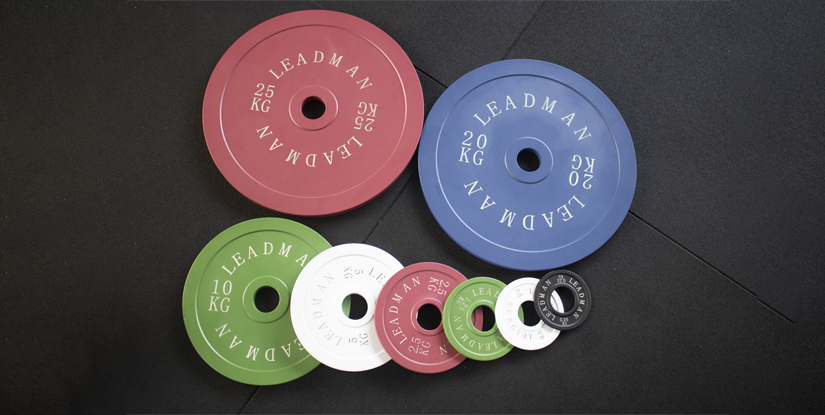
- Visual Consistency: In competition settings, uniform color and high-contrast numbering are vital for quick identification.
A well-maintained surface finish not only looks better but also prevents the buildup of grime and sweat. This brings us to the final operational requirement: creating a standardized maintenance and inspection routine to protect your investment.
Establishing a Professional Maintenance and Inspection Schedule
Purchasing high-quality custom bumper plates is an investment in the facility's long-term stability. However, even the best equipment requires a structured maintenance cadence to prevent degradation. A failure to inspect equipment regularly can lead to unforeseen safety hazards and higher replacement costs due to neglect.
Routine Inspection Checklist for Facility Managers
Operators should implement a tiered inspection system: daily, monthly, and quarterly. This ensures that minor issues are caught before they become major structural failures. A systematic approach allows for a predictable budget for equipment replacement rather than emergency spending.
| Frequency | Focus Area | Action Required |
|---|
| Daily | Visual/Surface | Check for visible cracks, excessive debris, or significant discoloration. |
| Monthly | Fit/Function | Verify center hole fit on barbells and check for any significant thickness variance. |
| Quarterly | Structural Integrity | Detailed inspection of the hub-to-rubber bond and checking for any separation or cracking. |
A consistent inspection schedule is the final piece of the puzzle in managing a competition-ready gym. By focusing on these technical specifications—from density to diameter—operators can ensure their facility remains a top-tier destination for professional athletes.
The Strategic Value of High-Precision Bumper Plates
In conclusion, the decision to invest in custom bumper plates for competition-ready gyms is a strategic move toward facility excellence. By prioritizing weight tolerance, material density, and hub precision, operators mitigate the risks of equipment failure and athlete dissatisfaction. While the initial capital expenditure for high-precision equipment may be higher, the long-term ROI through durability and reduced replacement frequency is substantial.
The transition from a standard gym to a professional-grade training center requires a shift in procurement philosophy—moving from purchasing 'weights' to investing in 'precision instruments.' As the industry evolves, the demand for standardized, high-performance equipment will only increase, making technical knowledge an indispensable tool for the modern facility owner.