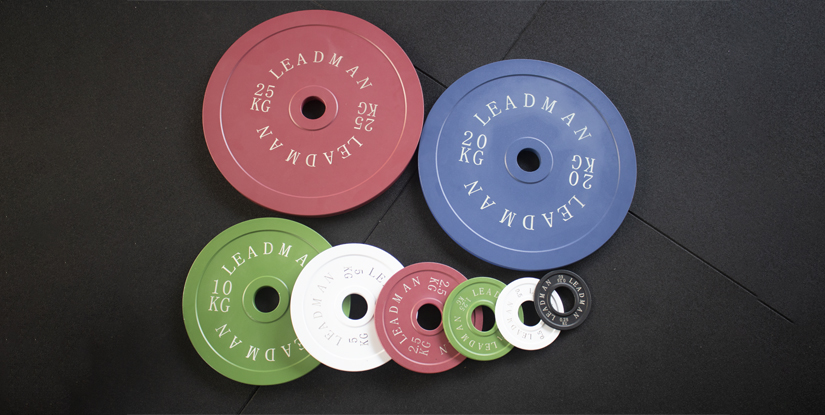
Addressing the Impact of Improper Rubber Bumper Plate Selection
Facility managers often encounter a frustrating cycle of premature wear and floor damage caused by poorly specified weightlifting equipment. When a training facility transitions from standard iron plates to high-impact training sets, the primary failure mode is not usually the weight itself, but the mismatch between the material density and the facility's structural constraints. Using substandard Rubber Bumper Plates in a high-volume commercial setting often leads to excessive bounce, surface cracking, and unwanted vibrations that can fatigue both the barbell and the subfloor.
The root cause of these issues typically lies in a failure to account for the Shore hardness and the quality of the virgin rubber used in production. Low-grade recycled rubber blends may offer a lower initial price point, but they exhibit unpredictable rebound characteristics and a tendency to lose their shape under constant high-velocity impact. To avoid these operational headaches, procurement officers must look beyond the nominal weight and focus on the technical specifications of the material density and impact absorption capabilities. Establishing these baseline material requirements is the first step toward a more durable training environment.
Identifying Common Material Failures
- Surface Delamination: Occurs when the outer skin of the plate loses adhesion to the inner core due to low-quality bonding agents.
- Inconsistent Rebound: Caused by non-homogeneous rubber distribution, making high-velocity drops unpredictable for athletes.
- Odor Retention: Low-grade synthetic blends often retain chemical odors that become permanent in enclosed gym environments.
Once the material selection criteria are understood, the focus must shift toward how these physical properties interact with your specific facility layout and flooring systems.
Material Composition and Density Standards
Understanding the relationship between rubber density and impact energy is critical for long-term equipment reliability. While all bumper plates are designed to absorb shock, the internal architecture of the plate determines whether that energy is dissipated safely or transferred into the building's structure. High-quality plates utilize a high-density core that maintains structural integrity even during repetitive drop cycles.
The density of the rubber directly influences the 'deadness' of the bounce. A professional-grade plate is designed to minimize kinetic energy return, ensuring that the weight stays where it lands. If the density is too low, the plate behaves like a spring, which increases the risk of barbell bounce-back and potential injury. Conversely, an overly hard density might not provide sufficient dampening, leading to accelerated wear on the surrounding flooring. Operators should evaluate the density based on their specific training style—Olympic lifting requires high-density, low-rebound characteristics, whereas general strength training might tolerate a slightly softer profile.
| Material Type | Impact Absorption | Rebound Characteristics | Best Use Case |
|---|
| Virgin Rubber (High Density) | Superior | Low / Controlled | Competitive Weightlifting & High-Volume Gyms |
| Recycled Rubber (Medium) | Moderate | Moderate | General Strength Training & Small Studios |
| Composite Blend (Low Density) | Lower | High / Unpredictable | Low-Impact Movement & Budget-Constrained Settings |
Selecting the right density is only half the battle; the chosen plates must also be compatible with your existing floor protection protocols.
Optimizing Floor Load and Shock Absorption
A common oversight in facility design is treating the floor as an indestructible surface. Even with high-quality Rubber Bumper Plates, the kinetic energy from a heavy drop is transferred through the plate into the flooring and the subfloor. If the floor's load rating is insufficient, the repetitive impact will cause structural settling, cracks in concrete, or the failure of specialized gym flooring.
The interaction between the plate and the floor is a dual-system equation. You must consider both the Shore hardness of the plate and the thickness of the impact mats below. A common mistake is placing hard, high-density plates directly onto thin, low-density foam mats, which causes the plates to 'bottom out' and strike the hard subfloor, causing permanent indentation. To verify a correct setup, perform a 'drop test' with a moderate weight: observe the depth of the compression in the mat and ensure the material recovers its shape instantly without permanent deformation.
Floor Protection Checklist for Operators
- Verify Subfloor Type: Confirm if you are dropping on reinforced concrete, wood, or a raised platform.
- Check Mat Thickness: Ensure impact mats are at least 20mm to 50mm thick for high-impact areas.
- Inspect for 'Bottoming Out': Check if the weight seems to hit a 'hard' limit during a drop.
Proper floor integration prevents catastrophic structural damage, but even the best-protected floors require regular equipment inspections to maintain safety standards.
Routine Inspection and Maintenance Protocols
To maintain the longevity of your investment, facility managers must implement a disciplined inspection cadence. Rubber is a polymer, and like all polymers, it is subject to environmental degradation and mechanical fatigue over time. Neglecting these checks can lead to the sudden failure of a plate during a high-intensity session, which poses a significant liability risk.
A professional maintenance program should include both visual and physical inspections. Visual checks should focus on surface integrity, while physical checks assess the internal structural health. For instance, a plate might look fine on the surface but may have developed an internal void due to repeated high-impact drops. This is often detectable by a change in the sound the plate makes when it hits the floor—a 'hollow' sound often indicates internal structural compromise.
The Three-Tier Inspection Framework
| Frequency | Inspection Type | Key Focus Areas |
|---|
| Daily (Visual) | Quick Walkthrough | Surface cracks, visible debris, and obvious deformations. |
| Monthly (Physical) | Tactile Check | Checking for diameter inconsistencies and 'soft spots' in the rubber. |
| Quarterly (Full) | Comprehensive Audit | Checking the center hub integrity and checking for weight tolerances. |
Regularly catching these small signs of wear prevents the need for large-scale equipment replacement and keeps your facility compliant with safety standards.
Troubleshooting Plate Deformations and Surface Wear
When irregularities occur, it is essential to diagnose whether the problem stems from the equipment, the user, or the environment. If you notice a set of plates beginning to look 'out of round' or losing their uniform shape, you are likely witnessing mechanical fatigue. This is a common problem when plates are stored in extreme temperature fluctuations or are used beyond their intended impact threshold.
A common error is attempting to 'fix' a deformed plate by applying heat or pressure. This is rarely successful with high-density rubber and can actually cause further unevenness. Instead, use the following diagnostic steps to determine if the plate should be decommissioned. First, measure the diameter at several different points around the circumference using a caliper. If the variance exceeds the manufacturer's tolerance (typically 1-3%), the plate is no longer suitable for precision lifting. Second, inspect the center hub; if the connection between the rubber and the metal core is loose or wobbles, the plate has reached the end of its functional life.
Troubleshooting Common Symptoms
- Symptom: Increased 'bounce' during drops.
Cause: Thermal changes or material fatigue.
Fix: Verify storage temperature; replace if deformation is visible. - Symptom: Uneven weight distribution.
Cause: Uneven rubber injection during manufacturing.
Fix: Return to supplier if within warranty; do not attempt to reshape.
By understanding these failure modes, you can better prepare your procurement strategy for future equipment cycles.
Procurement Strategies for High-Volume Facilities
When purchasing Rubber Bumper Plates for a commercial environment, the 'lowest bid' approach is often the most expensive in the long run. The total cost of ownership (TCO) must include the cost of replacement, floor repair, and potential downtime. To ensure you are getting professional-grade equipment, you must move beyond superficial descriptions and demand technical data sheets.
A robust procurement strategy involves asking for specific material properties. Don't just ask if they are 'rubber'; ask for the density specifications and the expected Shore hardness. Furthermore, verify the manufacturing process. High-quality plates are often produced through a more controlled molding process that ensures even density distribution. When reviewing quotes, look for providers that offer clear tolerances for both weight and diameter. If a supplier cannot provide a specific tolerance range, it is a red flag regarding their quality control standards.
Verification Parameters for Buyers
- Tolerance Range: Is the weight tolerance within +/- 1% to 2%?
- Material Origin: Is the rubber virgin or a high-quality recycled blend?
- Hub Construction: Is the steel core integrated or a separate, loose-fitting piece?
Applying these rigorous standards during the selection phase will drastically reduce your long-term operational costs and improve the overall athlete experience.
Environmental Factors and Storage Best Practices
Even the highest-quality rubber products are susceptible to environmental degradation if managed poorly. Facilities that do not control their ambient environment often see accelerated aging in their equipment. Factors such as UV exposure, extreme temperature swings, and chemical contaminants can leach plasticizers from the rubber, leading to brittleness and cracking.
To prevent premature aging, always store your plates in a temperature-controlled environment whenever possible. If your facility has an outdoor or unheated section, ensure that the plates are not left exposed to direct sunlight, as UV rays are highly destructive to synthetic polymers. Additionally, be mindful of cleaning protocols. Many industrial-strength floor cleaners contain solvents that can degrade the surface of the rubber. Always use a pH-neutral cleaner and ensure that the cleaning solution does not sit on the surface of the plates for extended periods.
Environmental Control Checklist
- UV Protection: Keep all equipment away from direct sunlight or window-facing areas.
- Chemical Sensitivity: Use only non-corrosive, pH-neutral cleaners for rubber surfaces.
- Storage Elevation: Store plates on racks rather than directly on the floor to improve airflow and prevent moisture trapping.
A well-maintained environment is the final piece of the puzzle in ensuring your equipment performs at peak capacity for years to come.
Summary of Operational Excellence
Maintaining a professional-grade training environment requires a holistic understanding of how equipment, flooring, and the environment interact. By prioritizing high-density materials, implementing strict inspection protocols, and understanding the nuances of material science, facility operators can transition from reactive maintenance to proactive management. The goal is to create a space where the equipment facilitates performance rather than creating unexpected variables or safety hazards.
