
Quality Standards for Hex Dumbbell Wholesale in Commercial Use
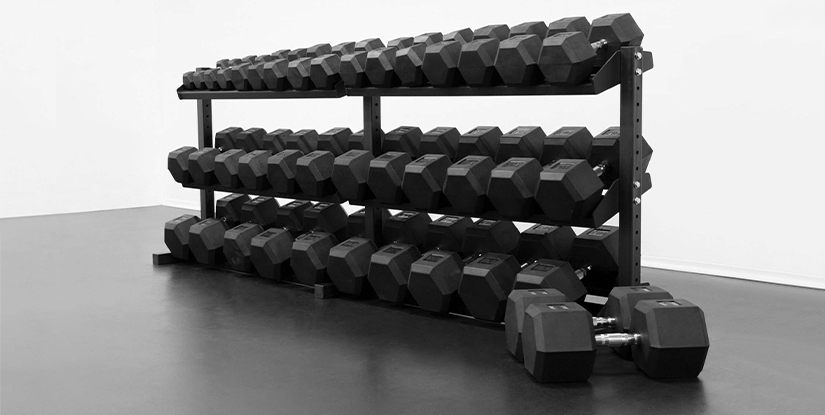
Material Integrity and Casting Precision in Commercial Hex Dumbbells
Selecting high-quality hex dumbbells for a commercial facility is not merely about aesthetics; it is about long-term durability and liability management. The primary failure mode in low-grade wholesale products is internal void formation within the cast iron, which leads to structural cracking under repeated impact. When a dumbbell hits a rubber floor, the kinetic energy must be absorbed by the material, not redirected into internal fractures.
Identifying High-Density Cast Iron
Professional buyers should look for evidence of high-density casting processes. Low-quality manufacturers often use recycled scrap with high impurity levels, resulting in brittle shells. A key verification step is the 'tapping test': a high-quality hex dumbbell should produce a solid, sharp metallic ring when struck lightly, whereas a hollow or low-density unit will produce a dull, thudding sound. This distinction indicates the presence of air pockets or structural weaknesses that could lead to catastrophic failure during high-intensity training.
| Feature | Commercial Grade Standard | Budget/Low-Quality Red Flag |
|---|---|---|
| Casting Density | Homogeneous, no visible internal air pockets | Visible pitting or 'bubbling' on the surface |
| Weight Consistency | Tolerance within +/- 1% to 2% | Significant variance between same-weight pairs |
| Material Origin | High-purity cast iron | Recycled scrap with high slag content |
Understanding the core material properties is the first step in preventing premature replacement cycles. Once you have established the baseline for material integrity, the next critical factor to scrutinize is the precision of the outer hexagonal geometry.
Geometric Precision and Surface Smoothness Standards
The hexagonal shape of a dumbbell serves a specific function: stability during ground placement. However, if the hex edges are poorly defined or inconsistent, they become a source of friction and potential injury. In a commercial setting, uneven hex edges can cause the dumbbell to roll unpredictably or, more dangerously, scratch the flooring and the user's hands during transition movements.
The Impact of Edge Definition
A professional-grade hex dumbbell must feature well-defined, slightly rounded edges. Sharp, jagged corners are a sign of poor casting or inadequate finishing, and they can lead to skin abrasions or damage to high-end gym flooring. Conversely, edges that are too blunt may lack the intended stability. Operators should check that every face of the hexagon is parallel and that the transition between the head and the handle is seamless. A common mistake is overlooking 'burrs'—small bits of metal left from the mold—which should be completely removed during the finishing process.
- Verification Step: Run a gloved hand over the edges to detect any snagging or sharp protrusions.
- Standard: Edges should be smooth to the touch but sufficiently structured to prevent sliding on flat surfaces.
While the exterior shape determines handling safety, the connection between the weight head and the handle determines the longevity of the equipment. This leads us to the most frequent point of failure in wholesale orders: the handle attachment.
Handle Integration and Threading Reliability
The interface between the dumbbell head and the handle is the most high-stress point in the entire assembly. In commercial use, dumbbells are frequently dropped, subjecting the handle connection to intense vibrational stress. A common failure mode is the loosening or complete detachment of the handle due to poor threading or insufficient welding/casting depth.
Evaluating Handle Types: Fixed vs. Adjustable
For fixed hex dumbbells, the handle is typically integrated into the casting or inserted through a pre-drilled hole and secured. For commercial-grade equipment, the transition from the metal handle to the weight head must be seamless. If there is any 'play' or movement when you wiggle the handle, the unit is unfit for professional use. In adjustable models, the threading must be precision-machured to prevent the weight plates from rattling or becoming stuck.
| Component | Checklist for Verification | Potential Failure Mode |
|---|---|---|
| Handle Grip | Knurling depth is consistent and not excessively sharp | Slippage during heavy lifts or skin tearing |
| Handle Material | Stainless steel or high-grade chrome-plated steel | Rusting or snapping under load |
| Connection Point | Zero lateral movement (no 'wobble') | Handle detachment during dynamic movements |
A stable handle ensures that the user's focus remains on the lift rather than the equipment. However, even a perfectly built dumbbell can fail if the surface coating is substandard, leading to rapid oxidation.
Explore the complete technical specifications:
Surface Finishes and Corrosion Resistance
In high-traffic gyms, humidity and perspiration are constant. A low-quality surface finish will begin to rust or peel within months, creating an unhygienic environment and a poor aesthetic impression. The choice between powder coating, rubber coating, and raw cast iron involves significant trade-offs regarding maintenance and durability.
Comparing Coating Technologies
Rubber-coated hex dumbbells are popular for noise reduction and floor protection, but the quality of the urethane or rubber is vital. Poor quality coatings will 'bubble' or peel away from the metal core when exposed to sweat or cleaning chemicals. For traditional cast iron hex dumbbells, a high-quality powder coating is the industry standard because it provides a durable, non-porous barrier against oxidation. When inspecting a shipment, check for uniform thickness; thin spots in the coating are the primary entry points for rust.
Operational Maintenance Tip
To extend the lifespan of coated dumbbells, operators should avoid using harsh acidic cleaners, which can degrade the polymer bonds in rubber/urethane coatings. Instead, use a pH-neutral disinfectant to maintain cleanliness without compromising the surface integrity.
Protecting the surface is essential for both aesthetics and safety, but the next layer of quality involves the weight accuracy itself—the very metric that defines the tool.
Weight Accuracy and Calibration Standards
The most significant risk in wholesale procurement is the 'weight creep' or 'weight deficit' found in many budget-friendly shipments. If a gym claims to have a full set of 50lb dumbbells, but the actual weight varies significantly, it undermines the professional credibility of the facility and can disrupt structured training programs.
The Importance of Weight Uniformity
A professional standard requires that the actual weight of the dumbbell be within a very tight margin of the stated weight. In a commercial setting, a variance of more than 2-3% is often unacceptable for strength athletes who rely on precision. If you receive a shipment where the 20kg dumbbells range from 19.2kg to 20.8kg, you are facing a massive quality control problem at the factory level. This lack of precision is usually caused by uncalibrated scales or inconsistent metal volumes during the casting process.
- The Verification Protocol: Randomly select 5% of the shipment and weigh them on a calibrated digital scale.
- Threshold: Reject any batch where the average weight deviation exceeds the agreed-upon tolerance (typically 1-2%).
Ensuring that every dumbbell is actually the weight it claims to be is critical. Once the weight is verified, the focus must shift to how that weight is safely held by the user.
Ergonomic Knurling and Grip Performance
The knurling—the cross-hatched pattern on the handle—is the primary way a user secures the weight. Poor knurling is a major pain point; it is either too smooth, causing the weight to slip during heavy sets, or too aggressive, causing unnecessary pain and skin damage. In commercial environments, the knurling must be designed to withstand thousands of uses without wearing down.
Optimizing Grip for High-Frequency Use
When evaluating a wholesale order, you must feel the knurling. A high-quality knurl should have a consistent pattern and a moderate 'bite' that provides grip without being abrasive. Cheaply made dumbbells often use a shallow etching process that disappears after a few months of use, leaving the handle dangerously smooth. A deep, diamond-patterned knurl is preferred for commercial use as it provides better mechanical grip through both dry and sweaty conditions.
| Knurling Type | Pros | Cons/Risks |
|---|---|---|
| Medium/Deep Diamond | Excellent grip, durable for long-term use | Can be too harsh for beginners/elderly users |
| Light/Smooth Etching | Gentle on hands, high comfort | Dangerous when wet or during high-intensity use |
| Aggressive/Sharp | Maximum grip for heavy lifting | High risk of skin abrasions and calluses |
A reliable grip is the final physical link between the athlete and the iron. Having verified the grip and the weight, we must now address the final stage of the product lifecycle: long-term facility maintenance.
Facility Maintenance and Replacement Cycles
Even the highest quality hex dumbbells require a structured maintenance plan to prevent the degradation of their specialized features. A proactive approach to inspection can prevent small issues, such as a tiny bit of rust, from becoming large-scale equipment failures that require total replacement.
Developing an Inspection Cadence
Commercial operators should implement a two-tier inspection system. The first tier is the daily visual walk-through by floor staff, looking for obvious signs of damage like broken handles or chipped coatings. The second tier is a quarterly deep-dive inspection where individual pieces are checked for weight accuracy and handle stability. This prevents the 'hidden' deterioration that occurs in high-volume facilities.
Common Maintenance Failures to Avoid
A frequent error is neglecting the storage environment. Storing hex dumbbells in high-humidity areas without adequate ventilation can lead to accelerated oxidation, even on coated models. Furthermore, using heavy-duty industrial degreasers on rubberized dumbbells can strip the outer layer, making the product look aged and unprofessional. Maintaining a clean, dry storage area is the simplest way to maximize the ROI of your wholesale purchase.
By adhering to these rigorous standards, from casting density to ergonomic design, procurement professionals can ensure their commercial investment provides both safety and long-term value.