
Optimizing Performance and Longevity of an Olympic Rubber Weight Plates Set
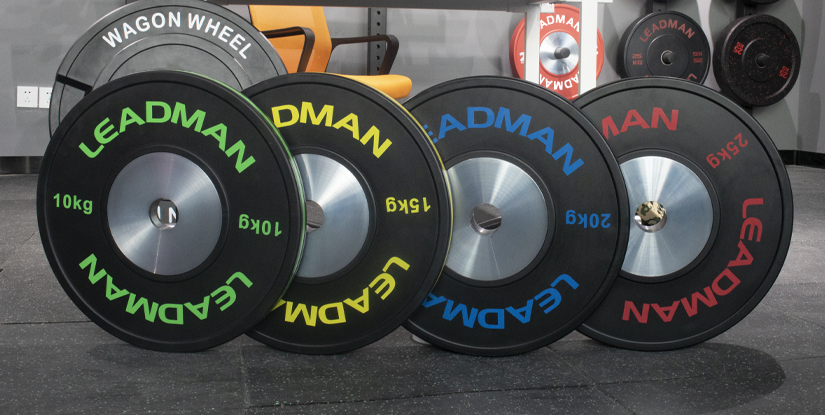
Addressing Material Degradation in Commercial Weight Sets
Facility managers often encounter a frustrating phenomenon: high-quality equipment losing its perceived value within months of deployment. A common pain point is the premature cracking or crumbling of the rubber skin on an Olympic Rubber Weight Plates Set. This failure is rarely a manufacturing defect of the core, but rather a consequence of environmental mismanagement and poor material selection during procurement. When rubber loses its elasticity, it ceases to provide the shock absorption necessary to protect both the barbell and the facility floor.
The primary cause of this degradation is uncontrolled UV exposure and extreme temperature fluctuations. Low-grade polymers used in budget-friendly sets lack the necessary chemical stabilizers to resist oxidation. To prevent this, operators must ensure that rubber-coated equipment is stored in climate-controlled environments and away from direct sunlight. Verifying the Shore hardness of the rubber upon delivery is a critical first step in ensuring long-term durability.
| Material Type | Primary Benefit | Typical Failure Mode | Ideal Use Case |
|---|---|---|---|
| Virgin Butyl Rubber | High impact resistance, low odor | Surface oxidation if stored outdoors | High-traffic commercial gyms |
| Recycled Crumb Rubber | Cost-effective, high density | Higher odor, potential for surface flaking | Standard weight rooms |
| Polyurethane Coating | Extreme durability, scratch resistance | Higher cost, rigid profile | Professional strength athletics |
By understanding these material distinctions, procurement officers can avoid the cycle of constant replacement. Once the material integrity is established, the focus must shift toward the mechanical precision of the plate-to-bar interface.
Ensuring Dimensional Accuracy and Center of Gravity Balance
A fundamental requirement for any professional-grade Olympic Rubber Weight Plates Set is dimensional consistency. A common operational error occurs when weight sets from disparate suppliers are mixed on a single barbell. If one plate is 5mm thicker than another despite having the same weight rating, the resulting imbalance can cause the barbell to oscillate during heavy lifts, leading to uneven load distribution and potential injury. This oscillation is often caused by inconsistent casting of the internal steel core.
To verify the quality of a set, operators should perform a volumetric check. This involves measuring the thickness of the plate at three distinct points: the center, the edge, and the rim. A high-quality set should exhibit a tolerance deviation of less than 1% across all measured points. Furthermore, the center hole diameter must be perfectly concentric to prevent the plate from 'wobbling' on the barbell sleeve. A wobbly plate is a symptom of an off-center mass, which compromises the fluidity of the lift.
The Impact of Concavity on Barbell Smoothness
The shape of the plate's inner circumference—the concavity—directly affects how the weight sits on the sleeve. If the concavity is too aggressive, the plate may not sit flush, causing friction and noise. Conversely, a flat inner surface may result in excessive movement. When selecting a set, inspect the transition between the steel ring and the rubber coating to ensure a seamless, smooth profile.
Maintaining this precision requires more than just a good initial purchase; it requires a rigorous routine of physical inspection and cleaning to prevent buildup that affects fitment.
Standardized Maintenance Protocols for Rubber Surfaces
Even the most robust Olympic Rubber Weight Plates Set will succumb to environmental contaminants if maintenance is neglected. The accumulation of skin oils, chalk dust, and perspiration creates a film on the rubber surface. This film not only makes the plates difficult to grip but can also lead to 'pitting'—a process where acidic contaminants break down the polymer structure over time. This is a classic problem in high-use commercial facilities where hygiene is a top priority.
The solution is a standardized weekly cleaning protocol. Rather than using harsh chemical solvents that strip the protective coatings, operators should use a mild, pH-neutral soap solution and a soft-bristle brush. Harsh degreasers can cause the rubber to become brittle or even dissolve the adhesive holding the coating to the steel core. This failure mode is often mistaken for 'natural wear,' but it is actually chemical damage caused by improper cleaning agents.
- Weekly: Wipe down surfaces with a damp, non-abrasive cloth to remove dust and chalk.
- Monthly: Inspect for micro-cracks or areas of discoloration that indicate UV or chemical damage.
- Quarterly: Check the internal steel ring for any signs of corrosion or loose fitment.
Consistent maintenance ensures that the rubber remains supple and the aesthetics of the facility remain professional. As the physical components are kept clean, the next step is to verify the mechanical assembly of the entire weight station.
Related reading:
Structural Integration and Loading Best Practices
Proper loading of the barbell is as vital to the longevity of the equipment as the quality of the plates themselves. A frequent mistake among novice operators is 'improper stacking,' where heavy plates are loaded onto the bar without regard for the barbell's bend or the centrifugal force of the lift. This can lead to the plates being slammed violently against the collars, causing micro-fractures in the rubber or damaging the barbell's knurling.
To mitigate this, facility managers should implement a strict loading protocol. Plates should be loaded smoothly, and weight collars (clips) must be used on every set to secure the load. In a commercial setting, the presence of high-quality, heavy-duty collars is not optional; they are a critical component of the entire system. A lack of secure collars can cause plates to shift mid-lift, creating a dangerous imbalance. Use the following checklist to verify your setup before a heavy training session:
| Component | Inspection Checkpoint | Action if Failed |
|---|---|---|
| Weight Plates | Are plates free of significant cracks or chips? | Remove from rotation and replace. |
| Barbell Sleeves | Are sleeves smooth and free of burrs? | Polish with fine-grit sandpaper if necessary. |
| Collars/Clips | Do they lock securely and without excessive force? | Replace with a higher-tension model. |
| Flooring | Is the sub-floor/matting intact under the lifting zone? | Inspect for compression or indentations. |
By adhering to these setup standards, you reduce the mechanical stress on the Olympic Rubber Weight Plates Set and the lifting apparatus. This proactive approach to setup transitions into the final phase: identifying when a set has reached its end-of-life.
Related reading:
Identifying Critical Failure Modes and Retirement Criteria
Understanding when to decommission a set is a key skill for facility managers. A major problem arises when operators try to 'stretch' the life of a set that has already reached its failure threshold. A common sign of failure is 'de-lamination,' where the rubber coating begins to separate from the internal steel plate. This is not just an aesthetic issue; it is a structural failure that can lead to the plate breaking apart under heavy load, presenting a significant safety hazard.
Operators must be able to distinguish between 'normal wear' and 'critical failure.' Normal wear might include minor color fading or superficial scratches. Critical failure, however, involves deep cracks that penetrate the steel core, significant changes in weight due to material loss, or a palpable wobble when the plate is mounted. When these indicators appear, the equipment must be removed from service immediately.
The Economic Logic of Replacement
While it may seem counterintuitive to replace a set that still 'works,' there is a strong ROI in replacing equipment at the first sign of critical degradation. A damaged Olympic Rubber Weight Plates Set can cause indirect costs, such as increased floor repairs or, more seriously, an increase in facility liability due to injury. A professional facility maintains a replacement fund to ensure that the highest standards of safety are never compromised for the sake of temporary budget savings.
Monitoring these thresholds ensures that your facility remains a premium environment. With the lifecycle of the plates understood, the final consideration is the long-term impact on the facility's total cost of ownership.
Related reading:
Evaluating Long-Term Value and ROI in Procurement
When purchasing a new Olympic Rubber Weight Plates Set, the lowest initial price is often a false economy. The total cost of ownership (TCO) includes the initial purchase price plus the costs of maintenance, replacement frequency, and potential downtime. In a commercial gym environment, a low-cost set that requires replacement every 18 months is far more expensive than a premium set that lasts five years.
To calculate the true value, consider the 'cost per use-year.' A high-quality set with high Shore hardness and superior UV resistance will have a much lower cost per use-year despite a higher upfront cost. Commercial operators should look for sets that feature high-density steel cores and high-quality vulcanized rubber, as these are the variables that most heavily influence the TCO. When evaluating a quote, ask for the technical data sheets regarding the rubber density and the thickness of the steel ring to ensure you are comparing apples to apples.
A well-invested piece of equipment becomes a hallmark of a professional facility, whereas a cheap set becomes a visible liability. By focusing on these long-term metrics, procurement managers can make decisions that favor both the budget and the user experience. As the market evolves, staying updated on these material standards remains essential for operational excellence.