
Must-Have Weight Room Equipment: A Strategic Procurement and Operational Guide
The Volume Fallacy: Why More Equipment Does Not Equal Higher ROI
A common misconception among facility operators is that the sheer volume of inventory—the number of machines and the diversity of brands—is the primary driver of facility value. However, empirical observation in high-performance environments shows that a high density of low-utility equipment actually degrades the user experience and increases the long-term maintenance burden. A facility filled with specialized, single-function machines often suffers from higher downtime and fragmented training paths compared to a streamlined, high-utility setup.
To build a high-performance environment, procurement must shift from a 'quantity-first' mindset to a 'utility-per-square-foot' framework. Instead of purchasing every available movement pattern, operators should prioritize equipment that serves multiple kinetic functions. This strategic approach minimizes capital expenditure while maximizing the operational throughput of the space. Understanding this fundamental shift is essential before moving into the specific selection criteria for core assets.
| Metric | Volume-Driven Strategy | Utility-Driven Strategy |
|---|---|---|
| Core Focus | High variety, low specialization | High durability, multi-functionality |
| Maintenance Impact | High; diverse parts requirements | Low; standardized componentry |
| Congested; highly specialized | Fluid; versatile movement patterns | |
| Diminishing; high depreciation | Optimized; long-term durability |
By prioritizing versatility, operators can avoid the common pitfall of purchasing equipment that remains idle most of the time. Once the strategic framework is established, we must address the specific categories of equipment that form the backbone of any professional facility.
Establishing the Core: Foundational Strength Assets and Load Capacities
Transitioning from a broad strategy to specific procurement, the first step involves identifying the foundational strength assets. These are the high-load, high-frequency items that form the structural identity of a weight room. If these foundational pieces fail or are insufficient in capacity, the entire training program collapses. A common error is underestimating the required load capacity for heavy-duty movements like deadlifts and squats.
The Role of High-Capacity Racks and Benches
The structural integrity of a power rack or a weight bench is not merely about the steel gauge, but about the stability of the uprights and the resilience of the upholstery. When sourcing these items, operators must verify the weight-bearing limits and the quality of the welding. A failure in a power rack during a heavy lift is not just a mechanical failure; it is a catastrophic safety event.
- Verification Check: Ensure all rack uprights are made of high-gauge steel and that the J-cups/spotter arms are rated for at least 150% of the anticipated maximum load.
- Common Failure Mode: Using benches with low-density foam that compresses over time, leading to spinal misalignment during heavy lifts.
Selecting the correct bench and rack foundation ensures that the most intense training sessions can be conducted safely. However, a successful weight room requires more than just heavy steel; it requires the free weights that provide the resistance for these movements.
Free Weight Selection: Precision, Balance, and Durability
Having established the stationary structure, the focus shifts to the mobile resistance: free weights. This is where many operators encounter the problem of inconsistent weight distribution and rapid surface degradation. A set of dumbbells that feels 'off-balance' can lead to repetitive strain injuries, while low-quality coatings often fail within the first year of heavy use.
Dumbbells and Barbells: Material and Coating Standards
When procuring must-have weight room equipment in the free weight category, the material specification is the most critical decision. There is a significant difference between entry-level cast iron and professional-grade urethane-coated weights. For high-traffic facilities, the investment in superior coatings provides a much higher long-term ROI due to reduced wear and tear.
| Equipment Type | Material Standard | Operational Benefit | Failure Mode to Avoid |
|---|---|---|---|
| Dumbbells | Urethane-Coated | Minimal scent, high impact resistance | Cracking or peeling of cheap rubber |
| Barbells | Chrome or Cerakote Finish | Corrosion resistance, smooth rotation | Rusting on low-grade steel |
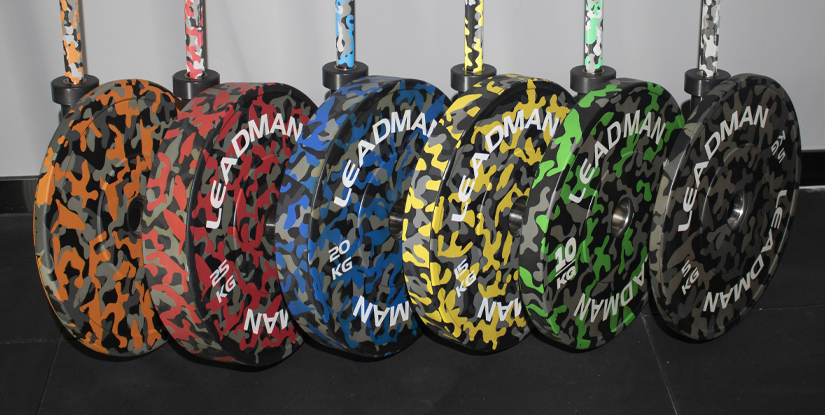
| Weight Plates | High-Density Rubber | Protects flooring, reduces noise | Brittle rubber that chips easily |
A balanced set of free weights ensures that users can transition smoothly between exercises without searching for specific increments. With the foundational resistance secured, the next step is to integrate machines that offer controlled resistance for targeted muscle work.
Explore the complete technical specifications:
Resistance Machine Optimization: Controlled Movement vs. Freedom of Motion
Once the core free weight infrastructure is in place, operators often look to add resistance machines. This introduces a new challenge: the tension between controlled, user-friendly movement and the biological necessity for natural, functional movement. The mistake often made here is over-investing in machines that restrict the user's natural biomechanics too heavily.
Selecting Versatile Resistance Machines
The goal is to select machines that offer a high degree of ergonomic adjustment. A machine that only fits one body type is a wasted asset. When evaluating machines, consider the range of motion and the quality of the cable/pulley system. A sticking pulley or a frayed cable is a high-risk failure mode that requires immediate intervention.
- Implementation Detail: Prioritize dual-function machines (e.g., a machine that can perform both lat pulldowns and seated rows) to maximize floor space efficiency.
- Verification: Test the smoothness of the weight stack through the entire range of motion to ensure no 'dead spots' or friction-induced resistance occur.
Ensuring these machines are high-quality and versatile prevents the facility from becoming a collection of single-use, poorly-fitted tools. As these machines undergo heavy usage, a systematic approach to maintenance becomes mandatory to preserve their performance.
Explore the complete technical specifications:
Operational Longevity: The Maintenance and Inspection Protocols
As discussed in the previous sections, the durability of your equipment is directly tied to your procurement decisions. However, even the highest-quality equipment will degrade without a rigorous maintenance protocol. The primary pain point for facility managers is unexpected downtime caused by a single broken component, which can disrupt training schedules and decrease user satisfaction.
The Maintenance Hierarchy: Daily vs. Monthly Tasks
A professional-grade facility does not wait for a machine to break before acting. Instead, it employs a two-tiered approach: a daily visual inspection and a monthly mechanical audit. This proactive stance reduces the cost of repairs and extends the lifecycle of the assets.
| Task Frequency | Action Item | Specific Focus Area | Required Tool/Method |
|---|---|---|---|
| Daily | Visual Inspection | Cables, upholstery, and floor integrity | Visual check/Hand feel |
| Weekly | Wipe-down & Cleaning | Metal surfaces and grip areas | Non-corrosive disinfectant |
| Monthly | Mechanical Audit | Bolt torque, bearing smoothness, lubrication | Torque wrench/Lubricant |
A consistent maintenance schedule is the difference between an aging, dilapidated gym and a high-performance training center. Once the maintenance protocols are embedded in the operational culture, the focus must return to the layout and flow of the equipment.
Explore the complete technical specifications:
Best Commercial Gym Equipment Brands | Professional Selection Guide
Spatial Intelligence: Optimizing Equipment Layout and Workflow
The physical arrangement of your must-have weight room equipment is just as important as the equipment itself. A poorly planned layout creates 'bottlenecks' where users congregate, often leading to accidental collisions or inefficient use of space. This is frequently caused by a failure to account for the 'operational footprint'—the space required not just by the machine, but by the person using it.
The Importance of Clearance and Safety Zones
Every piece of equipment has a static footprint and a dynamic operational zone. A power rack may occupy 4x4 feet, but the dynamic zone for a barbell lift might be 8x8 feet. Neglecting this distinction is a common mistake that leads to unsafe environments and perceived crowding.
- Decision Criteria: When planning the floor layout, always add a 25% safety buffer to the manufacturer-specified footprint of each major machine.
- Verification: Walk the floor as if you were performing a heavy lift; if you feel cramped or near an obstacle, the layout requires adjustment.
A smart layout maximizes the capacity of the room while ensuring safety and ease of movement. With the layout and maintenance secured, we can conclude by looking at the broader economic impact of these decisions.
Explore the complete technical specifications:
The Long-Term Economic View: ROI and Lifecycle Management
Concluding this guide, it is vital to view the procurement of weight room equipment through a long-term economic lens. The initial purchase price is merely the beginning of the total cost of ownership (TCO). A cheaper machine that requires frequent part replacements and has a short lifespan is significantly more expensive over a five-year period than a premium-grade asset.
Calculating Total Cost of Ownership (TCO)
To make a truly strategic decision, operators should calculate the TCO rather than just looking at the upfront invoice. This involves factoring in maintenance costs, replacement frequency, and the potential revenue loss from equipment downtime. A high-quality, durable equipment set may have a higher initial cost but will yield a much higher return on investment (ROI) through longevity and reliability.
By applying the principles of utility, maintenance, and spatial intelligence, you can build a weight room that is not just a collection of machines, but a high-performance asset that drives long-term value. This systematic approach ensures that your facility remains a premier destination for training and development.