
Optimizing Repforce Gym Equipment Performance and Longevity
Structural Integrity Standards for Repforce Gym Equipment
Selecting high-performance fitness gear requires more than a cursory glance at aesthetics; it demands a rigorous understanding of structural engineering and material durability. For facility managers and professional trainers, the primary concern is often the discrepancy between advertised durability and real-world operational stress. When equipment fails, it is rarely due to a single catastrophic event but rather a gradual degradation of structural components caused by improper load distribution or substandard metallurgical qualities. Identifying these early indicators is essential for long-term ROI.
Material Composition and Load Ratings
Professional-grade equipment must withstand repeated high-impact use without permanent deformation. When evaluating gear, the density of the steel tubing and the quality of the powder coating serve as the first lines of defense against mechanical failure. A common mistake among procurement officers is prioritizing volume over gauge thickness. A thicker steel gauge provides a higher threshold for resistance to buckling under heavy load, which is critical for strength training zones.
| Component Type | High-Performance Specification | Typical Failure Mode |
|---|---|---|
| Steel Tubing Gauge | 11-gauge or higher | Structural buckling under heavy eccentric loads |
| Welding Integrity | Full-penetration continuous welds | Stress fractures at corner junctions |
| Powder Coating | Multi-layer electrostatic finish | Flaking and oxidation due to sweat acidity |
| Urethane Coating | High-density, non-slip application | Cracking or thinning under heavy impact |
By understanding these fundamental specifications, operators can move from a reactive stance to a proactive one. Establishing a baseline for material quality ensures that your procurement decisions are backed by technical reality rather than marketing claims. Once the structural baseline is understood, the focus must shift to how these machines move, specifically through the lens of mechanical assembly and lubrication.
Mechanical Precision and Pivot Point Maintenance
The transition from structural stability to mechanical fluidity is where many facility operators face their most frequent troubleshooting challenges. Even the most robust steel frame is rendered ineffective if the moving parts—such as pulleys, bearings, and pivot points—are not maintained with precision. A common issue in high-traffic environments is the development of 'stutter' or inconsistent resistance during a repetition, which can lead to user injury or decreased training efficacy.
Bearing Integrity and Friction Management
Mechanical resistance is often an early warning sign of bearing degradation or insufficient lubrication. Friction within a pulley system is caused by several factors: dust ingress, insufficient lubricant, or the inevitable wear of the bearing races. To maintain a professional standard, operators must implement a strictly timed maintenance cadence. If a machine begins to exhibit a grinding sound or irregular motion, it is usually a symptom of bearing race pitting or a lack of superficial lubrication.
- Visual Check: Inspect cables for fraying or any sign of internal wire breaks.
- Tactile Check: Feel for 'catch' points during a full range of motion.
- Aural Check: Listen for metal-on-metal grinding or high-pitched squeaking.
A well-maintained machine should provide a smooth, uninterrupted path of motion. Failure to address these subtle cues often leads to more expensive component replacements later. Effective maintenance of these moving parts serves as the foundation for the next critical stage: the essential role of surface protection and floor loading.
Flooring Specifications and Impact Absorption
While much attention is paid to the machines themselves, the interface between the equipment and the facility floor is often overlooked. The vibration and impact generated by dropping heavy weights can cause micro-fractures in even the most durable flooring if the correct absorption specifications are not met. This is a significant concern for multi-use facilities where vibration travel can disturb other zones of the building.
Shore Hardness and Impact Attenuation
When selecting flooring to support your fitness layout, the concept of 'Shore Hardness' is a vital metric. This refers to the resistance of the material to indentation. While high-density rubber provides excellent impact absorption, it must be balanced against the need for a stable surface that does not deform permanently under heavy static loads like squat racks or weight benches. A common failure in facility design is using thin, low-density mats that provide insufficient damping, leading to floor damage and excessive noise.
| Flooring Material Type | Ideal Application | Pros/Cons |
|---|---|---|
| High-Density Rubber Tiles | Heavy Strength Zones | Excellent impact absorption; requires regular cleaning to avoid buildup. |
| Modular Flooring Rolls | Cardio and Functional Areas | Seamless appearance; less effective at damping heavy free-weight drops. |
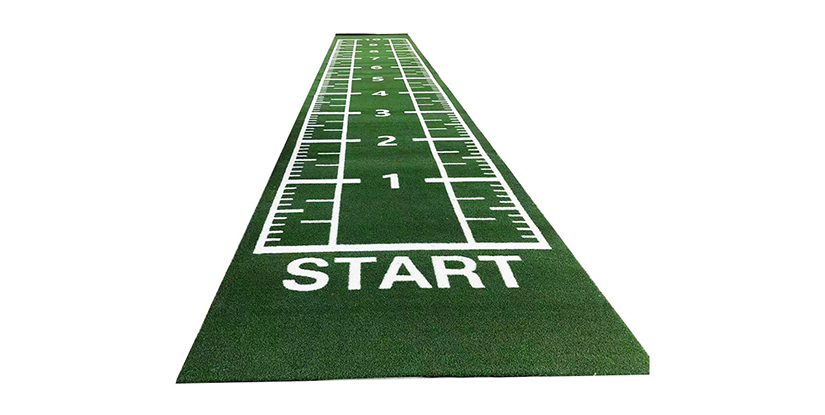
| Integrated Gym Flooring | Full-Scale Professional Gyms | Superior durability; higher initial installation cost. |
Proper flooring selection does more than protect the surface; it preserves the structural alignment of your machines by providing a level, non-compliant base. Without this stable foundation, the mechanical issues discussed in the previous section may be exacerbated by uneven weight distribution. As we move from the ground up, it becomes clear that every component is part of a holistic ecosystem of stability.
The Interplay of Load Distribution and Stability
With the flooring established, the focus returns to how the weight itself is distributed across the machine and the floor. Stability is a direct consequence of the relationship between the machine's center of gravity and its footprint. A common problem observed in smaller or lighter-duty machines is 'walking' or shifting during use, which is often caused by a combination of uneven floors and insufficient weight-base ratios.
Ensuring Machine Leveling and Footprint Integrity
Even the highest quality piece of gear will perform poorly if it is not perfectly level. When a machine is tilted, even by a few degrees, the load is no-longer distributed across all contact points. This uneven load causes excessive wear on one side of the bearings and can lead to the unbalancing of the machine's frame. To verify correct performance, operators should use a digital level on the primary frame members during the assembly and monthly inspection phases.
- Verification Step 1: Use a level to check all horizontal and vertical axes of the main frame.
- Verification Step 2: Ensure adjustable feet are fully extended and making solid contact with the flooring.
- Verification Step 3: Check for any lateral movement or 'wobble' when the machine is under load.
By ensuring a level-plane foundation, you significantly extend the lifespan of the mechanical parts. However, a stable machine is only as good as the components that hold the weights. This leads us to the critical necessity of regular weight-bearing component audits.
Related reading:
Gym Equipment Package: Savings, Standardization & Hidden Costs
Weight-Bearing Component Audits and Replacement Cycles
The most high-stress parts of any fitness machine are the weight stacks, pins, and cables. These components experience the most significant fatigue over time. A failure in a weight-bearing component is not just a maintenance issue—it is a critical safety hazard. Professional operators must move beyond a purely 'run-to-failure' model and instead implement a predictable replacement cycle based on usage intensity.
Identifying Fatigue in Cables and Pins
Cables are subject to constant bending stress, which leads to internal wire fatigue. A common mistake is waiting for the outer coating to fray before replacing the cable. In reality, the internal steel strands may already be compromised. Similarly, weight stack selector pins can become worn or slightly bent, leading to irregular engagement with the weight plates. This can cause the weight to 'jump' or dislodge during a high-velocity movement.
| Component | Warning Sign | Mandatory Action |
|---|---|---|
| Selector Pin | Uneven edges or bending | Replace immediately to prevent weight dislodgment. |
| Steel Cable | Loss of elasticity or fraying | Replace before any visible strand breakage occurs. |
| Weight Plate | Cracked edges or loose fittings | Audit the loading mechanism for debris or blockage. |
Establishing these thresholds for replacement allows a facility to maintain a high safety standard without constant emergency repairs. This proactive approach to component-level maintenance ensures that the structural integrity discussed at the beginning of our guide remains uncompromised throughout the machine's lifecycle.
Related reading:
Optimizing Facility Layout for Equipment Longevity
The way equipment is positioned within a room dictates the long-term maintenance requirements and the general wear patterns of the machines. A common oversight in gym design is neglecting the 'buffer zone' around heavy-use equipment. Placing machines too close to one another or to walls restricts airflow, which can lead to increased humidity and subsequent oxidation of metal surfaces.
Managing Airflow and User Accessibility
Proper spacing is not just about user comfort; it is a technical requirement for machine longevity. Heat dissipation is a factor in electronic-based machines, and even in manual equipment, the accumulation of dust and sweat in tight corners can accelerate the degradation of bearings and moving parts. Ensure that there is a minimum of 3 feet of clearance around all heavy machines to allow for both safe movement and adequate ventilation.
The layout should also consider the acoustic impact of the machinery. By placing high-impact zones on the most robust parts of your flooring, you mitigate the vibration-induced wear on the rest of the facility's infrastructure. This strategic placement is the final layer in a comprehensive management plan for high-performance fitness gear.
Related reading:
Finalizing the Maintenance and Inspection Protocol
A successful equipment management strategy culminates in a standardized, repeatable inspection protocol. Without a written document that lists the exact steps for your staff, maintenance becomes inconsistent and unreliable. This protocol should bridge the gap between the structural, mechanical, and flooring-related tasks we have covered.
Implementing a Daily vs. Monthly Checklist
A professional facility uses a tiered approach to inspections. Daily checks are quick, visual-based assessments aimed at immediate safety, while monthly checks are deep-dive technical audits. A technician or head trainer should lead the monthly audits to ensure that subtle changes in machine behavior are caught before they become failures.
- Daily Checklist: Visual cable check, floor cleanliness, and general movement feel.
- Monthly Checklist: Bolt torque verification, bearing lubrication, and frame leveling.
- Quarterly Checklist: Full weight stack audit, upholstery inspection, and flooring stability check.
By adhering to these levels of scrutiny, you ensure that your equipment remains a reliable asset rather than a liability. Consistent oversight is the single most important factor in maintaining a professional-grade fitness environment.