
How to Select Dumbbell Manufacturers for Bulk Orders
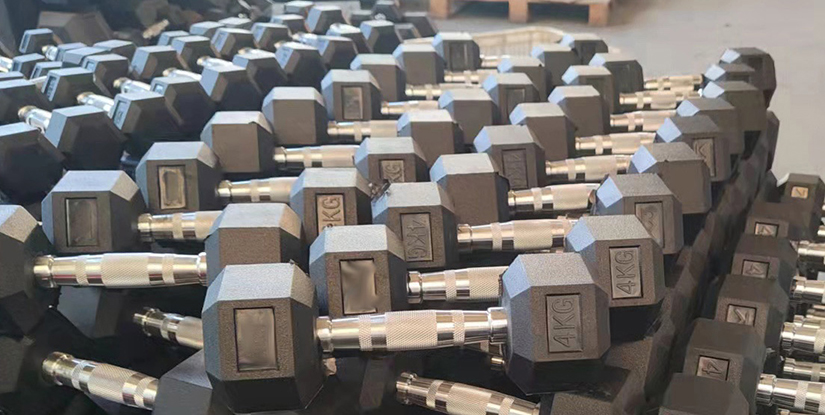
Navigating Market Volatility and Procurement Risks
Bulk procurement of strength training equipment is often plagued by two invisible enemies: material price fluctuations and inconsistent product weight accuracy. For a commercial gym operator or a fitness distributor, selecting a manufacturer based solely on a low initial quote is a high-risk strategy that frequently leads to mid-order surcharges or receiving sets that do not meet weight tolerances. This volatility stems from the fluctuating costs of raw iron, steel, and rubber, which directly impact the manufacturing cost of dumbbells.
A common failure mode occurs when a supplier offers a price that is significantly below the current market average for raw steel. While this looks attractive on a spreadsheet, it often signals that the manufacturer is either using lower-grade scrap metal or is using thinner coating processes to save on material costs. Such a decision results in dumbbells that show premature oxidation or structural flaws. To mitigate this, buyers must transition from a 'lowest price' mindset to a 'total cost of ownership' model. Understanding the relationship between raw material purity and the final product lifespan is the first step in a robust selection process. Once the economic risks are understood, the focus must shift to the technical reality of how these products are actually forged.
Analyzing Material Composition and Structural Integrity
Understanding the manufacturing process requires a deep dive into the foundational materials used for different dumbbell types. The structural integrity of a dumbbell is determined by the core material—whether it is solid cast iron, steel, or a polymer shell—and the quality of the coating applied to it. Failure to verify these inputs leads to uneven weight distribution or surface degradation.
Core Material Specifications
When selecting a manufacturer, you must define the exact composition of the core. For instance, cast iron dumbbells must have a uniform density to prevent 'unbalanced' sensations during high-repetition use. A manufacturer utilizing high-grade cast iron will produce much smoother edges and consistent weight increments than one using low-grade recycled iron, which often contains air pockets or impurities.
Coating Technologies and Durability
The exterior coating is not merely aesthetic; it is a functional layer designed for impact resistance and grip stability. Common issues include the 'peeling' of rubber coatings or the 'cracking' of urethane shells. These failures are usually caused by poor adhesion between the core and the outer layer. A reliable manufacturer will use advanced chemical bonding or heat-molding processes to ensure the coating remains intact even under heavy daily use.
| Dumbbell Material Type | Typical Use Case | Primary Benefit | Key Failure Mode to Verify |
|---|---|---|---|
| Cast Iron | Home Gyms / Budget Commercial | Cost-effective, durable core | Surface oxidation and rough texture |
| Rubber Encased | High-Traffic Commercial Gyms | Impact reduction, noise control | Rubber peeling or scent issues |
| Urethane Coated | Premium Fitness Clubs | Highest durability, non-scented | Cost-driven coating thinness |
| Neoprene Coated | Aerobics / Light Strength | Soft grip, aesthetic variety | Rapid degradation and peeling |
By categorizing materials in this way, a buyer can align the product's physical properties with the intended environment. Moving from the physical construction to the manufacturing workflow helps reveal the true operational capacity of a potential partner.
The End-to-End Manufacturing Workflow and Precision Control
The precision of a dumbbell is not an accident; it is the result of a controlled, step-by-step manufacturing sequence. When a manufacturer fails to implement strict controls at each stage, the resulting batch will suffer from high variance in weight and dimension. A professional buyer should ask for a detailed overview of the 0→1 process to ensure the manufacturer possesses the technical maturity to handle bulk volumes.
Phase 1: Casting and Shaping
For cast iron or steel dumbbells, the process begins with the melting of raw metal and the pouring of the molten material into precision molds. The quality of the mold determines the dimensional accuracy of the dumbbell head. If the mold is not maintained or is of low quality, the weights will have irregular shapes, making them difficult to stack or store efficiently.
Phase 2: Machining and Weight Calibration
After the initial casting, the dumbbells undergo machining to smooth the surfaces and prepare the handle threads. This is a critical juncture for precision. Each unit must be calibrated to a specific weight. A high-quality manufacturer utilizes precision scales and automated calibration processes to ensure that the weight deviation is within a strictly defined margin—typically +/- 1% to 2%.
Phase 3: Coating and Finishing
The final phase involves the application of the outer layer—be it rubber, urethane, or paint. This requires controlled environments to ensure consistent thickness. Inadequate drying times or poor temperature control during the molding of rubber shells can lead to 'bubbling' or 'delamination,' where the coating separates from the weight head. Verifying that the manufacturer has a dedicated finishing facility is a key way to prevent these common defects.
Identifying these process steps allows a buyer to ask more pointed questions during a facility audit. These questions will eventually lead to the development of a rigorous quality control framework.
Explore the complete technical specifications:
Implementing Rigorous Quality Control and Tolerance Verification
The transition from a successful production run to a high-quality bulk order depends entirely on the rigor of the Quality Control (QC) protocols. Even the best manufacturers can suffer from 'batch drift,' where the quality of the first 100 units differs from the last 100. To prevent this, a buyer must define the specific parameters that will be tested before the shipment leaves the factory floor.
Weight Tolerance and Density Standards
The most frequent complaint in bulk dumbbell orders is weight variance. A 10kg dumbbell that actually weighs 9.7kg is a liability for professional strength training. You must demand a specification sheet that outlines the acceptable tolerance range. A professional manufacturer should be able to provide a report showing that a statistically significant sample size from the current batch falls within the agreed-upon range.
Surface Finish and Grip Integrity
The handle is the interface between the user and the weight. Common failures include cross-threading on the screw-on ends or a lack of texture on the knurling. A buyer should request samples specifically to test the 'grip feel' and 'thread durability.' If the knurling is too shallow or the coating is too slick, the equipment becomes a safety hazard in a commercial setting.
- Verification Check: Ask for a weight deviation report from a previous bulk order.
- Verification Check: Request a physical sample of the handle knurling and threading.
- Verification Check: Inspect the seam of the rubber/urethane for any signs of delamination or air gaps.
Once the quality standards are established, the final step is to evaluate the manufacturer's ability to scale these standards during a high-volume production cycle.
Scaling Operations: Supply Chain and Logistics Management
Bulk orders require more than just a good factory; they require a sophisticated supply chain and logistics infrastructure. A manufacturer might produce excellent dumbbells, but if their logistical capacity is weak, your project will face delays, broken units, or shipping surcharges. Scaling from a few hundred units to several thousand requires a different level of operational maturity.
Lead Time and Capacity Planning
A significant mistake made by buyers is failing to account for the 'production bottleneck' period. During peak seasons, a manufacturer's capacity may be reached, causing lead times to double or triple. It is essential to ask a manufacturer about their maximum monthly output and how much of that is currently pre-booked. This prevents the project from stalling due to unmanaged demand.
Packaging and Damage Mitigation
Dumbbells are heavy, dense, and often shipped in large volumes. The way they are packed is critical for preventing damage during transit. Improper stacking can lead to crushed boxes or, more seriously, damaged weight heads that are no longer safe for use. A professional-grade manufacturer will use heavy-duty corrugated boxes and reinforced dividers to ensure the structural integrity of the shipment is maintained from the factory to your warehouse.
| Logistics Factor | Risk Level | Mitigation Strategy |
|---|---|---|
| Lead Time Discrepancy | High | Request a tiered delivery schedule with milestone check-ins. |
| Transit Damage | Medium | Enforce strict packaging standards (e.g., double-walled boxes). |
| Shipping Cost Spikes | Medium | Negotiate Incoterms (FOB vs CIF) early in the process. |
| Inventory Shortage | Low/Medium | Verify current raw material stockpiles at the factory. |
Managing these logistical variables ensures that the high-quality products you have selected actually arrive in the condition intended. This leads to the final considerations of long-term partnership and financial ROI.
Evaluating Long-Term ROI and Partnership Viability
The final stage of selecting a manufacturer is moving beyond the immediate order to evaluate the long-term return on investment (ROI). A manufacturer who provides high-quality, consistent dumbbells reduces your long-term costs by minimizing returns, customer complaints, and replacement needs. In the long run, a slightly higher unit price for a superior product is almost always more profitable than a cheap, low-quality alternative.
Total Cost of Ownership vs. Initial Price
When comparing two manufacturers, do not just look at the price per unit. Calculate the 'Total Cost of Ownership' (TCO). A high-quality urethane dumbbell may cost 20% more than a rubber one, but if its lifespan is three times longer and it requires zero maintenance, the ROI is vastly superior. A professional buyer should factor in replacement cycles and potential warranty claims when performing the final comparison.
Supplier Reliability and Future-Proofing
As the fitness market evolves, your equipment needs will also change. A manufacturer who is willing to work with you on custom specifications or new product lines is a much more valuable partner than a one-off supplier. Evaluate the manufacturer's openness to feedback and their ability to adapt to new material technologies. This adaptability is what separates a vendor from a strategic partner.
Operational Scalability Checklist
Before finalizing a contract, verify the following ability-to-scale parameters:
- Monthly Output Cap: Does the factory have the specialized machinery to increase output by 50% without quality loss?
- Raw Material Buffer: Does the supplier maintain a minimum 30-day reserve of core materials (iron/steel) to mitigate shortages?
- R&D Capability: Can they produce custom colors or textures upon request?
With the selection process complete, you are now equipped to move from a buyer to a strategic procurement professional. The ability to distinguish between a basic supplier and a high-tier manufacturer is what will ultimately define the success of your fitness brand or commercial facility.