
Selecting and Maintaining High-Quality Olympic Rubber Weight Plates
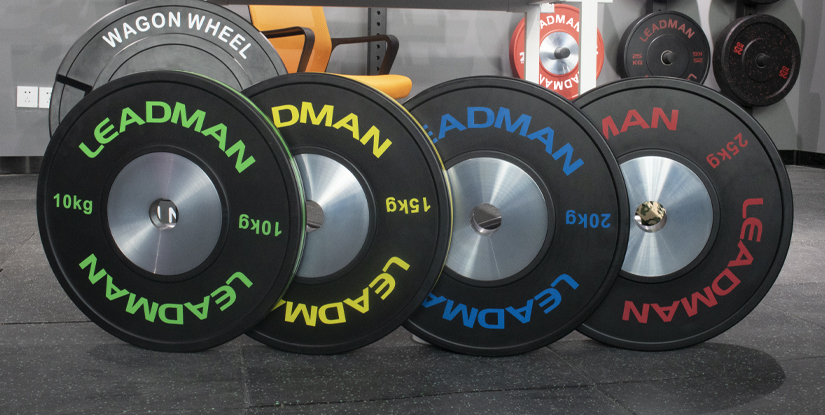
Commercial facility managers often face the frustrating reality of premature equipment degradation, specifically when high-impact training sessions lead to cracked, uneven, or poorly weighted resistance tools. One of the most common pain points involves the rapid deterioration of Olympic Rubber Weight Plates, which can result in uneven load distribution, damaging both the plates and the expensive barbell sleeves they occupy. Understanding the technical nuances of material composition and manufacturing standards is the only way to avoid the cycle of frequent replacement and rising operational costs.
Understanding Material Composition and Density Standards
Before purchasing or implementing new resistance equipment, an operator must understand that not all rubber-coated products are created equal. The primary cause of plate failure—such as cracking or delamination—is often an inconsistent ratio of virgin rubber to recycled filler material. High-quality Olympic Rubber Weight Plates utilize a dense, high-grade elastomer core that provides both structural integrity and shock absorption.
Material Density and Failure Modes
In a professional setting, the 'hardness' of the rubber (often measured via Shore hardness scales) dictates how the plate reacts to a high-velocity drop. If the material is too soft, the plate may deform under heavy loads, leading to permanent shape distortion. If it is too hard, the lack of shock absorption can transfer excessive kinetic energy back into the barbell and the facility's flooring. Operators should look for a balanced density that maintains its circular profile even under extreme thermal or mechanical stress.
| Material Characteristic | Low-Grade Performance | Commercial-Grade Performance |
|---|---|---|
| Rubber Density | Highly variable/inconsistent | High-density, uniform distribution |
| Impact Response | Brittle cracking under load | Resilient elasticity and shock absorption |
| Weight Tolerance | High variance (±3% or more) | Precision calibrated (typically <±1% variance) |
| Odor Profile | Strong chemical/petroleum scent | Neutral or minimal scent |
Identifying these material differences during the procurement stage prevents the eventual failure of the equipment. Once the material integrity is understood, the next critical step is verifying the precision of the weight itself through calibration checks.
Verifying Weight Tolerance and Precision Calibration
A significant issue in commercial strength training is the accumulation of 'weight creep,' where a set of plates labeled 25kg actually fluctuates wildly between 24.5kg and 25.5kg. This lack of precision can disrupt an athlete's training rhythm and creates a liability for professional competition environments. To ensure operational excellence, facilities must implement a verification protocol for their Olympic Rubber Weight Plates.
Standard Calibration Protocols for Facility Operators
Professional procurement managers should never assume that a stamped weight is an accurate weight. Implementing a periodic calibration check is a vital maintenance step. This involves using a calibrated digital scale to verify the actual mass of the plates against their nominal value. If a significant portion of a new shipment falls outside the acceptable tolerance range, it is a clear indicator of poor manufacturing control.
- Visual Inspection: Check for uneven edges or 'waviness' in the plate circumference.
- Mass Verification: Weigh sample plates from every new shipment on a high-capacity digital scale.
- Diameter Check: Ensure the outer diameter is consistent across different denominations to prevent barbell imbalance.
- Tolerance Benchmark: Aim for plates that maintain a variance of less than 1% for high-performance environments.
By establishing these strict verification standards, an operator ensures that the training environment remains both professional and predictable. However, even the most accurately weighted plates will fail if the structural interface between the plate and the barbell is ignored.
Related reading:
Preventing Damage to Barbell Sleeves and Load Interfaces
One of the most overlooked causes of equipment failure is the improper interaction between the center hole of the plate and the barbell sleeve. When Olympic Rubber Weight Plates are manufactured with imprecise center holes, they can create a 'wedging' effect. This uneven pressure can damage the knurling or the rotating sleeves of high-end barbells, leading to expensive repairs or total component failure.
The Mechanism of Friction and Centering Issues
The center hole must be a perfect circle with a slightly larger clearance than the barbell diameter to allow for smooth rotation. If a plate is slightly ovalized or if the internal diameter is too tight, it creates lateral friction. This friction generates heat and uneven torque, which eventually wears down the bearings or bushings within the barbell. This failure is not just a weight issue; it is a mechanical compatibility issue.
| Problem Symptom | Underlying Cause | Actionable Fix/Prevention |
|---|---|---|
| Barbell rotation feels 'gritty' | Imprecise center hole diameters | Verify plate-to-sleeve clearance during receipt |
| Uneven weight distribution on bar | Inconsistent plate thickness | Select precision-molded high-density plates |
| Damage to barbell end caps | Poorly finished internal edges | Inspect internal edges for smoothness and beveling |
Ensuring that the physical interface is smooth and consistent preserves the longevity of the entire lifting system. With the mechanical compatibility addressed, the focus must now shift toward the long-term surface integrity of the plates themselves.
Related reading:
Surface Integrity and Long-Term Wear Resistance
Over months of heavy use, the exterior surface of the rubber can undergo various types of degradation. This is often caused by improper storage or exposure to environmental factors like UV light and extreme temperature shifts. A degraded surface not only looks unprofessional but can also lead to the shedding of rubber particles, which creates a slip hazard on the gym floor.
Mitigating Surface Cracking and Delamination
The most common failure mode for the outer layer is delamination, where the rubber skin separates from the inner weight core. This is typically caused by low-quality adhesives or an inadequate thermal bond during the manufacturing process. To prevent this, facility operators should prioritize plates that feature a seamless or high-integrity vulcanized construction. Managing the environmental temperature within the facility also plays a massive role in maintaining surface elasticity.
Maintenance Checklist for Surface Care:
- Thermal Management: Avoid storing plates in areas with direct sunlight or extreme temperature fluctuations.
- Chemical Exposure: Never use harsh degreasers or solvents to clean the rubber surface; use only mild soap and water.
- Monthly Visual Audit: Inspect for hairline cracks or areas of separation around the center ring.
- Dust/Debris Removal: Regularly wipe down plates to prevent abrasive particles from settling in the surface texture.
Maintaining the surface is a proactive way to extend the lifespan of the equipment. Once the surface is secured, the operator must ensure the surrounding environment, specifically the flooring, is equally robust.
Related reading:
Optimizing Floor Load and Shock Absorption Systems
The durability of Olympic Rubber Weight Plates is inherently tied to the surface they are dropped onto. A common mistake made by gym owners is neglecting the relationship between the plate's impact force and the facility's floor-load capacity. Dropping heavy plates on an unoptimized surface will lead to both plate deformation and structural floor damage.
The Relationship Between Plate Mass and Flooring
When a heavy weight set is dropped, the kinetic energy is not simply absorbed; it is transferred through the object into the ground. If the floor is too rigid (such as standard concrete), the shockwave can cause the internal core of the rubber plate to crack or even shatter. Conversely, if the flooring is too soft or low-density, the plates may 'sink' or deform under static load, leading to an uneven lifting surface over time.
Facility managers should select flooring that complements the use of high-density plates. This involves calculating the total possible weight load in a specific area and ensuring the subfloor can handle the dynamic impact. High-quality rubber mats or specialized lifting platforms act as a necessary buffer, preserving the integrity of both the Olympic Rubber Weight Plates and the building's foundation.
By treating the plates, the barbell, and the flooring as a single integrated system, operators can significantly reduce the total cost of ownership. This holistic view of the lifting environment leads directly to the necessity of a smart procurement strategy.
Related reading:
Strategic Procurement: Choosing the Right Vendor Profile
Because the technical requirements for commercial weight plates are so specific, the final piece of the professional equation is the selection of a reliable supply partner. Relying on generic, low-cost suppliers often results in the exact failures—weight variance, cracking, and barbell damage—that this guide has outlined.
Establishing Quality Benchmarks for New Orders
When vetting a new supplier for high-volume orders, do not simply ask for a price per unit. Instead, request technical specifications regarding the rubber composition and the manufacturing tolerances. A professional supplier should be able to provide detailed data on their density and center-hole precision. A high-quality procurement process involves asking for more than just a product description; it requires a technical verification of manufacturing standards.
Decision Matrix for Procurement:
- Low-Cost Vendor: Focuses on price, offers vague descriptions, lacks specific density/tolerance data.
- High-Performance Vendor: Provides technical specifications, clear weight tolerance (±1%), and detailed material composition.
Finalizing a purchase based on total lifecycle value rather than the initial lowest price will invariably yield better ROI. By applying the inspection, verification, and maintenance protocols discussed, facility owners can ensure their resistance equipment remains a high-performing asset for years to come.