
Supporting Member Training with CrossFit Gym Accessories: A Technical Operational Guide
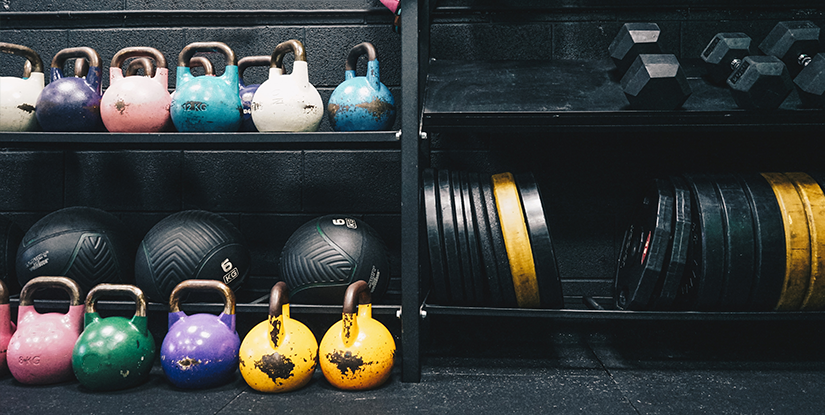
The Economic Fallacy of Low-Cost Training Accessories
A common misconception among facility operators is that the durability of CrossFit gym accessories is secondary to their initial procurement cost. This perspective often leads to a high turnover rate of equipment, which negatively impacts long-term ROI and member safety. In reality, high-intensity functional training places unique mechanical stresses on gear—specifically regarding tensile strength, friction coefficients, and impact resistance—that standard fitness equipment is not designed to withstand.
When operators prioritize low-cost alternatives, they often encounter a cycle of frequent replacements and, more critically, unforeseen safety failures. To support member training effectively, one must understand that the 'cheapest' option often carries a higher total cost of ownership due to maintenance requirements and replacement frequency. Transitioning from a cost-centric to a performance-centric procurement model is the first step in stabilizing your facility's operational stability.
Understanding these fundamental economic and mechanical realities allows for a more structured approach to selecting and managing the essential tools used in high-intensity environments. This selection process begins with a deep dive into the actual composition of the gear.
Mechanical Integrity and Material Selection for High-Impact Gear
Building upon the necessity of long-term value, the actual physical composition of your accessories determines their operational lifespan. In a high-intensity environment, accessories such as kettlebells, barbells, and plyometric boxes are subjected to constant impact and varying thermal conditions.
Material Fatigue and Stress Factors
The primary cause of premature failure in training accessories is often material fatigue. For instance, steel used in barbell construction must possess a specific balance of hardness and elasticity. If a barbell is too hard, it becomes brittle and may snap under heavy loads; if it is too soft, it will permanently deform. Similarly, the coating on weight plates—whether cast iron, rubber, or urethane—dictates how much vibration and impact energy is absorbed during heavy drops.
- Hardness vs. Elasticity: Essential for barbell longevity under heavy tension.
- Surface Friction: Critical for grip stability in accessories like gymnastics rings or battle ropes.
- Impact Damping: Determines the wear and tear on flooring and surrounding structures.
Decision Criteria for Material Procurement
When sourcing new inventory, operators should utilize a comparison of material attributes rather than just price. The following table outlines the standard trade-offs observed in the commercial market.
| Material Type | Primary Benefit | Typical Failure Mode | Best Use Case |
|---|---|---|---|
| Cast Iron | High density, low cost | Surface chipping, rust exposure | Standard weight increments |
| Urethane | Extreme durability, impact resistance | High initial cost, difficult to repair | High-traffic commercial floors |
| Rubber-Coated | Noise reduction, impact absorption | Peeling or cracking under heat/cold | Standard functional training |
| Steel (High Tensile) | Extreme durability, maintains shape | Surface scratches, oxidation | Competition-grade barbells |
By selecting materials based on these specific mechanical properties, you move from reactive purchasing to strategic asset management. This careful selection process directly informs how these tools must be maintained to prevent the failures discussed in the next section.
Routine Inspection Protocols for Functional Training Tools
Once the correct materials are in place, the focus shifts from procurement to the continuous monitoring of equipment health. Even the highest-quality accessories will eventually exhibit signs of wear if left unmonitored, a situation that can compromise member training safety.
Identifying Failure Modes in Grip and Tension Accessories
One of the most frequent issues encountered during member training involves the degradation of grip-based accessories like gymnastics rings, resistance bands, and climbing ropes. These items rely on structural integrity that is often invisible to the untrained eye.
- Resistance Bands: Check for micro-tears or discoloration. A band that has lost its elasticity or shows surface fraying is a high-risk item that must be decommissioned immediately.
- Gymnastics Rings: Inspect the wood or plastic surfaces for cracks and the webbing for fraying. The structural integrity of the hanging points is a critical failure point.
- Climbing Ropes: Look for core protrusion or significant thinning of the outer sheath.
The Systematic Inspection Checklist
Operators should implement a tiered inspection schedule to ensure no small defect turns into a significant safety incident. A systematic approach ensures that every piece of gear is verified regularly.
| Frequency | Inspection Target | Verification Method |
|---|---|---|
| Daily (Pre-Class) | High-usage items (Barbells, Kettlebells) | Visual check for loose parts or significant dents. |
| Weekly (Deep Dive) | Tension items (Bands, Rings, Ropes) | Physical stress test and detailed surface inspection. |
| Monthly (Audit) | Fixed structures (Racks, Pull-up Bars) | Bolt torque verification and weld integrity check. |
Following this schedule allows for the early detection of wear, which is much easier to manage than a catastrophic failure during a heavy lift. However, even with a perfect inspection routine, certain environmental factors can still degrade your equipment faster than expected.
Explore the complete technical specifications:
Mitigating Environmental Degradation and Wear
The physical environment of a gym—including humidity, temperature fluctuations, and cleanliness—plays a massive role in the lifecycle of your accessories. An overlooked factor in many facilities is how much the ambient atmosphere influences the oxidation and degradation rates of metal and composite materials.
Thermal and Moisture Impact on Equipment
High humidity levels can accelerate the oxidation (rust) of steel components, such as barbell sleeves and rack uprights. This is not merely an aesthetic issue; rust can increase friction in bearings and weaken structural welds. Similarly, extreme temperature shifts can affect the elasticity of rubber and plastic components, making them more prone to cracking or loss of structural stability.
Common Operational Errors in Environment Control
A significant mistake made by many operators is neglecting the post-workout cleaning process. Sweat and skin oils are highly corrosive and can seep into the textures of knurling or the pores of rubber. Failure to clean these surfaces regularly leads to:
- Increased Friction Irregularities: Which can lead to inconsistent grip during heavy movements.
- Accelerated Oxidation: Leading to premature rust on metal surfaces.
- Material Softening: Where oils can degrade the polymer structure of certain coatings.
The solution is to implement a standard operating procedure (SOP) for both the athletes and the staff to ensure that equipment is wiped down after use. This proactive maintenance is a critical component of supporting member training with CrossFit gym accessories over many years. Effective maintenance is only possible if the physical placement of these tools is optimized.
Explore the complete technical specifications:
Optimizing Accessory Layout for Safety and Longevity
Beyond the individual piece of equipment, the way accessories are stored and laid out within the facility significantly impacts their longevity and the safety of the training floor. Poor layout choices often lead to accelerated mechanical damage through accidental impact.
The Mechanics of Impact Damage in Storage
When heavy accessories like dumbbells or kettlebells are frequently dropped or improperly stored, the resulting kinetic energy travels through the floor and can cause structural misalignment in nearby racks or even the facility foundation. This is a common cause of 'racking wobble' seen in many poorly managed facilities.
Implementation of Organized Storage Systems
To minimize these risks, operators should design specific zones for different types of equipment. A high-functioning layout prevents the chaotic movement of heavy loads and protects the accessories themselves.
- Zoned Storage: Keep high-impact items (weights) away from high-precision items (barbells, rings).
- Vertical vs. Horizontal: Use vertical storage for larger items to save floor space, but ensure the center of gravity is low to prevent tipping.
- Clearance Zones: Ensure there is sufficient clearance around moving parts like rowing machines or sleds to prevent collisions with fixed accessories.
Implementing a structured storage and layout plan reduces the frequency of accidental damage, which in turn protects the investment made in high-quality gear. This organized approach leads directly to the final stage of the operational cycle: verifying that all processes are working as intended.
Explore the complete technical specifications:
Leg Extension & Curl Machine Integrated with Functional Rack
Scaling Accessory Management for Growth
As a facility grows, the volume of accessories increases, which exponentially increases the complexity of management. A system that works for 10 kettlebells may fail when managing 50. Scaling requires moving from manual tracking to digital or highly structured analog logs.
Scaling Challenges in High-Volume Facilities
The primary challenge in scaling is the 'visibility gap'—the period between a piece of equipment failing and the staff noticing it. In a large-scale operation, a single damaged resistance band might go unnoticed for days if there is no central registry. This increases the liability risk significantly.
- Inventory Volume: As the number of accessories increases, the probability of one being 'out of spec' at any given moment rises.
Key Performance Indicators (KPIs) for Equipment Health
While many facilities focus on membership growth, a professional operation should also track equipment-related KPIs. These metrics provide a data-driven way to assess the health of your physical assets.
- Replacement Frequency: Tracking how often specific categories of accessories are being replaced to identify issues with either quality or usage.
- Inspection Pass Rate: The percentage of items that pass weekly deep-dive inspections without needing repair.
- Maintenance Downtime: The amount of time equipment is out of service due to unplanned failures versus scheduled maintenance.
The Verification Workflow
A professional verification workflow should be documented and signed off by a lead coach or facility manager. This ensures accountability and provides a paper trail in the event of a safety audit or liability inquiry. The process should follow a logical flow: Observe → Measure → Document → Act.
When an operator moves through these stages—from understanding the initial economic landscape to implementing rigorous verification—they transition from a reactive owner to a proactive manager. This holistic approach is the most effective way of supporting member training with CrossFit gym accessories while maintaining a profitable and safe facility.