
Planning Gym Equipment Installation: A Strategic Operational Guide
Challenging the Myth of Simple Equipment Placement
A common misconception in facility management is that planning gym equipment installation is merely a matter of moving heavy boxes from a delivery truck to a designated floor space. Many operators treat installation as a purely logistical event rather than a critical structural and operational phase. This mindset often leads to catastrophic failures such as floor degradation, uneven weight distribution, and immediate safety violations. In reality, a professional installation is a multi-layered engineering process that integrates structural load capacity, spatial ergonomics, and long-term maintenance accessibility.
The cause of many failed installations is a lack of pre-arrival site analysis. When heavy resistance machines or Olympic lifting platforms are placed on a subfloor that cannot handle dynamic loads, the resulting structural fatigue can lead to expensive renovations. To avoid this, operators must move from a 'placement' mindset to a 'system integration' mindset. Once the physical requirements are understood, the focus must shift toward the specific spatial constraints of the facility.
The High Cost of Surface Oversights
Failure to account for floor vibration and impact resistance is a primary driver of long-term equipment damage. For example, placing heavy free-weight stations on standard commercial flooring without adequate dampening results in micro-fractures in the concrete subfloor. A professional installation protocol must specify the exact thickness and density of sub-floor materials required for different zones.
Understanding these structural imperatives is the first step in preventing long-term depreciation of your assets. This brings us to the crucial requirement of spatial layout and circulation logic.
Optimizing Floor Layout for Operational Flow and Safety
Building on the structural requirements discussed, the actual arrangement of machines must account for more than just the machine's footprint. A frequent failure in facility planning is the neglect of the 'user safety buffer'—the clearance required for a person to actually use the machine safely. If machines are packed too tightly to maximize equipment count, the facility suffers from high accident rates and reduced user satisfaction.
To ensure efficient movement, planners should categorize equipment based on movement patterns. For instance, cardio machines require high circulation paths, while strength machines require fixed-point stability. A well-planned layout differentiates between 'active zones' and 'transit zones' to prevent collisions between moving parts and walking patrons.
Density vs. Accessibility: A Decision Framework
When determining the density of your installation, consider the following decision criteria to balance ROI with user safety:
| Metric Category | High-Density Approach (Small Studio) | Low-Density Approach (Commercial Gym) |
|---|---|---|
| Minimum Clearance | 1.0 - 1.5 meters around equipment | 2.0 - 3.0 meters around equipment |
| Primary Risk | User collision and restricted movement | Underutilized floor space and lower ROI |
| Required Surface | High-impact rubber tiles | Heavy-duty architectural flooring |
| Maintenance Access | Requires machine disassembly for repair | Easily accessible from all sides |
By selecting a density model that aligns with your facility type, you mitigate the risk of operational bottlenecks. However, physical spacing is only as effective as the underlying power and utility distribution.
Power Infrastructure and Electrical Load Management
A sophisticated layout can be completely undermined if the electrical infrastructure cannot support the planned technological integration. A common mistake is failing to account for the peak amperage draw of modern high-end cardio equipment and specialized training technology. When multiple treadmills or interactive strength consoles run simultaneously, they can trigger circuit trips that shut down entire sections of a facility.
Planners must analyze the electrical load of each machine type during its highest usage phase. This involves calculating the total potential load of a single circuit rather than the average load. For example, a circuit powering five high-end motorized treadmills must be designed to handle the simultaneous surge of all five motors starting up or hitting maximum resistance.
Standard Electrical Requirements Checklist
- Dedicated Circuits: Assign dedicated circuits to high-draw cardiovascular zones to avoid interference.
- Outlet Placement: Ensure outlets are at a height that prevents tripping hazards but remains accessible for cleaning.
- Surge Protection: Incorporate professional-grade surge protection for all smart-enabled equipment to protect sensitive circuit boards.
- Cable Management: Plan for recessed floor outlets or cable tracks to prevent exposed wires in high-traffic areas.
With the power and layout secured, the focus must shift toward the actual mechanical installation and the precision of the assembly process.
Explore the complete technical specifications:
Precision in Mechanical Assembly and Component Alignment
The actual process of planning gym equipment installation must include a rigorous mechanical checklist. Many facilities receive equipment that is 'pre-assembled' to a degree, but the final assembly on-site often suffers from human error in torque application and alignment. A machine that is slightly off-axis might work perfectly during a test, but after six months of heavy use, the resulting friction will cause premature wear on cables, pulleys, and bearings.
The cause of most mechanical failures during the first year of operation is improper leveling. Even a fractional degree of tilt on a weight stack or a bench can create uneven tension in the cables. This uneven tension creates 'hot spots' of friction that eventually snap cables or damage the bushings. To verify correct installation, an operator should perform a 'level and tension' audit immediately upon assembly completion.
Verification of Mechanical Integrity
Operators should use the following verification steps to ensure that the mechanical installation meets commercial standards:
- Level Check: Use a high-precision spirit level on all horizontal and vertical frames.
- Fastener Audit: Use a calibrated torque wrench to verify that every bolt meets the manufacturer's specified foot-pounds of torque.
- Cable Tension Test: Run the machine through its full range of motion three times to ensure no binding or unusual resistance occurs.
- Bearing Smoothness: Check all pivot points for a smooth, consistent glide without any mechanical 'notches.'
Once the mechanical components are verified, the next critical step is the installation of protective and aesthetic surface layers.
Explore the complete technical specifications:
Surface Finishes and Impact Mitigation Strategies
While mechanical precision ensures the machine works, surface precision ensures the building survives the machine. The interaction between the equipment and the floor is where many installation projects fail to account for long-term maintenance costs. A common failure is installing high-impact equipment on a floor that is purely aesthetic, leading to the eventual cracking of the floor or the unevenness of the machine itself.
The choice of flooring must be dictated by the specific equipment categories being installed. As noted in the structural section, different zones require different shock absorption levels. For instance, a deadlift platform requires a much higher coefficient of energy absorption than a yoga corner. Failing to provide this distinction leads to excessive noise vibration and structural stress.
Comparing Surface Material Efficiencies
| Material Type | Best Use Case | Pros | Cons |
|---|---|---|---|
| Rubber Tiles (15mm+) | Strength & Free Weights | Excellent shock absorption, durable | Difficult to clean in seams |
| Vinyl/PVC Flooring | Cardio & Functional Zones | Aesthetic, easy to sanitize | Low impact resistance |
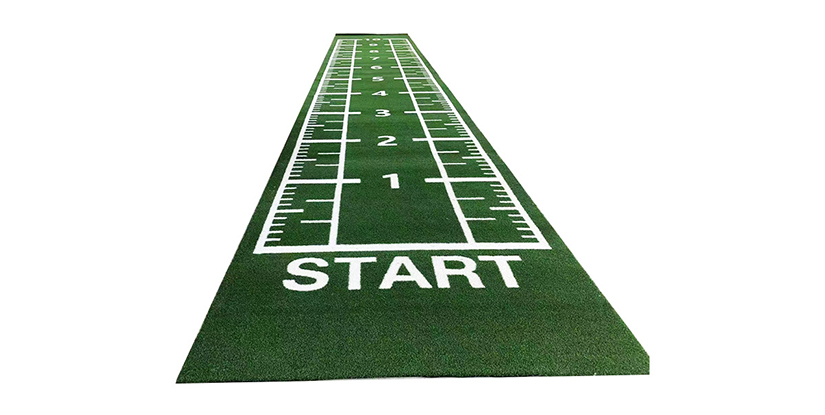
| Turf Strips | Sled Drags & Agility | High traction, specialized use | Requires high maintenance (vacuuming) |
| Matting (EVA) | Stretching & Mobility | Soft, lightweight, inexpensive | High wear rate, lacks stability |
Selecting the correct material ensures that your floor remains an asset rather than a maintenance liability. However, even with the right floor, the installation process is not finished until the maintenance protocols are in place.
Explore the complete technical specifications:
Establishing a Post-Installation Maintenance Cadence
An effective installation plan does not end when the last bolt is tightened; it ends when a maintenance schedule is integrated into the facility's operational workflow. A significant percentage of equipment downtime in commercial gyms is caused by a lack of preventative care following a new installation. When machines are new, they are often neglected because they 'just work,' leading to a backlog of issues that surface all at once.
The cause of rapid depreciation is often the 'set it and forget it' mentality. A professional operator must establish a tiered maintenance schedule that addresses both minor adjustments and deep technical inspections. This involves monitoring high-wear components like cables, upholstery, and lubricants which are subject to constant environmental and mechanical stress.
Tiered Maintenance Checklist
Daily/Weekly (Operator Level):
- Visual check for loose bolts or frayed cables.
- Wipe down surfaces to prevent sweat-induced corrosion.
- Check for unusual noises during operation.
Quarterly/Bi-Annual (Technical Level):
- Lubricate all moving parts and guide rods.
- Check tension on all cables and adjust if necessary.
- Deep-clean electronic components and check cable connections.
- Audit floor integrity under high-impact zones.
By embedding these checks into your routine, you protect the substantial capital investment made during the initial installation phase.
Explore the complete technical specifications:
Mitigating Long-Term Liability Through Safety Audits
The final and perhaps most critical stage of planning gym equipment installation is the implementation of a safety audit protocol. The goal here is to transition from a technical setup to a legal and operational safeguard. Liability in a gym setting often arises from equipment that was either improperly installed or poorly maintained, leading to user injury.
A common failure mode is the lack of documented proof of inspection. In the event of a claim, having a record that shows a machine was inspected, leveled, and torque-tested is the difference between a managed incident and a major legal liability. Therefore, all installation and maintenance steps must be recorded in a formalized log.
The Safety Compliance Framework
To manage liability effectively, operators should adhere to the following standards:
- Documentation: Maintain a digital or physical log for every piece of equipment showing its installation date and last service date.
- Clearance Verification: Periodically re-measure the safety buffers around machines to ensure no new equipment or obstacles have encroached on the user space.
- Staff Training: Ensure all personnel are trained to recognize the early signs of mechanical failure, such as a change in cable resistance or a wobbly frame.
Regular adherence to these protocols ensures that your facility remains a safe environment for users and a low-risk environment for owners.
Future-Proofing the Installation Landscape
As the fitness industry continues to evolve toward highly integrated, data-driven hardware, the way we approach installation must also change. Future-proofing means moving away from static setups and toward modular, technologically adaptable environments. This involves anticipating the need for more power, better connectivity, and more robust structural support.
The current trend in high-end fitness is the integration of IoT (Internet of Things) and AI-driven coaching. This means that your next installation phase might require more than just a power outlet; it might require high-speed data ports and advanced cooling systems for the server-grade hardware housed within the equipment. A forward-thinking operator plans not just for the machines they are buying today, but for the technological ecosystem they wish to inhabit tomorrow.