
Optimizing Facility Performance with Olympus Olympic Rubber Plates
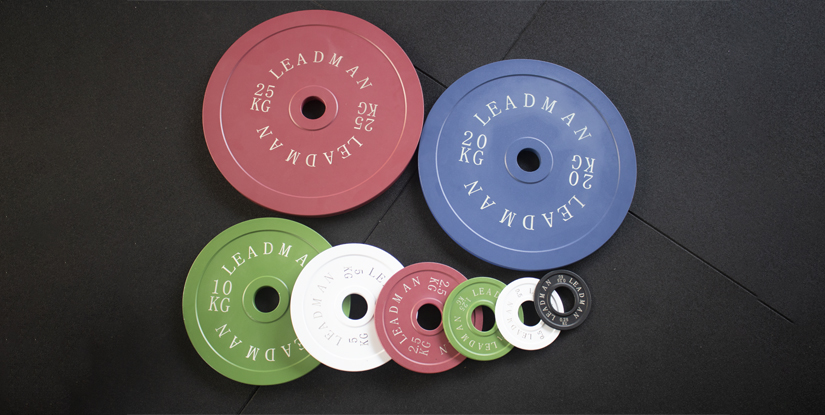
The Hidden Costs of Substandard Weight Plate Selection
Facility managers often overlook the long-term implications of weight plate durability until the first sign of structural degradation appears. A common pain point in high-traffic commercial gyms is the rapid deterioration of high-impact surfaces, which leads to increased noise pollution, floor damage, and irregular weight distribution. When selecting Olympus Olympic Rubber Plates, the primary failure mode isn't typically the rubber itself, but the mismatch between the plate's density and the facility's floor loading capacity. If the material is too soft, it deforms under heavy loads; if it is too brittle, it cracks under impact. Understanding these material physics is the first step in preventing premature replacement cycles. By addressing these fundamental issues during the procurement phase, operators can ensure a much longer equipment lifecycle.
With the foundational risks identified, we must look closer at the specific technical properties that distinguish professional-grade rubber from consumer alternatives.
Material Composition and Density Standards
To avoid the common trap of purchasing low-density plates that lose their shape, operators must understand the relationship between polymer density and shock absorption. High-quality Olympic plates are engineered to maintain a consistent diameter and center of gravity, even after repeated high-velocity drops. The core issue in many facilities is the 'compression set'—where the rubber fails to return to its original shape after a heavy load is removed. This leads to uneven thickness and, eventually, a compromised barbell balance.
Shore Hardness and Impact Dynamics
A critical decision criterion for any procurement manager is the Shore hardness range. While there is no single 'perfect' number, professional environments generally require a balance between surface toughness and energy dissipation. A plate that is too hard will transfer excessive kinetic energy back into the barbell and the floor, potentially damaging the structural integrity of the lifting platform. Conversely, a plate that is too soft will experience excessive 'bounce,' which can destabilize an athlete during a lift.
- High-Density Vulcanized Rubber: Best for strength training and heavy lifting; provides minimal bounce and high durability.
- Medium-Density Polyurethane: Suitable for general fitness applications; offers a balance of impact protection and longevity.
- Low-Density Recycled Rubber: Often found in budget setups; prone to rapid deformation and uneven wear.
Selecting the correct density ensures that the Olympic weight plate functions as a safety mechanism rather than a liability. This understanding of material density leads directly into the necessity of precise dimensional tolerances.
Precision Dimensional Tolerances and Calibration
Precision in the diameter of the plate is not merely an aesthetic requirement; it is a functional necessity for balanced lifting. A significant problem encountered by veteran lifters is the 'imbalanced bar' phenomenon, where one side of the barbell is perceptibly heavier or larger than the other. This is frequently caused by manufacturing variances in the outer diameter of the plate. When plates do not meet strict tolerance standards, it can lead to technical errors in movements like the snatch or clean and jerk, potentially causing injury.
| Measurement Type | Acceptable Tolerance (Professional) | Common Failure Mode |
|---|---|---|
| Diameter Deviation | ± 1.0% to 1.5% | Unbalanced barbell rotation |
| Thickness Uniformity | ± 2.0% | Weight distribution imbalance |
| Center Hole Diameter | ± 0.5 mm | Wobble or loose fit on barbell sleeve |
Operators should verify these dimensions upon delivery using a calibrated digital caliper. Failure to do so can result in a set of weights that feels inconsistent across the facility. Once the physical dimensions are verified, the next critical step is evaluating how these plates interact with your lifting environment.
Related reading:
Interaction Between Plate Density and Flooring Systems
The relationship between your weight plates and your flooring is a closed-loop system. A common mistake made by facility designers is selecting high-impact plates while neglecting the thickness of the subfloor or the shock-absorbent properties of the gym mats. This mismatch results in high-frequency vibrations that can travel through the building's structural members, causing nuisance noise in adjacent rooms or even structural fatigue in the floor joists. The technical goal is to create a system where the plate absorbs the immediate impact while the flooring manages the secondary energy dispersion.
Designing a Complementary Impact Zone
When installing a lifting area, the operator must consider the following hierarchy of protection:
- Primary Impact: The rubber plate absorbs the initial kinetic energy.
- Secondary Impact: A high-density lifting platform (minimum 25mm-50mm) manages the weight'.
- Tertiary Impact: The structural floor (concrete or wood) remains isolated via vibration-dampening sub-layers.
With the environmental requirements established, we can now focus on the rigorous inspection protocols required to maintain these assets.
Related reading:
Preventative Maintenance and Inspection Protocols
Maintaining a professional inventory requires more than just visual checks; it requires a systematic approach to identifying microscopic wear patterns. The primary cause of plate failure in high-volume clubs is often neglect of the center ring and the inner diameter. As the internal ring wears down, the plate may begin to sit unevenly on the barbell sleeve, causing friction and heat. This friction can eventually damage even high-quality barbells if not addressed through regular inspection.
The Weekly Operator Checklist
To maintain operational excellence, facility staff should follow a standardized inspection routine. This prevents small issues from becoming expensive replacement orders.
- Surface Integrity Check: Inspect for cracks, gouges, or peeling rubber that could indicate UV damage or chemical degradation.
- Diameter Consistency Test: Ensure no individual plates have become significantly smaller due to excessive dropping or heat exposure.
- Inner Ring Inspection: Check for any warping or deformation in the center hole that might affect barbell rotation.
- Odor and Chemical Stability: Verify there are no unusual chemical odors, which can indicate the degradation of low-quality binders within the rubber.
By implementing these checks, you transition from a reactive maintenance model to a proactive one. This vigilance is especially important when managing a high-value asset like a complete set of Olympus Olympic Rubber Plates.
Related reading:
Troubleshooting Common Operational Issues
Even with the best equipment, operational anomalies will occur. The key is to distinguish between a hardware failure and a user-induced problem. When a plate exhibits a new behavior, such as an unusual bounce or a strange sound, the operator must diagnose the root cause before deciding on a replacement. This prevents unnecessary expenditure on perfectly functional gear.
| Observed Symptom | Potential Cause | Actionable Fix / Verification |
|---|---|---|
| Increased Vibration | Loose barbell collars or mismatched plate thickness | Check collar tightness and verify diameter consistency |
| Surface Cracking | Exposure to harsh cleaning chemicals or UV light | Switch to pH-neutral cleaners; move away from direct sunlight |
| Uneven Rotation | Deformed inner ring or damaged barbell sleeve | Inspect the plate center hole for circularity |
| Excessive Noise | Floor/Platform mismatch or dried-out rubber surface | Inspect subfloor levelness and use rubber mats |
Understanding these patterns allows for faster resolution and less downtime for your members. Once you can diagnose these issues, you are ready to optimize your procurement strategy for the future.
Related reading:
Long-Term ROI and Procurement Strategy
The final component of a successful facility management plan is the transition from a 'cost-per-unit' mindset to a 'cost-per-use' mindset. While premium rubber plates often carry a higher initial price tag, their ability to withstand the rigorous demands of a commercial environment results in a significantly lower Total Cost of Ownership (TCO). A low-cost plate that must be replaced every 18 months is far more expensive than a premium plate that lasts five years.
Selection Criteria for High-Volume Facilities
When preparing a new purchase order, use the following criteria to evaluate your options:
- Manufacturer Provenance: Does the supplier provide technical data sheets regarding density and Shore hardness?
- Volume Scalability: Can the supplier provide matching weight increments to ensure set consistency?
- Environmental Resilience: Is the rubber formulated to handle the specific ambient temperature and humidity of your facility?