
What Custom Gym Equipment Manufacturers Can Offer Your Business
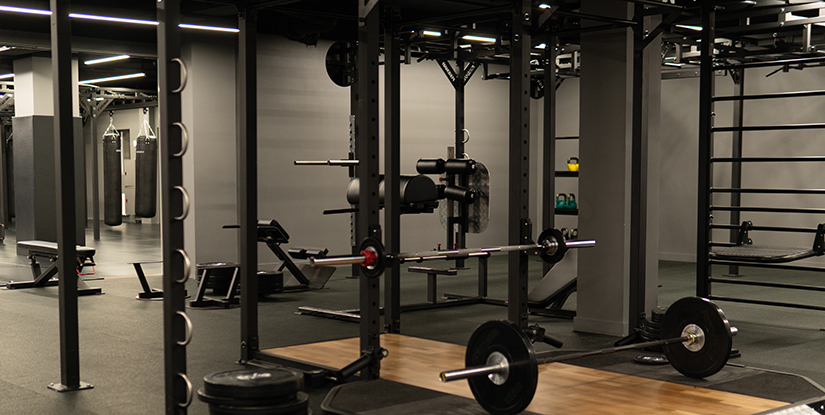
For fitness facility operators and specialized gym developers, the transition from standard off-the-shelf procurement to customized manufacturing is a strategic pivot. While mass-produced equipment offers predictable costs, it often fails to address unique spatial constraints, specific brand identities, or niche training methodologies. Understanding what custom gym equipment manufacturers can offer your business requires a deep dive into the technical lifecycle—from raw material selection to the final deployment of specialized hardware. This guide explores the technical advantages, material science, and manufacturing rigor that differentiate bespoke fabrication from generic production.
Strategic Advantages of Custom Material Selection and Engineering
The fundamental limitation of generic equipment is the use of standardized material grades designed for broad, non-specific use. Custom manufacturing allows a facility to dictate the exact metallurgy and polymer properties of their assets. When a business moves toward customization, they are no longer just choosing a color; they are choosing the structural integrity and longevity of their investment.
Optimizing Structural Steel and Tubing Grades
Most commercial-grade equipment utilizes standard carbon steel, but custom manufacturers can pivot to higher-tensile steel or specialized alloys to reduce weight without sacrificing structural rigidity. For example, if a boutique studio requires lightweight but highly stable functional training rigs, the manufacturer might utilize high-strength low-alloy (HSLA) steel. This prevents the common failure mode of structural bowing under prolonged heavy loading. A key decision criterion for buyers is the wall thickness of the steel tubing—standard 11-gauge (approx. 3mm) is common, but custom requests may demand 7-gauge (approx. 4.5mm) for high-impact zones.
Advanced Polymer and Upholstery Specifications
A frequent pain point in facility management is the premature degradation of upholstery due to sweat acidity and high-frequency friction. Custom manufacturers offer advanced polymer solutions, such as medical-grade vinyl or high-density polyurethane foam, which provide superior resistance to environmental stressors. When specifying these materials, operators must evaluate the shore hardness of the foam to ensure it retains its shape over thousands of compression cycles.
Once the material foundations are established, the focus shifts to the physical shaping and assembly of the components through precision fabrication.
Precision Fabrication Processes and Tolerance Management
The quality of a custom piece is often decided in the fabrication phase, where the raw materials are transformed into functional geometry. Unlike mass-market items that may tolerate slight deviations, custom manufacturing demands much tighter tolerances to ensure seamless integration into complex facility layouts.
Laser Cutting and CNC Machining Accuracy
High-end custom equipment relies heavily on Computer Numerical Control (CNC) technology. Laser cutting ensures that plate steel components have perfectly smooth edges and exact dimensions. A common failure mode in lower-quality manufacturing is the presence of 'burrs' or uneven edges, which can lead to structural weak points or user injury. A professional buyer should verify the precision of the CNC processes by requesting tolerance specifications for critical pivot points and bolt holes.
| Manufacturing Process | Standard Equipment Expectation | Custom Manufacturer Offering | Operational Benefit |
|---|---|---|---|
| Steel Cutting | Manual or basic mechanical cutting | High-precision CNC Laser/Plasma | Perfectly flush joints and easier assembly |
| Tube Bending | Standard 90-degree fixed angles | Complex, multi-axis CNC bending | Ergonomic, non-linear geometries |
| Component Fitting | General clearance tolerance | Tight-tolerance mechanical interfaces | Reduced noise and less mechanical wear |
The Role of Specialized Welding Techniques
The structural integrity of a heavy-duty rack or strength machine depends entirely on the quality of the welds. Custom manufacturers often utilize TIG (Tungsten Inert Gas) welding for smoother, more aesthetically pleasing, and stronger joints compared to standard MIG welding. The cause of many catastrophic equipment failures is brittle welds caused by improper heat control. To verify quality, operators should look for consistent bead width and zero porosity in the weld seams.
With the physical structure now defined, the next critical step is the application of protective layers to ensure long-term durability.
Explore the complete technical specifications:
High-Performance Surface Finishes and Corrosion Resistance
The surface finish of gym equipment is more than an aesthetic choice; it is a technical layer designed to protect the substrate from oxidation and human-induced wear. Custom manufacturers provide a much broader palette of finishes that can be calibrated to the specific environment of the facility.
Electrostatic Powder Coating vs. Liquid Finishes
The industry standard for durability is electrostatic powder coating. This process involves applying a dry powder that is then cured under heat to create a hard, resilient shell. However, custom manufacturers can offer specialized textures—such as sand-grain or matte finishes—which provide better grip and hide scratches. A common mistake is choosing a high-gloss finish that shows fingerprints and scuffs too easily in high-traffic commercial environments.
Chemical Resistance and Longevity Testing
In high-humidity or high-sweat environments, the coating must be chemically resistant. Custom manufacturers can specify primers that offer enhanced adhesion, preventing the common issue of paint chipping or peeling over time. When evaluating a manufacturer, ask about their UV resistance and chemical stability testing protocols to ensure the finish remains intact under rigorous cleaning regimes.
Securing a robust surface finish prepares the equipment for the final, most complex stage: mechanical movement and integration.
Explore the complete technical specifications:
Kinematic Engineering and Mechanical Component Customization
Moving parts—such as pulleys, bearings, and cable systems—are the most frequent sites of mechanical failure in gym equipment. Customization in this area allows a business to optimize the 'feel' of the machine, moving from a generic resistance to a high-precision training experience.
Bearing Precision and Movement Smoothness
The difference between a high-end machine and a budget one often lies in the bearings. Custom manufacturers can integrate high-precision, sealed bearings that offer lower friction and longer life cycles. The cause of 'jerky' movement in resistance machines is usually low-grade bearings or poor alignment. To verify a manufacturer's capability, ask for the bearing specifications and the expected life-cycle hours under load.
Custom Cable and Pulley Architectures
Standard cable machines are often limited by fixed movement paths. Custom manufacturers can engineer variable-path cable systems that allow for more natural human biomechanics. This requires advanced kinematic modeling to ensure that the cable tension remains consistent throughout the entire range of motion. A failure to account for these complex paths often results in 'dead spots' in the resistance profile.
| Component Type | Standard Performance Profile | Custom Optimized Profile | Key Metric to Verify |
|---|---|---|---|
| Cable Systems | Uniform but limited movement | Bio-mechanical path optimization | Tension consistency across range |
| Bearings | Standard ball bearings | High-precision sealed bearings | Friction coefficient and noise levels |
| Weight Stacks | Standard guide rods | Hardened, low-friction guide rods | Smoothness of vertical travel |
Once the internal mechanics are perfected, the focus shifts toward the final assembly and quality assurance protocols.
Rigorous Quality Control and Failure Mode Testing
A custom manufacturer's greatest value proposition is the ability to implement a quality control (QC) protocol that matches the specific requirements of the order. Generic manufacturers use statistical sampling, whereas custom manufacturers can provide 100% inspection on critical components.
Load Testing and Structural Stress Analysis
Before any piece of equipment leaves the factory, it should undergo rigorous testing. Custom manufacturers can perform load tests that exceed standard industry ratings to ensure a safety margin. The goal is to identify potential failure modes, such as metal fatigue or weld fractures, before the product reaches the client. A professional buyer should request documentation of load-testing protocols and any finite element analysis (FEA) used during the design phase.
Dimensional and Aesthetic Inspection Checklists
Beyond structural testing, a comprehensive QC process includes aesthetic and dimensional verification. This ensures that every piece of a modular system fits together perfectly upon arrival at the facility. Common defects caught in this stage include slight misalignments in frame geometry or inconsistencies in the powder coating thickness. Operators should look for manufacturers who provide detailed inspection reports for each custom batch.
With the production and testing cycles complete, the final phase involves the logistical deployment and long-term maintenance planning.
Deployment Logistics and Lifecycle Maintenance Planning
The lifecycle of custom equipment does not end at the factory gate; it begins with a planned deployment and an ongoing maintenance strategy. Because custom equipment is often non-standard, traditional maintenance routines may not apply.
On-Site Installation and Spatial Integration
Custom equipment is frequently designed for specific spatial configurations. Therefore, the installation process is a critical phase of the lifecycle. Manufacturers can offer pre-assembly or modular delivery to minimize on-site disruption. A major risk during this phase is the lack of standardized parts, meaning the installation crew must be highly specialized. Ensure that your manufacturer provides detailed installation diagrams and perhaps even on-site technical support.
Proactive Maintenance and Parts Availability
A significant risk with customized equipment is the potential for long lead times when a specialized part fails. To mitigate this, a business should negotiate a 'spare parts' agreement that includes the procurement of critical custom-designed components during the initial order. A professional maintenance schedule for custom gear should include monthly checks of cable tension, bearing lubrication, and bolt torque to prevent the degradation of the high-performance parts you have invested in.
By understanding these technical layers—from the metallurgy of the steel to the precision of the kinematics—facility operators can leverage the true value of what custom gym equipment manufacturers can offer your business.