
What CrossFit Gym Equipment Packages Include: A Strategic Procurement Guide
The Myth of the 'Turnkey' Solution in Equipment Procurement
A common misconception among new facility operators is that a high-quality CrossFit gym equipment package is simply a collection of heavy items delivered to a doorstep. This view ignores the complex orchestration of structural integrity, logistical compatibility, and operational workflow. Many buyers assume that a standard package provides everything needed for a high-performance environment, only to realize mid-launch that they lack essential secondary tools or specialized floor protection. This failure to account for the 'connective tissue' of a gym leads to unforeseen capital expenditures and operational bottlenecks.
A professional package must be viewed not as a set of products, but as a coordinated system. True value lies in the synergy between strength, gymnastics, and metabolic conditioning elements. When an operator understands the distinction between a basic inventory list and a synchronized equipment ecosystem, they can avoid the high cost of redundant or incompatible purchases. Establishing this systemic perspective is the first step toward building a durable, high-revenue facility.
Understanding the baseline components is necessary, but discerning the specific layers of a high-tier package is where the real strategic advantage is gained. Before addressing the hardware, one must understand the primary structural requirements.
Deconstructing the Core Strength and Rig Systems
Building upon the systemic view, the first major layer of any serious package is the structural foundation: the rig and heavy lifting apparatus. The primary failure mode in budget-conscious procurement is selecting rigs with insufficient gauge steel or inadequate footprint stability. A rig that wobbles under lateral load is not just a nuisance; it is a significant liability that compromises athlete confidence and long-term safety.
Structural Requirements for Commercial Rigging
When evaluating what CrossFit gym equipment packages include regarding strength modules, operators must look beyond the aesthetic and focus on the metallurgy. Commercial-grade rigs should prioritize high-tensities of steel and precision-engineered connection points. The following table outlines the critical parameters for evaluating strength modules:
| Component Type | Critical Spec to Verify | Common Failure Mode | Operator Verification Method |
|---|---|---|---|
| Rigging Structure | Steel Gauge (Minimum 11-gauge recommended) | Structural deflection under load | Side-to-side sway test under weight |
| Weight Plates | Tolerance level (Urethane vs Rubber) | Uneven weight distribution | High-precision digital scale check |
| Barbell Set | Knurling precision and sleeve rotation | Bearing friction/stiffness | High-speed rotation test (empty bar) |
| Bumper Plates | Impact absorption coefficient | Surface cracking or bouncing | Visual inspection for micro-fissures |
A robust rig serves as the anchor for dozens of other movements, meaning any structural weakness here cascades through the entire training program. Once the heavy lifting foundation is secured, the focus must shift toward the high-volume movement tools that define metabolic conditioning.
The Metabolic Conditioning and Cardiovascular Layer
The strength foundation provides the anchor, but the cardiovascular layer provides the intensity. In many standard packages, the metabolic conditioning tools are often the most overlooked in terms of durability requirements. While a single rower or air bike might suffice for a home gym, a commercial CrossFit facility requires machines capable of high-frequency, high-intensity duty cycles without thermal throttling or mechanical fatigue.
Optimizing the Selection of High-Output Machines
A professional-grade package should prioritize machines with modular maintenance capabilities. A common mistake is purchasing 'closed-system' machines that require specialized proprietary parts for simple repairs. For a functional CrossFit environment, the machines must be able to withstand high-cadence usage from diverse athlete body types and weights. When selecting these components, consider the following decision criteria:
- Durability of Drive Systems: Verify if the machine uses high-tensile belts or heavy-duty chains that can handle rapid direction changes.
- Digital Interface Stability: Ensure consoles are weather-resistant (if near doors) and highly responsive to rapid user inputs.
- Footprint Efficiency: In a commercial setting, the machine should ideally be able to be moved or utilized in different training modalities to save space.
Ensuring these high-output machines are robust prevents the 'down-time' trap, where a broken machine reduces your facility's total capacity. With the metabolic and strength layers addressed, the next crucial element is the dexterity and bodyweight training equipment.
Explore the complete technical specifications:
Gymnastics and Bodyweight Tooling Requirements
Moving from the high-intensity machines to the precision-focused gymnastics section, one notices a shift in the required level of detail. Gymnastics tools—such as rings, pull-up bars, and boxes—are often subject to much higher levels of friction and repetitive impact. A package that includes low-grade wood or cheap synthetic materials will fail to meet the standards of professional-level training.
Material Standards for Gymnastic Implementations
The quality of a pull-up bar or a gymnastic ring is defined by its grip-ability and its ability to remain static under high-frequency tension. A poorly manufactured ring can develop burrs or uneven surfaces that cause skin abrasion, leading to increased athlete injury rates. Operators should verify the following:
- Ring Material: High-density wood or precision-molded polymer that provides consistent grip even when sweat-slicked.
- Box Integrity: For plyometric boxes, the structural integrity of the corners and the rigidity of the material (plywood vs foam) are critical to prevent catastrophic failure during high-impact landings.
- Suspension Hardware: The carabiners and straps used for rings must have a rated load significantly higher than the weight of the heaviest athlete to ensure a safety margin.
The precision required for gymnastics ensures that the athlete's technical development is not hindered by the equipment. Once these precision tools are accounted for, the focus must return to the physical environment where all these elements reside: the floor.
Explore the complete technical specifications:
The Foundation of Safety: Flooring and Surface Management
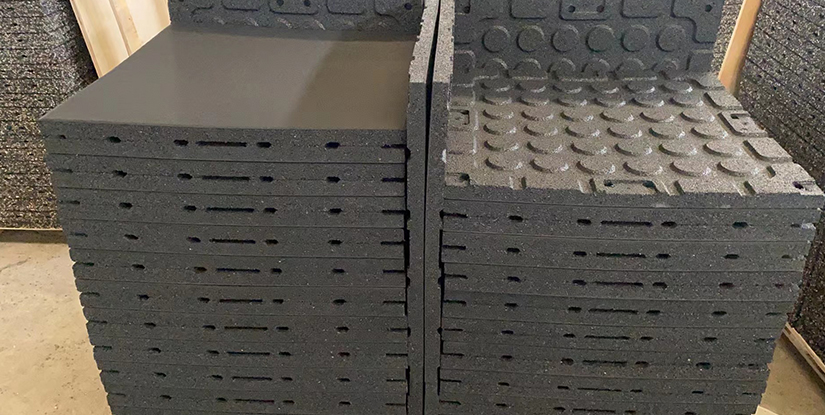
It is a mistake to view the flooring as a secondary 'add-on' rather than a core part of the equipment package. A high-performance CrossFit environment is a high-impact environment. If the flooring is not properly specified, the kinetic energy from dropped barbells will eventually damage both the subfloor and the structural integrity of the equipment itself. This leads to a rapid depreciation of your entire investment.
Calculating Floor Density and Impact Absorption
The goal of professional flooring in a CrossFit setting is to provide a balance between stability (for heavy lifting) and impact absorption (for dropped weights). Using a single, thin mat is a common failure that results in excessive noise, vibration, and structural damage. A strategic package should include a multi-layered approach:
| Floor Layer | Primary Function | Ideal Material | Verification of Performance |
|---|---|---|---|
| Base Layer | Subfloor leveling and vibration dampening | High-density EVA or specialized foam | Check for even surface tension across the room |
| Impact Layer | Weight drop protection | Vulcanized rubber (min 15mm-20mm) | Test for lack of 'rebound' or bouncing |
| Top Surface | Grip and hygiene | Micro-textured rubber/non-slip | Observe moisture/sweat absorption and slip-resistance |
Correct flooring installation is a prerequisite for all other equipment to function as intended. Without this base, even the highest-quality rig will eventually suffer from vibration-induced bolt loosening. After ensuring the floor can handle the load, the operator must consider the logistical management of all these components.
Explore the complete technical specifications:
Best Commercial Gym Equipment Brands | Professional Selection Guide
Inventory Management and Accessory Integration
A complete equipment package is often betrayed by the lack of small-scale accessories. While the heavy rigs and cardio machines form the bulk of the cost, the "small things"—kettlebells, medicine balls, jump ropes, and resistance bands—are what keep the class moving. A failure to include a diverse range of accessory weights is a common procurement mistake that can stall a trainer's ability to scale workouts.
The Accessory Density Checklist
When reviewing a package, do not just look at the heavy hitters; audit the variety of the auxiliary items. A high-tier package should offer a spectrum of resistance and weight increments. Use this checklist to ensure you aren't left with a shortage of common tools:
- Weight Increments: Does the package include a wide range of kettlebell weights (e.g., from 4kg to 32kg) to accommodate all athlete levels?
- Material Durability: Are the medicine balls and wall balls made of high-density, impact-resistant synthetic materials that won't burst upon hitting a wall?
- Versatility: Do the resistance bands and jump ropes meet commercial-grade tension standards for high-frequency use?
A well-rounded accessory inventory ensures that as your membership grows, your ability to scale movements remains intact. However, having the items is only half the battle; the other half is maintaining them.
Explore the complete technical specifications:
Logistics, Assembly, and the Lifecycle of a Package
The final piece of the puzzle is not a piece of equipment itself, but the process of integrating the package into a functioning business. Many operators overlook the total cost of ownership (TCO) by only looking at the initial purchase price. A professional approach considers the assembly requirements, the installation footprint, and the ongoing maintenance schedule required to keep the facility running.
The Lifecycle Checklist for Equipment Management
Successful facility management relies on a disciplined approach to the equipment's lifecycle. A complete package is only as good as its maintenance regimen. To avoid the 'broken equipment' reputation, implement the following operational standards:
- Weekly Inspection Cadence: Check all bolt connections on rigs and weight plates for any signs of loosening or cracking.
- Monthly Lubrication Cycle: Ensure all moving parts on cardio machines and barbell sleeves are properly lubricated to prevent friction-based wear.
- Quarterly Structural Audit: Conduct a deep-dive inspection of all high-tension points, including gymnastics straps and climbing elements.
A well-managed equipment lifecycle ensures that your initial investment continues to generate revenue for years rather than being a sunken cost within eighteen months. By treating the equipment package as a dynamic system rather than a static purchase, you protect your long-term ROI and ensure athlete safety.