
Understanding the Cost of Custom Bumper Plates: A Procurement Analysis
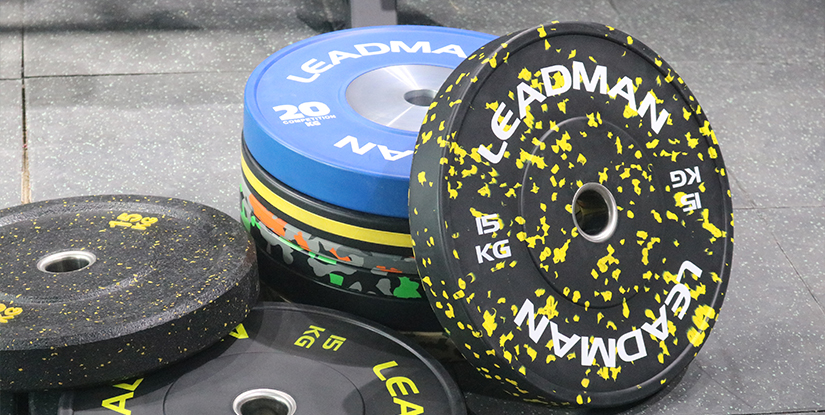
The Hidden Financial Volatility in Custom Bumper Plate Procurement
Procurement managers and facility owners often face a frustrating disconnect between quoted prices and the actual total cost of ownership. A quote for custom bumper plates might appear competitive on the surface, but without a granular understanding of the underlying variables, buyers frequently encounter unexpected surcharges, premature replacement costs, and logistical bottlenecks. The core issue lies in the discrepancy between 'sticker price' and 'operational value.' When a buyer seeks a specialized design or a specific weight tolerance, they are no longer purchasing a commodity; they are investing in a precision-engineered component that carries unique production risks.
This guide addresses the economic complexities of high-end strength equipment, focusing on why costs fluctuate and how to navigate the technical requirements that drive price. By identifying the specific drivers of manufacturing complexity, operators can make informed decisions that favor long-term ROI over short-term savings. Understanding these variables is the first step in preventing the most common failure mode: purchasing equipment that meets aesthetic needs but fails operational durability standards.
| Cost Factor | Low Impact (Standard) | High Impact (Custom) |
|---|---|---|
| Material Uniformity | Standard recycled rubber | High-density virgin rubber/polyurethane |
| Tolerance Level | ± 3% weight variance | ± 1% or precision-engineered |
| Design Complexity | Single color, simple embossed logo | Multi-layer molding, complex 3D textures |
Once the fundamental drivers of price are established, we must examine the material science that dictates the long-term durability of these assets.
Material Selection and the Impact of Rubber Density on Long-Term ROI
As established in our initial analysis of price volatility, the choice of raw material is the primary determinant of both the upfront cost and the longevity of the plate. In the realm of custom bumper plates, the distinction between recycled crumb rubber and virgin rubber/polyurethane compounds is not merely a matter of texture; it is a fundamental economic decision. Using lower-grade recycled materials may reduce initial expenditure, but it significantly increases the risk of 'chunking'—where pieces of the bumper plate break off during high-velocity drops.
The Economic Trade-off: Recycled vs. Virgin Compounds
Commercial facility operators often struggle with the 'death spiral' of low-cost procurement, where cheaper plates require replacement every 18–24 months. High-density virgin rubber provides superior shock absorption and resistance to environmental degradation, but the manufacturing process is more intensive. The complexity arises because specialized compounds must maintain a consistent density to ensure that the custom molds remain accurate during the vulcanization or molding process.
- Failure Mode: Using low-density recycled blends in high-impact environments leads to rapid edge deformation and loss of geometric precision.
- Verification Metric: Check the density specification on the technical data sheet; high-grade plates should exhibit consistent rebound characteristics without permanent deformation.
Selecting the right material density ensures that the custom design remains intact, but the material choice is only one piece of the equation; the manufacturing process itself determines whether the final product can meet strict weight tolerances.
Technical Tolerances and the Cost of Weight Precision
Building upon the necessity of high-quality material selection, we must address the technical rigor required to maintain weight accuracy. In custom manufacturing, achieving a precise weight is significantly more expensive than producing standard plates because the mold geometry and material density must be perfectly synchronized. A discrepancy in weight is often a symptom of poor control over the injection or compression molding process.
Managing Precision in Custom Molds
When an operator requests a custom shape or a complex 3D embossed logo, the mold geometry becomes more volatile. If the mold is not designed with precise shrinkage rates in mind, the final plate will fail to meet the target weight, leading to unusable inventory or costly re-work. This is why 'understanding the cost of custom bumper plates' requires looking at the precision level offered by the manufacturer.
| Precision Tier | Weight Tolerance | Typical Use Case | Cost Premium |
|---|---|---|---|
| Commercial Standard | ± 2% to 3% | Standard CrossFit or functional gyms | Base Price |
| Professional/Elite | ± 0.5% to 1% | Competition-grade or precision training | +15% to 25% |
| Ultra-Precision | < ± 0.5% | Specialized academic or research environments | +40% or more |
A buyer must decide: is the cost of higher precision justified by the application? While the premium for high-precision plates is notable, the cost of inconsistent weight across a set can disrupt training workflows and reduce user trust. With tolerances defined, the focus must shift to how these plates are aesthetically and structurally finished.
Explore the complete technical specifications:
Surface Finish and Aesthetic Complexity vs. Production Scalability
Aesthetics are a major driver for custom orders, but they also introduce unique failure points. A high-end surface finish or a complex multi-color design can increase the production time and the rate of manufacturing defects. This section explores how visual complexity impacts the final price and why it is a critical decision point for procurement managers.
The Relationship Between Surface Texture and Durability
A custom surface finish, such as a matte finish or a textured grip, is often requested to enhance the professional look of a facility. However, if the texture is too deep or the molding process is shallow, the surface can become a point of failure under repeated impact. This results in the 'peeling' effect seen in poorly manufactured custom-designed plates.
- Mistake to Avoid: Over-prioritizing high-gloss or intricate 3D textures that are not structurally reinforced, leading to surface cracking during drop tests.
- Verification Step: Conduct a visual inspection of the mold edges and the transition between the embossed logo and the base material to ensure there are no thin-walled sections.
While the aesthetic finish provides the final professional touch, it must be balanced against the mechanical requirements of the plate, which leads us to the inevitable discussion of logistics and shipping complexities.
Logistical Overhead and the True Cost of Weight-Based Shipping
Having analyzed the manufacturing complexities, it is essential to understand how the physical characteristics of the finished product influence the final landed cost. Bumper plates are inherently heavy, high-volume items, meaning that any error in weight or dimensions can exponentially increase shipping expenses. A lack of foresight in shipping planning is a common pit-fall that erodes the perceived savings of a low-cost manufacturer.
Navigating Dimensional and Weight-Based Freight
Custom designs often result in slightly different dimensions than standard plates. If the custom plate is even a few millimeters larger in diameter due to an unconventional mold, it can change the packaging requirements and the stacking height on a standard pallet. This can lead to higher dimensional weight charges or the need for specialized shipping containers.
Pro-Tip for Procurement: Always request the final dimensional specifications (diameter and thickness) alongside the weight specifications before finalizing a custom order. This allows you to calculate actual freight costs with high accuracy rather than relying on estimates.
Effective logistics management ensures that the quality of the product isn't negated by high shipping fees, but maintaining that quality requires rigorous inspections throughout the manufacturing lifecycle.
Inspection Protocols: Verifying Quality and Value Compliance
Once the manufacturing and logistical hurdles are understood, the final stage of the procurement cycle is the verification of the delivered goods. An operator must have a systematic way to verify that the custom bumper plates meet the promised specifications. Without a formal inspection protocol, you are essentially accepting the manufacturer's word as absolute truth, which is a high-risk strategy.
The Operator's Verification Checklist
Upon delivery, a professional facility manager should execute a three-step verification process to ensure the investment meets the technical requirements outlined in the purchase order.
- 1. Dimensional Integrity: Use a caliper to measure the thickness and diameter. Ensure the plates sit flat and do not exhibit significant bowing or concentricity errors.
- 2. Weight Verification: Weigh a random sample of plates from different parts of the shipment (top, middle, and bottom of the pallet) to ensure weight variance is within the agreed-upon ± range.
- 3. Surface/Visual Audit: Inspect for 'flash' (excess material at the mold seam), inconsistent color saturation, or any peeling in the custom-embossed areas.
By following this checklist, you can identify issues early and hold the supplier accountable for any deviations from the contract, protecting your long-term ROI.
Future Outlook: The Evolution of Customization in Strength Equipment
As manufacturing technologies like high-precision 3D molding and advanced polymer blending become more accessible, the landscape of custom strength equipment is shifting. The ability to create highly specific, durable, and aesthetically unique plates will likely become more common, but the core economic principles remain the same. The value of a custom plate will always be a function of its material density, precision, and durability.
For the forward-thinking buyer, the goal is to stay ahead of these technological shifts without falling into the trap of superficial customization. The most successful procurement strategies will continue to prioritize technical specs—weight tolerance and material integrity—over purely visual enhancements. As the market evolves, those who understand the technical and economic foundations of the industry will be best positioned to scale their facilities with confidence.