
Maximizing Space Savings with Multi Functional Gym Equipment
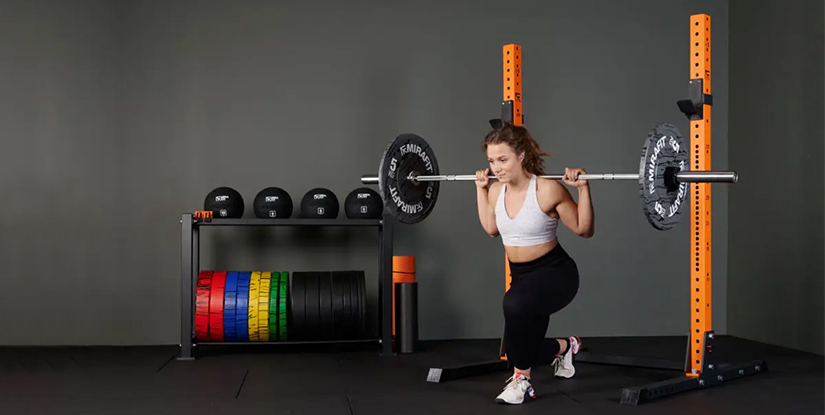
Facility managers and residential developers frequently encounter a singular, critical bottleneck: the diminishing ratio of usable square footage to high-value training utility. The core problem is the 'equipment sprawl' caused by traditional, single-modality machines that occupy vast footprints while offering limited exercise variety. This lack of versatility leads to inefficient floor plans and reduced Return on Investment (ROI). To resolve this, engineering-focused selection must shift toward multi-functional systems designed for high-density utility. This guide explores the technical parameters of space-saving integration, from structural load capacities to mechanical versatility.
Quantifying the Footprint Efficiency of Integrated Systems
Before implementing a space-saving strategy, one must understand the mathematical advantage of integrated systems over modular single-use machines. A standard barbell rack, a cable crossover, and a functional trainer each demand distinct, non-overlapping floor areas. In contrast, a single multi-functional unit centralizes these kinetic pathways into one structural chassis.
The primary cause of inefficient space usage is often a failure to account for the 'functional buffer zone'—the clearance required for human movement around a machine. When selecting equipment, engineers must compare the total footprint (the base area) against the functional footprint (the area required during peak movement). Multi-functional units typically offer a more compact functional footprint because their movement planes are synchronized within a single geometric volume.
Comparing Footprint Ratios: Single-Use vs. Multi-Functional
| Equipment Type | Average Static Footprint | Movement Buffer Required | Total Operational Area |
|---|---|---|---|
| Standalone Smith Machine | dHigh | dMedium | dLarge |
| Functional Trainer | dLow | dHigh | dMedium |
| Multi-Functional Gym Station | dMedium | dLow/Medium | dOptimized |
By analyzing these ratios, operators can realize that while a multi-functional unit may have a slightly larger static base than a single cable machine, its total operational area is significantly lower due to the consolidation of movement paths. This leads directly into the necessity of evaluating the structural integrity required to support such density.
Structural Load Distribution in High-Density Training Hubs
As we transition from analyzing footprint dimensions to understanding the mechanical load, it is vital to recognize that space savings often come at the cost of complex load distributions. In a multi-functional setup, a single structural frame must withstand eccentric loads from multiple directions—such as a heavy squat in the center and a lateral cable pull on the periphery.
A common failure mode in space-constrained environments is the use of lightweight, consumer-grade frames for multi-functional tasks. When a user performs a heavy compound lift on a station that is also being utilized for cable-based accessory work, the frame experiences multi-axial stress. If the steel gauge or the welding quality is insufficient, micro-fractures can develop at the junction points.
Material Selection and Frame Integrity Standards
- Steel Gauge: High-density stations should utilize a minimum of 11-gauge or 7-gauge steel for primary uprights to prevent structural deflection.
- Weld Type: Continuous, full-penetration welds are required at all high-stress load-bearing junctions, rather than spot welds.
- Base Stability: The chassis should feature an extended footprint or integrated weight pegs to lower the center of gravity during asymmetrical loading.
Verifying these technical specs involves more than a visual check; operators should perform a 'load-oscillation test'—observing the frame for excessive vibration or swaying when weight is moved dynamically. Once structural stability is verified, the focus shifts to the precision of the moving parts.
Explore the complete technical specifications:
Mechanical Precision and Cable Tension Calibration
Having established the requirement for a rigid frame, the next critical component is the kinetic interface: the cables and pulleys. In multi-functional equipment, the complexity of the pulley system increases the frequency of maintenance requirements. A failure to maintain tension can result in erratic resistance levels, which is a significant safety risk in dense training environments.
The cause of most cable-related failures is twofold: inadequate lubrication of the pulley bearings and the use of low-grade synthetic cabling. When multiple functions are integrated, the cables often cross or run through tight channels, increasing the friction coefficient. This friction generates heat, which can prematurely degrade the cable coating and lead to fraying.
Cable Maintenance and Tension Verification Checklist
| Component | Potential Failure Mode | Verification Method | Required Action |
|---|---|---|---|
| Steel/Synthetic Cable | dFraying or Kinking | d: Running hand along length (with gloves) d: Immediate replacement||
| Pulley Bearing | d: Binding or Seizing d: Rotating pulley manually d: Apply specialized lubricant|||
| Weight Stack Selector | d: Misalignment d: Vertical weight drop test d: Re-align guide rods
Regularly executing this checklist ensures that the mechanical advantage promised by the equipment remains consistent. Precise cable management is the final piece of the hardware puzzle, leading us to the operational constraints of the facility layout.
Explore the complete technical specifications:
Leg Extension & Curl Machine Integrated with Functional Rack
Optimizing Facility Layout for Integrated Equipment
With the mechanical aspects of the equipment secured, the focus moves from the machine itself to the environment in which it resides. Space savings with multi functional gym equipment is not achieved merely by purchasing the machine, but by designing a layout that respects its operational requirements.
A common mistake made by facility designers is placing multi-functional stations too close to walls or other equipment. While the machine itself may have a small footprint, the 'kinetic arc'—the space required for a user to complete a full range of motion—is often much larger. Placing a functional trainer too close to a wall can restrict the user's ability to perform lateral movements, effectively wasting the very space the machine was intended to save.
Zonal Planning for High-Utility Stations
To prevent these errors, engineers recommend a zonal approach to facility planning. Instead of treating each piece of equipment as an isolated island, treat the multi-functional station as a 'hub' with a dedicated sphere of influence. This sphere should be clearly demarcated on the floor using high-visibility tape or varying floor textures.
- The 1.5x Rule: Always plan for 1.5 times the static footprint to account for user stance and elbow flare.
- Obstacle Clearance: Ensure that any overhead attachments (like pull-up bars) have clear vertical clearance from ceiling fixtures or lighting.
- Directional Flow: Position the station so that the most frequent movement patterns (e.g., front-to-back) do not intersect with high-traffic walkways.
By implementing these layout protocols, the utility of the equipment is maximized without creating safety hazards. This spatial discipline ensures that the hardware performs at its peak technical capacity.
Explore the complete technical specifications:
Mitigating Wear and Tear in High-Usage Environments
Designing for space efficiency often results in higher density of use per square foot, which inherently accelerates the wear and tear on the equipment. When more exercises are performed on a single unit, the individual components experience a higher frequency of duty cycles, necessitating a more rigorous inspection cadence.
A common failure mode is the neglect of the upholstery and contact points. In multi-functional stations, users transition between sitting, lying, and standing positions rapidly. This constant switching places diverse stresses on the padding and the attachment points. If the upholstery begins to tear or compress, it not only affects user comfort but can also expose the underlying foam to sweat and moisture, leading to structural degradation of the padding.
Preventative Maintenance Protocols for Multi-Axial Machines
To prolong the lifecycle of high-density equipment, operators should adopt a tiered maintenance schedule. This prevents small issues, such as a loosening bolt or a dry pulley, from cascading into total system failures.
- Daily (User Level): Wipe down contact surfaces and check for any obvious loose parts or debris in the weight stacks.
- Weekly (Operator Level): Inspect cable coatings for fraying and check the tightness of all adjustment pins.
- Monthly (Technical Level): Lubricate all guide rods and pulley bearings; perform a full torque check on all major structural bolts.
Maintaining this rigor ensures that the equipment remains a reliable asset rather than a liability. As these maintenance cycles are completed, the facility moves from a reactive posture to a proactive one, securing the long-term ROI of the investment.
Explore the complete technical specifications:
Safety Protocols and User Interference Management
As we conclude the technical overview of managing space-saving equipment, the final pillar is user safety. In a high-density environment, the risk of 'user interference'—where one person's movement impacts another's—is elevated. When multiple functions are integrated into one station, the potential for overlapping kinetic paths increases.
The cause of many gym-related accidents in compact spaces is the lack of clear boundaries. If a user is performing a lateral cable movement while another user is performing a heavy squat on the same machine, the proximity can lead to collisions or psychological discomfort. This is a critical failure in facility management that must be addressed through both design and instruction.
The fix involves two layers: physical demarcation and user education. Physically, the floor should be marked to indicate the 'active zone.' For the user, the facility must provide clear guidelines on how to use the multi-functional station safely, emphasizing the importance of maintaining personal space within the machine's functional arc.
Technical Conclusion: The Future of High-Density Training
The transition toward multi-functional systems is a necessary evolution for any facility facing the constraints of high real estate costs. By prioritizing structural integrity, mechanical precision, and rigorous maintenance, operators can transform a single piece of equipment into a comprehensive training ecosystem. The successful integration of these machines requires a shift from seeing them as simple 'tools' to seeing them as complex, multi-axial mechanical systems that demand professional management and technical respect.