
Member Muscle Growth with Commercial Weight Training Equipment
Optimizing Hypertrophy via Commercial Weight Training Equipment
In the high-stakes environment of commercial fitness management, the primary metric for long-term retention is often the tangible progress of the clientele. Member muscle growth with commercial weight training equipment is not merely a biological byproduct of lifting weights; it is a direct result of the mechanical precision, load consistency, and ergonomic reliability provided by high-tier strength hardware. When equipment fails to deliver a smooth resistance curve, the resulting friction or erratic movement can disrupt the mind-muscle connection, effectively stalling progressive overload and diminishing the ROI for both the athlete and the facility operator.
To maximize hypertrophy, equipment must facilitate mechanical tension through a controlled range of motion. If a machine's pivot points are poorly aligned or the weight stack movement is stuttered, the user cannot maintain the necessary time under tension (TUT) required for myofibrillar hypertrophy. Therefore, understanding the interplay between equipment specifications and biological adaptation is the first step toward facility excellence. Once the fundamental relationship between hardware and muscle fiber recruitment is established, the next critical consideration is the structural integrity of the resistance systems themselves.
The Role of Resistance Curves in Muscle Recruitment
Effective muscle growth requires a resistance profile that matches the physiological strength curve of the target muscle. For instance, a commercial chest press should offer peak tension where the pectoralis major is mechanically strongest. A common failure mode occurs when equipment uses low-grade pulleys that create 'dead zones' in the lift, forcing the user to rely on momentum rather than pure muscular force. Operators should verify that their resistance curves are smooth across the entire concentric and eccentric phases to ensure optimal metabolic stress.
Mitigating Mechanical Friction and Resistance Irregularities
Having established the necessity of smooth resistance curves, operators must now address the physical causes of mechanical inconsistency. Friction within a weight stack or a cable system is the most frequent obstacle to consistent member muscle growth with commercial weight training equipment. Excessive friction does not only hinder the athlete's ability to reach failure; it also causes premature wear on components, leading to increased operational costs and potential safety liabilities.
The primary cause of resistance irregularity is the degradation of lubrication within the guide rods or the fraying of high-tensile cables. When a user feels a 'jerk' during a repetition, it is often a sign that the coefficient of friction has increased beyond acceptable professional tolerances. This lack of smoothness prevents the trainee from executing the controlled eccentric phase, which is vital for muscle fiber micro-trauma and subsequent growth.
| Issue Type | Primary Cause | Operational Fix | Verification Method |
|---|---|---|---|
| Erratic Weight Stack Movement | Insufficient rod lubrication or debris | Apply high-grade silicone spray to guide rods | Observe vertical travel with zero load |
| Cable Lag or Jerking | Internal cable fraying or pulley misalignment | Replace cable or realign pulley housing | Full range of motion check under 50% load |
| Resistance Stutter | Worn bushings or bearing seizure | Replace worn bushings or bearing units | Manual sweep of the resistance arc |
By implementing a rigorous maintenance cadence, facilities can mitigate these issues before they impact the user experience. Addressing these mechanical irregularities directly prepares the operator for the more complex task of managing high-load strength equipment.
Standardizing Component Replacement Cycles
A common mistake in facility management is the 'run-to-failure' mentality. Waiting for a cable to snap or a pulley to seize is a reactive strategy that disrupts the member experience and risks injury. Instead, professional operators should implement a predictive replacement schedule based on usage intensity and cycle counts. This proactive approach ensures that the mechanical efficiency required for muscle growth remains constant throughout the equipment's lifecycle.
Ensuring Structural Stability for Heavy Compound Movements
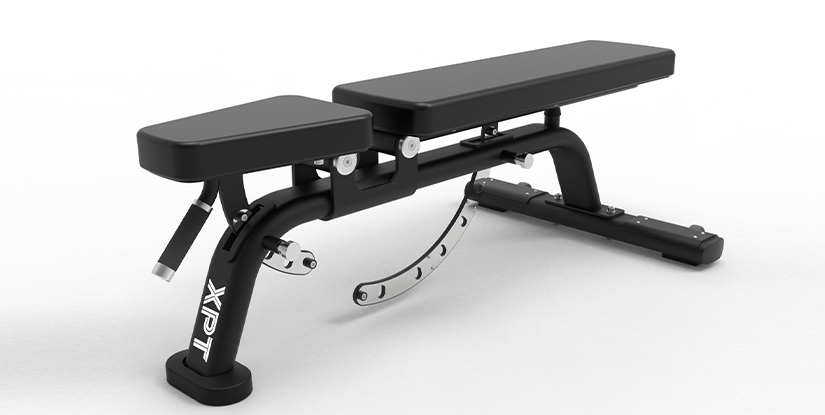
Mechanical smoothness is only one half of the equation; the other is structural stability. When members transition from isolated machines to free weight stations or heavy compound rigs, the structural integrity of the frame becomes the limiting factor. If a power rack or an adjustable bench exhibits even slight lateral movement or 'sway' during a heavy set, the user’s central nervous system will prioritize stability over force production, effectively limiting the weight they can lift and the muscle growth they can achieve.
This instability is often caused by loose fasteners or suboptimal floor anchoring. In a commercial setting, the vibration from heavy lifting can gradually loosen hex bolts and structural joints. If a bench or rack is not perfectly level or securely bolted, the resulting micro-movements can lead to a loss of power transfer. This is a critical failure mode where the user's output is absorbed by the equipment rather than being directed into the muscle tissue.
Verifying Structural Rigidity and Leveling
To maintain a high standard of training, operators should utilize a systematic verification process for all heavy-duty equipment. This involves not only checking for tightness but also ensuring that the equipment is functionally integrated with the facility floor. A poorly leveled rack is a liability that complicates the path of a barbell, making consistent muscle growth difficult for the end user.
- Torque Verification: Use a calibrated torque wrench to ensure all structural bolts meet the manufacturer's specified Newton-meter (Nm) requirements.
- Leveling Calibration: Utilize a digital level on all flat benches and heavy plate-loaded stations to ensure a perfectly horizontal plane.
- Vibration Dampening: Inspect flooring and weight plates for uneven wear that might contribute to structural instability.
Ensuring that the foundation is secure allows the operator to move from structural concerns to the specific nuances of loading and progressive overload.
Optimization of Loading Precision and Incrementality
With the structural foundation secured, the focus shifts to the precision of the load itself. A major obstacle to member muscle growth with commercial weight training equipment is inconsistent loading. If a 20kg plate on one machine feels significantly different than a 20kg plate on another due to manufacturing tolerances, the member cannot accurately track progressive overload—the very engine of hypertrophy.
The problem of loading inconsistency often stems from two sources: cheap, non-calibrated weight plates and worn-out selector pins. When a selector pin does not seat fully into the weight stack, or when the plates themselves vary in density or thickness, the user’s ability to implement a strict progressive overload protocol is compromised. This lack of precision leads to plateauing and user frustration.
| Component | Standard Requirement | Problematic Symptom | Corrective Action |
|---|---|---|---|
| Selector Pins | Full seating in stack holes | Pin is partially exposed or loose | Clean pin and ensure hole is free of debris |
| Weight Plates | Calibrated mass/thickness | Uneven weight distribution/thickness | Audit plate sets for uniformity |
| Load Increments | Consistent resistance increments | Non-linear jumps in resistance | Verify pulley ratios and cable tension |
Maintaining high-precision loading mechanisms is essential for creating an environment where athletes can reliably push their physical limits. Once the load is predictable, the operator must turn their attention to the ergonomic interface of the machines.
The Ergonomic Interface: Maximizing Muscle Isolation
Even with perfect resistance and precise loading, muscle growth can be stunted if the machine's ergonomics do not facilitate proper isolation. A common mistake in procurement is selecting equipment that has a high 'general' appeal but lacks the adjustable geometry required for diverse body types. If the pivot point of a machine does not align with the human joint, the machine will inadvertently recruit secondary muscles, stealing the tension from the target area.
For example, if a seated row machine has a fixed footplate that cannot be adjusted, a shorter user may find themselves unable to stabilize their lower body, leading to excessive lumbar involvement. This lack of isolation prevents the targeted back musculature from reaching the threshold of fatigue necessary for growth. Therefore, verifying the adjustability and kinematic alignment of the equipment is a vital step in a professional facility's operational checklist.
- Joint Alignment Check: Ensure the machine's pivot point is adjustable to match the user's anatomical axis.
- Stability Radius: Confirm that adjustable parts (seat height, footrests) lock firmly within a 5-10mm tolerance.
- Range of Motion (ROM) Audit: Test the machine through its full range to ensure no mechanical stoppage occurs at the end-range.
Proper ergonomic integration ensures that the athlete's energy is directed exclusively toward the intended muscle group, rather than wasted on stabilization. This leads directly into the necessity of long-term safety and operational compliance.
Safety Protocols and Compliance for Long-Term Operation
The rigorous pursuit of muscle growth must always be balanced with a zero-tolerance approach to safety. As members push closer to their physical limits through heavy compound lifts and high-intensity interval training, the risk of catastrophic equipment failure increases. A failure to maintain safety-critical components is not just a maintenance oversight; it is a fundamental failure in professional operation.
The cause of most safety incidents in commercial gyms is a combination of neglected maintenance and a lack of user-facing safety features. For instance, a worn-out safety bar in a squat rack or a frayed cable in a lat pulldown machine can lead to immediate and severe injury. Operators must move beyond simple visual inspections and engage in deep-dive technical audits to ensure that every safety mechanism is functional.
- Daily Safety Walkthrough: A quick visual scan of all cables, pins, and upholstery to identify obvious wear.
- Weekly Component Audit: A more detailed check of all moving parts, including the tension of cables and the security of pins.
- Monthly Structural Deep-Dive: A thorough inspection of the chassis, bolts, and welding points to detect hairline fractures.
Consistent safety verification builds trust with the membership, which is the bedrock of long-term business stability. Following these protocols, the operator can now synthesize all elements into a coherent strategy for growth.
Conclusion: Synthesizing Equipment Performance and Member Success
Driving member muscle growth with commercial weight training equipment requires an integrated approach that spans mechanical maintenance, structural stability, and ergonomic precision. By moving from the granular details of friction reduction to the high-level oversight of safety and loading precision, a facility operator transforms from a simple manager to a provider of high-performance environments. Success is found in the details: the smoothness of a cable, the torque of a bolt, and the accuracy of a weight increment. When these elements are harmonized, the equipment ceases to be a static tool and becomes a dynamic catalyst for human physical potential.