
Gym Equipment Planning for Success: A Strategic Procurement Guide
The Fallacy of the 'Premade' Gym Layout
A pervasive misconception among new facility operators is that a successful gym layout is simply a matter of filling a square footage with as much hardware as possible. This approach often leads to a cluttered, inefficient floor plan that fails to optimize user flow and eventually leads to premature equipment wear. High-performance facility planning requires a shift from 'product-centric' thinking to 'flow-centric' thinking. Instead of asking which machine to buy first, strategic planners must ask how a user navigates a training session from warm-up to cool-down.
The root cause of failed layouts is rarely a lack of space, but rather a lack of understanding regarding clearance requirements and ergonomic zones. When equipment is packed too tightly to save on initial procurement costs, the resulting friction—both physical and psychological—reduces member retention and increases the risk of collision-related injuries. By prioritizing movement corridors and functional zones, operators can maximize the perceived value of their square footage. This foundational shift in mindset is the first step in an integrated strategy that extends into specific procurement and maintenance protocols.
Defining Functional Zones
Before selecting individual pieces of hardware, the facility must be divided into logical zones. This prevents the 'scattered equipment' effect where disparate machines interrupt the flow of specialized training areas. A standard high-performing layout includes a dedicated strength zone, a cardiovascular corridor, and a functional/mobility space. Establishing these boundaries early ensures that the eventual equipment placement supports long-term operational efficiency.
Optimizing Spatial Allocation and User Flow
Building on the necessity of functional zoning, the next critical step is calculating the actual spatial footprint required for safe operation. A common mistake in gym equipment planning for success is failing to account for the 'dynamic footprint'—the total area occupied by a machine plus the range of motion of the user and the necessary safety buffer. If a cable machine requires 2 meters of linear space, but the user's movement or a nearby barbell rack encroaches on that space, the entire zone becomes a liability.
To avoid these bottlenecks, operators should implement a tiered clearance system. This involves designating minimum distance requirements for different categories of equipment. For example, heavy free weights require larger fall zones than static cardio machines. Below is a general framework for evaluating spatial needs during the planning phase.
| Equipment Category | Base Footprint | Dynamic Buffer (Recommended) | Primary Risk Factor |
|---|---|---|---|
| Cardiovascular (Treadmills, Cycles) | Static footprint of machine | 0.5m - 1m behind/sides | Heat dissipation & user exit |
| Resistance Machines (Selectorized) | Machine base dimensions | 1.0m - 1.5m around | User range of motion (ROM) |
| Free Weight Stations (Racks, Benches) | Rack/Bench dimensions | 1.5m - 2.5m (Drop zone) | Uncontrolled weight descent |
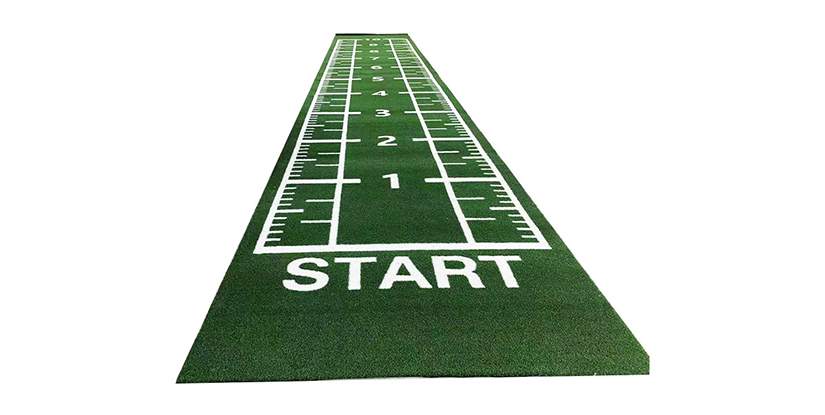
| Functional/Open Areas (Turf, Mats) | Total floor area designated | Full area width | Multi-user intersection |
A properly calculated buffer ensures that even during peak hours, the facility feels professional rather than chaotic. Once the spatial boundaries are set, the focus must shift toward the technical specifications of the hardware itself to ensure long-term durability.
Material Integrity and Durability Standards
Once the layout is mathematically sound, the focus shifts from where the equipment goes to what the equipment is actually made of. A significant pain point for growing facilities is the rapid degradation of equipment due to sub-standard material selection. This is often caused by a procurement team prioritizing low upfront costs over total cost of ownership (TCO). Choosing commercial-grade equipment with high-tensile steel frames and industrial-grade upholstery is not a luxury; it is a requirement for operational longevity.
When evaluating equipment, the decision should be based on the expected usage frequency and the mechanical components. For instance, bearing quality in resistance machines and the gauge of the steel tubing are critical indicators of how a machine will perform after 18 months of continuous heavy use. Operators should look for specific indicators of quality to avoid the trap of cheap, high-maintenance hardware.
Key Technical Indicators for Procurement
Steel Gauge: Higher thickness (e.g., 11-gauge or 12-gauge steel) provides superior stability and resistance to warping under heavy loads.Understanding these technicalities allows a buyer to move from a simple price-comparison model to a value-driven procurement model. However, even the most durable equipment will fail if the maintenance regime is neglected, which brings us to the necessity of a structured inspection protocol.
Explore the complete technical specifications:
Implementing a Preventative Maintenance Cadence
Even the highest-quality equipment requires consistent care to maintain its operational integrity. A common failure in facility management is the 'run-to-failure' approach, where maintenance is only performed once a piece of equipment stops working. This is highly inefficient and can lead to significant downtime, frustrating members and increasing the cost of repairs due to secondary damage.
To achieve success, an operator must transition to a preventative maintenance (PM) model. This involves a scheduled, documented series of checks designed to identify minor wear before it becomes a critical failure. For example, a loose bolt on a weight stack might seem insignificant, but if left unaddressed, it can lead to uneven weight distribution and catastrophic bearing failure. The following table outlines a recommended inspection frequency based on typical commercial usage levels.
| Component Type | Daily/Weekly Check | Monthly Deep Inspection | Quarterly Technical Review |
|---|---|---|---|
| Cables and Pulleys | Visual check for fraying or kinks | Tension testing and lubrication | Complete cable replacement assessment |
| Moving Parts (Rails/Bearings) | Check for smooth motion/noise | Clean and apply industrial lubricant | Check for bearing play or friction |
| Fasteners (Bolts/Nuts) | Visual check for loose parts | Torque testing with a wrench | Full structure integrity audit |
| Electronic/Digital Interfaces | Verify power and sensor response | Clean screen and connectivity check | Firmware and battery diagnostics |
By treating maintenance as a non-negotiable operational cost rather than an optional expense, facilities can significantly extend the lifecycle of their assets. This discipline in upkeep must be paired with rigorous safety monitoring to ensure the facility remains a safe environment for all users.
Explore the complete technical specifications:
Risk Mitigation Through Safety Standards and Compliance
The technical integrity of your equipment is only one half of the safety equation; the other half is the adherence to strict operational safety standards. A critical failure mode in gym operations is the lack of standardized safety protocols during both the setup and the daily use of heavy machinery. This often results in preventable accidents that carry massive liability risks for the facility owner.
Effective risk mitigation requires a multi-layered approach: ensuring the equipment meets international safety benchmarks, verifying correct installation, and training staff to identify hazardous conditions. It is not enough to simply buy safe equipment; you must also verify that it remains in a safe state throughout its lifecycle. For instance, a heavy-duty power rack is only as safe as the bolts anchoring it to the floor.
The Operator's Safety Verification Checklist
Installation Verification: Ensure all equipment is leveled and anchored according to the manufacturer's technical specs.Developing a culture of safety begins with the planning stage and continues through the daily inspection cycles. Once these safety and maintenance layers are in place, the operator can focus on the long-term financial success and scaling of the business.
Explore the complete technical specifications:
Optimizing Procurement Budgets and Vendor Selection
When transitioning from the planning phase to actual purchasing, many operators encounter the 'budget trap.' This occurs when a limited initial capital expenditure (CAPEX) budget forces the purchase of equipment that lacks the modularity or durability required for growth. To ensure success, procurement should be viewed through the lens of scalability rather than just immediate cost savings.
A crucial decision parameter is the distinction between 'entry-level commercial' and 'heavy-duty commercial' equipment. While the former may suit a boutique studio with low foot traffic, a high-volume training facility will experience much faster wear on drive belts, cables, and upholstery. A common mistake is failing to negotiate service-level agreements (SLAs) during the initial purchase. A strong procurement strategy includes not just the price of the hardware, but the availability of replacement parts and the technical support provided by a certain supplier.
Procurement Evaluation Matrix
Before finalizing any purchase order, use the following criteria to evaluate different equipment options:
- Modularity: Can the machine be upgraded or expanded (e.g., adding more weight stacks or different attachments) as the facility grows?
- Serviceability: Are the mechanical parts standardized, and can they be serviced locally without specialized proprietary tools?
- Lifecycle Cost Ratio: Compare the (Initial Price + 3-year Maintenance Cost) against the (Projected Revenue per Machine).
By focusing on these long-term indicators, you avoid the cycle of constant replacements and downtime. This leads directly into the final stage of the planning cycle: measuring the actual results of your investment.
Calculating and Monitoring Return on Investment (ROI)
As we conclude the technical planning cycle, the focus must return to the economic reality of the business: Return on Investment. Many operators view gym equipment as a sunk cost rather than a revenue-generating asset. This perspective error leads to poor decision-making during the next procurement cycle. To maximize ROI, an operator must track how equipment usage correlates with member retention and revenue.
High-performing equipment with a lower initial price but high maintenance requirements can actually drive down your ROI over a three-year period. Conversely, a higher initial investment in a durable, well-designed machine often results in a much higher lifetime value (LTV) for that asset. Tracking the 'cost-per-use' is a sophisticated way to monitor this metric. If a specific machine requires monthly repairs, its total cost is not just the purchase price, but the purchase price plus the labor, parts, and the potential loss of member goodwill.
Metrics for Long-Term Asset Success
To truly understand if your gym equipment planning for success is working, you must move beyond simple profit and loss statements and look at asset-specific data. This includes tracking downtime, repair costs, and user satisfaction regarding specific zones. If the cardiovascular zone sees high traffic but also high breakage, it is a signal to either increase the maintenance frequency or change the procurement profile for the next replacement cycle.
Ultimately, a successful facility is one where the physical environment, the mechanical hardware, and the operational protocols work in a synchronized loop. From the initial spatial calculations to the final ROI analysis, every decision must be grounded in technical precision and long-term strategic vision.