
Why Gym Equipment Fabrication Matters for Custom Projects
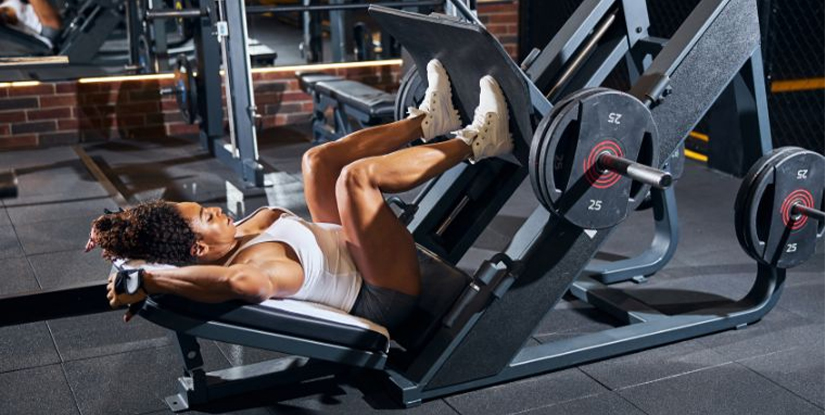
In the high-stakes world of commercial fitness, many procurement managers fall into the trap of believing that 'standard' is synonymous with 'safe.' They assume that if a piece of equipment looks sturdy, it is engineered correctly. However, when undertaking a custom project—whether it is a boutique studio with unique spatial constraints or a high-performance training facility—relying on off-the-shelf logic is a recipe for structural failure. Understanding why gym equipment fabrication matters for custom projects is not just about aesthetics; it is about the fundamental physics of load distribution and material durability.
The Fallacy of Standardized Strength in Custom Environments
A common misconception among facility operators is that custom-made does not necessarily mean higher quality. In reality, the opposite is often true for specialized environments. Standard mass-produced equipment is designed for the 'average' user and a 'standard' commercial footprint. When you force these standard units into a custom layout or demand they perform a specific, non-standard function, the structural integrity is compromised.
For instance, if a facility requires a multi-station unit to fit a non-rectangular corner, a poorly fabricated 'modified' unit will often suffer from uneven weight distribution. The cause is usually a failure to recalculate the center of gravity during the design phase. To avoid this, you must verify that the fabricator provides a formal structural analysis report rather than just a 3D rendering.
Common Failure Mode: Using standard mounting hardware on a custom-length cantilevered arm, leading to excessive vibration and eventually metal fatigue.
By recognizing that custom projects require a fundamental redesign of load paths, rather than just a resizing of parts, we can better understand the critical role of material selection in the next stage of production.
Material Selection and the Metallurgy of Durability
Building on the need for specialized structural analysis, the next pillar of successful custom fabrication is the selection of raw materials. In custom projects, you cannot simply rely on the standard steel grade used by the mass-market manufacturer. If your custom project involves high-impact zones or high-humidity environments, the material specifications must be drastically more rigorous.
The difference between a project that lasts five years and one that lasts fifteen often comes down to the metallurgical grade of the steel and the thickness of the tubing. A high-quality fabricator will not just offer 'steel,' but will specify the carbon content and the structural grade. For custom load-bearing frames, high-tensile steel is often a requirement to maintain a slim profile without sacrificing strength.
Comparing Standard vs. Custom Material Specifications
| Feature | Standard Mass-Produced Equipment | Custom Project Grade Requirements |
|---|---|---|
| Steel Gauge | Standard 11-14 gauge | Reinforced 7-10 gauge at stress points |
| Coating Process | Standard powder coating | Anti-corrosive electroplating + thick-film powder |
| Weld Type | Standard MIG welding | Full-penetration TIG or specialized structural welds |
| Tube Geometry | Uniform circular or rectangular | Variable geometry for optimized load paths |
When reviewing a quote for a custom project, never accept a generic term like 'high-quality steel.' Always demand the specific grade (e.g., ASTM A36 or higher) to ensure the material can handle the intended mechanical stresses. This technical specificity leads directly into the most visible aspect of fabrication: the precision of the joints and welds.
Explore the complete technical specifications:
Precision Welding and the Integrity of Load-Bearing Joints
Once the materials are selected, the actual assembly—specifically the welding process—becomes the most critical point of failure. Many operators overlook the nuance of weld quality, assuming that if a joint looks 'clean,' it is strong. This is a dangerous error. In custom fabrication, the complexity of the angles and the weight-bearing requirements often create non-standard stress points that standard welding techniques cannot adequately address.
The problem often arises when a fabricator uses 'aesthetic welding'—where the goal is a smooth look—instead of 'structural welding,' where the goal is deep penetration. In a custom multi-station rig, a weld that is visually perfect but lacks depth will eventually crack under the repetitive, cyclical loading of heavy lifting. This is known as fatigue failure.
How to Verify Weld Quality:
- Visual Inspection: Look for consistent bead width and the absence of porosity (small holes) or undercut (grooves at the edge of the weld).
- Penetration Test: Ask if the fabricator performs non-destructive testing (NDT) on high-stress junctions for large-scale custom builds.
- Angle Integrity: For custom-angled frames, ensure the weldment accounts for the specific torque of the connecting bolts.
Ensuring the strength of these joints is vital, but even the strongest weld cannot compensate for a failure in the mechanical components, such as the bearings or bushings that allow movement.
Explore the complete technical specifications:
Mechanical Tolerances in Moving Components
As we transition from the static frame to the moving parts of the equipment, the focus shifts from sheer strength to mechanical tolerance. In custom projects, especially those involving strength machines or cable systems, the precision of the moving parts determines the 'feel' and the longevity of the machine. If the tolerances are too loose, the machine feels 'cheap' and shaky; if they are too tight, friction increases, leading to premature wear.
The root cause of most mechanical failures in custom gym equipment is the mismatch between the fabricated frame and the standardized moving parts. If you buy a custom-built frame but use generic, low-tolerance pulleys or bearings, the entire system’s performance is bottlenecked. A true custom project requires an integrated approach where the bushings, bearings, and pulleys are sized specifically for the custom load requirements.
Technical Checklist for Moving Part Integration
| Component | Verification Parameter | What to Look For (Success) |
|---|---|---|
| Bearings | Load Rating vs. Max Load | Bearing capacity must exceed peak dynamic load by at least 2x. |
| Cable/Wire | Diameter & Friction Coefficient | Diameter must match pulley groove geometry perfectly to prevent fraying. |
| Bushings | Tolerance Clearance | Minimal lateral play (side-to-side movement) during operation. |
| Guides | Alignment Precision | Zero contact/rubbing between weight stack and guide rods. |
Maintaining these high tolerances requires more than just good assembly; it requires a rigorous maintenance schedule that accounts for the unique mechanics of the custom unit. Proper maintenance ensures that the precision achieved during fabrication is preserved over the equipment's lifecycle.
Explore the complete technical specifications:
The Impact of Surface Finishes on Longevity and Grip
While the structural integrity is handled by the steel and welds, the surface finish is what protects the investment from the environment. A common mistake in custom projects is treating the finish as a secondary 'cosmetic' step. In reality, the surface finish—the powder coating or paint—is the first line of defense against oxidation and sweat-induced corrosion.
In a custom-built high-traffic facility, the sheer volume of human contact and chemical exposure (from cleaning agents) is higher than in a home setting. If the fabrication process uses a low-grade electrostatic powder coating, the finish will chip easily. Once the coating is compromised, moisture reaches the raw steel, leading to rust that can eventually weaken the structural integrity of the frame.
Decision Criteria for Finishes:
- Environment: For humid or coastal areas, specify a high-micron thickness coating with anti-corrosive additives.
- User Interaction: For contact points (handles/bars), ensure the finish is non-slip but also resistant to skin oils and sweat.
- Verification: Perform a 'cross-hatch test' on a sample piece to ensure coating adhesion levels meet industry standards.
A high-quality finish protects the metal, but the most effective way to ensure the longevity of the entire system is to implement a structured inspection protocol for the entire mechanical assembly.
Routine Inspection Protocols for Custom-Built Systems
Because custom-built equipment often features non-standard geometries and specialized parts, standard maintenance manuals provided by mass-market manufacturers are useless. Operators must develop a bespoke inspection protocol that addresses the specific weak points of their unique fabrication. If you skip this, the very customization that makes the equipment great will become its biggest liability.
The most frequent failure point in custom rigs is the tensioning of bolts and fasteners. In a custom layout, vibration patterns are often unpredictable. A single loose bolt in a custom-angled joint can cause a cascade of structural stress that leads to a catastrophic failure. The cause is usually vibration-induced loosening, and the fix is a standardized torque-checking schedule.
Operator's Inspection Frequency Guide
| Inspection Level | Frequency | Focus Areas |
|---|---|---|
| Level 1: Visual | Daily/Weekly | Rust spots, loose bolts, worn cables, and surface chips. |
| Level 2: Mechanical | Monthly | Bearing lubrication, pulley alignment, and bolt torque verification. |
| Level 3: Structural | Quarterly/Bi-Annually | Weld integrity check, frame alignment, and deep-seated corrosion. |
Regularity is the key to performance. By conducting these checks, you move from reactive repairs to proactive management. This mindset is essential for the final step: ensuring that the equipment meets all safety and compliance standards before it is officially commissioned.
Compliance and Safety Verification in Custom Fabrication
The final, and perhaps most crucial, aspect of why gym equipment fabrication matters for custom projects is legal and operational compliance. When you move away from 'standard' equipment, you also move away from the 'pre-certified' safety profiles that mass-market brands enjoy. This places the burden of proof for safety squarely on the operator and the fabricator.
A common mistake is assuming that a 'custom' piece of equipment is inherently safe because it is heavy-duty. However, without proper certification or third-party testing, a custom rig could have unforeseen tipping points or crushing hazards. The cause of these issues is often a lack of rigorous weight-testing during the prototyping phase. To mitigate this, you must demand proof of load testing and compliance with international fitness equipment safety standards (such as ISO or ASTM) during the fabrication process.
The Final Verification Step: Before the equipment is integrated into a live floor, perform a 'Load-Stress Test.' This involves applying 125% of the maximum rated load to the unit for a sustained period (at least 24 hours) to monitor for any settling, bowing, or abnormal sounds. If the frame remains stable and the moving parts operate without resistance, the fabrication is successful.
Understanding these technical layers—from the metallurgy of the steel to the final load-stress test—is what separates a successful custom project from a costly, dangerous mistake. Effective fabrication is the foundation of a high-performance facility.