
Why Fitness Equipment Manufacturers Are Key to Gym Success
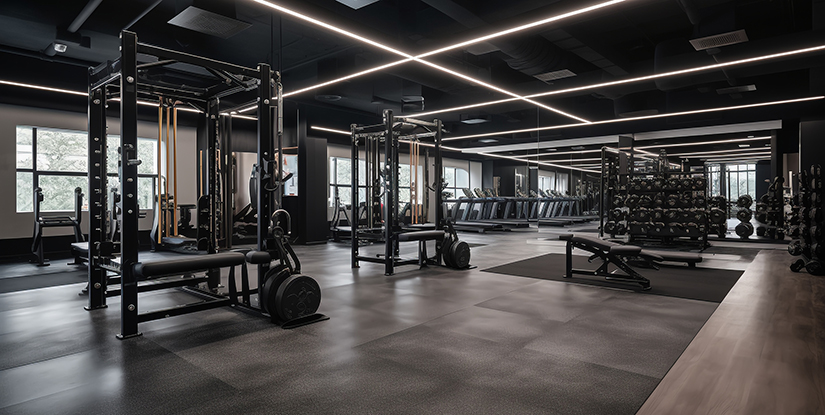
The Lifecycle of Gym Asset Management: From Procurement to Retirement
For a facility operator, a piece of fitness equipment is not merely a static object; it is a dynamic asset with a measurable lifecycle. Understanding why fitness equipment manufacturers are key to gym success begins with recognizing that the quality of the initial manufacturing process dictates the entire operational trajectory of your facility. A poorly manufactured machine creates a downward spiral of high maintenance costs, member dissatisfaction, and premature replacement cycles.
A professional procurement strategy moves through five distinct phases: Specification, Sourcing, Deployment, Maintenance, and Retirement. In the specification phase, the manufacturer's technical capabilities must align with your facility's usage intensity. During sourcing, you are not just buying a machine, but the engineering rigor behind it. Deployment requires precise assembly, while maintenance preserves the asset's value. Finally, retirement should be a planned economic decision, not a forced one caused by sudden mechanical failure. Failure to respect these phases often leads to a 'reactive' management style, where the operator is constantly fighting broken machines instead of growing the business.
As we move from the broad lifecycle view into the granular details of production, the true differentiation occurs in how raw materials are transformed into high-performance machinery.
Material Science and Structural Integrity in Manufacturing
The transition from raw materials to a finished product is where the risk of structural failure is highest. A common mistake among novice buyers is focusing solely on the aesthetic finish while ignoring the underlying metallurgy. High-quality manufacturers prioritize material density and alloy composition to ensure longevity under heavy commercial loads.
Steel Grade and Tubing Wall Thickness
The skeleton of most strength equipment is steel tubing. A critical specification to verify is the wall thickness. While residential-grade equipment might use 14-gauge or 16-gauge steel, commercial-grade equipment typically demands 11-gauge or even 7-gauge steel for high-impact areas like squat racks or heavy-duty frames. Thin-walled tubing may look sufficient during initial inspection but will eventually succumb to 'flex fatigue' under repetitive heavy loading.
Bearing Quality and Component Resilience
Moving parts, such as those found in cable machines or elliptical trainers, rely heavily on bearing assemblies. A manufacturer's choice of bearings determines the 'smoothness' of the motion. Low-grade bearings often use recycled or substandard steel, leading to increased friction, heat buildup, and eventual seizing. This friction doesn't just affect the user experience; it increases the torque required by the motor in electronic equipment, leading to premature electrical failure.
| Component Type | Low-Tier Indicator (Risk) | High-Tier Standard (Value) |
|---|---|---|
| Frame Material | Thin-walled 16-gauge steel | Heavy-duty 11-gauge steel |
| Bearing Assembly | Standard steel ball bearings | Precision high-load sealed bearings |
| Upholstery | Standard PU vinyl (peels easily) | High-density, anti-microbial reinforced vinyl |
| Cable Core | Single-strand nylon/wire | Multi-strand aircraft-grade steel |
By selecting a manufacturer that adheres to these material standards, you mitigate the risk of structural deformation. Once the materials are selected, the focus shifts to the actual fabrication processes that shape these components.
Precision Engineering: From CNC Machining to Welding
Once the materials are vetted, the actual fabrication process determines the precision of the equipment's movement. This is where many manufacturers differentiate themselves through technological investment. The accuracy of a machine's motion path is a direct result of the manufacturing precision in the factory.
CNC Machining and Tolerance Control
Computer Numerical Control (CNC) machining is essential for creating parts with extremely tight tolerances. In resistance training equipment, if the pivot points or adjustment pins are even slightly off-spec, the resulting 'play' or wobble can lead to uneven wear patterns. A professional manufacturer will specify tight tolerance ranges (often within microns) for all moving junctions to ensure that the machine remains calibrated even after years of use.
Welding Integrity and Load Distribution
The structural strength of a machine is only as good much as its weakest weld. Modern manufacturing utilizes robotic welding to ensure consistency that human welders cannot replicate manually over long production runs. A common failure mode in budget equipment is the 'cold weld'—a weld that looks substantial on the surface but lacks deep penetration into the base metal. This leads to catastrophic structural cracks under heavy load. Operators should look for evidence of high-heat, deep-penetration welding in the manufacturer's technical documentation or through direct inspection of seam profiles.
The precision of the build is only half the battle; the finished surfaces must also be protected from the harsh environments of a high-traffic gym. This leads us to the critical step of surface treatments and finishing.
Explore the complete technical specifications:
Surface Finishes and Corrosion Resistance Standards
A gym is a high-humidity, high-impact environment. Sweat, cleaning chemicals, and even ambient moisture can act as corrosive agents. A manufacturer's ability to apply durable coatings is a key indicator of how well the equipment will age in a commercial setting.
Powder Coating vs. Liquid Paint
Most professional-grade equipment utilizes electrostatic powder coating. This process applies a dry powder to the metal, which is then cured under intense heat. This creates a much harder, more resilient finish than traditional liquid paint. Liquid paint is prone to chipping and scratching, which eventually exposes the underlying steel to oxidation. A high-quality powder coating provides a thick, impact-resistant barrier that protects the frame from both daily use and chemical exposure.
Upholstery and Ergonomic Material Durability
The contact points—the seats, pads, and grips—are often the first components to show wear. A common mistake is neglecting the specification of upholstery density. Cheap foam loses its shape rapidly, causing the user to feel the hard plate underneath, which leads to discomfort and poor form. Premium manufacturers use high-density, dual-layer foam and reinforced stitching to ensure the pad maintains its ergonomic shape under constant compression.
- Checklist for Surface Verification:
- Verify the presence of a thick, even powder coating without bubbles or thin spots.
- Inspect the thickness and 'rebound' of foam padding.
- Examine the durability of grip coatings (rubberized vs. smooth metal).
- Ensure all edges are deburred and smooth to prevent injury.
While the outward finish determines the aesthetic longevity, the internal electronic and mechanical components determine the functional lifespan. Let's examine the rigor required for electronic and cable-based systems.
Explore the complete technical specifications:
Electronics and Resistance Consistency in Digital Equipment
Modern gyms increasingly rely on digital strength and cardio equipment. In these machines, the 'manufacturer' is actually a technology provider. The reliability of the software and the durability of the electronic components are the primary drivers of uptime.
Electromagnetic Resistance Precision
In digital strength machines, resistance is often generated by electromagnets. The precision of this resistance is critical for athlete training. If the magnetic field fluctuates due to poor component quality, the user will experience 'jerky' resistance, which can cause muscle spasms or joint strain. High-quality manufacturers use high-grade copper coils and stable power supplies to ensure a constant, smooth resistance curve throughout the entire range of motion.
Software Stability and User Interface Durability
The interface is the user's primary touchpoint. A common failure mode in budget digital equipment is the slow response time or 'freezing' of the software during a workout. This is often caused by low-grade microcontrollers or insufficient memory. Furthermore, the physical screen must be capable of withstanding constant cleaning with disinfecting wipes. A screen that becomes foggy or delaminates after six months of use is a sign of poor environmental testing in the manufacturing phase.
Effective electronic integration is vital, but it must be supported by the mechanical components that drive the movement. This brings us to the critical role of quality control and inspection protocols.
The Rigors of Quality Control and Failure Prevention
Why fitness equipment manufacturers are key to gym success is ultimately answered in their Quality Control (QC) department. Without a rigorous QC process, even the best materials and designs will fail in the field. A manufacturer's ability to predict failure before the product leaves the factory is what separates them from the competition.
Stress Testing and Fatigue Analysis
Manufacturers should perform destructive and non-destructive testing on their equipment. This includes 'fatigue testing,' where a machine is subjected to thousands of repetitive load cycles to simulate years of use. This helps identify potential failure points, such as a specific bolt or a weld joint that might break after six months of heavy use. If a manufacturer cannot provide data on their testing protocols, it is a major red flag.
Pre-Shipment Inspection (PSI) Protocols
The final layer of defense is the Pre-Shipment Inspection. This is where every unit is checked for common defects such as:
- Misalignment: Ensuring all moving parts align perfectly according to the CAD design.
- Surface Imperfections: Checking for scratches, dents, or uneven coating.
- Electronic Calibration: Verifying that digital resistance and interfaces are fully functional.
- Hardware Torque: Ensuring all bolts are tightened to the specified torque levels.
Once the equipment passes these rigorous checks and is deployed, the focus must shift from the factory to the gym floor to ensure the asset is preserved through proper maintenance.
Operational Longevity: Maintaining the Manufacturer's Standards
Even the highest quality machine will fail if the operational maintenance is neglected. However, a quality manufacturer simplifies this process by designing equipment that is easy to service and maintain. The relationship between the manufacturer and the operator continues long after the delivery is complete.
Preventative Maintenance Schedules
To maximize ROI, operators must implement a strict maintenance schedule. This is not just about cleaning, but about proactive component management. For example, cable machines require periodic lubrication and tension checks, while electronic machines may need software updates or sensor cleaning. A manufacturer that provides clear, accessible maintenance manuals is a partner in your success.
Common Failure Modes and Rapid Troubleshooting
Understanding common failures allows for faster reaction times. If a cable begins to fray, it is usually a sign of either a worn pulley or an outdated cable specification. If a digital screen becomes unresponsive, it may be an issue with the power supply or a sensor interference. Being able to identify these issues early prevents small problems from becoming expensive repairs.
| Common Issue | Likely Cause | Actionable Fix |
|---|---|---|
| Jerky Resistance | Bearing wear or magnet fluctuation | Replace bearings or check power supply |
| Squeaking Joints | Lack of lubrication | Apply manufacturer-approved lubricant |
| Cable Fraying | Worn pulley grooves | Replace pulley or upgrade cable type |
| Software Lag | Sensor buildup or outdated firmware | Clean sensors and update software |
In conclusion, the manufacturer's role extends from the initial selection of steel to the final software update. By understanding these processes, you can make much more informed procurement decisions.