
Optimizing Facility Longevity with Standard Rubber Weight Plates
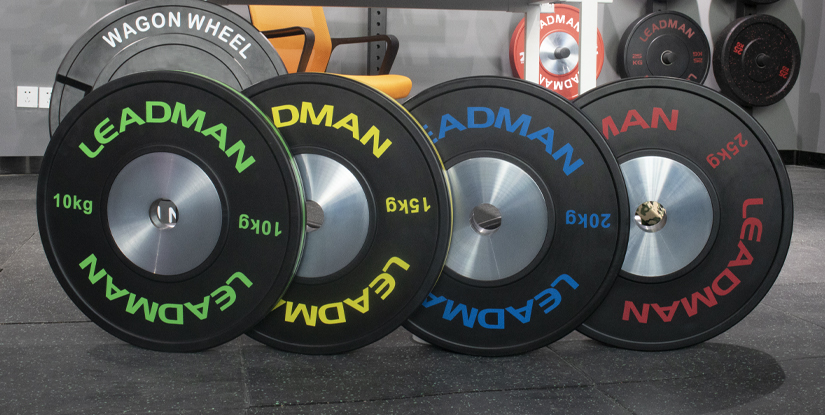
The Durability Myth: Why Cheap Rubber Coatings Fail
A common misconception in commercial fitness procurement is that any rubber coating is sufficient for high-traffic environments. Facility managers often assume that because a product is labeled as rubberized, it possesses inherent shock absorption and long-term resilience. In reality, the quality of the polymer blend and the application method dictate whether your equipment lasts three years or ten. Lower-grade materials frequently suffer from premature cracking, uneven density, and a tendency to 'shed' micro-particles under heavy use.
When a facility experiences premature degradation of its weight sets, the cause is rarely the heavy usage itself, but rather a mismatch between the Standard Rubber Weight Plates specification and the actual impact force of the training environment. A plate designed for light commercial use will fail rapidly in a heavy lifting or CrossFit-style facility. To avoid this, operators must look beyond the visual finish and examine the density and composition of the rubber jacket. Understanding these material nuances is the first step toward a reliable procurement strategy, which leads directly into the necessity of assessing mechanical tolerances.
Verifying Material Density and Surface Finish Standards
Building on the need for high-quality material selection, it is critical to move from qualitative descriptions to measurable benchmarks. High-performing rubberized plates are not just 'soft'; they are engineered to maintain a specific Shore hardness that balances impact protection with structural integrity. If the rubber is too soft, the internal metal core may eventually shift or deform; if it is too hard, the plate loses its primary function of protecting the floor and the barbell.
Evaluating Shore Hardness and Compressive Strength
When reviewing technical specifications, facility managers should look for a consistent density range. While exact values vary by manufacturer, the goal is a uniform surface that does not exhibit 'soft spots' when subjected to concentrated weight. A common failure mode occurs when the rubber is injected inconsistently, leading to air pockets that eventually burst under heavy impact. To verify quality, operators should perform a simple visual and tactile inspection of the plate edges and the transition point where the rubber meets the steel center.
| Parameter | Low-Grade Indicator | Commercial-Grade Standard |
|---|---|---|
| Surface Uniformity | Visible pitting or bubbles | Smooth, non-porous finish |
| Edge Consistency | Uneven or crumbling edges | Uniform, rounded perimeter |
| Impact Response | High bounce/rebound | Controlled, damped descent |
| Odor Profile | Strong, acrid chemical smell | Minimal or neutral scent |
Ensuring the surface finish meets these standards prevents the frustration of constant replacement cycles. Once you have identified a high-quality material, the next logical step is to ensure that the physical dimensions and the internal hub are built to professional standards.
Precision in Dimensional Tolerances and Hub Design
Even the highest quality rubber jacket is useless if the internal structure is imprecise. A major pain point for experienced lifters is the 'wobble' effect, where the weight feels unevenly distributed during a lift. This is often caused by poor concentricity between the metal core and the rubber coating. In a professional setting, weight deviation should be minimal to ensure both safety and the accuracy of the training load.
The Impact of Concentricity on Barbell Stability
When plates are loaded onto a barbell, the center of gravity must remain perfectly aligned with the rod. If the internal steel hub is off-center, the resulting centrifugal force can destabilize a lift, particularly in high-velocity movements like cleans or snatches. This is not just a matter of precision; it is a matter of safety. A poorly manufactured plate can lead to uneven wear on the barbell sleeves and, in extreme cases, damage to the barbell itself.
- Check for Centricity: Spin the plate on a vertical spindle or rod to ensure the center of mass is not oscillating.
- Measure Weight Variance: Weigh a set of five plates from the same batch to check for consistency within a reasonable commercial tolerance.
- Verify Hub Diameter: Ensure the internal hole is smooth and lacks jagged edges that could scratch the barbell.
Rigorous checking of these dimensions ensures that the plates perform predictably under load. However, even perfectly weighted plates require a strict maintenance and inspection regimen to remain in peak condition.
Related reading:
Establishing a Preventative Maintenance and Inspection Protocol
A high-quality set of weights is an investment that requires active management. Relying solely on a 'set and forget' mentality is a mistake that leads to unexpected costs and equipment downtime. An effective maintenance strategy focuses on early detection of failure modes before they become safety hazards or significant aesthetic issues.
Daily Visual Audits vs. Monthly Deep Inspections
Operators should implement a tiered approach to equipment care. Daily checks are brief and visual, while monthly inspections are more mechanical and granular. This two-step process ensures that minor issues like small cracks or surface discoloration are caught before they evolve into structural failures.
| Inspection Frequency | Target Area | Actionable Step |
|---|---|---|
| Daily (Visual) | Surface Integrity | Check for large cracks or missing rubber chunks. |
| Weekly (Tactile) | Edge Wear | Feel the edges for fraying or separation from the core. |
| Monthly (Mechanical) | Hub & Core | Inspect the internal steel for rust or deformation. |
| Quarterly (Comprehensive) | Inventory Accuracy | Re-weigh key plates to ensure no moisture-induced mass change. |
By adhering to this schedule, you can extend the lifecycle of your equipment significantly. The following section will address what to do when these protocols inevitably flag an issue that requires immediate attention.
Related reading:
Troubleshooting Common Failure Modes in Rubberized Weight Sets
Despite the best maintenance, certain environmental and operational factors can cause issues. When a problem is identified during a routine inspection, the ability to quickly diagnose the cause prevents unnecessary expenditures. Understanding whether a problem is caused by environmental exposure or mechanical misuse is critical for determining the correct fix.
Identifying Cracking, De-lamination, and Odor Issues
One of the most frequent issues is 'de-lamination,' where the rubber begins to separate from the metal core. This is often caused by extreme temperature fluctuations or low-quality adhesives used during manufacturing. If the plates are stored in an unconditioned space with high humidity, moisture can become trapped between the metal and rubber, leading to internal oxidation and eventual separation.
- Cracking: Often caused by UV exposure or extremely low temperatures. Ensure plates are not stored in direct sunlight.
- De-lamination: Usually a sign of poor manufacturing or extreme thermal shock. This is often non-repairable in a commercial setting.
- Surface Pitting: Typically results from improper cleaning agents or abrasive contact with harsh surfaces.
Once you have identified and addressed these failure modes, you must verify the effectiveness of your corrective actions. This brings us to the final stage of the operational loop: the verification of long-term performance.
Related reading:
Verifying Correct Performance and Long-Term ROI
The final step in any professional procurement or maintenance cycle is validation. It is not enough to simply fix a problem; you must verify that the fix has restored the equipment to its required operational standard. This prevents the recurring cycle of 'patch-and-fail' that drains facility budgets.
The Verification Checklist for Facility Managers
When a new batch of equipment arrives, or after a major cleaning/repair cycle, use a formal verification step. This moves the process from subjective 'it looks fine' to an objective 'it meets spec' standard. For a facility manager, this documentation is also vital for insurance and compliance purposes.
- Weight Verification: Use a calibrated scale to ensure the new or repaired plates are within the specified weight tolerance.
- Load Testing: Observe the plates on a barbell during a standard lifting movement to check for balance and vibration.
- Surface Inspection: Use a high-lumen light to check for micro-fissures in the rubber under load.
- Environmental Stability: Ensure the storage area remains within the recommended temperature and humidity ranges.
Effective management of your weight sets ensures that your facility remains a high-standard environment for all users. By mastering these technical details, you turn a simple piece of equipment into a long-term, reliable asset.