
Rubber vs. Cast Iron Options in Hex Dumbbell Wholesale: A Procurement Expert's Guide
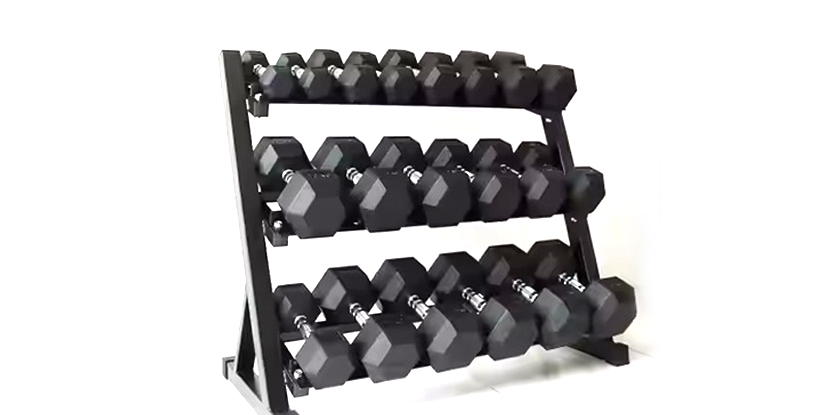
When managing a commercial gym facility or a high-volume retail warehouse, the decision between rubber and cast iron finishes for hex dumbbells is rarely about aesthetics. It is a decision rooted in durability, floor protection, and long-term replacement costs. A procurement error at the wholesale level—choosing a material that does not match the specific user environment—can lead to premature equipment degradation or even structural floor damage. This guide explores the technical nuances of both materials to ensure your next wholesale order aligns with your operational reality.
Durability and Surface Integrity in High-Traffic Environments
Understanding the core physical differences between rubber and cast iron is the first step in avoiding the common mistake of underestimating environmental wear. While both materials provide the heavy-duty mass required for strength training, their failure modes are fundamentally different. A rubber-coated hex dumbbell relies on the adhesion between the outer polymer and the inner weight core, whereas a cast iron dumbbell relies on the integrity of its painted or powder-coated finish.
In high-intensity training centers, the constant impact of dropping weights creates mechanical stress. If the rubber coating is of low quality, it can undergo 'delamination,' where the coating peels away from the metal core. Conversely, cast iron handles impact well but is prone to chipping if the coating is brittle. To mitigate these risks, a buyer must evaluate the density of the rubber and the thickness of the cast iron's finish.
Material Density and Impact Absorption
High-density rubber is specifically engineered to absorb kinetic energy. This is a critical metric for facilities with high drop frequencies. A common failure mode in budget wholesale orders is receiving 'low-density' rubber, which tends to crack or even compress permanently under repeated heavy impact. In contrast, cast iron offers high density and low volume, making the dumbbells more compact, but it offers almost zero shock absorption, which places significant stress on the facility floor.
The ability to manage these physical impacts determines the lifespan of both the equipment and the surrounding flooring. Understanding these impact dynamics leads us to the necessity of a rigorous comparison of material-specific characteristics.
The Core Comparison: Rubber vs. Cast Iron Options in Hex Dumbbell Wholesale
To make an informed procurement decision, we must move beyond subjective preferences and look at technical specifications. The following comparison provides a baseline for evaluating wholesale product sheets. It is essential to note that the 'best' option is entirely dependent on the specific facility type—whether it is a professional powerlifting gym or a standard commercial fitness club.
| Criteria | Rubber-Encased Hex Dumbbells | Traditional Cast Iron Hex Dumbbells |
|---|---|---|
| Impact Protection | High; absorbs energy and protects floors. | Low; requires rubber flooring to prevent damage. |
| Durability Profile | Risk of delamination/cracking over time. | Risk of paint chipping and surface rust. |
| Size-to-Weight Ratio | Larger volume for the same weight. | Compact and dense; easier to grip. |
| Maintenance Needs | Low; mostly surface cleaning. | Moderate; requires rust prevention monitoring. |
| Cost per Unit | Generally higher due to coating process. | Generally lower; higher value for volume. |
| Optimal Use Case | Commercial gyms, CrossFit, high-impact areas. | Home gyms, budget fitness centers, precision lifting. |
By analyzing these variables, a buyer can determine if the higher upfront cost of rubber is justified by the long-term savings in floor maintenance. However, material selection is only one part of the equation; the manufacturing quality of the internal core and the handle also play a significant role.
Explore the complete technical specifications:
Evaluating the Internal Core and Coating Adhesion
The internal core of a hex dumbbell serves as the structural foundation. In rubber-encased models, the quality of the bond between the core and the shell is the single most important factor in preventing product failure. If the adhesive process is skipped or substandard, the rubber will inevitably separate from the weight under high-temperature or high-impact conditions.
A common pitfall in wholesale procurement is receiving a shipment where the weight is unevenly distributed due to a poor-quality cast core. This leads to an unbalanced dumbbell that feels 'off' to the user, increasing the risk of injury. When inspecting a sample, always check for uniformity in both the weight and the center of gravity. For cast iron models, the focus shifts from adhesion to surface treatment. A well-applied powder coating can prevent oxidation, but if the coating is too thin, it will chip upon the first few heavy drops, exposing the raw metal to moisture and air.
Verifying Core Uniformity and Weight Precision
To ensure quality, a professional buyer should request a weight tolerance specification. A high-quality manufacturer should offer a tolerance of +/- 1-2%. If a supplier cannot provide a specific tolerance range, it is a signal of inconsistent manufacturing processes. Once the core integrity is verified, the focus shifts to how the exterior interacts with the user's hands.
A secure, ergonomic grip is non-negotiable, regardless of whether the dumbbell is cast iron or rubber-encased. This brings us to the critical examination of handle design and surface finish.
Explore the complete technical specifications:
Ergonomics and Grip Performance: Surface Texture Nuances
While the weight and the core are the foundation, the user's actual interaction with the dumbbell happens at the handle. The hex shape of the head is designed to prevent rolling, but the handle must provide a reliable, non-slip grip even when the user's hands are sweaty or chalked. In the world of hex dumbbells, the interface between the hand and the metal/rubber is where performance meets safety.
Cast iron dumbbells often feature knurled handles, which provide a textured, aggressive grip. This is excellent for heavy lifting but can be abrasive to users with sensitive skin. Rubber-encased dumbbells often utilize a slightly different handle approach, sometimes featuring a textured-coated metal bar or a more integrated ergonomic shape. The lack of aggressive knurling in some rubber-heavy models can be a drawback for elite athletes who rely on tactile friction.
Common Grip Failure Modes
- Rust-Induced Texture Loss: In cast iron dumbbells, moisture can lead to surface rust even on the handle, making the knurling feel jagged or unreliable.
- Grip Slippage: In lower-grade rubber dumbbells, the handle coating may become smooth and 'greasy' with prolonged use, reducing friction.
- Corrosion of the Threaded Ends: For adjustable or single-piece constructions, moisture can penetrate the junction points, leading to structural integrity issues.
Identifying these potential issues during the sampling phase allows you to set higher standards for your suppliers. Once the grip and handle design are settled, you must address the long-term logistical considerations of your order.
Total Cost of Ownership (TCO) vs. Initial Purchase Price
A significant mistake made by novice procurement officers is focusing solely on the per-unit price of the order. In a high-volume wholesale scenario, the initial price is only one component of the Total Cost of Ownership (TCO). The true cost includes the durability of the product, the frequency of replacement, and the indirect costs of facility maintenance.
Rubber-encased dumbbells typically carry a higher initial price tag. However, when you factor in the cost of replacing damaged gym flooring caused by the impact of cast iron dumbbells, the rubber options often prove more economical over a 3-to-5-year cycle. Conversely, cast iron is highly cost-effective for environments where the equipment is used more gently or where the budget is extremely tight, such as budget fitness boutiques or home-use retail models.
Calculating the Real Investment
To calculate the TCO, consider these three factors: (1) The expected lifespan of the dumbbell finish, (2) The durability of your existing gym flooring, and (3) The projected labor costs for maintenance/cleaning. A facility that uses rubber-encased dumbbells might spend less on floor repairs, even if the equipment itself is more expensive. This nuanced view is essential for a professional buyer seeking long-term ROI.
Having established the financial logic, the next step is to finalize your quality control (QC) checklist to ensure the delivered goods match the specifications discussed.
Developing a Rigorous Quality Control (QC) Checklist
Once you have chosen between rubber and cast iron, you cannot rely on the supplier's word alone. A professional procurement strategy requires a hands-on inspection of the first batch to ensure the production quality is repeatable. The goal is to catch deviations in weight, finish, or adhesion before they become a recurring issue in your inventory.
When the shipment arrives, perform the following checks to verify the integrity of your investment. This is your last line of defense against receiving substandard equipment that could harm your brand reputation or your facility's safety.
The Mandatory Inspection Protocol
- Weight Verification: Use a calibrated digital scale to check at least 5% of the shipment. Ensure the variance falls within the promised +/- 1-2% tolerance.
- The 'Drop Test' for Adhesion: For rubber-encased models, drop a single dumbbell from a height of 12 inches onto a hard surface. Inspect the contact point for any signs of rubber peeling or cracking.
- Surface Finish Inspection: Check for uneven paint on cast iron models. Look specifically at the edges of the hex shape where chipping is most likely to occur.
- Grip Texture Check: Rub your hands over the knurled or coated handles to ensure the texture is consistent and lacks any sharp or defective edges.
- Visual Symmetry Check: Ensure the hex shape is uniform and that the handles are perfectly centered in the weight heads.
Adhering to this protocol ensures that the decision made during the selection phase is actually delivered in the final product. With your inspection methods set, you are ready to navigate the final steps of the procurement cycle.
Future Trends in Dumbbell Material Engineering
As we look toward the future of strength equipment, the distinction between rubber and cast iron continues to evolve. We are seeing more advanced polymer coatings that offer the durability of industrial-grade rubber with the compact profile of cast iron. These hybrid materials aim to solve the 'delamination' problem while maintaining high impact absorption.
The industry is moving toward high-precision manufacturing where weight tolerances are tighter than ever. For the wholesale buyer, staying ahead of these trends means looking beyond the standard options and investigating specialized coatings or hybrid constructions that can provide a competitive edge in both durability and user experience. Whether you choose the classic reliability of cast iron or the protective benefits of rubber, the key remains the same: prioritize technical specifications over price alone.