
Maximizing Durability and Safety of a Powerlifting Bench And Squat Rack
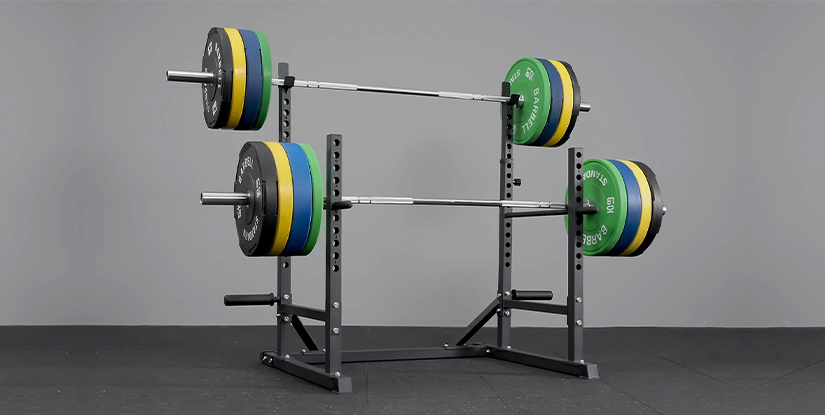
Structural Integrity and Load-Bearing Vulnerabilities
The operational failure of a Powerlifting Bench And Squat Rack system rarely occurs due to a single catastrophic event; rather, it is the result of cumulative mechanical fatigue and improper load distribution. For facility operators, the primary pain point is often the unannounced structural degradation that leads to equipment instability or catastrophic collapse during high-intensity lifts. Understanding the mechanism of failure—specifically metal fatigue and fastener loosening—is the first step toward establishing a preventative maintenance culture.
Common Failure Modes in Heavy-Duty Racks
Most failures originate in the connection points between the uprights and the base or the bench frame and the rack interface. Vibrations from repetitive heavy loading can slowly back out hex bolts, leading to lateral sway. If a rack exhibits even a minor degree of oscillation during a lift, the integrity of the entire unit is compromised. This is not merely a nuisance; it is a fundamental sign of structural instability that requires immediate intervention.
| Failure Indicator | Potential Cause | Verification Method |
|---|---|---|
| Lateral Sway | Loose base bolts or uneven flooring | Apply horizontal pressure to uprights |
| Audible Creaking | Friction in sliding mechanisms or loose joints | Visual inspection of all connection points |
| Padding Compression | High Shore hardness degradation in bench foam | Manual indentation test |
| Paint Flaking | Moisture ingress or chemical cleaners | Tactile surface inspection |
By identifying these indicators early, operators can move from reactive repair to proactive management. Once the structural stability is verified, the focus must shift to the specific technical tolerances of the component interfaces.
Upholstery Resilience and Bench Surface Optimization
While the steel skeleton provides the strength, the bench surface determines the user's ability to maintain a stable midline during heavy presses. A common mistake among facility managers is overlooking the technical specifications of the upholstery, assuming that all high-density foam is equal. Over time, even high-quality polyurethane can suffer from compression set or surface tearing, which directly impacts lifter stability.
Selecting High-Performance Bench Materials
The durability of the bench surface is a balance between Shore hardness (for firmness) and tensile strength (for tear resistance). A bench that is too soft lacks the necessary support for heavy bench presses, while a surface that is too hard can lead to bruising and discomfort, discouraging consistent use. When evaluating a Powerlifting Bench And Squat Rack setup, the upholstery should be rated for high-frequency mechanical stress.
- High-Density Foam: Look for closed-cell foam that resists moisture absorption and maintains its shape under constant load.
- Vinyl Coating: The surface must be easy to sanitize without degrading the polymer structure.
- Stitch Integrity: Inspect seams for fraying, as this is where most moisture-related failures begin.
Ensuring the bench surface remains intact is critical for user safety, yet a perfect surface is useless if the frame beneath it is not properly aligned with the rack. This brings us to the necessity of precise calibration between the bench and the uprights.
Alignment Precision and J-Cup Calibration
A significant source of operator error in professional environments is the failure to calibrate the height and depth of the J-cups and spotter arms. If the bench is not perfectly centered within the footprint of the rack, the lifter's center of gravity will shift, creating uneven torque on the uprights and increasing the risk of the bar slipping. This misalignment is often caused by uneven floor surfaces or imprecise initial assembly.
Verifying Center-Point Accuracy
To ensure optimal performance, the bench must be positioned so that the lifter's gaze and the barbell's path align with the center of the rack's width. This requires more than just a visual estimate; it requires a standardized setup procedure that can be repeated daily.
| Adjustment Step | Technical Goal | Verification Action |
|---|---|---|
| Base Alignment | Ensure the bench sits level within the rack frame | Use a spirit level on the bench surface |
| J-Cup Height | Standardize the starting position of the bar | Measure distance from floor to bar height |
| Spotter Arm Depth | Prevent bar bounce during failed lifts | Check clearance between bar and arm |
| Lateral Spacing | Equalize distance between bench and uprights | Measure from bench edge to upright |
A correctly calibrated system reduces the mechanical strain on the equipment and enhances the user experience. However, even a perfectly aligned system requires regular mechanical oversight to prevent gradual drift caused by heavy usage.
Related reading:
Portable Squat Rack: Base Depth Ratio, Steel Gauge & Travel Safety
The Criticality of Fastener Torque and Bolt Tension
The connection between the structural steel and the functional components of a Powerlifting Bench And Squat Rack relies entirely on the integrity of the fasteners. Over time, the massive kinetic energy transferred during heavy squats and presses can cause fasteners to lose their pre-load, leading to a phenomenon known as "joint walking," where parts slowly shift out of alignment.
Implementation of a Torque Schedule
A professional-grade facility should not rely on a one-time assembly. Instead, a regular torque verification schedule must be implemented. This involves using a calibrated torque wrench to ensure that every bolt meets the manufacturer's specified Newton-meters (Nm) or foot-pounds (ft-lbs). Failure to do this can lead to catastrophic shearing or the loosening of structural plates.
- Weekly: Visual check for missing washers or visible gaps in joints.
- Monthly: Full torque check of all primary structural bolts using a calibrated wrench.
- Quarterly: Deep inspection of secondary components like J-cups and bench adjustable pins.
When fasteners are tightened incorrectly—either too loose or excessively tight—the results are equally detrimental. Over-tightening can strip threads or crack cast iron components, while under-tightening leads to the instability discussed previously. Moving from mechanical maintenance to long-term operational planning requires understanding the surrounding environment.
Related reading:
Environmental Variables and Floor-Load Constraints
The performance of a heavy-duty rack system is heavily influenced by the substrate it sits upon. Many operators focus solely on the rack itself, failing to account for how the floor impacts structural stability and noise vibration. A rack placed on an uneven or insufficiently rigid surface will inevitably develop the lateral sway mentioned in our earlier assessment of failure modes.
The Role of Flooring in Structural Stability
Gym flooring is not just for impact protection; it is a critical component of the equipment's structural ecosystem. High-quality rubber flooring provides necessary shock absorption, but it must also offer a stable base for the rack's feet. If the flooring is too soft (low Shore hardness), the rack may lean or tilt, causing uneven load distribution across the uprights.
- Impact Absorption: Prevents the transfer of energy into the building structure, reducing long-term damage.
- Stabilization: A dense, high-quality flooring helps distribute the point loads of a heavily loaded rack.
- Seismic/Vibration Control: High-density mats help dampen the vibrations that can loosen fasteners over time.
Optimizing the relationship between the equipment and the floor ensures that the mechanical precision of the rack is preserved. This stability forms the foundation for all subsequent operational tasks, including the movement and reorganization of the equipment.
Related reading:
Optimizing Workflow and Layout for Longevity
The way a rack and bench are integrated into a facility's layout determines both the longevity of the equipment and the efficiency of the athletes. Improperly spaced equipment creates obstacles and increases the likelihood of accidental collisions with the rack's uprights, which can cause structural dings or localized deformation of the steel.
Designing for Heavy-Duty Use
When planning the placement of a Powerlifting Bench And Squat Rack, operators must consider the "buffer zone" required for safe movement. This includes the space needed for the lifter to approach the bar, the space for a spotter to move, and the clearance for weight plate loading/unloading.
| Zone Type | Description | Risk if Neglected |
|---|---|---|
| Approach Zone | Area directly in front of the bench | Tripping hazards/Unstable starts |
| Loading Zone | Lateral space for plate changeover | Striking the uprights with plates |
| Spotter Path | Clear area behind the lifter | Collision during heavy sets |
| Buffer Perimeter | Distance between rack and other machines | Cross-traffic interference |
A well-planned layout reduces the daily physical stress placed on the equipment. However, even with a perfect layout, the inevitability of wear and tear means that a rigorous inspection routine must remain a permanent part of the operational lifecycle.
Related reading:
Standardized Inspection Checklist for Facility Operators
To transition from a reactive to a proactive maintenance model, operators should utilize a standardized checklist. This document serves as the primary tool for verifying the operational readiness of the Powerlifting Bench And Squat Rack system and provides a historical record of the equipment's condition.
The Daily/Weekly Inspection Protocol
A checklist should be divided by frequency to ensure that high-impact checks are performed regularly without overwhelming the staff. The goal is to catch subtle changes in the equipment's behavior before they escalate into safety hazards.
- Daily (Visual/Tactile): Check for any new dents, loose bolts, or ripped upholstery; ensure the bench is centered.
- Weekly (Mechanical): Test the movement of J-cups and adjustable pins; check for any excessive rattle or vibration.
- Monthly (Full Audit): Full torque check of all bolts; inspect the floor contact points for any unevenness or sinking.
By strictly adhering to these protocols, facility managers can extend the life of their investment and ensure a safer environment for all users. Maintaining this high standard of care is the ultimate way to ensure long-term operational success.
Related reading:
Synthesizing Maintenance and Longevity
The durability of heavy-duty lifting equipment is not a static attribute; it is an actively maintained state. From the structural integrity of the steel to the granular details of fastener torque and upholstery hardness, every component plays a role in the overall safety and performance of the system. A professional approach requires a deep understanding of how mechanical, environmental, and operational factors interact.
By focusing on the core issues—structural stability, precise alignment, and rigorous maintenance—operators can minimize downtime and prevent the most common failure modes. The transition from a consumer mindset to a commercial operational mindset is the single most important step in managing a high-performance facility.