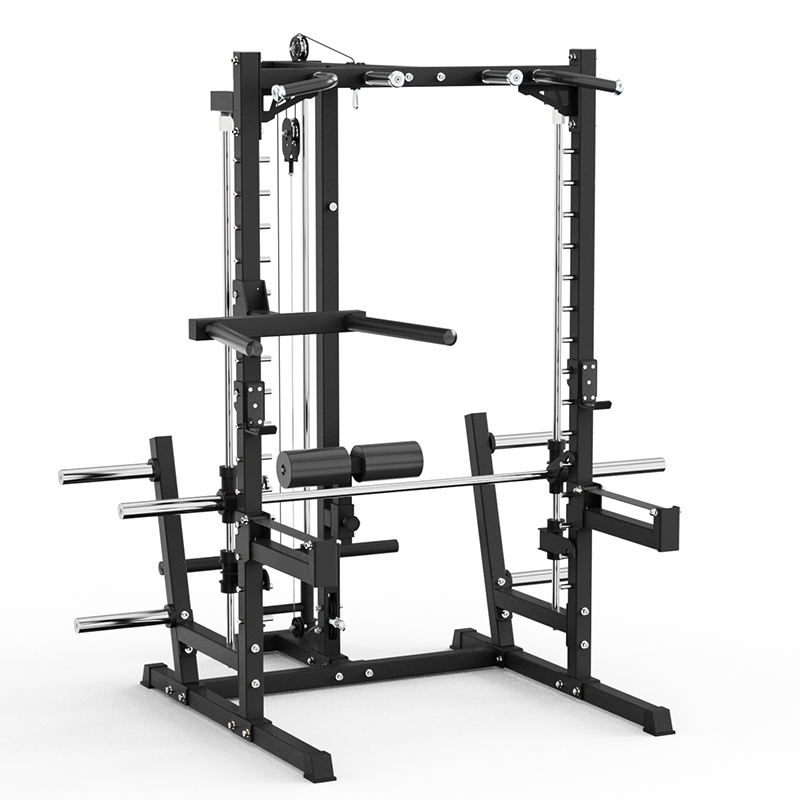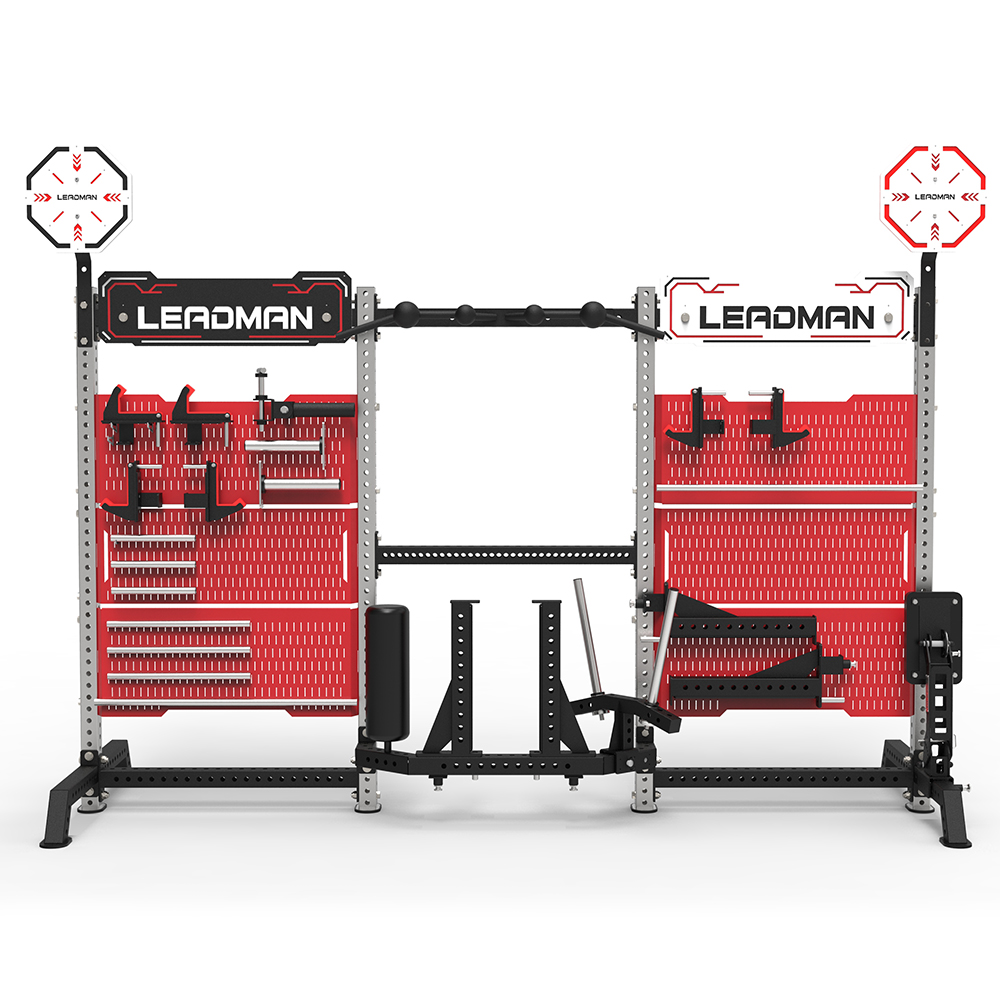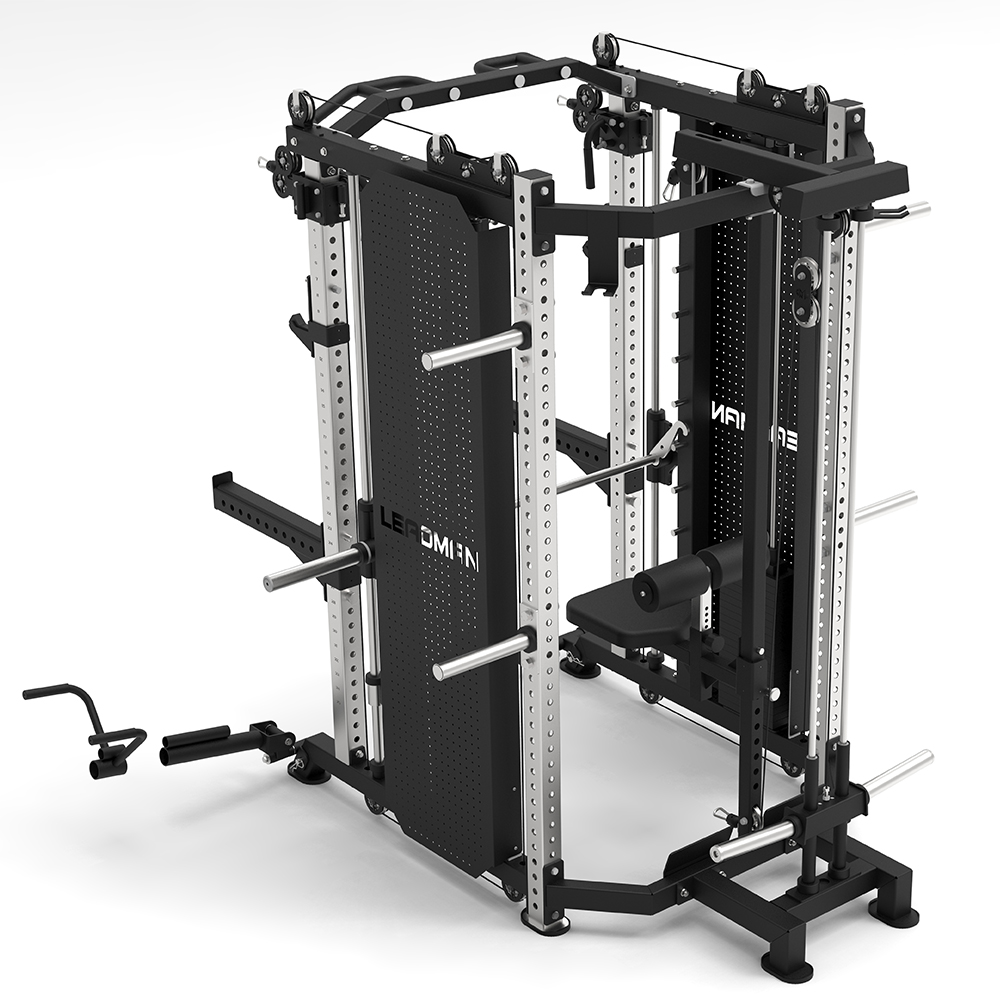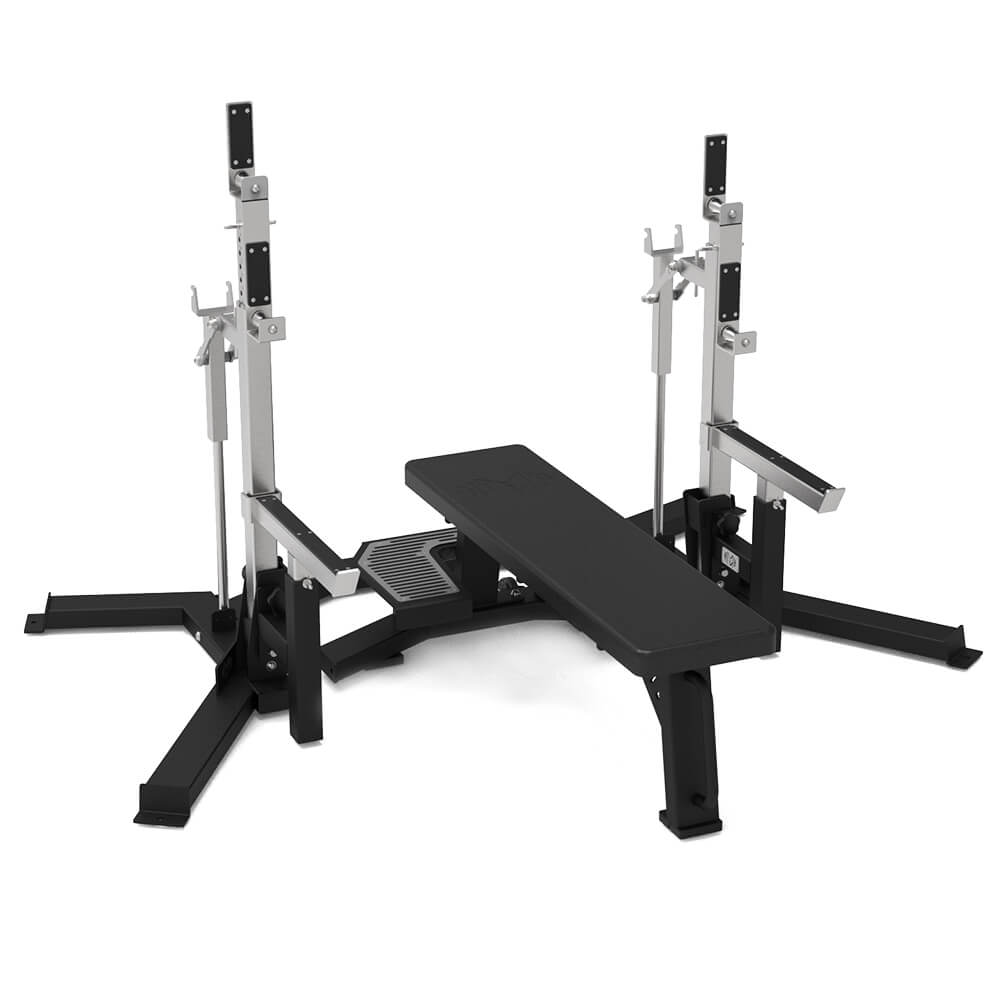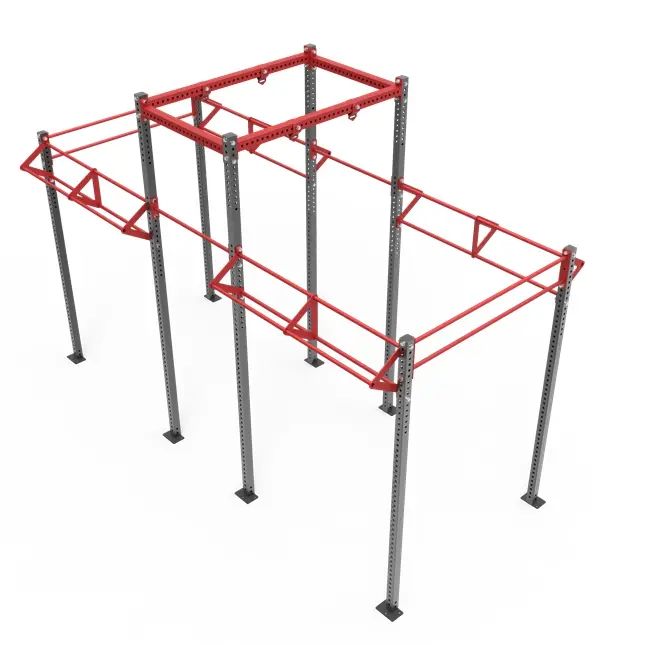

The portable squat rack category emerged from a specific constraint: athletes and coaches who need heavy-duty squat stands that collapse into a car trunk or airline-checkable bag. Unlike permanent power racks anchored to concrete slabs, portable designs must resist forward tip and lateral sway using only their own footprint and gravity. This engineering challenge intensifies at loads exceeding 150kg, where the rack's base width-to-height ratio becomes the primary safety variable. Understanding this physics trade-off separates genuinely capable travel racks from dangerously unstable placeholders.
The mechanical foundation of any portable squat rack is the base spread relative to the j-hook height. A rack with j-hooks at 140cm (average squat catch height) requires a front-to-back base depth of at least 70cm to achieve a 2:1 stability ratio—the minimum recommended for unbolted structures. Portable squat rack designs achieving this often use telescoping front legs that extend during use and retract for storage, or tripod configurations where a single rear leg opposes two front feet. Models with fixed, narrow bases under 50cm depth require additional rear weight storage or user ballast (e.g., loading plates onto rear pegs) to prevent tip-back during aggressive reracking. Drop test data from portable rack evaluations shows that 65cm-base units with 140cm hook height withstand 160kg reracks without tip, while 45cm-base equivalents tip at 110kg under identical conditions.
From a materials perspective, quality portable squat rack options prioritize 14-gauge (2.0mm) to 12-gauge (2.6mm) steel thickness rather than lighter 16-gauge (1.5mm). The weight penalty of thicker steel—approximately 2-3kg per upright—directly correlates with stability under lateral loads. Portable squat rack uprights made from 2.6mm square tubing resist flex during walkouts; 1.5mm tubes visibly bow under 120kg, causing the barbell to drift forward or backward mid-squat. The connecting mechanism between the two stands also matters: rigid cross-members (detachable bars) eliminate independent stand movement but add bulk, while tether straps or cables allow the stands to shift apart during heavy unracks. Commercial-grade portable racks use telescoping crossbars with cam-lock tensioners, achieving rigidity comparable to fixed-width stands in 30 seconds of setup time.
For buyers evaluating options, prioritize portable squat rack models with laser-cut hole spacing of 25mm through the front face, not just the sides. Front-face holes allow j-hook depth adjustment—critical for accommodating different bar diameters (28mm Olympic vs. 25mm standard) and bench press positioning. Verify that the j-hooks include UHMW plastic liners at least 5mm thick; thinner liners compress permanently after 200-300 racks, exposing bare steel that damages barbell knurling. The most travel-friendly designs break down into a flat pack under 75cm in any dimension, fitting into standard checked luggage. Emerging innovations include integrated landmine posts (requiring a reinforced baseplate) and dip attachment compatibility—though each added feature typically adds 1.5-2kg to total package weight.