
Maximizing Training Variety with Gym Workout Equipment
The Strategic Necessity of Training Variety with Gym Workout Equipment
Facility managers and high-performance coaches often encounter a plateau in client progress that is not caused by insufficient effort, but by a lack of mechanical stimulus diversity. When a training regimen relies too heavily on a narrow subset of movement patterns, the musculoskeletal system adapts, leading to diminishing returns and increased overuse injury risks. Achieving true training variety with gym workout equipment requires more than just adding more machines; it requires a calculated selection of tools that address different planes of motion, resistance curves, and stability requirements.
The core problem is often a 'redundancy trap,' where an operator invests in multiple machines that serve nearly identical biomechanical functions. This leads to wasted floor space and a stagnant training environment. To resolve this, an operator must shift from a collection-based mindset to a functional-diversity mindset, ensuring that the inventory provides a comprehensive spectrum of resistance. Once the strategic foundation for variety is understood, the next step involves evaluating the specific mechanical advantages provided by different classes of equipment.
Identifying the Redundancy Trap
A common mistake in commercial gym procurement is purchasing three different versions of a horizontal chest press. While the branding may differ, the resistance curve and stability profiles often overlap by over 80%. To avoid this, decision-makers should evaluate equipment based on the following distinction matrix:
| Equipment Class | Primary Resistance Type | Stability Profile | Movement Plane Focus |
|---|---|---|---|
| Selectorized Machines | Constant/Fixed Curve | High (Isolated) | Single Plane (Sagittal/Frontal) |
| Free Weights | Variable (Gravity-Based) | Low (Requires Core) | Multi-planar/Rotational |
| Cable Systems | Adjustable/Variable | Moderate (Dynamic) | Omni-directional |
| Functional Trainers | Constant Tension | Variable (Unstable) | High Complexity/Rotational |
By recognizing these distinctions, an operator can curate a diverse ecosystem that prevents mechanical stagnation. This understanding of equipment classes leads directly into the technical nuances of resistance profiles.
Analyzing Resistance Curves and Mechanical Advantages
Having established the need for diversity in equipment classes, we must now look at how the specific resistance profile of a tool dictates the training stimulus. A common failure in facility design is a lack of balance between constant tension and variable resistance. For instance, a client may have access to heavy free weights but lacks the ability to maintain tension at the end-range of a movement, which is a critical component of muscle hypertrophy and strength longevity.
Resistance curves determine how much load is felt at different points in a range of motion (ROM). If a facility only provides gravity-based weights, the training variety is limited by the inherent strength curve of the human body. Incorporating equipment that offers varying profiles—such as pneumatic, cam-driven, or cable-based resistance—allows for more sophisticated training cycles. The following table outlines how different resistance types impact the training experience.
Resistance Profile Comparison
| Resistance Type | Mechanism of Action | Key Advantage | Common Technical Limitation |
|---|---|---|---|
| Gravity (Free Weights) | Linear weight drop | Natural strength curve | Zero tension at peak contraction |
| Cam-Driven (Selectorized) | Changing leverage via eccentric cams | Matches human strength curve | Fixed movement path restricts variety |
| Pneumatic (Air-Driven) | Air compression/Pressure | Instantaneous force adjustment | High initial capital expenditure |
| Constant Tension (Cables) | Pulley and weight stack | Continuous resistance throughout ROM | Requires high stability for heavy loads |
Effective implementation requires matching these profiles to specific training phases. For example, a powerlifting phase may prioritize free weights, whereas a hypertrophy phase might benefit more from the constant tension of cable-driven equipment. Mastering these profiles ensures that the facility can support diverse athletic goals. However, physical resistance is only effective if the structural integrity of the equipment remains constant, necessitating a rigorous approach to inspection.
Standardizing Maintenance Protocols for High-Usage Equipment
A sophisticated range of training variety is only as good as the reliability of the machines providing it. A significant pain point for operators is the 'death by a thousand cuts'—the gradual decline of equipment performance due to neglected small-scale maintenance. A machine that feels 'clunky' or has a slight resistance hitch doesn't just hinder training variety; it actively creates biomechanical inefficiencies that can lead to injury.
Maintenance must be viewed as a preventive operational cost rather than a reactive repair expense. A common mistake is waiting for a component to fail before intervening. A professional-grade maintenance schedule should categorize equipment by its movement mechanism to ensure nothing is overlooked. Failure to do so often results in premature wear of expensive components like nylon bushings or high-grade steel cables.
Operational Maintenance Checklist
- Cable-Based Systems: Inspect cable fraying every 30 days; lubricate pulleys with silicone-based lubricant to prevent friction heat.
- Selectorized Machines: Verify weight stack guide rod smoothness; check pin seating for consistent resistance.
- Free Weight Racks: Inspect bolt torque on uprights; check for weld cracks under high-load impact zones.
- Upholstery and Contact Points: Inspect for skin-contact cracks or tears that could harbor bacteria or cause friction burns.
By implementing these checks, an operator ensures that the variety offered to the user is delivered with precision and safety. Once the machines are performing as designed, the operator must focus on the spatial implementation of this variety.
Explore the complete technical specifications:
Optimizing Facility Layout for Functional Training Variety
Even with a diverse inventory, the physical layout of the facility can inadvertently stifle training variety. The most common failure in layout design is the 'congestion bottleneck,' where high-demand equipment like cable machines or power racks are placed in areas with insufficient clearance. This forces users to modify their movements—often sacrificing form—to avoid hitting adjacent equipment, thereby negating the technical benefits of the machine.
A strategic layout treats the gym floor as a single, integrated system. There should be a clear hierarchy of space: heavy-duty high-impact zones (free weights), medium-duty station zones (machines), and low-impact dynamic zones (functional training). A well-designed layout allows for the seamless transition between different training modalities without causing user friction.
Zoning Strategy for Enhanced Throughput
To optimize the use of diverse equipment, consider the following zoning parameters:
- High-Density Core: Centralized area for dumbbells and benches; requires high-durability flooring (minimum 8mm rubber) to absorb impact.
- The Perimeter Ring: Specialized machines and cable stations; placed near walls to maximize central floor space for movement.
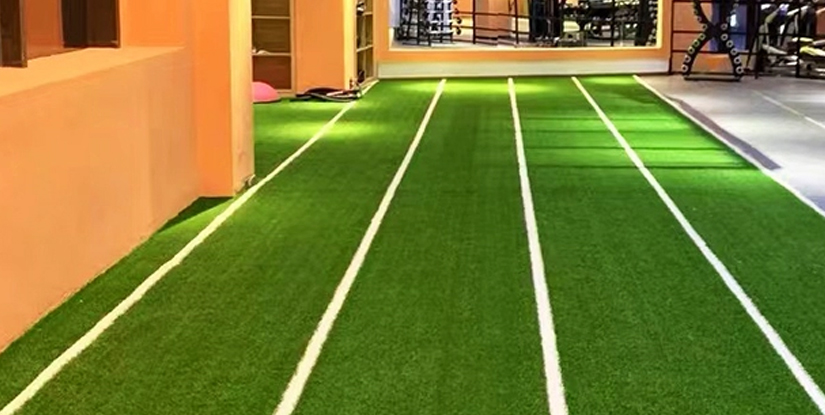
- The Dynamic Lane: An open area for sled pushes, kettlebell work, and plyometrics; requires a minimum 10-meter unobstructed path for safety.
Designing with these zones in mind ensures that the technological variety provided by the equipment is actually usable. However, as the facility grows and the diversity of training evolves, the operator must also stay ahead of potential technical obsolescence through intelligent procurement.
Explore the complete technical specifications:
Mitigating Procurement Risks in Equipment Expansion
As an operator seeks to increase training variety, the temptation to buy 'more' can lead to significant capital inefficiency. The core problem in the expansion phase is the procurement of low-spec equipment that fails to meet the demands of a commercial environment. A common cause of this failure is prioritizing low upfront costs over long-term Total Cost of Ownership (TCO). For example, a machine may be cheap to purchase, but if its resistance curve is inconsistent or its parts are proprietary and expensive to replace, the ROI will be negative within 24 months.
To mitigate this, every procurement decision must be based on technical specifications rather than just aesthetic or brand appeal. A professional buyer must look beyond the exterior to the internal mechanics of the equipment. This involves auditing the supplier's technical documentation and verifying the quality of the metal, the bearing grades, and the warranty terms.
Procurement Decision Criteria
| Metric | Low-Spec (Warning Sign) | High-Spec (Target) |
|---|---|---|
| Steel Gauge | Thin-walled, prone to vibration | Heavy-gauge, high-density steel |
| Bearing Type | Standard unshielded bearings | Precision-sealed or ball-bearing systems |
| Warranty Scope | Parts only, limited time | Full structure and motion component coverage |
| Resistance Consistency | Variable tension, slight 'jerkiness' | Smooth, consistent resistance through ROM |
Verifying these metrics during the selection process protects the long-term viability of the facility's training variety. With the technical foundations and procurement strategies in place, we can conclude with a look at how to verify the actual performance efficacy in a real-world setting.
Explore the complete technical specifications:
Verifying Training Efficacy and Equipment Performance
The final step in the lifecycle of training variety is the verification phase. How do you know if your diverse equipment is actually serving the facility's goals? The problem often lies in 'invisible underutilization,' where certain machines sit idle while others are over-crowded, indicating a misalignment between equipment variety and user needs. This is frequently caused by a lack of structured feedback loops.
Verification is not a one-time event but a continuous process of observation and data collection. An operator should use both qualitative and quantitative methods to ensure that the technical variety provided translates into actual user progress and facility throughput. A successful verification process identifies whether the equipment is being used as intended or if users are bypassing it due to poor setup or mechanical flaws.
Continuous Verification Workflow
To ensure the training variety remains effective, implement the following three-stage verification cycle:
- Stage 1: Visual Audit (Daily/Weekly): Observe user form. Are users modifying movements to avoid hitting other equipment? Are they struggling with the resistance curve of the machines?
- Stage 2: Load/Usage Tracking (Monthly): If using smart equipment or digital tracking, analyze usage patterns. Which machines have high dwell times versus high turnover?
- Stage 3: Mechanical Stress Test (Quarterly): Perform a deep-dive inspection of all cables, checking for tension consistency and checking all load-bearing bolts for structural integrity.
By consistently applying these verification stages, operators can transition from a reactive stance to a proactive management style, ensuring that the diversity of training remains a competitive advantage rather than an operational burden.