
Optimizing Facility Longevity with High-Quality Gym Weight Plates Rubber
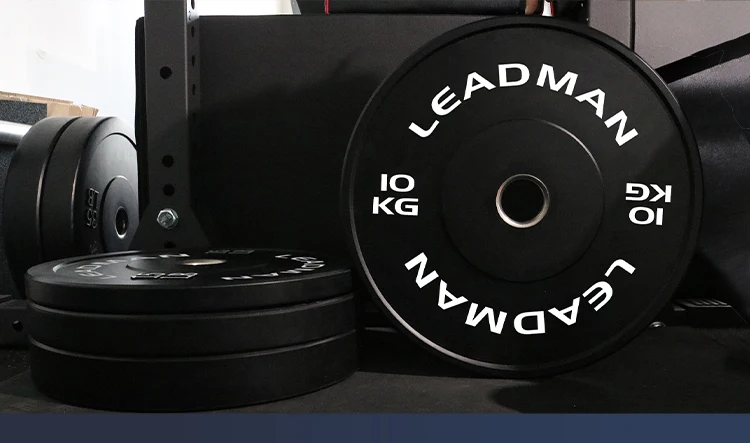
Understanding the Technical Composition of Gym Weight Plates Rubber
Selecting high-quality lifting equipment requires a fundamental understanding of material science. For facility operators, the primary concern is often the variance in density and Shore hardness across different batches of Gym Weight Plates Rubber. A common problem in commercial settings is the premature cracking or 'chalking' of the surface, which occurs when the rubber compound lacks sufficient elasticity to withstand repeated high-impact drops.
The cause of such degradation is usually an improper ratio of synthetic elastomers or an excess of recycled filler materials. When a plate is dropped, the energy must be absorbed and dissipated through the rubber layer. If the material is too brittle, the impact energy travels directly to the internal steel or iron core, leading to structural fatigue. To verify quality, an operator should check the rebound characteristics: a high-quality rubber plate should exhibit a controlled, dampened bounce rather than an erratic, high-frequency vibration. Understanding these material nuances is the first step in preventing premature replacement cycles.
Density and Shore Hardness Variables
When evaluating specifications, procurement managers must look beyond the weight and focus on the physical properties of the coating. A higher Shore hardness indicates a firmer, more durable surface, but it also increases the risk of noise and floor vibration if not paired with appropriate flooring.
| Material Type | Primary Benefit | Typical Use Case | Risk Factor |
|---|---|---|---|
| Virgin Rubber Coating | Highest elasticity and impact absorption | Premium commercial strength training zones | Higher initial procurement cost |
| Recycled Rubber Composite | Cost-effective and durable | General fitness and functional training | Potential for odor or uneven surface texture |
| Urethane-Enhanced Surface | Extreme wear resistance | High-traffic heavy lifting areas | Reduced shock absorption compared to pure rubber |
Once the material composition is understood, the focus must shift to how these plates interact with the surrounding environment and flooring systems.
Evaluating Impact Absorption and Floor Load Requirements
The relationship between your Gym Weight Plates Rubber and the subfloor is a critical factor in long-term facility maintenance. A frequent failure mode in mid-tier gyms is the neglect of shock absorption, which results in cracked subfloors or structural damage to the building. This is caused by an imbalance between the weight of the plate and the thickness of the rubber coating relative to the floor's decibel and impact rating.
To mitigate this, operators must implement a rigorous selection process based on the intended training zone. For example, a deadlift platform requires a higher degree of kinetic energy dissipation than a standard weight station. Verification involves testing the 'impact noise' threshold. If a dropped plate produces a sharp, high-pitched sound, the rubber is likely too thin or too dense, necessitating either a thicker plate coating or a thicker layer of gym flooring. Managing this interplay ensures that your equipment longevity is not compromised by the very floor meant to protect it.
Standardizing Impact Control Procedures
Establishing a baseline for impact management helps prevent structural fatigue in both the equipment and the facility. Use the following checklist to verify your setup:
- Check Plate Thickness: Ensure the rubber sleeve is uniform across the entire circumference.
- Test Floor Compliance: Verify the flooring under the weights can handle the calculated weight per square inch.
- Monitor Sound Decibels: Record the sound of a standard drop to ensure it meets facility noise thresholds.
- Inspect for Vibrations: Observe the movement of adjacent equipment after a heavy drop.
With the physical setup validated, the next operational priority is establishing a consistent inspection cadence to catch wear before it leads to failure.
Routine Inspection Protocols for Rubberized Weight Plates
Maintaining a professional standard of safety requires a systematic approach to inspection. A common mistake among facility managers is treating Gym Weight Plates Rubber as a 'set and forget' asset. In reality, rubber is an organic-based synthetic that undergoes thermal and mechanical stress every time it is used. Over time, this stress can manifest as delamination—where the rubber skin begins to separate from the internal core.
The cause of delamination is often high-heat environments or extreme temperature fluctuations within the gym. To prevent this, operators should perform a monthly visual and tactile inspection. During this process, look for 'bubbling' or areas where the rubber feels soft or detached from the center. If you detect any separation, the plate should be removed from circulation immediately, as an uneven weight distribution can cause barbell instability during a lift. Verification is achieved by performing a simple 'squeeze test' on the edges of the plate to ensure the bond remains rigid.
Failure Mode Identification Checklist
| Observed Symptom | Likely Cause | Required Action |
|---|---|---|
| Surface Chalking | UV exposure or low-quality recycled filler | Replace plate or move to indoor-only zones |
| Edge Cracking | Low-temperature brittleness | Maintain controlled room temperature |
| Core Separation | High-impact fatigue or poor adhesion | Decommission plate immediately |
| Odor Emission | Excessive volatile organic compounds (VOCs) | Verify ventilation and material certification |
Identifying these signs early saves significant capital in the long run, but it also necessitates a deeper look at the maintenance of the storage areas themselves.
Related reading:
Optimizing Storage and Environmental Control
The longevity of your equipment is heavily influenced by how it is stored when not in use. A recurring issue in many facilities is the degradation of Gym Weight Plates Rubber due to improper storage conditions. For instance, stacking heavy plates in high-humidity areas or in direct sunlight can lead to rapid oxidation and structural weakening. The cause is the breakdown of the polymer chains under extreme thermal or moisture stress.
To ensure a high ROI on your equipment, implement a climate-controlled storage protocol. Ideally, plates should be stored in a dry, temperature-stable environment, ideally on vertical plate trees or specialized racks rather than in piles on the floor. Piling plates creates concentrated pressure points that can permanently deform the rubber profile. To verify that your storage is effective, monitor the ambient temperature in your storage room and ensure it does not deviate more than 10-15 degrees from your training area. This consistency prevents the expansion and contraction cycles that lead to cracking.
Temperature and Humidity Benchmarks
Maintaining these environmental standards is essential for preserving the physical properties of the rubberized surface:
- Optimal Temperature Range: 15°C to 25°C (59°F to 77°F).
- Target Humidity Levels: 40% to 60% relative humidity.
- Storage Elevation: Minimum 10cm off the ground to prevent moisture wicking.
As environmental control becomes a standard part of your workflow, you can begin focusing on the more technical aspects of loading and barbell compatibility.
Related reading:
Ensuring Barbell Compatibility and Load Stability
A critical, yet often overlooked, aspect of using Gym Weight Plates Rubber is the precision of the center hole diameter. A common problem in commercial gyms is the 'wobble' or uneven loading that occurs when the plate's inner diameter is slightly too large for the barbell sleeve. This is caused by manufacturing tolerances being too wide in lower-quality production runs. This instability is not just a nuisance; it can cause a sudden shift in center of gravity during a heavy lift, posing a significant safety risk to the lifter.
To prevent this, procurement teams must specify strict tolerance ranges. A professional-grade plate should have a center hole designed to fit a standard 50mm barbell sleeve with minimal play. To verify compatibility before a large-scale purchase, always request a sample or a technical spec sheet that defines the inner diameter tolerance (typically +/- 0.5mm). If the plate does not sit flush against the barbell sleeve, the weight distribution will be compromised, leading to uneven wear on both the barbell and the plate.
Verification of Load Precision
Before adding new stock to your facility, use the following method to ensure precision:
- The Fit Test: Slide the plate onto a standard 50mm barbell; ensure there is no more than a 1mm gap.
- The Balance Check: Load two identical plates on opposite ends of a barbell and observe for any lateral oscillation.
- The Smoothness Audit: Ensure the transition from the barbell sleeve to the rubber surface is seamless to prevent snagging.
By mastering these technical nuances—from material composition to storage—facility operators can significantly extend the lifecycle of their lifting equipment.
Related reading:
Optimizing Lifespan Through Cleaning and Maintenance
Maintaining the aesthetic and functional integrity of Gym Weight Plates Rubber requires a specific approach to cleaning. A common mistake is using harsh chemical degreasers or abrasive brushes, which can strip the protective outer layer of the rubber, leaving it vulnerable to oxidation and cracking. Once the surface is stripped, the rubber becomes more porous, absorbing sweat and oils which can lead to structural degradation over time.
The best practice is to use pH-neutral cleaning solutions and a soft, non-abrasive cloth. When cleaning, avoid excessive moisture buildup, as water can seep into the interface between the rubber and the core, promoting internal oxidation. To verify your cleaning method is safe, perform a patch test on a single plate in a low-visibility area. If the surface becomes tacky or changes color, your cleaning agent is too aggressive. Proper maintenance ensures that the plates remain easy to grip and visually professional for years.
Cleaning and Maintenance Checklist
- Avoid Solvents: Never use acetone, bleach, or ammonia-based cleaners on rubber surfaces.
- Damp, Not Soaked: Use a damp cloth rather than spraying liquids directly onto the plates.
- Dry Thoroughly: Always ensure plates are dry before placing them back on storage racks.
- Frequency: Perform a superficial wipe-down weekly and a deep clean quarterly.
Consistent care and the right cleaning protocols ensure that your investment continues to serve your facility effectively without the need for frequent replacement.