
Global Market Leadership of China Fitness Equipment: A Procurement and Quality Control Perspective
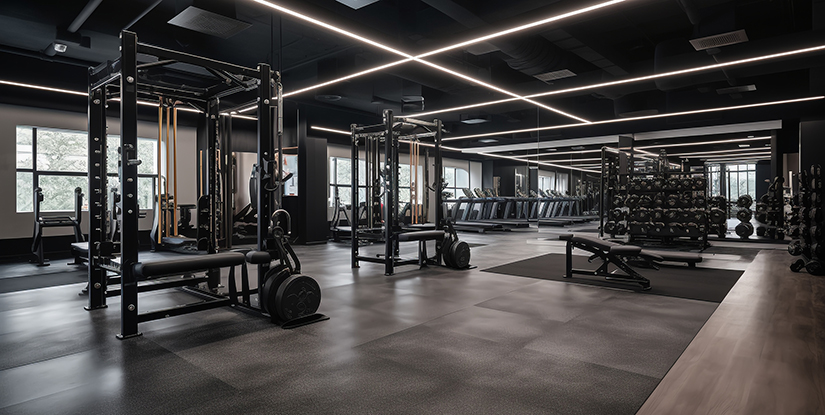
For decades, a pervasive misconception has circulated within the commercial fitness industry: that high-volume production from East Asia inherently compromises mechanical precision and long-term durability. This reductionist view often leads facility operators to overlook the sophisticated engineering shifts that have redefined the sector. In reality, the current landscape of the Global Market Leadership of China Fitness Equipment is not driven by low-cost generic output, but by a highly integrated vertical manufacturing model that controls everything from raw steel thickness to electronic control unit (ECU) firmware. To navigate this market successfully, procurement officers must move beyond superficial price-per-unit metrics and adopt a technical auditing framework focused on material science, structural integrity, and lifecycle reliability.
Deconstructing the Myth of Low-End Manufacturing in Modern Fitness Hardware
The initial hesitation many buyers feel stems from outdated benchmarks of the early 2000s. The core problem is that many procurement teams still use 'low-cost' as a proxy for 'lower quality,' failing to account for the technological leap in precision CNC machining and automated welding processes now ubiquitous in top-tier production hubs. The cause of this lingering doubt is usually a lack of visibility into the modern manufacturing stack.
To bridge this gap, operators should evaluate manufacturers based on their control over the supply chain. A high-tier facility will not just source parts; they will dictate the specifications for the entire assembly. For example, instead of assuming a standard steel grade, a professional buyer should demand specific carbon steel content and wall thickness tolerances. By shifting the focus from 'cost' to 'specification compliance,' the perceived risk of mechanical failure is significantly mitigated.
Understanding these technical thresholds is the first step toward a successful acquisition, which naturally leads to the critical requirement of material verification during the selection process.
Technical Standards for Material Selection and Structural Integrity
Transitioning from a general understanding of market shifts to specific hardware selection requires a rigorous look at the physical components. A common failure mode in commercial gyms is the premature fatigue of weight stacks and frame connections, often caused by inadequate material specification. When the Global Market Leadership of China Fitness Equipment is approached through a technical lens, the focus shifts to the metallurgy and powder coating processes that protect the investment.
The following table outlines the critical parameters a procurement specialist should verify when comparing strength-training equipment specifications:
| Component Category | Standard Spec (Commercial) | Premium Spec (High-Traffic) | Verification Method |
|---|---|---|---|
| Frame Steel Wall Thickness | 11-gauge (approx. 3mm) | 7-gauge or thicker (approx. 4mm+) | Digital Caliper Measurement |
| Powder Coating Type | ext: Electrostatic PolyurethaneHigh-Durability UV Resistant | Multi-layer Anti-corrosive | Cross-cut Adhesion Test |
| Bearing Type (Pivot Points) | Standard Bronze Bushings | Precision Sealed Ball Bearings | Manual Rotation Smoothness Check |
| Weight Stack Plate Material | Standard Cast Iron | High-Density Polyurethane Coated | Impact/Drop Testing |
Failure to demand these specific ranges often results in 'phantom durability,' where a machine appears heavy and solid but lacks the internal structural integrity to withstand 12+ hours of daily commercial use. Once the material specs are established, the next critical layer is the electronic integration and software reliability.
Explore the complete technical specifications:
Ensuring Reliability in Smart Equipment and Electronic Control Units
As the industry moves toward connected fitness, the complexity of equipment has shifted from purely mechanical to a hybrid of hardware and software. A significant pain point for modern gym owners is the failure of treadmill consoles or smart resistance systems. The cause is frequently a reliance on low-grade microcontrollers that cannot handle fluctuating electrical loads or consistent thermal buildup.
To prevent high downtime rates, operators must look beyond the touch-screen interface and audit the internal electronics. A professional approach involves verifying the IP (Ingress Protection) rating of the control boards and the stability of the power supply unit (PSU). A robust system should possess a high tolerance for the environmental variables common in fitness centers, such as high humidity and localized temperature spikes.
Critical Electronic Component Checklist
- Control Board Protection: Ensure the ECU features built-in surge protection and electromagnetic interference (EMI) shielding.
- Sensor Calibration: Verify that the resistance sensors (in smart trainers or ellipticals) have a high resolution and repeatable response time.
- Connectivity Stability: Check for consistent Bluetooth/ANT+ signal strength and the ability to handle firmware-over-the-air (FOTA) updates without corruption.
By securing the electronic foundations, you ensure the longevity of the digital experience, which leads directly to the necessity of a rigorous mechanical maintenance protocol.
Explore the complete technical specifications:
Implementing a Rigorous Preventive Maintenance Schedule
Even the highest quality equipment, regardless of its origin, will fail without a structured maintenance regime. The biggest mistake made by facility managers is treating maintenance as a 'reactive' task—only intervening once a part has broken. This approach leads to high repair costs and diminished user safety. Instead, a proactive model is required to preserve the ROI of the equipment.
The following maintenance framework is designed for high-use commercial environments to prevent common failure modes like bolt loosening, cable fraying, and lubrication loss:
| Frequency | Inspection Focus | Action Required | Verification Metric |
|---|---|---|---|
| Daily | Visual Surface Integrity | Wipe down upholstery; check for loose bolts. | Zero visible cracks or loose fasteners. |
| Weekly | Moving Parts & Cables | Check cable tension and frayed coatings. | Smooth movement without 'clicking' sounds. |
| Monthly | Mechanical Lubrication | Grease pivot points and guide rods. | Consistent glide; no sticking or friction. |
| Quarterly | Structural Fasteners | Re-torque all major frame bolts. | Torque wrench verification of spec. |
Maintaining this cadence ensures that the hardware remains in peak condition, but it also requires an understanding of how to troubleshoot minor issues before they become catastrophic failures.
Explore the complete technical specifications:
Troubleshooting Common Operational Failures
Despite best efforts in procurement and maintenance, operational friction is inevitable. The key to minimizing downtime is knowing how to differentiate between a component failure and a user-error/environmental issue. For instance, a constant noise in a cable machine may not be a snapped cable; it could simply be a dry guide rod or a misaligned pulley. Understanding these nuances saves significant service costs.
When a failure occurs, operators should follow a logical diagnostic path. If a treadmill motor is overheating, the cause might not be a faulty motor, but a heavily loaded deck that requires lubrication. By isolating the variable—mechanical, electronic, or environmental—you can resolve issues more effectively and document them for future procurement decisions.
Primary Diagnostic Workflow
- Identify the Symptom: Is it a noise, a lack of resistance, a complete power loss, or a physical instability?
- Isolate the Subsystem: Does the issue persist if the power is cycled? Does it occur only under heavy load?
- Verify Mechanical Integrity: Check for physical obstructions, lubrication levels, and fastener tightness.
- Verify Electrical Integrity: Inspect fuses, voltage outputs, and sensor connections.
Developing this diagnostic mindset allows a facility to manage its assets with precision, turning maintenance from a cost center into a value-preservation strategy.
Analyzing Long-Term ROI and Lifecycle Cost of Ownership
The final stage of a professional procurement strategy is the transition from the initial purchase to the long-term management of the asset. When evaluating the Global Market Leadership of China Fitness Equipment, the primary metric should not be the 'sticker price' but the Total Cost of Ownership (TCO). A lower initial price point can quickly become an expensive mistake if the equipment requires frequent parts replacement or lacks a durable supply chain for spare parts.
A robust TCO analysis compares the initial investment against expected depreciation, maintenance frequency, and the secondary market value. High-quality manufacturers often provide a more predictable depreciation curve because their components are standardized and widely available in the global aftermarket. This creates a much healthier ROI over a five-to-seven-year lifecycle than the cheaper, non-standardized alternatives.
TCO Comparison Framework
When making a final decision, consider these two divergent scenarios in your budget planning:
- Scenario A (Low-Cost Focus): Low initial outlay, high frequency of reactive maintenance, high parts obsolescence risk, and low resale value.
- Scenario B (Specification Focus): Moderate-to-high initial outlay, scheduled preventive maintenance, standardized part availability, and high residual value at end-of-life.
By prioritizing the long-term operational stability over short-term savings, facility owners can build a resilient business model that thrives on equipment reliability and user satisfaction.
Summary of Strategic Procurement Benchmarks
Navigating the complex global landscape requires a move toward technical excellence. From verifying the gauge of structural steel to auditing the firmware stability of smart consoles, every decision should be grounded in a verifiable metric. By treating the Global Market Leadership of China Fitness Equipment as a sophisticated manufacturing ecosystem rather than a low-cost commodity market, professional operators can secure high-performance assets that drive long-term profitability and user safety.