
Evaluating Fitness Wholesale Suppliers for Commercial Facility Procurement
Identifying Procurement Risks in Commercial Sourcing
Facility operators often face a critical failure mode during the initial procurement phase: the discrepancy between advertised specifications and actual material performance. When sourcing through Fitness Wholesale Suppliers, the primary risk is not merely price volatility, but the acquisition of equipment that fails to meet the structural or ergonomic requirements of a high-traffic commercial environment. This often stems from a lack of transparency regarding material composition and load-bearing tolerances.
A common mistake among new facility managers is prioritizing low unit costs without verifying the mechanical durability of the components. For example, a strength training station that appears robust but utilizes low-gauge steel will inevitably succumb to structural fatigue under heavy use. To mitigate this, operators must move from a purely cost-centric model to a specification-centric model. By establishing a rigorous verification process during the selection phase, you can prevent premature equipment failure and costly replacements. This technical foundation is necessary before moving into the granular details of specific equipment categories.
Common Sourcing Failure Modes
- Material Misrepresentation: High-gloss finishes masking inferior weld quality or thin-wall tubing.
- Bearing Inconsistency: Resistance fluctuations in cardio equipment due to non-standardized bearing sets.
- Compliance Gaps: Failure to meet regional safety standards for commercial-grade weight stacks.
Once the high-level procurement risks are understood, the focus must shift toward the specific mechanical requirements of strength equipment.
Mechanical Integrity Standards for Strength Training Equipment
Building on the need for rigorous specification-centric procurement, understanding the mechanical properties of strength equipment is vital for long-term ROI. In a commercial setting, the distinction between 'residential-grade' and 'commercial-grade' is not just marketing; it is a matter of metallurgical and structural engineering. When evaluating Fitness Wholesale Suppliers, you must demand documentation regarding the gauge of steel used in racks and the tensile strength of barbell components.
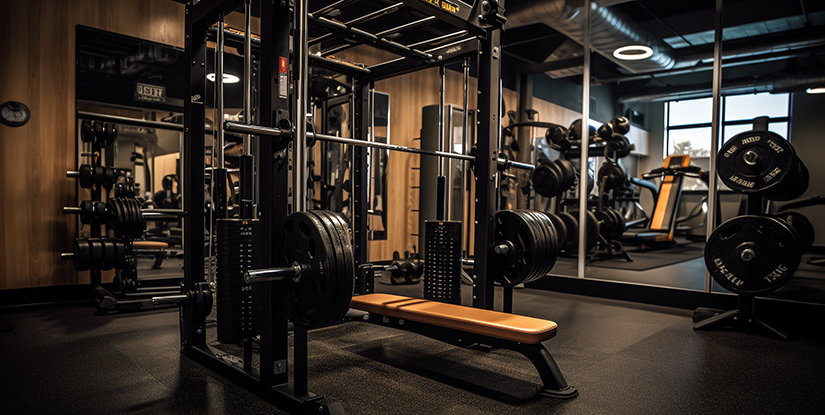
A critical failure point in strength training setups is the structural integrity of power racks and weight benches. If the steel gauge is too low, the frame may undergo permanent deformation under heavy loads. For instance, a rack utilizing 11-gauge steel is standard for heavy commercial use, whereas 14-gauge steel might be more appropriate for light-duty or home-office settings. Operators should verify the weld integrity and the thickness of the uprights to ensure the equipment can handle the kinetic energy of dropped weights.
| Component Type | Standard Commercial Specification | Common Failure Mode | Verification Method |
|---|---|---|---|
| Power Rack Uprights | 11-gauge to 7-gauge steel | Structural bending under heavy load | Micrometer thickness check |
| Barbell Knurling | Precision-etched, non-slip texture | Smoothing or stripping of grip texture | Visual inspection of etching depth |
| Weight Plate Holes | Standardized precision fit | Irregular ovalization or wobbling | Fit-test with standard plates |
| Bench Padding | High-density, non-porous foam | Compression/flattening of surface | Compression recovery test |
Ensuring these structural standards is met provides the necessary stability for the more complex, moving components found in cardio and functional training systems.
Key Material Selection Parameters
When reviewing technical sheets from suppliers, look for specific parameters rather than vague adjectives. Instead of 'durable,' look for 'high-tensile steel' or 'powder-coated finish with 50-micron thickness.' This level of detail allows for a quantifiable comparison between different sources. A lack of such data is a red flag indicating a potential lack of quality control in the manufacturing process.
With the structural integrity of strength equipment established, the complexity increases when considering the electronic and mechanical assemblies of cardiovascular machines.
Reliability and Maintenance of Cardiovascular Systems
Transitioning from static strength equipment to dynamic cardiovascular systems introduces new failure vectors, specifically regarding electronic integration and mechanical wear. High-end commercial gyms require machines that can operate for multiple hours daily without thermal throttling or motor failure. When vetting Fitness Wholesale Suppliers for cardio, the focus must expand from frame durability to motor longevity and console reliability.
A recurring issue in commercial cardio maintenance is the failure of drive belts or the degradation of electronic control units (ECUs) due to heat buildup. If a treadmill motor is undersized for its intended duty cycle, the heat generated can lead to premature insulation breakdown in the windings. This is often caused by a failure to implement a strict cleaning and lubrication schedule or by purchasing machines with inadequate ventilation designs. To prevent this, operators should request the duty cycle ratings and the motor's wattage capacity to ensure it matches the expected usage intensity.
Cardio Equipment Checklist for Operators
- Motor/Generator Capacity: Verify the peak and continuous wattage of the motor.
- Console Interface: Check for IP-rated resistance to perspiration and moisture.
- Belt Tensioning: Confirm the ease of adjustment and the availability of replacement parts.
- Footprint and Clearance: Ensure the machine's dimensions account for the safety zone required by local regulations.
The reliability of these mechanical systems is heavily dependent on the quality of the surrounding infrastructure, particularly the flooring, which leads us to the technical requirements of gym surfaces.
Related reading:
Engineering the Surface: Flooring and Impact Absorption
The durability of the machines and racks discussed previously is inextricably linked to the substrate they rest upon. A common, yet overlooked, error in facility setup is ignoring the shock absorption requirements of the flooring. Without an engineered flooring solution, the kinetic energy from dropped weights can lead to subfloor damage and accelerated wear on the equipment's structural joints.
When selecting materials, operators must understand the relationship between Shore hardness, impact attenuation, and acoustic vibration. A floor that is too hard provides zero protection for the subfloor and the machines; a floor that is too soft can cause instability for users on specialized training equipment. For example, high-impact lifting zones require a specific density of rubber to dampen heavy drops while maintaining a stable surface for the lifter. High-quality Fitness Wholesale Suppliers will provide the density (kg/m³) and the thickness (mm) of their flooring products.
| Flooring Application | Ideal Material Profile | Primary Function | Critical Metric to Verify |
|---|---|---|---|
| Heavy Lifting Zone | High-density vulcanized rubber | Impact absorption / shock mitigation | Thickness (min 20mm) and Shore Hardness |
| Cardio/Functional Area | Medium-density EVA or Rubber | Acoustic dampening / comfort | Compression set and density |
| Yoga/Stretching Area | High-density EVA foam | Joint protection / grip | Thickness and surface traction |
Verifying these metrics ensures that the equipment you have invested in is supported by a foundation that prevents structural fatigue and protects the facility's integrity.
Related reading:
Optimizing the Equipment Lifecycle and Maintenance Cycles
Developing a relationship with reliable Fitness Wholesale Suppliers is only the first step; the long-term success of a facility depends on the implementation of a rigorous preventative maintenance program. Most equipment failures in the commercial sector are not spontaneous; they are the result of neglected maintenance cycles that allow minor wear to evolve into catastrophic failures.
A common mistake in facility management is the 'reactive maintenance' model—only fixing things when they break. This approach is significantly more expensive than a 'preventative' model. For example, failing to lubricate the guide rods on a cable machine leads to increased friction, which eventually burns out the drive motor. By implementing a scheduled inspection cadence, you can identify these issues before they cause downtime. Below is a standard professional maintenance framework for high-traffic facilities.
Professional Maintenance Cadence
- Daily: Visual inspection for frayed cables, loose bolts, and hygiene/cleanliness.
- Weekly: Detailed check of electronic consoles, resistance settings, and lubrication of visible moving parts.
- Monthly: Torque testing of structural bolts, deep cleaning of motor vents, and belt tension verification.
- Quarterly: Full diagnostic check of electronic components and structural integrity assessment.
Adhering to these cycles ensures that the technical advantages of your equipment are preserved throughout its intended lifespan.
Related reading:
Advanced Procurement: Supplier Vetting and Inventory Strategy
To scale a fitness facility, moving beyond simple one-off purchases to a strategic inventory model is essential. This requires a deep dive into the logistical capabilities of your Fitness Wholesale Suppliers. A major failure mode in scaling is the "out-of-stock bottleneck," where a single broken component or an unfulfilled large order halts facility operations for weeks due to poor lead-time transparency.
When evaluating a supplier's logistical depth, do not merely ask for shipping times; ask for their tiered inventory availability and their protocol for replacement parts. A professional-grade supplier should maintain a dedicated stock of high-wear items (like treadmill belts, resistance cables, and upholstery) to ensure rapid turnaround. Below is a comparison of sourcing strategies for different facility scales.
| Strategy Type | Focus Area | Pros | Cons |
|---|---|---|---|
| Ad-hoc Sourcing | Single-unit purchase | Low initial commitment | High long-term cost; unpredictable quality |
| Volume-Based Wholesale | Bulk orders of single types | Significant unit cost reduction | Requires high storage capacity and capital |
| Strategic Partnership | Continuous supply chain | Predictable lead times; technical support | Higher complexity in relationship management |