
Understanding Empty Barbell Weight: A Technical Guide for Facility Managers
For commercial facility operators and professional gym procurement managers, the precision of equipment is a non-negotiable standard. While much focus is placed on the progressive load of plates, the foundational Empty Barbell Weight dictates the baseline for every movement in a strength program. A discrepancy in this base weight can lead to systematic errors in training and, more critically, a lack of standardization across a high-traffic facility. Understanding the technical nuances of these bars is the first step in ensuring equipment longevity and user safety.
Standardization of Empty Barbell Weight Across Competitions
The necessity of a standardized baseline stems from the global requirements of strength sports. When a facility provides bars that do not adhere to expected weight classes, it undermines the credibility of the training environment. Professionals must distinguish between standard Olympic bars and specialized variations to maintain strict inventory control.
Weight Class Variance and Specification
In a professional setting, the weight of the bar is not merely an estimate; it is a defined specification. Most standard Olympic barbells are manufactured to hit a precise target, but deviations occur due to manufacturing tolerances or material variations. For procurement specialists, understanding these categories is essential for building a cohesive lifting zone.
| Bar Type | Typical Weight Class | Primary Use Case | Common Material |
|---|---|---|---|
| Standard Olympic Bar | 20 kg (approx. 45 lbs) | Heavy lifting / Competition | High-tensile Steel |
| Women's Olympic Bar | 15 kg (approx. 33 lbs) | Technical lifts / Hypertrophy | Lighter Gauge Steel |
| Training/Junior Bar | 10 kg - 15 kg | Skill development / Beginners | Mild Steel |
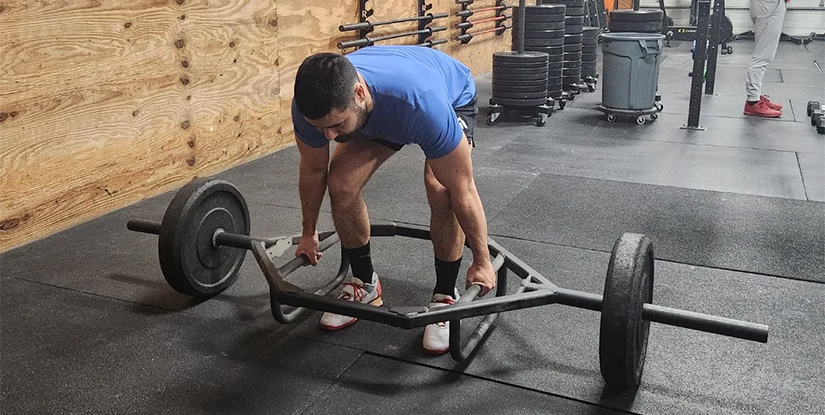
| Specialty Bar (EZ/Trap) | Variable | Isolation / Accessory work | Various Alloys |
Identifying these variations early prevents the common mistake of mixing competitive and training bars in the same lifting lane. Once the standard weight classes are established, the next critical step is inspecting the physical components that comprise that weight.
Structural Components and Weight Integrity
The total mass of a barbell is a composite of several high-precision parts. If one component fails or is replaced with a non-standard part, the Empty Barbell Weight is compromised, affecting the calibration of the entire lifting station. Maintenance teams must look beyond the knurling to the internal mechanisms.
The Role of Sleeves and Bearings
The sleeves—the ends of the bar where plates are loaded—account for a significant portion of the total mass. The internal mechanism, whether it utilizes bushings or needle bearings, also influences the perceived weight and the smooth rotation of the bar. A common failure mode in commercial gyms is the replacement of original sleeves with aftermarket components that do not match the original weight specification.
- Bushings: Typically found in training-grade bars; highly durable but offer less rotational fluidity.
- Needle Bearings: Standard in high-end competition bars; provides maximum rotation for Olympic lifts.
- Sleeve Tolerance: Deviations in sleeve thickness can alter the center of gravity and the total weight.
Failure to verify these components can result in an unbalanced load distribution. This brings us to the critical necessity of regular weight verification protocols.
Verification Protocols for Commercial Strength Equipment
Maintaining a reliable training environment requires more than just visual inspections; it requires quantitative verification. Relying on the stamped weight on the bar is often insufficient for high-compliance facilities where accuracy is paramount. A systematic approach to weighing equipment ensures that your inventory matches your operational standards.
Calibration and Measurement Procedures
Facility operators should implement a biannual calibration schedule to ensure that the Empty Barbell Weight remains within an acceptable margin of error. This prevents the gradual drift caused by wear, component replacement, or environmental corrosion.
Step-by-Step Verification Checklist:
- Prepare a Calibrated Scale: Use a high-capacity digital platform scale designed for heavy industrial loads.
- Zero the Scale: Ensure the scale is on a perfectly level, non-vibrating surface to prevent false readings.
- Single Bar Measurement: Weigh the barbell individually. Do not weigh it alongside other equipment.
- Cross-Reference: Compare the measured weight against the manufacturer's original spec sheet.
- Tolerance Check: Verify if the deviation is within the +/- 1% to 2% professional tolerance range.
If a bar falls outside the tolerance, it should be flagged for replacement or professional recalibration. Once the mass is verified, the focus must shift to the durability of the surface and material integrity.
Related reading:
Surface Finish and Knurling Durability
The way a barbell feels in the hand is a direct result of its surface treatment, which also plays a role in protecting the steel from the elements. A worn or compromised surface is often a precursor to structural failure or weight instability.
Material Degradation and Oxidation Control
Commercial environments, especially those with high humidity or proximity to sweat-heavy training zones, present a constant threat to the bar's finish. Whether the bar is chrome, cerakote, or stainless steel, the surface integrity must be monitored to prevent oxidation that can change the surface texture and, over long periods, the mass.
| Finish Type | Durability Level | Maintenance Requirement | Common Failure Mode |
|---|---|---|---|
| Chrome Plating | Moderate | Periodic wiping/drying | Pitting and flaking |
| Stainless Steel | High | Minimal; standard cleaning | Surface scratches |
| Cerakote/Powder Coat | Variable | Avoid abrasive cleaners | Chipping/Peeling |
| Black Oxide | Low | High frequency of oiling | Rapid Rust/Oxidation |
A degraded finish not only impacts the aesthetic of the gym but can also lead to the gradual accumulation of rust, which can eventually compromise the rotation of the sleeves. With the surface integrity understood, the next step is managing the physical load on the bar's structural integrity.
Related reading:
Load Ratings and Structural Integrity Limits
The Empty Barbell Weight is the starting point for a much larger mathematical equation: the total load capacity. Operators must understand that a bar's ability to hold weight is a function of its tensile strength and the quality of its steel. Exceeding these limits is a primary cause of permanent deformation (bending).
Understanding Tensile Strength and Yield Strength
When procurement managers select equipment, they must look at the steel's yield strength. This is the point at which the bar will permanently bend rather than snap back to its original shape. A high-quality barbell is engineered to handle massive loads while maintaining its straightness.
- Tensile Strength: The maximum stress a bar can endure before breaking.
- Whip/Oscillation: The degree of 'flex' a bar exhibits under load; critical for advanced lifters.
- Knurling Depth: The texture that provides grip; must be consistent to ensure safe handling of high loads.
Exceeding the rated load doesn't just break the bar; it can also cause micro-fractures in the sleeves. This damage can lead to a total loss of rotational function. Maintaining these bars effectively requires a dedicated maintenance routine.
Related reading:
Preventative Maintenance for Commercial Longevity
To protect the investment in high-quality barbells, a proactive maintenance culture is required. Waiting for a bar to bend or a sleeve to seize is a reactive approach that increases long-term costs. A structured maintenance routine preserves the Empty Barbell Weight and the general performance of the equipment.
The Routine Maintenance Schedule
A professional facility should treat its barbells like precision machinery. Regular intervention prevents the buildup of friction and the onset of corrosion.
Daily/Weekly Maintenance Task List:
- Visual Inspection: Check for any signs of bending or visible rust on the shaft.
- Rotation Test: Spin the sleeves by hand to ensure smooth, unobstructed movement.
- Wipe Down: Use a clean, dry microfiber cloth to remove sweat and moisture after daily use.
- Knurling Check: Ensure the knurling has not become smoothed out or filled with debris.
By adhering to these simple steps, facility managers can extend the lifespan of their equipment by several years. This durability is the foundation of a high-performing strength training area.
Related reading:
Common Failures and Troubleshooting Guide
Even with the best maintenance, components will eventually fail. Recognizing the early warning signs of a malfunctioning barbell allows for replacement before an injury occurs. Identifying the cause of a problem is the first step to a permanent fix.
Identifying and Solving Common Issues
Most barbell issues are preventable if the operator understands the relationship between usage and wear. Below is a guide for troubleshooting common operational discrepancies.
| Problem | Possible Cause | Corrective Action |
|---|---|---|
| Stiff/Slow Sleeve Rotation | Dust or dried lubricant buildup | Clean with solvent; apply specialized bearing oil |
| Squeaking during lifts | Lack of internal lubrication | Inject low-viscosity oil into the bearing housing |
| Permanent Shaft Bend | Overloading or improper dropping | Replace the barbell immediately; retrain staff |
| Loss of Grip/Slipping | Worn knurling or oily surface | Deep clean with degreaser or replace bar |
Regularly auditing these issues ensures that your facility remains a top-tier environment for professional athletes. With these troubleshooting steps in place, your team is ready to manage a professional-grade lifting floor effectively.
Related reading:
Conclusion: The Foundation of Professional Training
Mastering the nuances of the Empty Barbell Weight and its associated components is more than a technical exercise; it is a commitment to quality and safety. From the initial procurement of standardized Olympic bars to the rigorous biannual weight verification and daily maintenance protocols, every detail matters. A facility that treats its barbells as precision instruments will see a lower total cost of ownership, fewer equipment failures, and a more professional atmosphere for its clients.