
Optimizing Facility Safety with a Professional Dumbbell Rack With Dumbbells
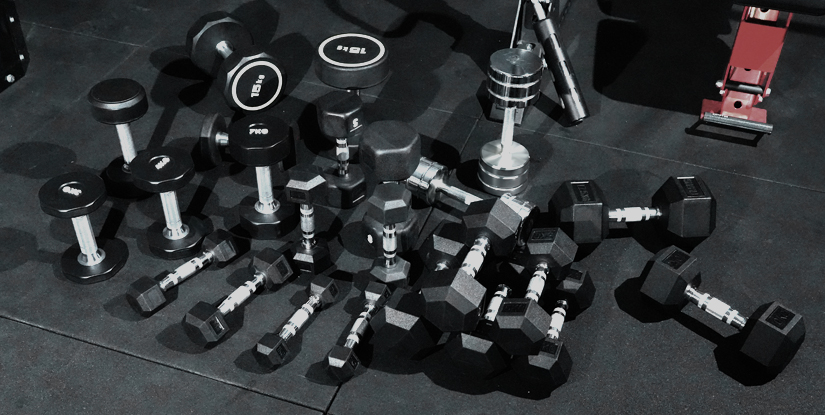
A common misconception among facility managers is that any metal frame capable of holding weight is sufficient for a high-traffic weight room. This oversight often leads to structural fatigue, uneven weight distribution, and ultimately, preventable injury. In a professional commercial setting, a Dumbbell Rack With Dumbbells is not merely a storage solution; it is a critical piece of structural engineering that dictates the safety of the training environment. When selecting or managing these units, one must look beyond simple capacity and focus on the interaction between static load-bearing and dynamic user behavior.
Evaluating Structural Integrity and Load Distribution Patterns
The fundamental problem in many gym environments is the use of undersized racking systems that fail to account for the cumulative weight of a full set. A common failure mode occurs when a rack is rated for a specific total weight, but the individual weight increments—the dumbbells themselves—are placed in a manner that creates torque on the frame. This imbalance can lead to tilting or even a catastrophic collapse if the center of gravity shifts unexpectedly during a user's retrieval process.
To prevent this, operators must evaluate the frame construction and the base stability. High-quality commercial units typically utilize heavy-duty steel tubing with specific wall thicknesses to resist bending under load. When assessing a unit, check the welding quality at the junction of the uprights and the base, as these are the primary stress points.
Weight Capacity and Frame Geometry
When selecting a Dumbbell Rack With Dumbbells, the geometry of the rack dictates how the weight is distributed across the footprint. A tiered vertical rack concentrates weight higher up, which requires a wider, more stable base to prevent tipping. Conversely, a horizontal or low-profile rack distributes weight closer to the floor, offering better stability but requiring more linear floor space.
| Rack Configuration Type | Primary Stability Factor | Ideal Use Case |
|---|---|---|
| Tiered Vertical Rack | Base Footprint Width | Small footprint, high-density vertical storage |
| Horizontal Low-Profile | Center of Gravity Height | High-volume free weight areas, stability focus |
| A-Frame Style | Angled Support Symmetry | Visual accessibility and ergonomic retrieval |
Understanding these geometric profiles allows a purchaser to match the equipment to the specific constraints of their facility. Once the structural footprint is determined, the next critical step is ensuring the floor can support the concentrated load.
Floor Load Constraints and Subfloor Integration
Even the stordiest rack becomes a liability if the underlying surface cannot handle the static and dynamic loads. A frequent mistake in gym design is neglecting the interaction between the rack's footprint and the gym flooring. A heavy rack, when fully loaded, exerts significant pressure on a very small surface area. If the flooring is too soft, the rack may tilt; if it is too hard, it may cause micro-fractures in the subfloor over time due to vibration.
Facility operators should verify the Shore hardness of their flooring to ensure it provides adequate shock absorption without sacrificing the stability required for the rack. A rigid, high-density rubber matting is generally preferred for weight-bearing zones to prevent the rack from 'sinking' or shifting during use.
Verification Checklist for Floor Readiness
- Levelness Check: Use a high-precision spirit level across the entire length of the rack base to ensure no single corner is unsupported.
- Compression Test: Verify that the rubber flooring recovers its shape immediately after a heavy weight is removed, indicating proper density.
- Vibration Damping: Observe if the rack exhibits any oscillation when a dumbbell is placed back onto the tray, which could indicate a lack of floor-to-frame dampening.
Securing the rack to a stable, level surface is the foundation of safety, but the actual organization of the weights is what dictates daily operational efficiency.
Optimizing Dumbbell Arrangement and User Ergonomics
A disorganized Dumbbell Rack With Dumbbells is more than a visual nuisance; it is a mechanical hazard. When dumbbells of different sizes are mixed or incorrectly placed, users often experience difficulty in retrieval, leading to awkward lifting postures or dropping weights. The cause of most 'clutter-related' injuries is a lack of standardized weight sequencing.
A professional setup must follow a strict ascending or descending weight order. Furthermore, the vertical spacing between the tiers should be sufficient to allow for easy hand clearance. If the tiers are too close together, users may bump the dumbbells above or below, causing a chain reaction of falling weights.
Standardized Weight Sequencing Protocols
To maintain a high-performance environment, implement a protocol where the heaviest weights are at the bottom and the lightest at the top (for vertical racks) or vice-versa (for horizontal, depending on the ergonomic design). This ensures that the highest center of gravity is managed correctly.
| Parameter | Standard Requirement | Verification Method |
|---|---|---|
| Vertical Clearance | Min 15cm between tiers | Measure with a standard gauge or ruler |
| Weight Increment | Continuous sequence | Visual audit of weight labels |
| Label Visibility | High contrast/Legible | Distance test from 2 meters |
By perfecting the arrangement, you reduce the mechanical stress on the rack and the ergonomic stress on the client. With the weights properly organized, the focus shifts to the long-term maintenance of the physical hardware.
Maintenance Cycles for Commercial-Grade Racks
The degradation of a Dumbbell Rack With Dumbbells is often gradual and nearly invisible until a failure occurs. Regular maintenance is required to prevent the common issues of bolt loosening, coating oxidation, and tier warping. Most facility managers fail to implement a structured inspection cadence, treating the rack as a 'set and forget' item.
The primary cause of rack instability over time is the vibration caused by heavy weight impacts. Every time a heavy dumbbell is set down, a micro-vibration travels through the frame, which can slowly back out the bolts and fasteners. This leads to a 'rattling' sensation and eventual structural weakness.
The Quarterly Inspection and Maintenance Protocol
To ensure longevity and safety, a quarterly maintenance schedule should be strictly followed. This prevents small issues from escalating into expensive replacements or safety incidents.
- Fastener Torque Check: Use a calibrated torque wrench to ensure all structural bolts are tightened to the manufacturer's specified Newton-meters.
- Surface Integrity Audit: Inspect the powder coating for any chips or scratches. Exposed steel is susceptible to rust, especially in high-humidity gym environments.
- Tier Alignment: Check that all weight trays are perfectly parallel to the floor to prevent the 'sliding' effect during retrieval.
Regularly auditing these components ensures that the equipment remains a reliable asset. Maintaining the hardware is essential, but understanding how to properly troubleshoot immediate issues is equally vital for daily operations.
Troubleshooting Common Rack Instabilities
When a rack begins to show signs of instability, operators must be able to identify the root cause immediately. A common symptom is a subtle 'sway' when a user approaches the rack. This is often caused by one of two things: an uneven floor surface or a lack of fastener tension. Relying on a quick fix like 'shimming' the base is a common mistake that only addresses the symptom, not the cause.
If the rack is swaying, the first step is to isolate the movement. Is it the frame itself, or is it the floor beneath it? If the floor is the issue, adding a high-density weight plate mat or an additional layer of rubber may stabilize the unit. If the frame is the issue, the fasteners must be addressed.
Diagnostic Decision Matrix
| Observed Symptom | Potential Root Cause | Actionable Fix |
|---|---|---|
| Rattle during use | Loose fasteners | Tighten all bolts with a torque wrench |
| Visible tilt to one side | Uneven flooring or base | Level the base or use heavy-duty shims |
| Tier sagging/warping | Overloaded weight limit | Redistribute weights or upgrade rack capacity |
| Rust on metal edges | Oxidation/Moisture | Sand and re-apply protective coating |
Identifying these signs early prevents the need for total equipment replacement. Once these operational issues are managed, the facility can focus on the broader equipment lifecycle and the commercial fitness equipment ecosystem.
Lifecycle Management and Procurement Standards
The final stage of professional management is understanding when to reinvest in new equipment. A Dumbbell Rack With Dumbbells has a finite lifecycle determined by its usage intensity and environmental conditions. For high-end clubs, the threshold for replacement is much lower than for residential or small studio settings. The goal is to replace equipment before it reaches its 'failure threshold' rather than waiting for an actual failure.
When planning a future procurement cycle, do not look only at the initial cost. Instead, look at the total cost of ownership, which includes the cost of maintenance, the frequency of replacement, and the potential liability of downtime. A more expensive, heavy-duty unit often has a much better ROI because it survives longer and requires fewer interventions.
Critical Procurement Questions for Buyers
Before placing an order for a new storage solution, procurement managers should demand technical specifications regarding the following:
- What is the maximum load-bearing capacity per tier, and is it a static or dynamic rating?
- Are the welding points reinforced for high-impact environments?
- What type of powder coating is used to prevent oxidation in humid environments?
- Can the unit be easily disassembled for transport or reconfiguration?
By asking these rigorous questions, you move from being a simple consumer to a professional facility operator who prioritizes long-term stability over short-term savings. Proper investment in a Dumbbell Rack With Dumbbells ensures a seamless integration into your long-term fitness management strategy.