
The Kettlebell Trial Order Strategy
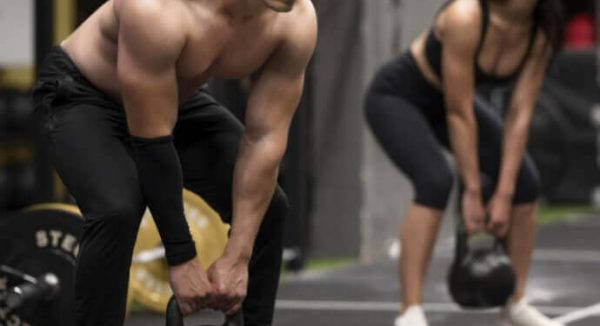
Why Competition Kettlebells Are the Ultimate "Trial Order" for Saudi Gym Investors
If you are considering sourcing gym equipment directly from China, you face a practical challenge: hundreds of Chinese suppliers online all claim to be "genuine manufacturers," "commercial-grade," and "exporting worldwide." But how do you know which one is real? Which one delivers consistent quality? Which one meets delivery deadlines?
Experienced Saudi buyers have developed a common strategy: before placing a full container order, they use a small-batch customized product to "test" the factory's real capabilities.
You might ask: what is the best product for a "trial order"? The answer is competition-grade kettlebells.
This answer might surprise you: in the Saudi market, many people have never even seen a kettlebell. This was our real observation at the Riyadh exhibition – visitors were curious about the kettlebells on our booth, but only a handful of people truly knew what they were looking at.
But this is precisely why it holds value. Let us explain.
A Real On-the-Ground Observation: Most Don't Know It, but the Few Who Do "Light Up"
At our booth in the Riyadh Front Exhibition Center, a scene repeated itself throughout the show:
Visitors walked past, saw the kettlebells – most reacted with curiosity, even confusion. Some even asked "what is this used for." In Saudi Arabia, the kettlebell remains unfamiliar to the majority of gym-goers.
But there were always a handful of people – typically boutique studio founders, procurement managers from high-end gyms, or coaches with international training backgrounds – whose eyes lit up when they saw the kettlebells. They would step forward, pick one up, feel the weight, check the handle arc, test the balance, and inspect the surface finish. This group does not need an explanation of "what is a kettlebell." They only care about one thing: "is your kettlebell good enough?"
This on-the-ground observation aligns with market data: within the Saudi kettlebell market, high-precision competition kettlebells account for only 8-10% of market share, while low-end cast iron kettlebells dominate with 65-70%. Most people's understanding of kettlebells stops at "a metal ball with a handle" – they have no awareness of quality concepts like "competition-grade ±1% weight tolerance," "single-piece cast handle," or "precision powder coating."
This means one thing: in Saudi Arabia, the kettlebell is still a category that has not been widely educated – but it has already been validated by a small group of pioneer buyers.
The Kettlebell Trial Order Strategy – Why Chinese Factories Use It to "Prove Themselves"
For Saudi buyers, directly purchasing a full container of equipment (power racks, weight plates, dumbbells, etc.) from a Chinese factory typically involves tens of thousands or even hundreds of thousands of dollars. Without an established trust relationship, paying the full amount upfront carries risk – concerns about quality standards, delivery delays, or even the supplier disappearing after payment.
The "trial order" strategy elegantly solves this problem:
Step 1: Place a small-batch order of custom-branded competition kettlebells. Small quantity (typically 50-200 units), manageable investment (a few thousand to around ten thousand dollars). The buyer can verify the factory's craftsmanship precision, communication efficiency, sample turnaround time, production cycle, and shipping standards.
Step 2: Inspect the results. If the kettlebells meet quality standards – weight tolerance within ±1%, clear logo casting, even surface finish, packaging compliant with Saudi Customs requirements – it demonstrates that the factory has reliable quality control and export experience.
Step 3: Release the full container order. With the trust built through the kettlebell trial order, the buyer can confidently proceed with the full container order for power racks, weight plates, dumbbells, and other equipment. The factory has passed the "test."
This is why experienced Saudi buyers call kettlebells the "litmus test" – it tests not the kettlebell itself, but the factory's overall capability. A factory that cannot make a good kettlebell cannot be trusted with power racks. A factory that perfects the kettlebell will deliver on larger equipment as well.
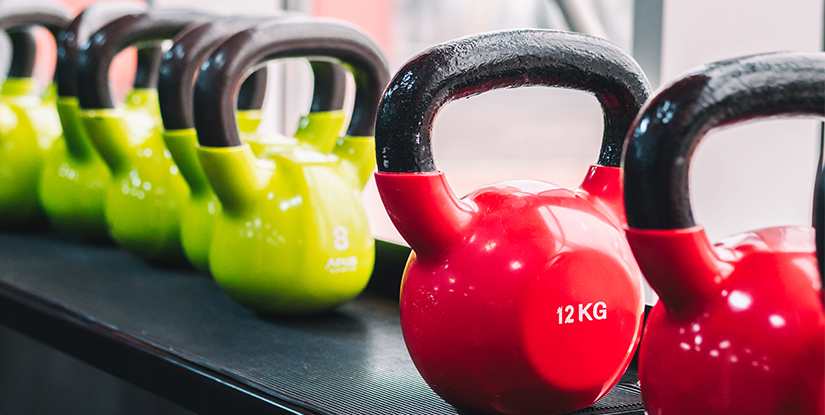
Saudi's Premium Gym Expansion – Why Now Is the Right Time
You might ask: if most people don't even know what a kettlebell is, isn't it too early to enter this market?
The answer is: quite the opposite. This is precisely the right time.
The Saudi fitness market is undergoing a deep transformation. Premium boutique gyms are expanding rapidly, creating demand for high-precision, differentiated products. Take GymNation as an example – the brand recently opened its largest flagship club to date in Riyadh's Qurtubah district, spanning 77,000 square feet, including "the region's largest free-weight training zone," attracting over 7,000 members on opening day. GymNation founder Loren Holland stated: "Saudi Arabia is experiencing a fitness revolution."
The shift happening in the Saudi fitness market is: from "generic hotel gym" to "differentiated premium experience." Kettlebells, as a core tool for functional training, are being introduced to this market by these "pioneer buyers." Market data confirms that China is the primary source of kettlebell imports to Saudi Arabia – since there are no large-scale local facilities capable of producing finished kettlebells to fitness-grade standards, the entire supply relies on imports from casting clusters in China's Hebei and Shandong provinces. This means: by the time you are already supplying custom competition kettlebells, most of the market still hasn't caught on to the concept.
That is the definition of "first-mover advantage." By entering the market now, you are setting the standards – the first player defines the category; those who follow can only catch up.
Saudi Arabia Cannot Produce Kettlebells Locally – Supply Relies Entirely on China
You might wonder: why don't Saudi buyers source high-quality kettlebells locally?
The answer is: Saudi Arabia has virtually no commercial-scale kettlebell production capacity.
Industry reports clearly state: "Saudi Arabia does not have a single commercial-scale kettlebell foundry or metal casting facility capable of producing finished kettlebells for the fitness market. While there are some small metal workshops in the Dammam and Riyadh industrial zones that could theoretically cast rough iron shapes, they lack the molds, powder coating lines, and handle finishing capabilities required to meet fitness-grade standards."
This means: all high-quality kettlebells in the Saudi market – especially competition-grade products – rely almost entirely on imports, with China being the largest source.
Local dealers and importers distribute kettlebells, but most only handle "branding" and "last-mile delivery" – they cannot perform actual production or deep processing. This sends a clear signal to Chinese manufacturers: you are a scarce supplier to a market where demand is being activated.
Combined with Saudi Arabia's 5% import duty on fitness equipment, Chinese factories have a natural price advantage – Saudi buyers sourcing directly from Chinese manufacturers can save 30%-50% compared to purchasing through local importers.
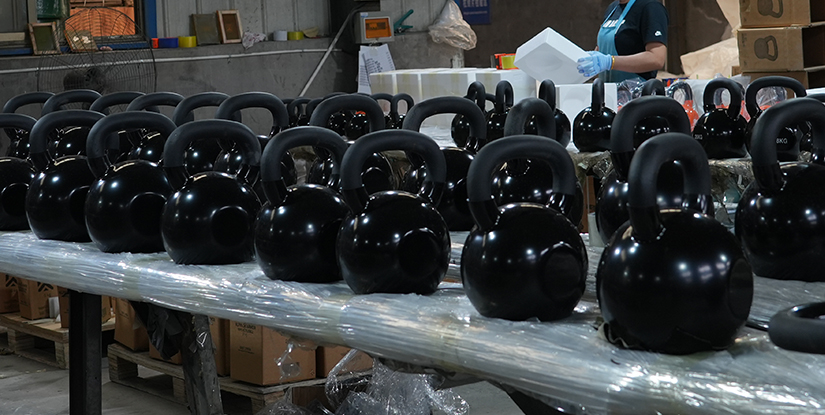
Why Kettlebells Are a "Visual Quality Inspection Tool"
A kettlebell looks simple – just a metal ball with a handle. But it is precisely this simplicity that leaves no place for craftsmanship flaws to hide. The difference between a high-quality kettlebell and a poorly made one is visible and tangible:
| Inspection Dimension | High-Quality Indicators | Poor-Quality Indicators |
|---|---|---|
| Weight Tolerance | Within ±1%; premium products achieve ±0.5% | Deviation beyond ±3%-5%; noticeable imbalance between left and right |
| Surface Finish | Uniform powder coating, no bubbles, no peeling, smooth feel | Uneven coating thickness, gritty texture, peeling and rusting after use |
| Handle Precision | Consistent arc, uniform handle diameter, comfortable grip | Misaligned handle, inconsistent thickness, rough welds that cut the hand |
| Logo Casting Precision | Crisp logo, accurate placement, flush or recessed with the surface | Blurry logo, misaligned, burrs on edges |
| Packaging Standards | Individual packaging, foam secured, compliant with Saudi Customs labeling | Bulk stacked, transit damage, missing or incorrect labels |
A factory that can produce a high-quality kettlebell demonstrates that it possesses: precision casting capability, strict quality control processes, skilled surface treatment, and mastery of export packaging standards. These are the same core competencies required to manufacture commercial-grade power racks, weight plates, and other large equipment.
Conversely, if a batch of kettlebells has blurry logos, significant weight deviations, or bubbles in the surface coating – that factory's larger equipment is not trustworthy either.
From Kettlebells to Full Container: Building Long-Term Partnerships Through a Trial Order
Here is how a typical cooperation process works:
Phase 1: Inquiry and Sampling. A Saudi boutique studio owner contacts us with a custom branding request – they want their gym's logo cast into the kettlebells. We provide 3D design renderings to confirm logo placement and size, then produce and ship samples. After the buyer approves the sample quality, they place the initial trial order (for example: 50 units of 16kg competition kettlebells with custom logo).
Phase 2: Production and Delivery. The trial order goes into production, quality inspection, packaging, and shipping. Throughout this process, the buyer can evaluate our responsiveness, communication efficiency, and attention to detail. Upon arrival, the buyer inspects the products to confirm weight tolerance compliance, clear logo casting, and intact packaging.
Phase 3: Full Container Release. With the trial order passed, trust is established. The next step is the full container order – power racks, weight plates, dumbbells, flooring, and other equipment, all consolidated into a single container bound for Saudi Arabia.
The core advantage of this process is: the buyer completes a comprehensive factory evaluation with minimal risk. No need to travel to China for a factory audit. No need to pay a massive deposit upfront. A single kettlebell order is enough to determine whether this factory can be trusted.
More importantly: the trial order products are not "wasted test items." These custom-branded, high-quality kettlebells go directly into your gym operations and become part of your brand. You are not spending money on testing – you are acquiring premium products while simultaneously validating your supplier.
As Saudi's "fitness revolution" continues to unfold, boutique studios and premium gyms will only grow their demand for differentiated, high-quality equipment. This is where kettlebells fit in. While most of the Saudi market may not yet know what they are, the pioneer buyers who are defining the new standards of Saudi fitness – the investors opening 77,000-square-foot flagship clubs with "the region's largest free-weight zones" – are already looking for partners who can deliver exactly what you offer.
Are you ready to start a long-term partnership with a single kettlebell order?