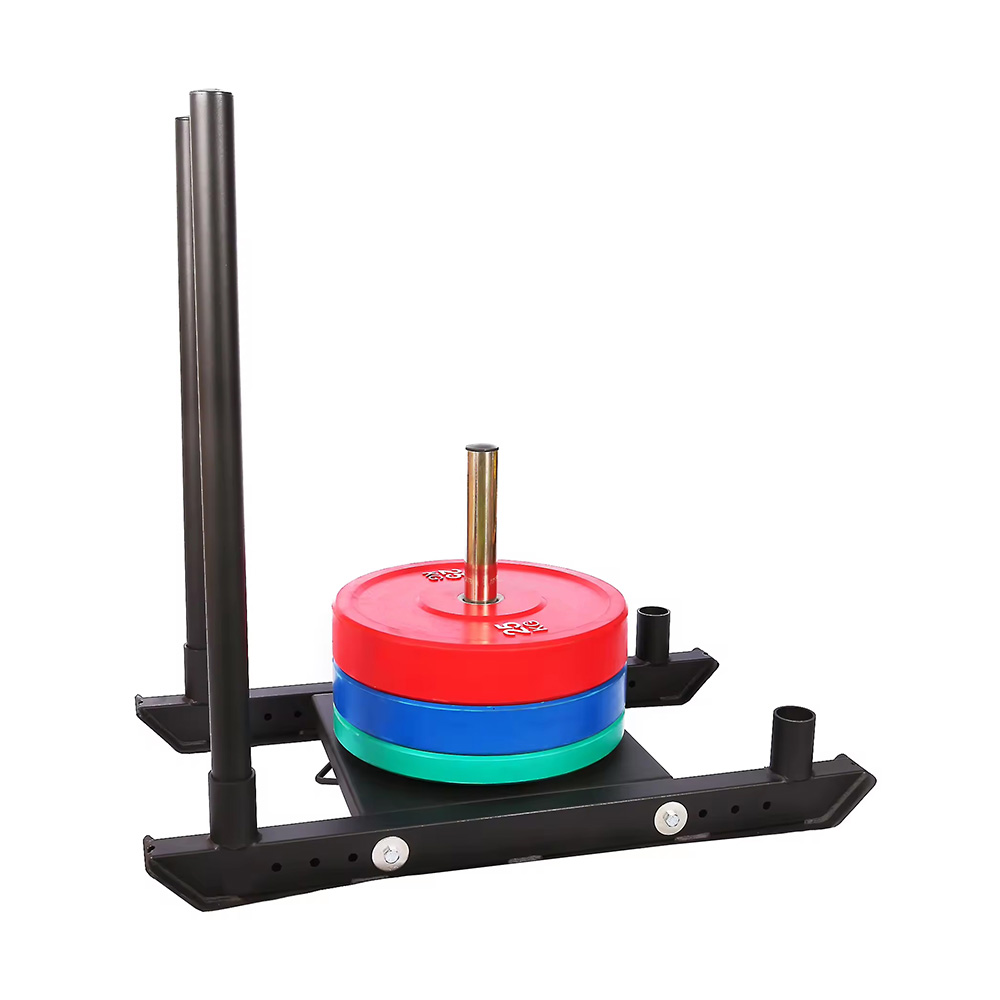
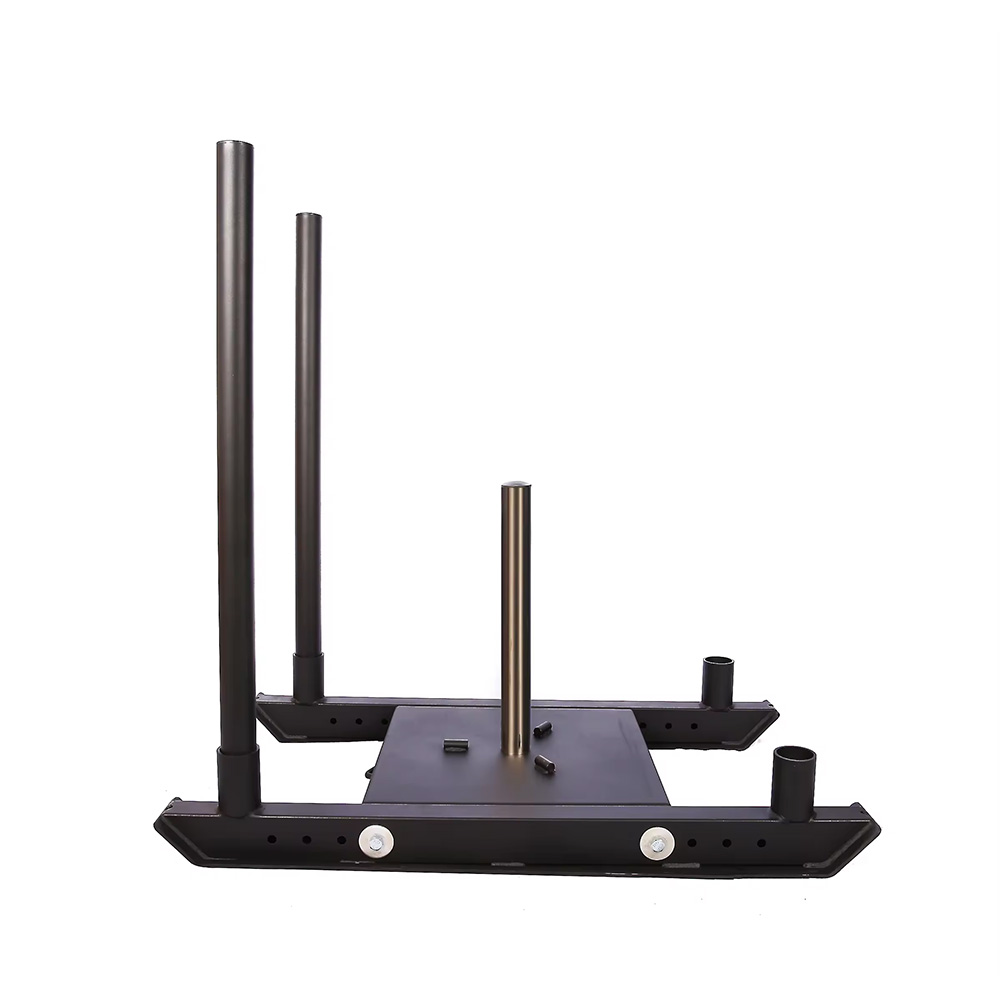
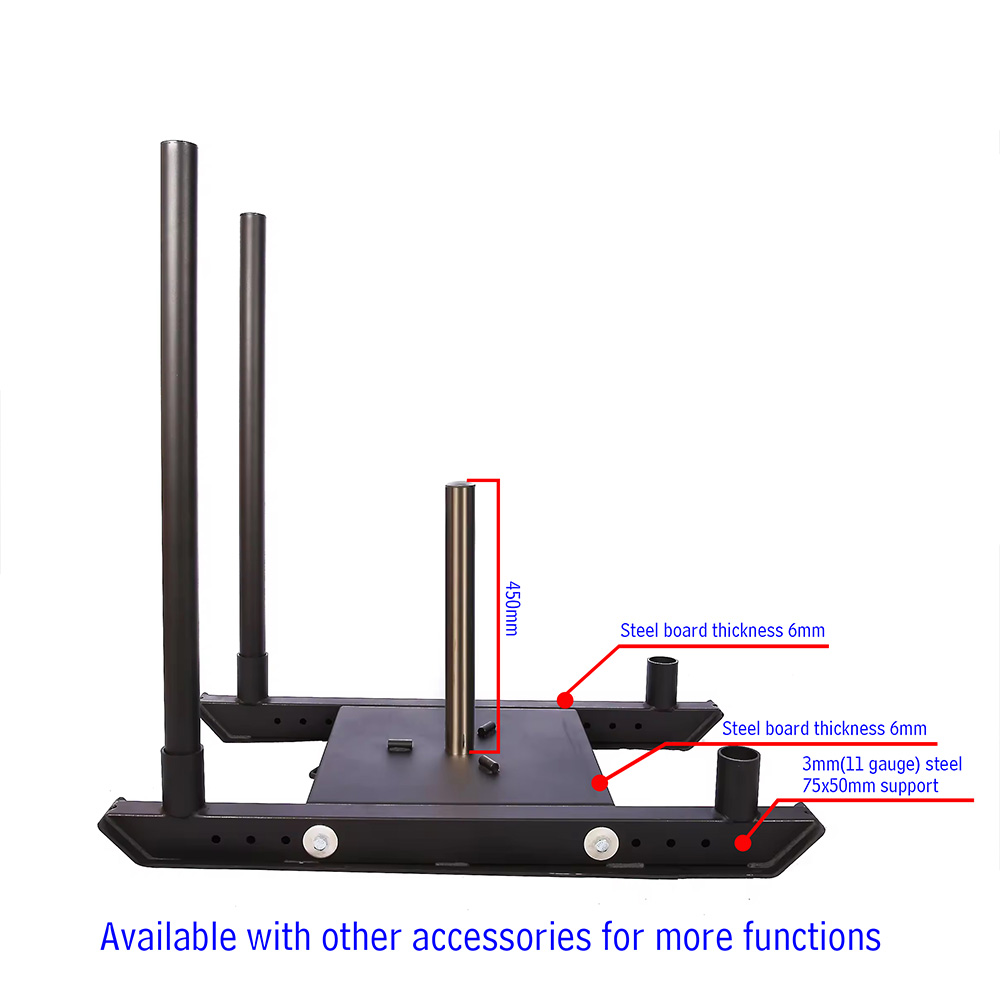
4-Post Push-Pull Sled


OEM/ODM Product, Popular Product

Main Customer Base: Gyms, health clubs, hotels, apartments and other commercial fitness venues.

Power Sled – Versatile Resistance Training for Strength and Conditioning

The Power Sled (also called a power sledge or resistance sled) is one of the most versatile tools for building explosive power, speed, and endurance. This steel-framed sled is designed for pushing, pulling, crawling, and sprinting drills, making it suitable for athletes, fitness enthusiasts, and conditioning coaches. With dimensions of 108cm × 105cm × 65cm, the sled provides a stable platform that accommodates various training positions and movement patterns.

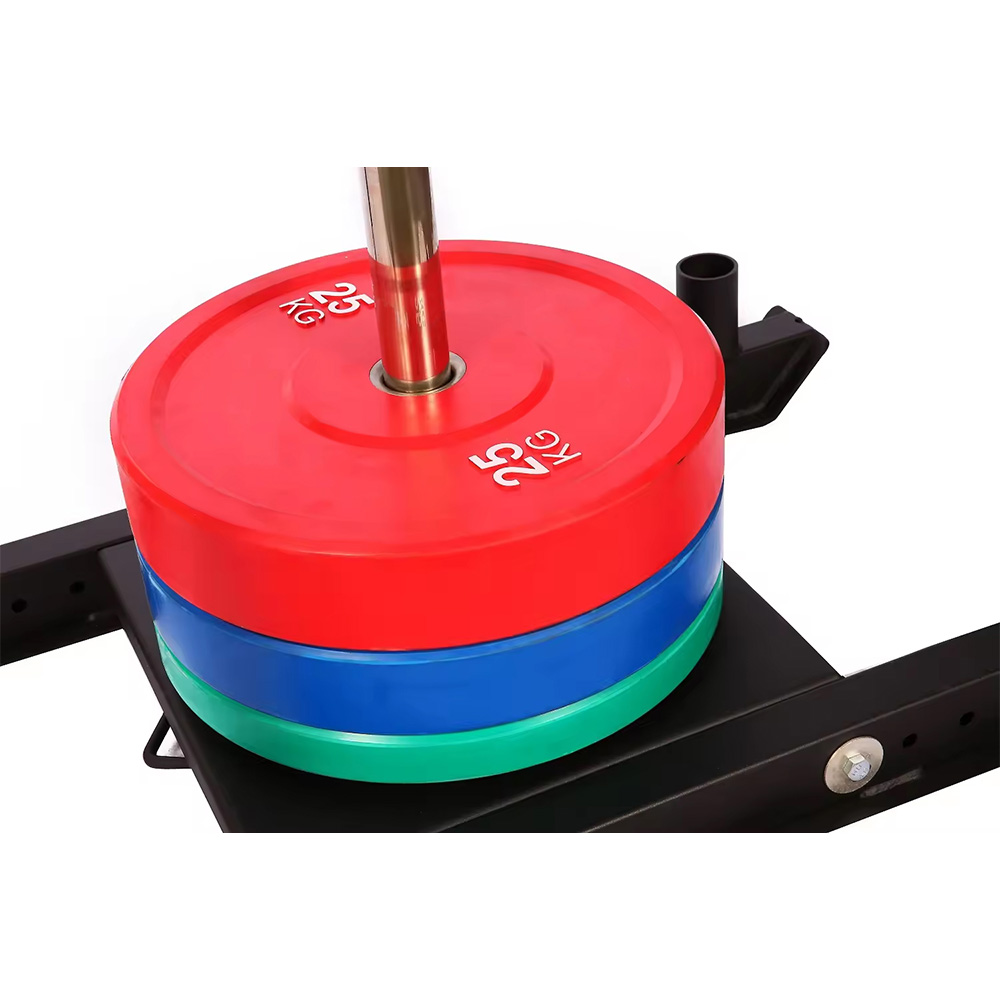
The key advantage of a power sled is its ability to accept standard Olympic bumper plates for progressive loading. Unlike fixed-weight sleds, this design allows you to add bumper plates to increase the load incrementally, making it suitable for beginners through advanced athletes. The sled can be used on grass, turf, asphalt, or rubber flooring, providing year-round training options regardless of weather or facility constraints.

Stable, Strong, and Durable Construction

The manufacturer emphasizes that the sled is stable, not easy to deform, strong and durable. The thickened pipe is more load-bearing, referring to the steel tubing used in the frame construction. The precise steel gauge is not specified, but the structural design—visible in the 108cm × 105cm footprint—distributes load across a wide base, preventing tipping or wobbling during aggressive pushes. The durable steel construction resists bending even under heavy plate loads and repeated impacts.

The sled is finished in black or customized colors with a protective coating (paint or powder coat) to resist rust and corrosion. For indoor and outdoor use, this finish protects against sweat, moisture, and abrasion from dragging on turf or concrete.

Multiple Training Methods: Push, Pull, Crawl, Sprint

The product description highlights that power sledge can be pulled or pushed, crawled or sprint. There are many ways to train. This versatility makes the sled valuable for:

  • Acceleration training: Heavy sled pushes develop lower body power for sprint starts
  • Conditioning: Lighter sled pushes with short rest intervals build work capacity
  • Posterior chain development: Backward sled drags target glutes and hamstrings
  • Upper body pushing: Low sled pushes engage chest and shoulders
  • Crawling drills: Low sled positions allow bear crawls and alligator walks

The bar design, easy to grasp refers to the push handles or pull attachment points. The handles are positioned at a height that allows athletes to maintain a strong athletic posture—hips back, chest up—during pushing movements. The gripping surface is typically textured or knurled to prevent slipping, even with sweaty hands or when using chalk.

Training Applications: Half Squat Push and Pull

The specification can be bent half squat push and pull training indicates that the handle height is optimized for a half-squat or athletic stance position. In this posture, the athlete's hips are flexed approximately 45°, with the torso leaning forward and arms extended to the sled handles. This position mimics the start of a sprint or the acceleration phase of many sports. The half-squat stance allows the glutes, quads, and hamstrings to contribute maximally to the push, while protecting the lower back from excessive flexion.

The can carry out resistance weight push and pull training confirms that the sled is designed for progressive overload. By adding bumper plates to the loading post, resistance increases linearly. Standard loading capacities for steel sleds range from 100kg to 200kg+; verify exact capacity with the manufacturer.

Dimensions and Footprint

The sled dimensions are 108cm (length) × 105cm (width) × 65cm (height). Analyzing each dimension:

  • 108cm length: The distance from the front (push handles) to the back (loading post). This length provides enough space for bumper plates to be loaded without interfering with the athlete's stance.
  • 105cm width: The width of the base runners (the skids that contact the ground). A wider base increases lateral stability during pushing movements, preventing the sled from tipping if force is applied unevenly.
  • 65cm height: The height of the push handles from the ground. This is a medium height, suitable for athletes of average stature (165-185cm) to push in a bent-knee athletic position. Taller or shorter athletes may need to adjust their stance accordingly.

The 5cm reference in the image likely indicates the thickness of the steel tube (5cm outer diameter) or the height of the loading post lip. This substantial tube diameter contributes to the sled's load-bearing capacity and resistance to deformation.

Loading with Bumper Plates

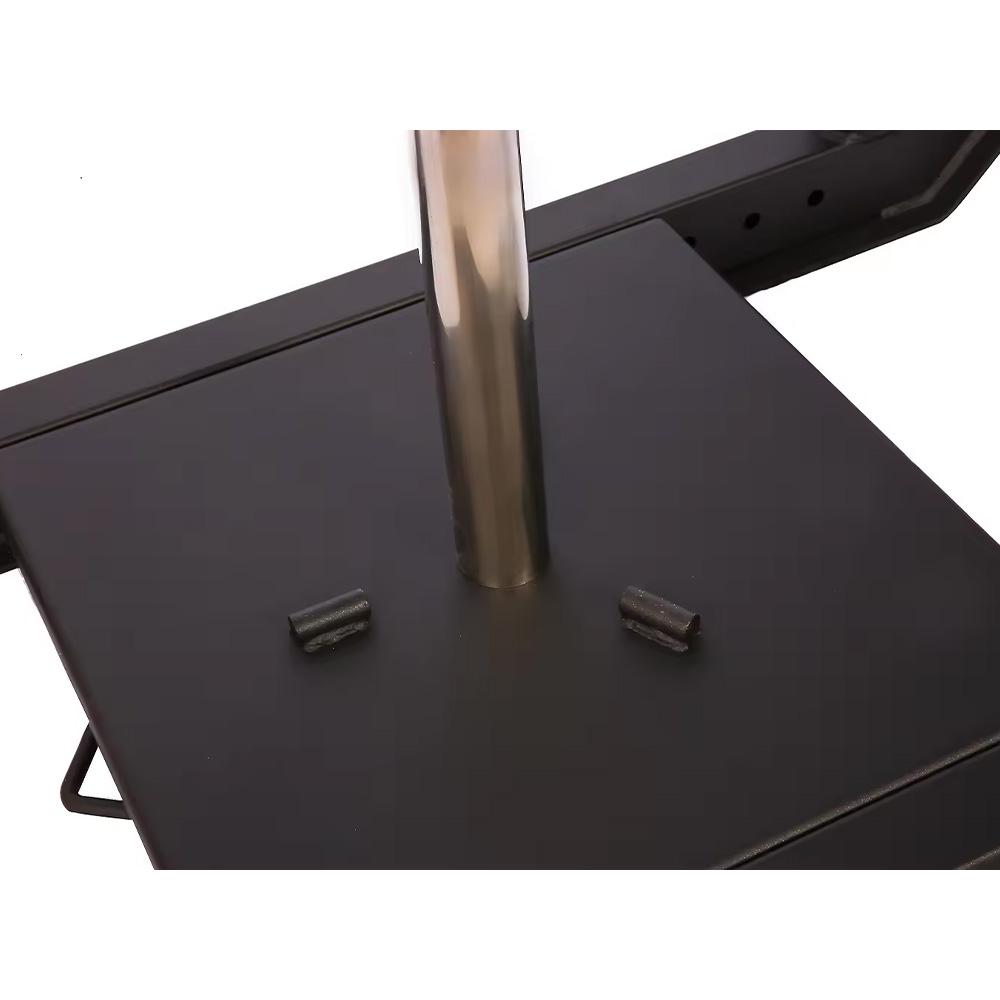
The sled includes a vertical loading post (typically 30-40cm tall) designed to accept standard Olympic bumper plates with 50mm center holes. To load:

  1. Slide bumper plates onto the loading post (one or multiple plates)
  2. Secure plates with a locking clip or hitch pin (may be included or purchased separately)
  3. Add weight incrementally based on training goal: light weight for speed/conditioning (25-50kg), moderate for strength-endurance (50-100kg), heavy for absolute strength/power (100kg+)

Important: Use bumper plates only (rubber construction). Iron plates are not recommended as repeated ground contact will damage both plates and the sled's loading post.

Surface Compatibility

The steel runners (the bottom contact surfaces) are designed to slide over various surfaces:

  • Artificial turf: Ideal surface—provides consistent resistance, protects both sled and turf
  • Grass: Works well, but may dig in if surface is soft or wet
  • Rubber gym flooring: Suitable, but may leave black marks; use with caution in commercial gyms
  • Asphalt or concrete: Works but will wear down the runners over time; not recommended for rubber plates (plate damage)

For indoor gym use, many facilities lay a dedicated turf strip for sled training. The sled's steel runners can be fitted with plastic or UHMW (ultra-high molecular weight polyethylene) skid plates for quieter operation and reduced floor wear—check with the manufacturer if this option is available.

Training Protocols and Programming

Power sled training can be integrated into various workout structures:

  • Distance pushes: Push sled 20-50 meters, rest 90-120 seconds, repeat 4-8 times
  • Timed pushes: Push sled for 15-30 seconds maximum effort, rest 1:3 work-to-rest ratio
  • Heavy carries: Load sled heavy (bodyweight + 50%), push 10-20 meters, focus on explosive power
  • Sprint towing: Attach harness (sold separately) to pull sled while sprinting
  • Backward drags: Face away from sled, walk backward pulling sled, target hamstrings and glutes

The sled's design accommodates both face-forward pushes and backward pulls (using straps or harness). Verify if pulling straps/harness are included or sold separately.

Home Use Application

The product is specified for application: home use, indicating it is sized and priced for individual training. For home users, the sled offers several benefits:

  • Low impact: Sled pushes provide high-intensity conditioning without joint stress (vs. running or plyometrics)
  • Space-efficient: 108×105cm footprint stores against a wall or in a garage corner
  • All-weather training: Use in backyard or driveway regardless of gym access
  • Family-friendly: Multiple family members can use same sled with different loads
  • Progressive: Add plates as strength improves—no need for a heavier sled

For home users without bumper plates, the sled can still be used with sandbags or other weights placed on the loading platform, though bumper plates are the recommended loading method.

Customization: Logo and Color

The customized logo available and color: black or customized options allow gym owners and individual users to personalize the sled. Customization options include:

  • Logo painting/decals: Gym name or logo applied to the top surface of the sled frame
  • Custom powder coat colors: Any RAL color available for the entire sled (MOQ may apply)
  • Logo stencil: For users wanting to paint their own logo (manufacturer provides stencil)
  • Custom handle height: For specialized training populations (contact OEM for feasibility)

OEM orders are accepted, making this sled suitable for fitness brands looking to offer a private-label conditioning tool.

Maintenance and Care

To extend the life of the power sled:

  • After each use: Wipe down steel frame if used on wet grass or in rain to prevent rust
  • Monthly inspection: Check for loose bolts, bent tubing, or cracked welds
  • Annual touch-up: Spray paint any areas where the finish has worn through to bare steel
  • Runner inspection: Check bottom runners for excessive wear; replace plastic skids if equipped
  • Storage: Store indoors or cover if left outside to prevent weather damage

The sled's steel construction is durable, but like all steel equipment, it will rust if left exposed to moisture for extended periods. Indoor storage or a protective cover is recommended.

Product FAQ

Specification Category Technical Details
Product Name Power Sled / Power Sledge / Resistance Sled
Dimensions (L×W×H) 108cm × 105cm × 65cm
Material Steel (thickened pipe construction, load-bearing design)
Category Fitness Accessories
Application Home Use (also suitable for commercial and outdoor training)
Usage Fitness Exercise – strength, speed, conditioning, endurance
Color Options Black (standard), Custom colors available for OEM
Loading Method Accepts standard Olympic bumper plates (50mm center hole) on vertical loading post
Training Applications Sled pushes, backward drags, half-squat push/pull, crawling, sprint towing, resistance training
Key Features Stable wide base, thickened steel tubing, easy-grasp bar design, bumper plate compatible
Logo Customization Customized logo available (paint, decal, or stencil)
OEM Accepted – custom colors, logo placement, potential dimensions
Steel Tube Thickness Approximately 5cm outer diameter (as shown in diagram), thickened for load capacity
Surface Compatibility Artificial turf, grass, rubber flooring, asphalt, concrete
Place of Origin Shandong, China
Port of Loading Qingdao
Packaging Standard export packaging (polybag + carton, may require wooden pallet for bulk)
Sample Lead Time 7-15 work days (standard), longer for custom colors or logos
Assembly Required Minimal to none (welded frame, may require attaching handles or loading post)
Included Accessories Sled frame only. Bumper plates, locking clips, and pulling harness sold separately.

Customize Your Brand

Format: +[country code][number] (e.g. +1234567890)