
Navigating the Range of Commercial Weight Lifting Equipment Available for High-Performance Facilities
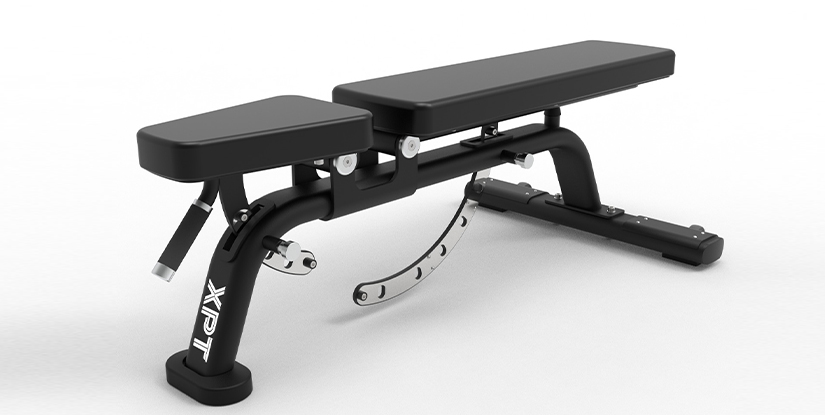
For facility owners and procurement specialists, the decision-making process is rarely about finding a single piece of equipment; it is about managing a complex ecosystem of steel, polymers, and mechanical components. The sheer volume of the range of commercial weight lifting equipment available can lead to significant capital misallocation if selection criteria are not strictly defined by durability and functional versatility. A common pitfall in procurement is prioritizing aesthetic uniformity over mechanical specificity, which often results in high maintenance costs and premature equipment failure. This guide provides a strategic overview of the primary equipment categories, essential technical specifications, and the operational standards required to maintain a high-ROI training environment.
Establishing Selection Criteria for Heavy-Duty Strength Training Assets
Before evaluating specific machines, one must establish the fundamental pillars of a commercial-grade inventory. The primary challenge in sourcing is the discrepancy between 'professional-looking' equipment and true commercial-spec machinery. A mistake often made by junior buyers is failing to distinguish between high-end residential gear and true commercial-grade equipment, the latter of which is built to withstand 12-18 hours of daily, high-intensity usage.
To avoid this, procurement professionals should use a standardized rubric based on mechanical engineering standards rather than visual appeal. The following table outlines the critical differentiation factors that should guide your initial sourcing strategy.
| Feature Category | Residential/Light Commercial Spec | True Commercial-Grade Standard |
|---|---|---|
| Steel Gauge Thickness | 11-14 Gauge (Standard) | 7-10 Gauge (Heavy Duty) |
| Weld Integrity | Spot Welds / Light MIG | Full Perimeter / Heavy Duty MIG |
| Bearing Systems | Standard Bushings | Sealed Precision Ball Bearings |
| Upholstery Durability | Basic PU Leather | High-Density Vinyl / Antimicrobial Fabric |
| Weight Stack Tolerance | Lower variance in weight increments | High precision with minimal friction drag |
By implementing these benchmarks, a facility manager can ensure that the range of commercial weight lifting equipment available to them meets the rigorous demands of professional athletes and high-traffic commercial environments. Once the baseline for quality is established, the focus must shift to the specific mechanical categories that form the core of a strength program.
Analyzing Free Weight Modalities and Structural Stability
The selection of free weights and their corresponding support structures—such as racks and benches—is the foundation of any strength-focused facility. The technical challenge here lies in the relationship between weight displacement and structural rigidity. A common failure mode in poorly sourced facilities is the use of benches or racks that exhibit lateral sway under maximum load, a problem caused by inadequate cross-bracing or low-gauge steel.
When evaluating the range of commercial weight lifting equipment available in the free weight category, focus on these two critical sub-segments:
Dumbbell and Kettlebell Material Composition
High-end facilities must decide between cast iron, rubber-encased, and urethane-coated options. While cast iron is cost-effective, it lacks the impact resistance required for high-intensity training environments. Urethane-coated weights are the industry standard for high-traffic zones because they resist chipping and provide superior durability against floor impacts. A failure to account for the coefficient of impact can lead to premature degradation of both the weights and the surrounding flooring.
Power Racks and Squat Stands Engineering
For heavy compound movements, the structural integrity of a rack is non-negotiable. Operators should verify the following parameters during the inspection of a new shipment:
- Base Footprint: Larger footprints generally provide better stability during heavy axial loading.
- Upright Profile: Check for consistent thickness across all vertical pillars.
- J-Cup and Safety Pin Fitment: Ensure there is zero lateral movement when the barbell is seated.
- Bolt Torque Standards: Verify that all high-stress connection points utilize Grade 8 or higher hardware.
Ensuring that your free weight architecture is structurally sound prepares the facility for the more mechanically complex systems found in the selectorized machine category.
Explore the complete technical specifications:
Technical Nuances of Selectorized and Plate-Loaded Machines
As we transition from free weights to guided movement systems, the complexity of the maintenance and selection process increases significantly. Selectorized machines (cable-based or weight-stack machines) and plate-loaded machines serve different operational roles, and a failure to balance the two can lead to user bottlenecks or high maintenance overhead.
The primary pain point with selectorized machines is 'resistance inconsistency'—the feeling that the weight is heavier at one point in the range of motion than another. This is almost always caused by poor pulley geometry or low-quality cable paths. To mitigate this, the following technical deep dive is essential.
Pulley Systems and Cable Durability
In high-use environments, cables are the most common point of failure. A high-performance facility must demand cables that feature high-tensile steel cores with a non-stretch sheath. A common mistake is ignoring the pulley sheath material; plastic pulleys wear down quickly, leading to friction and eventual cable fraying. High-grade aluminum or steel pulleys with sealed bearings are the necessary standard.
The Trade-off: Selectorized vs. Plate-Loaded Systems
Choosing between these two formats is a matter of balancing user efficiency with long-term durability. The table below provides a decision matrix for facility planners.
| Metric | Selectorized (Weight Stack) | Plate-Loaded (Manual Loading) |
|---|---|---|
| Changeover Speed | Very High (Ideal for high turnover) | Low (Requires more time) |
| Mechanical Complexity | High (More points of failure) | Low (Highly durable/Robust) |
| Maintenance Frequency | Frequent (Cables, pulleys, stacks) | Occasional (Pivot points, bearings) |
| User Versatility | Standardized resistance curves | Allows for progressive overload customization |
Understanding these mechanical nuances allows an operator to build a machine floor that is both efficient for the user and manageable for the maintenance team. This technical baseline is essential before implementing a rigorous maintenance and inspection schedule.
Explore the complete technical specifications:
Optimizing Cardio and Functional Integration
A modern facility is rarely composed solely of strength-training assets. The range of commercial weight lifting equipment available often intersects with cardiovascular and functional training zones. A common error is treating these as separate silos, whereas they should be integrated through spatial planning and durability alignment. For instance, a facility that places high-impact cardio equipment next to high-precision selectorized machines without adequate vibration damping may suffer from premature bearing wear in the strength machines.
Integration of Resistance and Aerobic Assets
When selecting cardiovascular equipment to complement your strength area, consider the 'noise and vibration profile.' High-intensity interval training (HIIT) machines often create significant floor-borne vibrations. To prevent these vibrations from impacting the calibration of your strength equipment, implement the following:
- Vibration Isolation: Use high-density rubber matting specifically under cardio zones to decouple movement.
- Spacing Parameters: Maintain a minimum clearance of 1.5 meters between heavy cardio units and precision cable machines.
- Power Supply Stability: Ensure high-wattage treadmills are on a dedicated circuit to prevent voltage drops that could affect electronic resistance systems in strength machines.
By managing these intersections, you ensure that the high-energy nature of cardio does not degrade the precision of your strength-training environment. This leads directly into the necessity of specialized upkeep.
Explore the complete technical specifications:
Operational Maintenance Protocols and Inspection Checklists
Even the highest-quality range of commercial weight lifting equipment available will fail if not subject to a disciplined maintenance regimen. The difference between a proactive and a reactive maintenance model is the single biggest factor in long-term ROI. Reactive maintenance—fixing things only when they break—leads to downtime, user frustration, and potential liability issues.
To avoid the common error of 'visual-only' inspections, operators should implement a tiered inspection protocol. A visual check is insufficient for determining the integrity of a bearing or the tension of a cable.
Tier 1: Daily Visual and Functional Audit
This is a low-intensity check that can be completed by floor staff in under 30 minutes. It focuses on obvious signs of wear and user-facing issues.
- Upholstery Check: Inspect for tears, cracks, or moisture absorption.
- Floor Integrity: Look for debris or loose flooring around heavy impact zones.
- Visible Rust/Corrosion: Check high-contact areas and adjustment pins.
- Weight Stack Alignment: Ensure stacks sit squarely on their guide rods.
Tier 2: Monthly Mechanical Deep-Dive
This requires a more technical approach, often involving basic tools. This tier targets the 'hidden' failures that lead to sudden mechanical breakdowns.
- Cable Tension & Fraying: Run a gloved hand along the length of the cable to feel for inconsistencies or microscopic fraying.
- Bolt Torque Verification: Use a torque wrench to check critical fasteners on racks and machines.
- Lubrication of Guide Rods: Inspect for dryness or buildup of grit. Use specialized silicone-based lubricants rather than heavy greases, which attract dust.
- Bearing Smoothness: Test the range of motion on all pivot points to detect any 'notchy' or irregular resistance.
A rigorous maintenance schedule ensures that the technical specifications you invested in at the time of purchase continue to deliver value throughout the equipment's lifecycle. However, even the best-maintained machines can fall victim to the evolving trends of training methodologies.
Future-Proofing the Facility Through Intelligent Equipment Selection
The landscape of strength training is constantly shifting, with new training paradigms emerging every few years. A facility that only invests in traditional, static equipment may find itself obsolete as the market moves toward functional and multi-modal training. To future-proof your investment, you must look beyond the current popularity of specific machines and look at the versatility of the hardware.
One of the greatest mistakes in procurement is purchasing highly specialized single-function machines that have a very narrow utility. Instead, focus on the concept of 'Modular Versatility.' For example, a high-quality functional trainer or a versatile power rack can serve multiple training styles (powerlifting, bodybuilding, and functional fitness) more effectively than a dozen specialized machines. This approach maximizes the utility of every square foot of your facility floor.
In summary, the range of commercial weight lifting equipment available to you is vast and varied. By applying the rigorous selection, maintenance, and structural standards detailed in this guide, you can transition from a mere purchaser of equipment to a strategic manager of high-performance assets. Success lies in the details: the gauge of the steel, the quality of the bearing, and the discipline of the inspection cycle.