
The Role of Lifting Equipment in Muscle Development
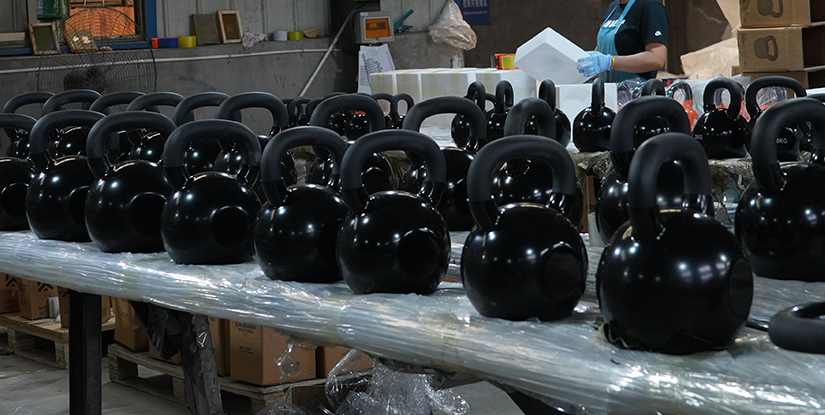
A pervasive misconception in the fitness industry is that muscle hypertrophy is driven solely by biological willpower and nutritional intake. While these factors are critical, they function within a technical ecosystem defined by the mechanical stimulus provided by specialized tools. Without high-quality, calibrated apparatus, the physiological signal required for growth is often attenuated or entirely lost. This guide examines how the mechanical properties and operational integrity of lifting equipment directly influence the efficacy of strength training programs.
Mechanics of Progressive Overload and Resistance Variation
The core of muscle development relies on the principle of progressive overload, yet many operators fail to realize that not all resistance is created equal. The role of lifting equipment in muscle development is fundamentally tied to its ability to provide consistent, predictable tension throughout a range of motion. If the resistance curve of a machine or the stability of a free weight is inconsistent, the neuromuscular system cannot adapt effectively to a controlled stimulus.
When equipment suffers from mechanical drift—such as a pulley system that creates friction at specific angles—the user experiences a 'dead zone' in the movement. This leads to a loss of time under tension, which is a primary driver of hypertrophy. Professionals must distinguish between constant resistance (like iron plates) and variable resistance (like elastic bands or specialized cams) to optimize specific phases of development.
Determining Resistance Profiles for Hypertrophy
- Constant Resistance: Ideal for foundational strength; requires high mechanical stability to prevent energy leakage.
- Variable Resistance: Used to manipulate the strength curve; requires high-quality tensioning to prevent uneven force distribution.
- Accommodating Resistance: Necessary for advanced peak power; relies on the durability of the attachment points.
Understanding these profiles allows for better selection of tools tailored to specific physiological goals. Once the mechanics of resistance are established, the focus must shift to the precision of the load itself.
Precision and Calibration in Load Measurement
Building on the necessity of consistent tension, the second critical factor is the precision of the load being lifted. A common failure mode in commercial and private training environments is the use of uncalibrated or worn-out weight sets. When a user believes they are lifting a specific mass, but the actual load is 5-10% lower due to wear or manufacturing tolerances, the progressive overload cycle is broken.
Inaccurate load delivery results in a 'plateau of ignorance,' where the trainee continues to increase repetitions or volume without actually increasing the mechanical stress on the muscle fibers. This is often caused by the degradation of bearing surfaces in selectorized machines or the wear of nylon bushings in weight stacks.
| Equipment Type | Common Calibration Failure | Impact on Muscle Growth | Verification Method |
|---|---|---|---|
| Selectorized Machines | Pin and stack friction | Inconsistent force delivery | Smoothness test through full ROM |
| Free Weight Sets | Diameter inconsistency | Grip instability/Shifted center | Manual caliper measurement |
| Barbell Systems | Knurling wear or bend | Reduced friction/Unstable load | Visual and tactile inspection |
| Resistance Bands | Elastic fatigue | Unpredictable tension curves | Force gauge testing |
Ensuring that the equipment delivers the intended mass is vital for tracking long-term progress. This precision, however, is useless if the structural integrity of the equipment cannot support the increasing load.
Explore the complete technical specifications:
Structural Integrity and the Threshold of Mechanical Failure
As resistance increases to drive muscle development, the stress on the equipment itself reaches critical levels. A major pain point for high-level trainers and facility managers is the catastrophic failure of a component during a heavy set. Such failures are rarely sudden; they are usually the result of cumulative metal fatigue or improper maintenance of fastening systems.
A common mistake is neglecting the tension of bolts on heavy-duty racks or the integrity of weld joints on lifting platforms. If a frame flexes excessively under load, the energy intended for the muscle is absorbed by the equipment, effectively 'stealing' the stimulus. This structural instability also poses a significant safety risk, which can terminate a training cycle indefinitely.
Structural Checkpoints for Heavy Loading
Before attempting any maximal effort lift, the following parameters must be verified to ensure the equipment is capable of handling the intended mechanical stress:
- Weld Inspection: Check for hairline fractures or discoloration on load-bearing joints.
- Bolt Torque: Ensure all structural fasteners are tightened to the manufacturer's specified range.
- Frame Deflection: Observe the frame under a moderate load to ensure there is no excessive or asymmetrical bending.
- Base Stability: Verify that the floor contact points are even and not subject to uneven settling.
Maintaining structural rigidity ensures that every ounce of effort is translated into muscle development rather than equipment deformation. This stability leads directly into the necessity of ergonomic alignment.
Explore the complete technical specifications:
Ergonomic Optimization for Targeted Muscle Recruitment
Having established that the equipment must be both precise and structurally sound, the next layer of complexity is the alignment of the human body with the machine's axis of rotation. Even a perfectly calibrated machine will fail to drive hypertrophy if the user's biomechanical alignment is incorrect relative to the equipment'-s movement pattern.
The role of lifting equipment in muscle development is highly dependent on the 'fit' between the user and the apparatus. A mismatch between the machine's pivot point and the user's joint center can lead to compensatory movements. These compensations often shift the load away from the target muscle and onto the joints or synergistic muscles, leading to overuse injuries and diminished returns.
Adjustment Criteria for Optimal Biomechanics
To maximize recruitment, the operator must adjust the equipment based on the following criteria:
| Adjustment Factor | Objective | Potential Failure Mode |
|---|---|---|
| Seat Height/Position | Align joint with machine pivot | Joint shear stress/Low recruitment |
| Handle/Grip Width | Optimize torque production | Wrist strain/Unbalanced tension |
| Foot Placement | Stabilize the kinetic chain | Loss of core engagement |
| Resistance Angle | Match muscle length-tension curve | Inefficient contraction peak |
By optimizing these settings, the user ensures that the mechanical work is localized to the intended muscle group. Proper alignment is a prerequisite for the maintenance of the equipment over time.
Long-Term Maintenance and the ROI of Durability
Optimizing the user-machine interface is a temporary fix if the equipment is not subject to a rigorous maintenance schedule. For professional operators, the ROI (Return on Investment) of lifting equipment is tied directly to its operational lifespan and its ability to remain within strict performance tolerances.
Neglecting routine maintenance is a frequent cause of premature equipment degradation. For example, failing to lubricate moving parts in a cable machine doesn't just cause noise; it creates a high-friction environment that alters the resistance profile and increases the load on the cables, leading to eventual snapping. From a business perspective, this translates to both lost training time and increased capital expenditure.
Daily and Weekly Maintenance Protocols
To ensure long-term performance, implement the following maintenance tiers:
- Daily Visual Check: Inspect cables for fraying, check weight stacks for alignment, and ensure no debris is in the tracks.
- Weekly Mechanical Service: Lubricate guide rods, tighten visible bolts, and clean contact surfaces to prevent oxidation.
- Monthly Comprehensive Audit: Test the tension of all resistance elements and perform a full structural integrity check of all load-bearing bolts.
Consistent maintenance ensures that the technical specifications of the equipment stay as close to their original state as possible. This reliability is the foundation of a successful long-term training environment.
Navigating the Evolution of Smart Resistance Technology
As the industry moves toward more sophisticated solutions, understanding the role of lifting equipment in muscle development now requires an awareness of digital integration. Modern 'smart' equipment uses electronic resistance and real-time data tracking to provide a level of precision previously unavailable in traditional settings.
While these technologies offer unparalleled data on velocity, force, and volume, they also introduce new failure modes. Software glitches, sensor drift, and connectivity issues can lead to incorrect data reporting, which can be just as detrimental to a training program as an uncalibrated weight stack. Professionals must learn to balance the benefits of digital precision with the fundamental requirements of mechanical stability.
Comparing Traditional vs. Digital Resistance Systems
| Feature | Traditional Iron/Cable | Digital/Electronic Resistance |
|---|---|---|
| Primary Advantage | High durability and low complexity | Dynamic resistance adjustment |
| Common Failure Mode | Mechanical wear/Metal fatigue | Sensor drift/Software errors |
| Learning Curve | Intuitive/Kinesthetic | Requires digital literacy/Setup |
| Maintenance Focus | Lubrication and hardware | Firmware and sensor calibration |
Regardless of the technology chosen, the fundamental physics of resistance remains the same. Whether through a steel plate or an electromagnetic motor, the goal is the same: a controlled, repeatable, and heavy stimulus.
The Future Outlook: Material Science and Hypertrophy
The role of lifting equipment in muscle development is constantly being reshaped by advancements in material science. We are seeing a shift toward more resilient alloys and composite materials that offer higher strength-to-weight ratios, allowing for more compact yet more durable training environments. These materials are designed to minimize the very issues—wear, friction, and fatigue—that we have discussed throughout this guide.
The next generation of equipment will likely focus on bio-responsive feedback, where the apparatus itself can sense the user's fatigue levels and adjust the resistance in real-time. While this sounds futuristic, the groundwork is being laid by current developments in high-fidelity sensor integration and advanced polymer construction. For the professional operator, staying ahead of these trends means prioritizing equipment that is not just 'strong,' but 'intelligent' and 'adaptable.'
As we have seen, the path to muscle development is a technical one. From the initial selection of resistance profiles to the long-term maintenance of structural integrity, every decision regarding equipment has a direct impact on physiological outcomes. High-performance training requires high-performance engineering.