
Meeting Member Goals with Gym Weight Training Equipment
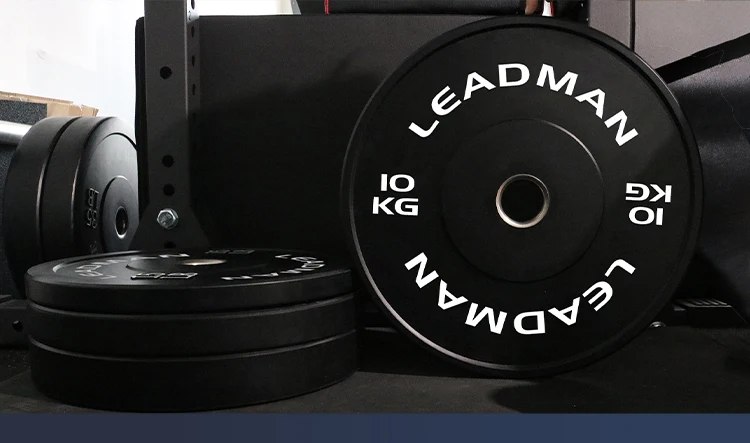
The Gap Between Equipment Capability and Member Achievement
In the commercial fitness industry, a recurring friction point occurs when members fail to reach their physiological milestones despite consistent training. Often, the culprit is not the trainee's discipline, but a fundamental misalignment between the gym weight training equipment available and the specific mechanical requirements of their goals. Whether a member is pursuing hypertrophy, maximal strength, or functional longevity, the equipment must provide the precise resistance curves and stability necessary to optimize muscle fiber recruitment.
When equipment is poorly maintained, outdated, or structurally mismatched to a specific training style, members encounter 'plateaus' that are actually technical failures. For example, a lack of smoothness in a cable machine's pulley system can introduce unintended momentum, disrupting the constant tension required for hypertrophy. This lack of precision causes frustration, increased injury risk, and eventually, member churn. To bridge this gap, operators must treat equipment not just as a static asset, but as a precision tool for achievement.
Understanding these mechanical discrepancies is the first step toward higher retention. Once we identify how equipment characteristics influence outcomes, we can address the specific technical standards required for different training modalities.
Analyzing Resistance Curves and Muscle Recruitment Efficiency
The effectiveness of a training session is heavily dictated by how a piece of equipment delivers resistance throughout a full range of motion. A common mistake made by equipment purchasers is focusing solely on weight stacks without considering the resistance curve. A resistance curve is the relationship between the load applied and the muscle's ability to overcome it at various joint angles. If the curve does not match the human strength profile, the equipment becomes a bottleneck for progress.
The Discrepancy Between Constant and Variable Resistance
In high-end commercial environments, the goal is to match the equipment's resistance profile to the user's natural strength curve. For instance, in a bench press, the human body is typically strongest at the midpoint and weakest at the lockout. If a machine's cam system or pulley ratio does not account for this, the user may experience a 'dead spot' where the weight feels impossibly heavy, or a 'light spot' where the resistance vanishes, leading to loss of control.
| Resistance Type | Primary Goal | Technical Mechanism | Failure Mode if Unmatched |
|---|---|---|---|
| Constant Tension | Hypertrophy/Endurance | Cables and pulleys with consistent ratios | Irregular pulley friction causing 'jerky' movements |
| Variable Resistance | Maximal Strength | Cam systems or eccentric loading | Misalignment between strength peak and load weight |
| Functional Movement | Free weights and adjustable handles | Inconsistent weight increments (non-standard plates) |
Operators must verify that their equipment provides smooth transitions. A common verification method is the 'manual sweep' test: rotating the handles or weights through the full range of motion without resistance to check for any hitching or friction points. Ensuring these curves are optimized is vital before moving into the physical structural requirements of the machines.
Structural Integrity and Load-Bearing Standards
Beyond the internal mechanics of resistance, the structural stability of the frame dictates whether a member can safely push toward their peak performance. A shaky leg press or a vibrating smith machine is a clear indicator of substandard engineering that directly inhibits the ability to meet high-intensity goals. When a frame oscillates under heavy loads, the trainee's central nervous system (CNS) prioritizes stability over muscle contraction, effectively capping their strength potential.
Identifying Structural Deficiencies in Heavy-Duty Equipment
High-performance training requires rigid, high-gauge steel construction. A failure in structural integrity often manifests as 'micro-wobbles' during heavy compound movements. For a procurement professional, this is a critical metric. If the equipment is intended for a heavy strength-training focus, the gauge of the steel tubing and the quality of the weld points are non-negotiable parameters.
- Weld Inspection: Look for smooth, continuous beads. Porous or uneven welds are signs of low-quality fabrication that will fail under cyclical fatigue.
- Bolted vs. Welded Joints: While bolted joints allow for assembly, excessive movement in a bolted frame under load indicates poor tolerance in the manufacturing process.
- Base Footprint: Ensure the machine has a sufficiently wide base to prevent tipping during eccentric loading or unbalanced movements.
A lack of stability is often a sign of poor tolerance management during manufacturing. Once the frame is verified as solid, the focus must shift to the moving parts that handle the most mechanical stress.
Explore the complete technical specifications:
Optimizing Mechanical Components and Bearing Longevity
The smoothness of a movement is only as good as the bearings and bushings that support it. For many facility managers, the most frequent complaint is that 'the machines feel old' or 'the cables feel rough.' This is rarely a matter of age and usually a matter of bearing degradation or lack of lubrication. This mechanical friction acts as a parasitic force, stealing energy from the user's movement and skewing the perceived load.
The Impact of Bearing Friction on Training Intensity
When a bearing begins to fail, it introduces high-frequency vibrations and inconsistent resistance. This is particularly detrimental to hypertrophy-focused training, where time-under-tension (TUT) is a key variable. If a trainee is attempting a slow, controlled eccentric phase and the machine jitters due to a worn bearing, the muscle cannot maintain a steady contraction, and the quality of the set is compromised.
| Component | Ideal State | Failure Sign | Operational Fix |
|---|---|---|---|
| Pulley Bearings | Smooth, silent rotation | Grinding or high-pitched squeal | Replacement of bearing unit; cleaning of housing |
| Weight Stack Guide Rods | Gliding without friction | Stickiness or weight 'jumping' | Cleaning and application of high-grade silicone lubricant |
| Consistent movement | Internal fraying or cable snagging | Replacement of the cable and internal nylon liners |
Verification of these components should be part of a monthly preventative maintenance checklist. If the bearings are sound, the facility can then focus on the more complex task of ergonomic alignment.
Explore the complete technical specifications:
Ergonomic Optimization for Diverse User Demographics
Meeting member goals also requires addressing the physical diversity of the member base. A machine that is perfectly engineered but lacks adjustability becomes useless to a significant portion of your clientele. If a member cannot adjust a seat height to align their joints with the machine's pivot point, they are not just training inefficiently—they are training dangerously.
The Pivot Point Alignment Principle
The most critical technical detail in any strength machine is the relationship between the user's biological pivot (the joint) and the machine's mechanical pivot. If these are misaligned, the lever arm creates an unnatural torque on the joints. For example, in a seated chest press, if the seat is too low, the resistance will be applied at a shoulder angle that stresses the rotator cuff rather than the pectorals. Operators must ensure that adjustment increments are granular enough to accommodate both a 5th percentile female and a 95th percentile male.
- Adjustment Granularity: Check if seat increments are too large (e.g., 5cm gaps). Smaller, more frequent increments are better for precision.
- Handle Diameter: Ensure grips are sized for a variety of hand spans to prevent grip-induced fatigue during heavy lifts.
- Range of Motion (ROM) Limits: Verify that the machine allows for full, safe ROM without hitting mechanical stoppers prematurely.
When ergonomics and mechanics are aligned, the equipment becomes a seamless extension of the user's intent. However, even the best-aligned machine will fail if the facility lacks a rigorous inspection protocol to catch wear before it impacts the user.
Standardizing Inspection Protocols for Operational Excellence
To ensure the equipment continues to meet member goals, a proactive rather than reactive maintenance stance is required. Relying on member complaints to trigger repairs is a failure of management; by the time a complaint is made, the member has already experienced a suboptimal training session and may have lost motivation.
The Tiered Inspection Framework
A professional facility should employ a tiered inspection system that distinguishes between quick daily checks and deep monthly mechanical audits. This ensures that both visual safety and internal mechanical integrity are addressed systematically.
| Inspection Tier | Frequency | Target Focus | Key Action |
|---|---|---|---|
| Level 1: Visual/Daily | Every 24 Hours | Surface and Safety | Check for loose bolts, frayed cables, and sweat buildup. |
| Level 2: Operational/Weekly | Weekly | Movement Quality | Test all adjustment pins and check pulley smoothness. |
| Level 3: Mechanical/Monthly | Monthly | Internal Components | Lubricate guide rods and inspect bearing housings/welds. |
By standardizing these checks, operators can verify the performance of their equipment before it negatively impacts the member experience. This level of scrutiny ensures that the equipment remains a reliable tool for progress.
Common Pitfalls in Equipment Lifecycle Management
One of the most frequent errors in gym management is the 'set it and forget it' mentality regarding equipment procurement. Many operators buy high-end equipment but fail to realize that the 'end-of-life' for a component is vastly different from the 'end-of-life' for the entire machine. Treating a worn bushing the same way you treat a broken frame is a mistake that leads to unnecessary downtime and costs.
The Cost of Delayed Maintenance vs. Component Replacement
A common mistake is attempting to 'save' a piece of equipment by over-lubricating a failing part rather than replacing it. For example, adding more oil to a squeaky pulley might temporarily quiet the noise, but it often traps dust and grit, which accelerates the destruction of the bearing. This results in a much more expensive repair later on. The goal is to identify the failure at the component level, not the machine level.
- Mistake: Using generic WD-40 on guide rods (it attracts dust and dries out). Fix: Use specialized silicone-based lubricants.
- Mistake: Ignoring a slight rattle in a weight stack. Fix: Inspect the bushings and stack-to-guide-rod clearance immediately.
- Mistake: Buying 'budget' equipment for a premium facility. Fix: Prioritize higher-gauge steel and better bearing-quality specs in the initial RFP.
Maintaining this distinction between component wear and structural failure allows for better budget forecasting and less operational disruption.
Future-Proofing Your Equipment Strategy
As the fitness industry evolves toward more data-driven and specialized training, the requirements for gym weight training equipment will continue to shift. To consistently meet member goals, operators must look beyond the current trends and focus on the foundational mechanics of resistance and stability. The machines that will remain relevant are those that offer a blend of high-quality fabrication and adaptable technology.
Ultimately, the ability of a facility to retain members and drive results is directly linked to the reliability of its mechanical assets. By prioritizing high-tolerance construction, regular technical audits, and a deep understanding of resistance mechanics, operators can turn their equipment into a competitive advantage. A well-maintained, high-precision facility is one where member goals are not just met, but consistently surpassed.