
Enhancing Results with Professional Strength Training Equipment
Addressing the Deficit in High-Performance Strength Outcomes
Commercial facility operators and high-performance coaches frequently encounter a specific, frustrating phenomenon: a plateau in client progress despite high-volume training protocols. This often stems from a fundamental mismatch between physiological potential and the mechanical limitations of the hardware being utilized. When equipment fails to provide consistent resistance or suffers from mechanical drift, the neuromuscular stimulus becomes unpredictable. This unpredictability prevents the precise progressive overload required for elite-level hypertrophy and strength gains.
The root cause is rarely the lack of effort; rather, it is the degradation of the kinetic chain's interface with the machine. Whether it is the friction in a pulley system, the instability of a weight stack, or the lack of ergonomic precision in a bench, these micro-impediments force the body to compensate with suboptimal movement patterns. To solve this, operators must transition from a mindset of mere 'availability' to one of 'mechanical integrity.' Once the baseline of equipment reliability is established, the focus shifts toward the specific technical attributes that drive superior results.
| Common Failure Mode | Mechanical Cause | Impact on Results |
|---|---|---|
| Irregular Resistance Curves | Worn Pulleys or Cable Stretch | Inconsistent tension during eccentric/concentric phases |
| Imprecise Path Tracking | Misaligned Guide Rods | Joint strain and reduced muscle isolation |
| Unstable Loading | Worn Bushings or Loose Bolts | Loss of kinetic energy and decreased safety |
Identifying these mechanical variances is the first step in optimizing a training environment. With the baseline of mechanical integrity established, we must now examine the structural components that define true professional-grade durability.
Material Selection and Structural Integrity Standards
Following the identification of mechanical drift, the next logical step is evaluating the material composition of the equipment. Professional-grade hardware is not merely 'heavy-duty'; it is engineered to maintain structural tolerances under extreme fatigue. A common mistake in procurement is prioritizing superficial aesthetics over the gauge of the steel or the quality of the bearing assemblies. When steel tubing is too thin or improperly welded, the equipment will inevitably experience 'frame flex' under heavy loads, which destroys the precision of the movement arc.
The Impact of Steel Gauge on Load Stability
High-performance strength equipment requires a high strength-to-weight ratio that prevents deflection. When a user engages in heavy compound movements, any micro-movement in the frame can disrupt their center of gravity. Professional standards typically demand heavy-gauge, electro-welded steel to ensure that the frame remains a static, reliable platform for the human body. Operators should verify the weight and thickness of the structural members before finalizing any large-scale investment.
Bearing Precision and Friction Management
Beyond the frame, the internal components—specifically bearings and bushings—determine the fluidity of the motion. High-quality equipment utilizes sealed bearings that offer low-friction rotation with minimal resistance variation. In contrast, lower-tier commercial equipment often utilizes open-system bushings that require frequent lubrication and are prone to rapid wear, leading to the 'jerky' resistance mentioned earlier. Verification of these components involves testing the smoothness of a movement cycle across the entire range of motion without hesitation.
As material quality dictates the longevity of the equipment, understanding the specific mechanical advantages of various categories is essential for effective facility planning. This leads us to the critical distinction between different resistance modalities.
Optimizing Resistance Modalities for Targeted Hypertrophy
Once the structural foundation is secured, the focus shifts to how resistance is actually delivered to the user. The choice between free weights, plate-loaded machines, and selectorized weight stacks is not merely a matter of variety; it is a strategic decision based on the specific training outcome desired. Each modality offers a different type of tension curve and degree of stability, which fundamentally alters the neurological and muscular demands of the exercise.
Comparing Plate-Loaded vs. Selectorized Systems
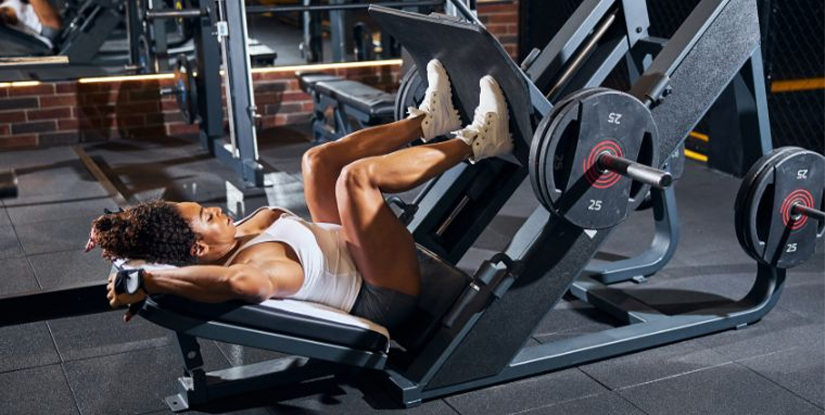
The decision between these two systems often comes down to the intended user experience and the level of technical control required. Plate-loaded machines offer a more natural, organic resistance curve that closely mimics free weights, making them ideal for advanced athletes. However, selectorized machines provide a more controlled, predictable environment, which is often preferred for hypertrophy-focused isolation work in general commercial settings.
| Feature | Plate-Loaded Systems | Selectorized Weight Stacks |
|---|---|---|
| Resistance Profile | Variable/Natural | Highly Predictable/Linear |
| Setup Speed | Slower (Requires Plates) | Fast (Pin-Based) |
| Primary Benefit | High Mechanical Tension | Ease of Use/Isolation |
| Maintenance Need | Moderate (Moving Parts) | High (Cable/Pulley/Pin) |
A common error is over-investing in one type while neglecting the other, resulting in a facility that is either too technical for general users or too restrictive for advanced athletes. To maximize results, a hybrid approach is often the most viable solution. Understanding these modalities is essential before moving into the rigorous maintenance required to keep them functional.
Implementing a Systematic Maintenance Cadence
Having selected the appropriate resistance modalities, the operator must now establish a rigorous maintenance protocol to prevent the degradation of the performance advantages discussed above. Even the highest-quality equipment will eventually fail if left to the mercies of heavy usage and environmental factors. Neglecting maintenance leads to 'mechanical decay,' where the precision of the movement is slowly lost through friction and component fatigue.
The Daily Operator Checklist
Effective facility management relies on daily, non-negotiable inspections. Operators should not wait for a breakage to occur; instead, they should look for the subtle signs of upcoming failure. This includes checking for loose bolts, unusual sounds during movement, and the presence of any frayed cabling. A proactive approach prevents the downtime and liability associated with unexpected equipment failure.
- Visual Inspection: Check for structural cracks, loose upholstery, and rust.
- Audio Check: Listen for grinding or squeaking in pulleys and bearings.
- Tactile Verification: Feel for 'play' or wobbling in weight stacks and selector pins.
- Cabling Integrity: Inspect all cables for fraying or kinks under tension.
Lubrication and Friction Control Protocols
Lubrication is often the most misunderstood aspect of equipment upkeep. Over-lubricating can actually attract dust and debris, creating a 'grinding paste' that accelerates wear on pulleys and guide rods. Professional maintenance requires the use of specific lubricants (such as silicone-based sprays for guide rods) and following the recommended intervals provided in the technical specifications. Verification is simple: if a movement feels slightly 'sticky' or requires more effort than usual, the lubrication interval has likely been exceeded.
Consistent maintenance ensures that the mechanical advantages of the equipment remain intact. However, even with perfect upkeep, an operator must be prepared to troubleshoot the inevitable mechanical hiccups that arise during heavy operation.
Advanced Troubleshooting: Diagnosing Mechanical Drift
Despite a rigorous maintenance schedule, certain issues will inevitably arise. When an operator notices a decline in the smoothness or accuracy of a machine, they must be able to diagnose whether the problem is a minor adjustment or a systemic failure. This diagnostic ability is crucial for maintaining the high standards required for professional strength training.
Diagnosing Resistance Inconsistency
When users report that a machine 'feels different' or the resistance is inconsistent, the problem is usually located in the kinetic transmission system. This involves the cables, pulleys, and weight stacks. An inconsistent feeling is often caused by a cable that has stretched beyond its elastic limit or a pulley bearing that has lost its internal lubrication. To troubleshoot, an operator should perform a manual cycle of the machine through its full range of motion, observing specifically for any points of resistance or 'dead zones.'
Addressing Frame and Alignment Issues
If the issue is related to the movement path—such as a user feeling a 'tug' or an uncomfortable lateral force—the cause is likely an alignment issue. This can be caused by a bent frame member or a misaligned guide rod. Such issues are more critical than cable wear because they can cause acute injury to the user. If a machine fails a 'straight-line test' (running a hand or a straight edge along the movement path), it must be taken out of service immediately for realignment or structural repair.
Regularly verifying these mechanical benchmarks ensures that the equipment remains a tool for growth rather than a liability. As we conclude the technical overview, it is important to look at the long-term strategic implications of equipment selection.
Strategic Procurement and Long-Term ROI Optimization
For the professional operator or facility owner, the selection of strength equipment is a high-stakes capital expenditure. The goal is not just to buy the best equipment, but to buy the equipment that provides the highest return on investment (ROI) over a 5-to-10-year lifecycle. This requires looking beyond the initial purchase price and considering the Total Cost of Ownership (TCO), which includes maintenance, parts replacement, and potential downtime.
Evaluating the Cost of Quality vs. Initial Outlay
A common trap in procurement is selecting 'entry-level' commercial equipment to save on upfront costs. While this may improve short-term cash flow, it often results in a much higher TCO due to frequent repairs and the need for premature replacement. High-quality, professional-grade equipment, while more expensive initially, offers a significantly longer service life and maintains its resale value much better than mid-tier alternatives. When calculating ROI, decision-makers should weigh the cost of a 20% higher initial price against a 50% reduction in annual maintenance costs.
| Metric | Mid-Tier Commercial | Professional-Grade |
|---|---|---|
| Expected Lifespan | 3–5 Years | 8–12+ Years |
| Annual Maintenance Cost | Higher (Frequent Parts) | Lower (Predictable) |
| Downtime Frequency | Moderate to High | Very Low |
| Resale Value | Depreciates Rapidly | Retains Significant Value |
Beyond the hardware itself, the spatial layout of the facility must complement the equipment's operational requirements. High-performance training often requires wider movement radii for free weights and significant clearance for heavy plate-loaded machines. Neglecting these spatial parameters can lead to user collision or restricted movement, effectively neutralizing the advantages of premium equipment. A well-planned layout ensures that the investment in high-grade machines is fully realized through uninterrupted, high-quality training sessions.
Maximizing User Safety Through Ergonomic Precision
The final pillar of professional-grade strength training is the ergonomics of the user-machine interface. While structural integrity provides the foundation, the actual points of contact—such as benches, grips, and footplates—determine the long-term health and performance of the athlete. Suboptimal ergonomics can lead to chronic overuse injuries or the development of compensatory movement patterns that degrade lifting technique over time.
Criteria for Selecting Ergonomic Components
When evaluating strength equipment, operators should use a specific checklist to ensure ergonomic excellence. High-end equipment should offer adjustability that accommodates a diverse range of anthropometric profiles (height, limb length, and torso width). A lack of precise adjustment increments is a common failure mode in mid-tier equipment, often forcing users into positions that strain the lumbar spine or the cervical vertebrae. Always check for the precision of adjustment pins and the thickness of upholstery padding.
- Grip Diameter: Ensure handles are sized for neutral grip engagement to prevent wrist strain.
- Adjustment Granularity: Verify that bench and seat adjustments offer enough increments for fine-tuning.
- Upholstery Density: Confirm that padding remains firm under load and does not 'bottom out' against the frame.
- Footplate Stability: Check that foot support is non-slip and offers multiple positions for varied lifting styles.
The Risk of Ergonomic Neglect
Ignoring ergonomics is a common mistake that leads to high liability and low user retention. If a machine's seat height or resistance path is not optimized for a specific user's biomechanics, the resulting mechanical strain is transferred from the intended muscle group to the joints. This is particularly dangerous in high-intensity strength training where peak forces are high. By prioritizing ergonomic precision, facility owners ensure that their equipment remains a high-performance asset that supports, rather than hinders, the user's long-term physical development.