
The Economics of Commercial vs. Residential Fitness Equipment
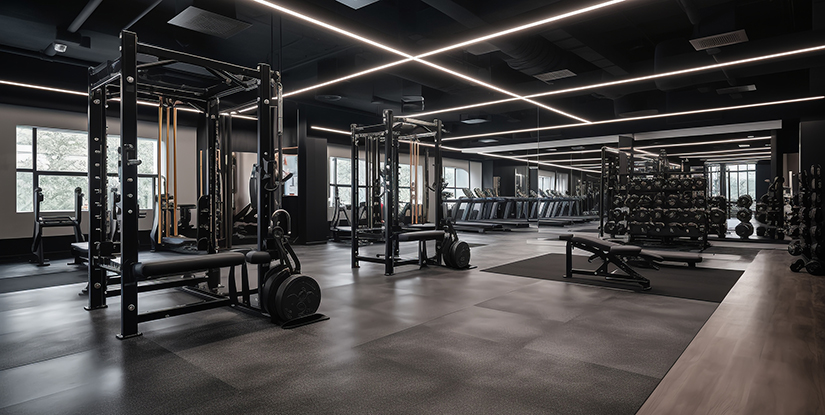
The Myth of the 'Home Gym' Discount: Understanding Value Disparities
A common misconception among facility planners and high-end residential buyers is that the primary difference between commercial and residential equipment lies solely in the aesthetics or the brand name. In reality, the divergence is rooted in rigorous mechanical engineering and duty-cycle capacity. When an operator attempts to substitute commercial-grade machines with residential alternatives to save on initial capital expenditure, they often encounter a cascade of operational failures that escalate total cost of ownership far beyond the initial savings.
To understand the true economics, one must look past the sticker price. Residential equipment is typically engineered for low-frequency, intermittent use, often utilizing lighter gauge steel and plastic components in high-stress areas. Commercial equipment, conversely, is designed for high-density, 24/7 operational environments. This distinction is not merely about durability; it is about the statistical probability of mechanical failure during peak usage periods. As we examine the material specifications, the technical justification for the premium becomes clear.
Defining the Usage Duty Cycle
A duty cycle defines the expected volume of use over a specific timeframe. Residential machines are often rated for a few hours of use per week, whereas commercial machines are built for hundreds of hours of continuous operation. Miscalculating this metric is a primary driver of premature equipment obsolment in boutique studios and hotel gyms.
Material Selection and Structural Integrity Comparison
The transition from a residential to a commercial mindset requires a deep dive into the metallurgical and structural differences that dictate long-term viability. While a residential treadmill might utilize a 14-gauge steel frame to keep weight and shipping costs low, a commercial equivalent typically employs 11-gauge or even 7-gauge steel to manage the kinetic energy of heavy users and high-frequency impact.
The failure mode in residential equipment is often catastrophic rather than incremental. For instance, a lightweight resistance cable in a home-grade cable machine may fray and snap under the repetitive tension of professional training, whereas commercial-grade cables utilize high-tensile steel cores with specialized coatings to prevent fatigue. This structural discrepancy extends to the bearing systems and motor assemblies used in cardio equipment.
| Feature/Specification | Residential-Grade Equipment | Commercial-Grade Equipment |
|---|---|---|
| Frame Construction | Lightweight, thinner gauge steel (14-16 ga) | Heavy-duty, thick gauge steel (7-11 ga) |
| Bearing Systems | Standard ball bearings; high friction loss | High-precision, sealed bearings; low friction |
| Drive Mechanisms | Belt or plastic components; shorter lifespan | Reinforced belts/chains; engineered for heat dissipation |
| Standard foam; high moisture absorption | High-density, antimicrobial, moisture-resistant vinyl | |
| Intermittent/Low-frequency use | High-frequency/Continuous-duty use |
Recognizing these structural differences allows a buyer to predict where a machine might fail during a heavy usage cycle. By evaluating the gauge of the steel and the quality of the bearings, one can move from speculative purchasing to technical procurement. This understanding of physical resilience sets the stage for discussing the direct financial implications of these mechanical choices.
The Hidden Burden of Maintenance and Lifecycle Costs
The apparent price gap between the two classes of equipment is often misleading because it ignores the velocity of depreciation and the cost of upkeep. When discussing the economics of commercial vs. residential fitness equipment, the most critical metric is not the acquisition cost, but the maintenance interval and the cost per use over a five-year window.
In a commercial setting, the lack of a standardized maintenance protocol for residential-grade machines leads to rapid degradation. A common failure mode is the overheating of small-motor cardio units when used in high-temperature, high-traffic environments. While a commercial unit is designed with enhanced heat dissipation and robust cooling systems, a residential unit will suffer motor burnout, requiring a total replacement rather than a simple component fix.
Calculating Total Cost of Ownership (TCO)
To verify the economic viability of your purchase, you must calculate the TCO using a standard three-year or five-year projection. Consider the following formulaic approach:
- Initial Acquisition Cost: The upfront price per unit.
- Maintenance Frequency: The number of service calls or parts replacements required per annum.
- Downtime Cost: The revenue lost or member dissatisfaction caused when a machine is out of service.
- Residual Value: The resale value of the machine at the end of the lifecycle.
A residential machine may cost 50% less upfront, but if it requires replacement every 18 months due to heavy use, the longitudinal cost will significantly exceed that of a commercial machine that lasts seven years with minimal intervention. This financial reality necessitates a more rigorous inspection of the mechanical components before procurement.
Mechanical Tolerances and User Experience Stability
Beyond the sheer durability of the frame, the precision of the mechanical movement—or the "feel" of the machine—is a significant differentiator. This is particularly true for strength training equipment where resistance curves and smooth transitions are vital for injury prevention.
Residential machines often suffer from inconsistent resistance curves due to cheaper weight stacks or lower-quality pulley systems. This leads to "stuttering" or jerky movements, which can be dangerous for advanced users. In a professional facility, even minor mechanical irregularities can lead to liability concerns. A commercial-grade machine utilizes precision-engineered cams and high-tolerance pulleys to ensure the resistance remains constant throughout the entire range of motion.
Verification of Motion Smoothness
When inspecting potential equipment, professionals should use a checklist to verify mechanical precision. A professional should check for:
- Smoothness of the resistance curve: Does the weight feel consistent through the entire rep?
- Bearing noise: Is there any audible grinding or high-pitched squealing?
- Alignment: Do the cables track perfectly within the guide rods without lateral oscillation?
These technical checks are essential because mechanical instability is often the first sign of an impending failure. Once the mechanical performance is verified, the buyer must then consider the logistical aspects of installation and long-term serviceability.
Procurement Strategies: When to Choose Residential vs. Commercial
The decision to use one over the other should be dictated by the intended operational environment rather than a desire for a bargain. Using residential equipment in a high-traffic gym is a strategic error, while using commercial equipment in a small home setting may be an unnecessary over-investment.
Choose Commercial Equipment If:
- You are operating a business (gym, hotel, wellness center) where equipment uptime is linked to revenue.
- The facility expects multiple users per piece of equipment per day.
- You require a longer warranty that covers parts and labor for heavy use.
- The environment requires high-grade antimicrobial surfaces for hygiene compliance.
Choose Residential Equipment If:
- The equipment is for private, low-frequency use (1-2 users per day).
- The budget is strictly capped for a personal setting with no intention of commercialization.
- Space and weight constraints are the primary concern (residential units are often more compact).
A frequent mistake is purchasing "prosumer" equipment for a commercial space, thinking it is a middle ground. However, most prosumer gear still lacks the certified durability and the service contract support required by professional facility management. Determining the correct category before signing a purchase order is the final step in a successful procurement process.
Technological Integration and Future-Proofing
As the fitness industry moves toward more integrated, data-driven experiences, the gap between commercial and residential technology is widening. Commercial equipment is increasingly built with high-speed processing and robust connectivity to handle large-scale data synchronization across multiple users.
If a facility operator chooses residential-grade cardio equipment with basic digital displays, they may find themselves unable to integrate with modern strength-tracking software or class-based training systems. This lack of integration leads to a diminished user experience and makes the facility feel dated. Commercial-grade consoles are designed to be updated via firmware and are built to withstand the heat and electronic interference common in large-scale electrical environments.
Evaluating Software Connectivity
When assessing the long-term value, ask the following:
- Does the equipment support open API integration for third-party training apps?
- Is the console designed for rugged use (water-resistant, high-visibility)?
- Can the software be updated remotely to add new features or training programs?
A robust technical foundation ensures that the equipment remains an asset rather than a technical bottleneck. With these considerations in mind, one can finalize a procurement strategy that balances immediate budget constraints with long-term operational excellence.
Final Summary of Economic and Technical Divergence
The economics of commercial vs. residential fitness equipment are defined by the interplay between initial investment and long-term reliability. While residential equipment offers a low barrier to entry, it introduces significant risks in terms of maintenance, downtime, and total cost of ownership in any high-use setting. Commercial equipment, through its superior material selection, higher mechanical tolerances, and professional-grade maintenance protocols, provides a more sustainable and profitable solution for professional operators.
The professional buyer must move beyond the price tag to evaluate the engineering specs, the projected duty cycle, and the technical requirements of their specific environment. By doing so, they avoid the common pitfalls of premature equipment failure and ensure a higher return on investment through long-term operational stability.