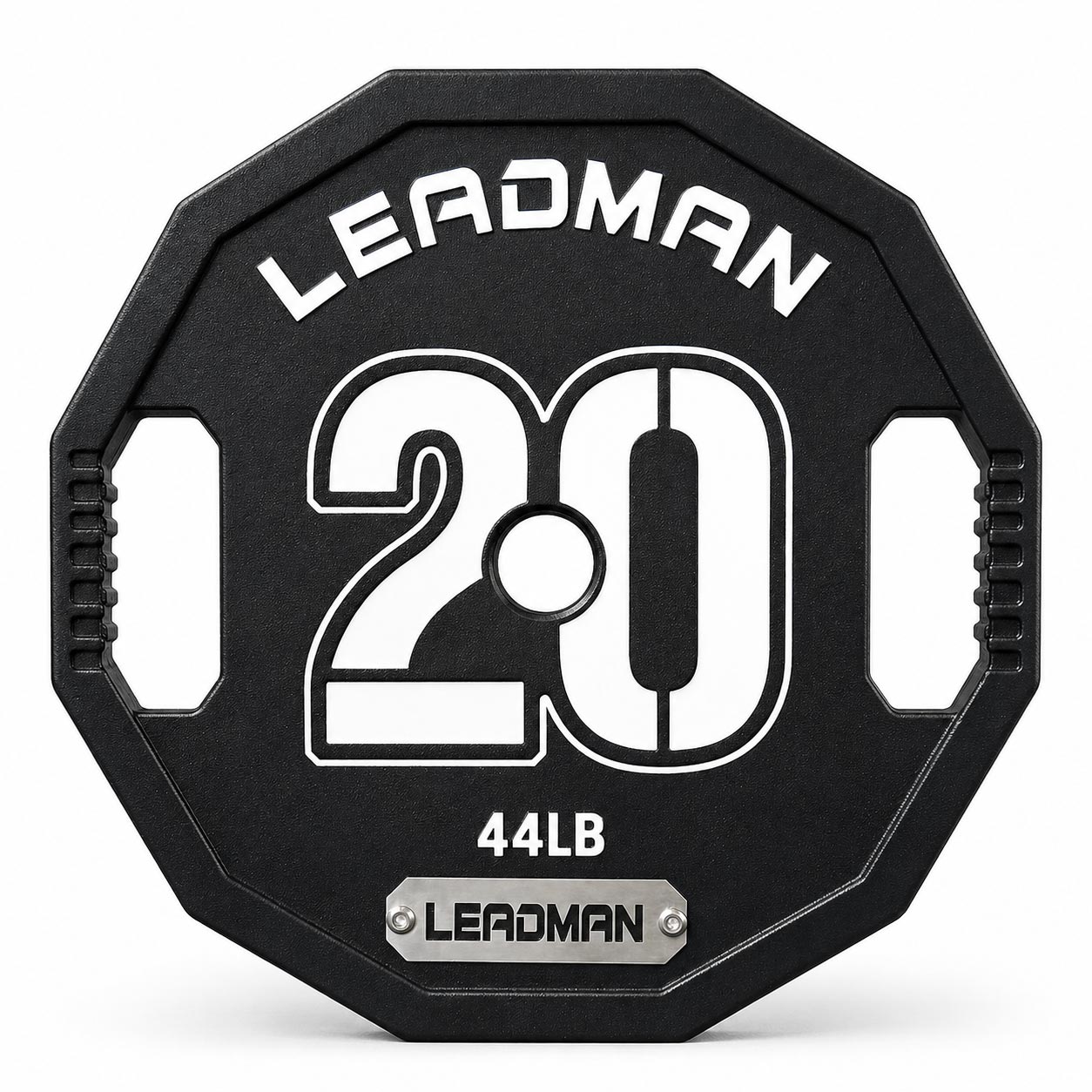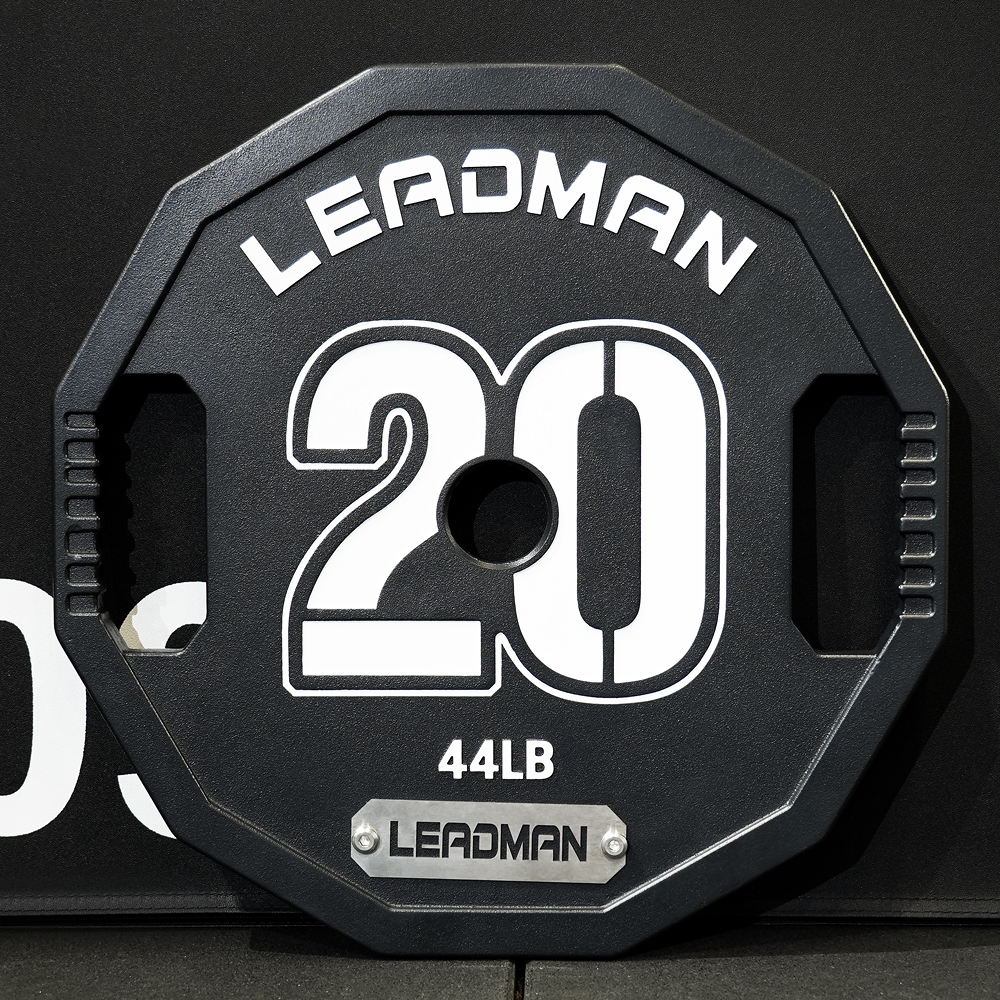
Walking into a high-end fitness space, you often face a compromise: equipment built for the brutal frequency of commercial use often sacrifices visual finesse, while home-focused gear rarely withstands heavy daily loads. The twelve-sided black cast iron weight plates resolve this conflict. These plates are not designed for a single environment but engineered to operate at the intersection of commercial durability and refined, space-conscious design. The core innovation lies in recognizing that premium home gyms and high-traffic professional facilities share a need for rapid weight identification, secure handling, and long-term surface integrity. By fusing a functional twelve-sided anti-roll geometry with an oversized visual communication system, this product directly addresses the operational friction points of busy training environments.
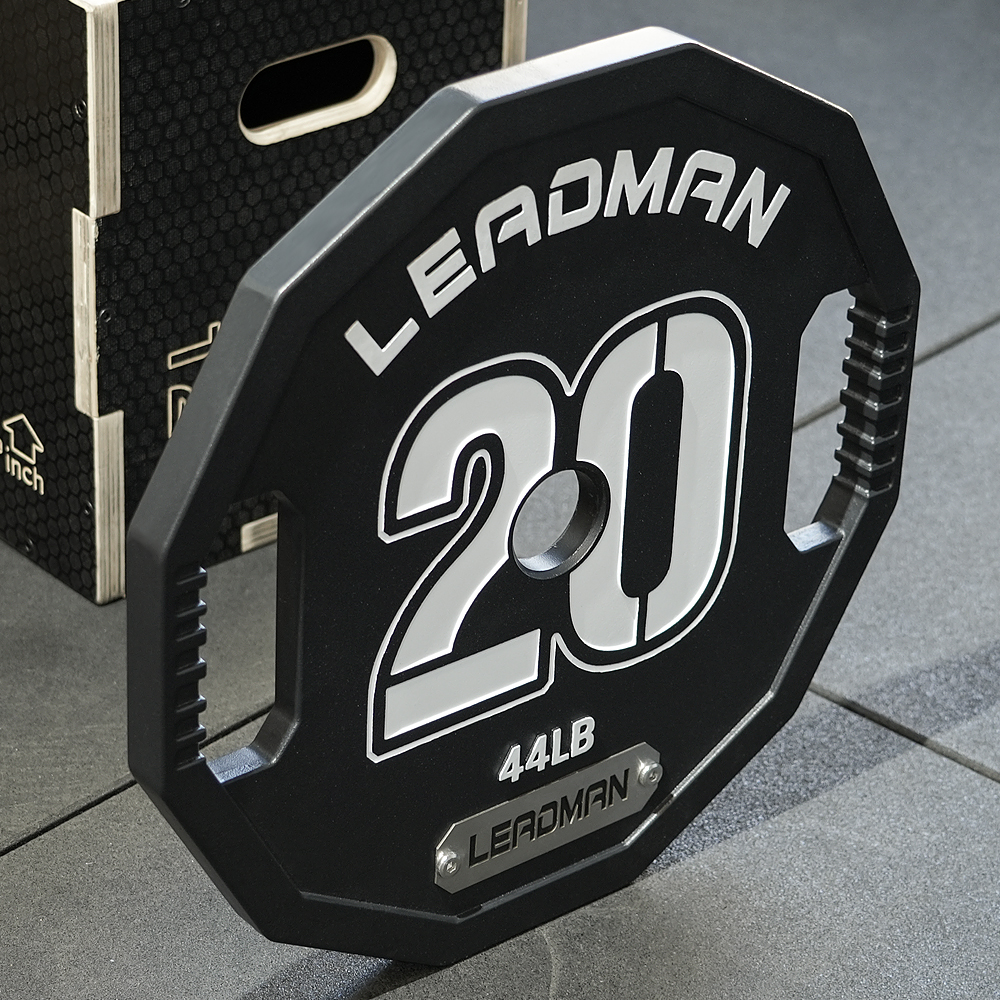
The shift from circular to multi-sided weight plates is often viewed as a marketing differentiator, but here, it is a calculated ergonomic decision. In any commercial setting, time efficiency directly correlates with client satisfaction and class turnover rates. A standard round plate that tips over on a weight tree or rolls across the floor introduces chaos. The 12-sided anti-roll design creates a high-friction interface with flooring surfaces, whether premium rubber gym tiles or home workout mats. This stability means users can load barbells without wrestling with moving plates, and facility managers can maintain a neater, safer workout floor. For a facility with dozens of plates changed hundreds of times daily, eliminating roll-away incidents significantly reduces trip hazards and equipment wear patterns on adjacent walls and machines.
| Operational Factor | 12-Sided Design Impact | Commercial Environment Gain |
|---|---|---|
| Storage Stability | Flat resting edges prevent rolling on horizontal plate racks. | Reduced noise during storage; no shifting during facility vibration. |
| Floor Loading Safety | Immediate stop upon hitting the floor; no unpredictable movement. | Lower accident risk in high-traffic zones like deadlift platforms. |
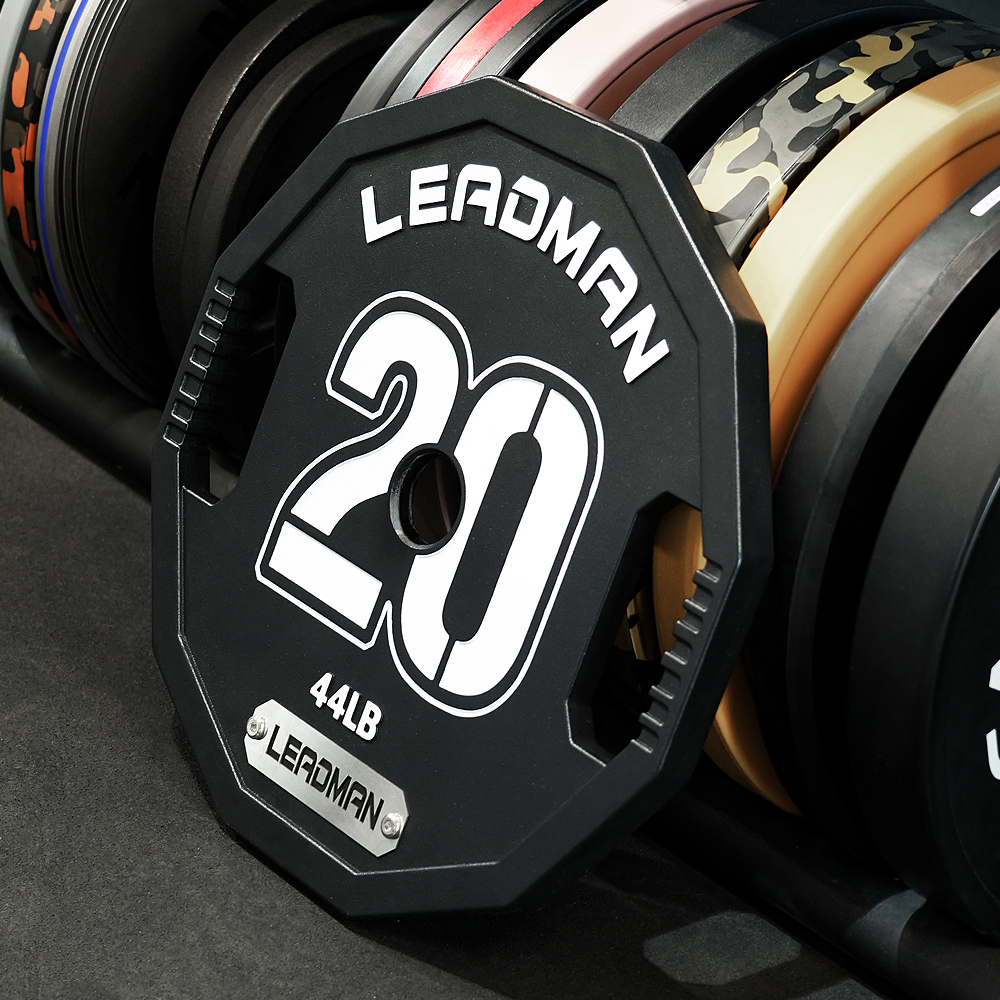
| Visual Organization | Crisp geometric edges create uniform alignment on storage pegs. | Professional appearance that reinforces brand discipline. |
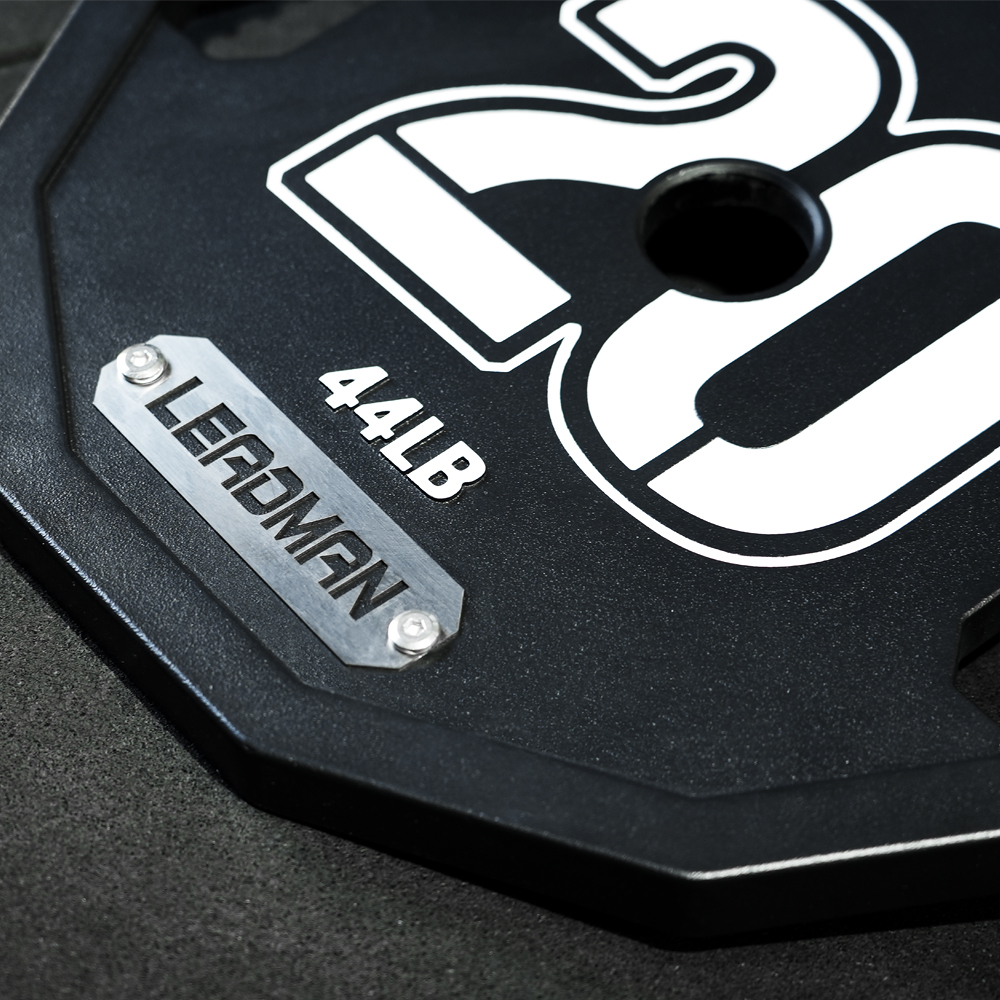
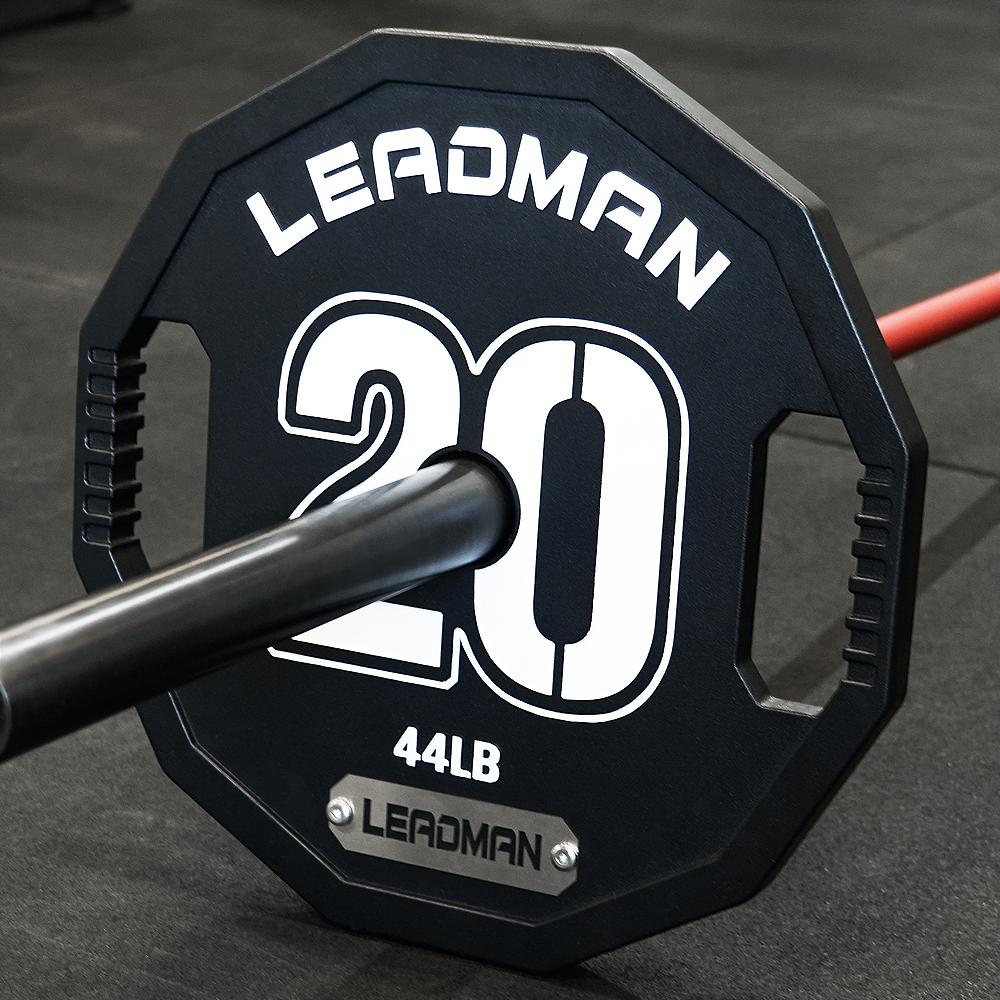
In peak hours, a commercial strength floor is a dense environment of moving bodies and clanging steel. Users and trainers do not have the luxury to squint at recessed engravings. The design philosophy here prioritizes information hierarchy at a glance. The oversized numerical marking for "44LB / 20kg" serves a dual commercial function: it accelerates member self-service efficiency (reducing their time selecting weights) and simplifies staff audits of plate inventory. Furthermore, the high-contrast metal logo plate is not merely a branding exercise; it acts as a tactile and visual anchor. Research on gym user behavior indicates that clearly marked equipment is perceived as safer and more professional, directly influencing member retention rates in competitive urban fitness markets.
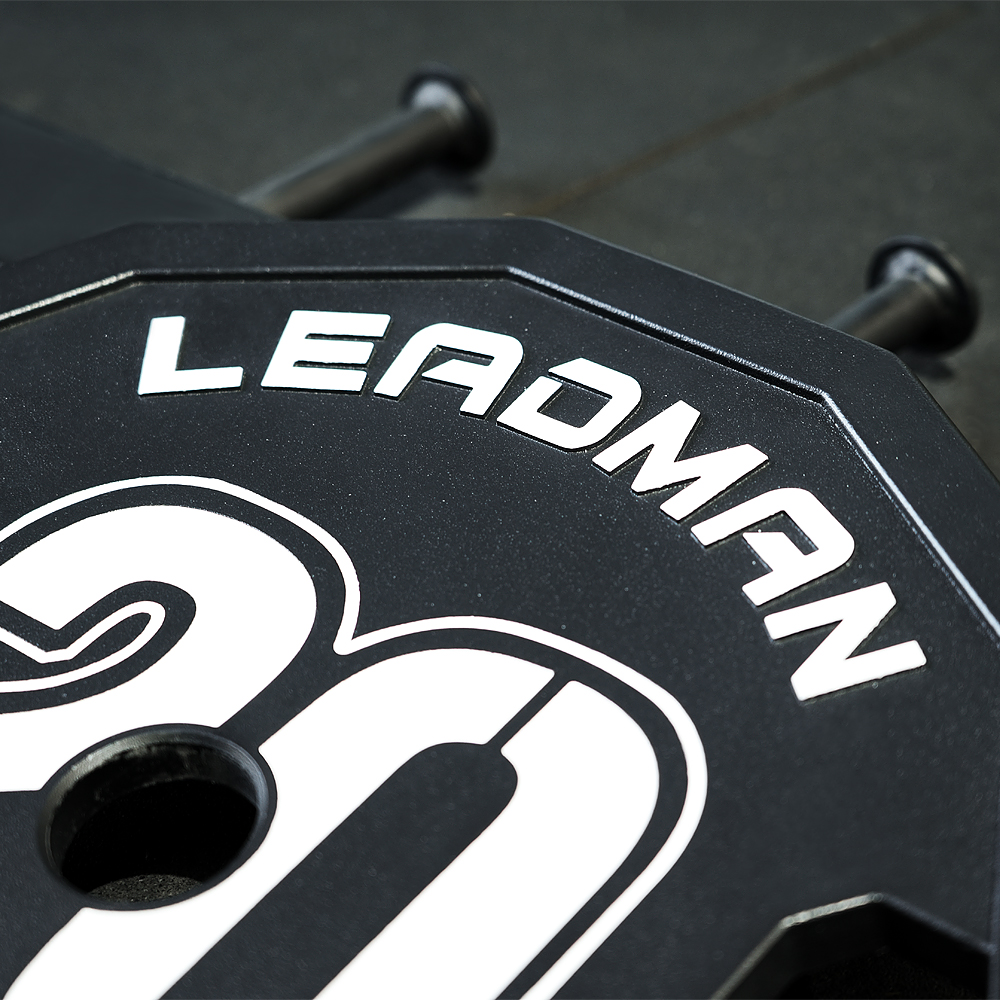
The manufacturing process chosen for these plates is the first indicator of lifecycle cost management. Rather than opting for cheaper gray iron casting methods, the manufacturer employs a resin-coated sand casting process. From a technical standpoint, resin sand provides a smoother surface finish, tighter dimensional tolerances on the center hole (critical for avoiding barbell sleeve wobble), and superior consistency across production batches. For a gym owner calculating total cost of ownership (TCO), this translates to fewer "loose fit" complaints and less abrasive wear on expensive Olympic barbell sleeves. The matte black powder coat finish further extends asset life by providing chemical resistance to common gym cleaning agents, a non-negotiable feature for facilities adhering to strict hygiene protocols.
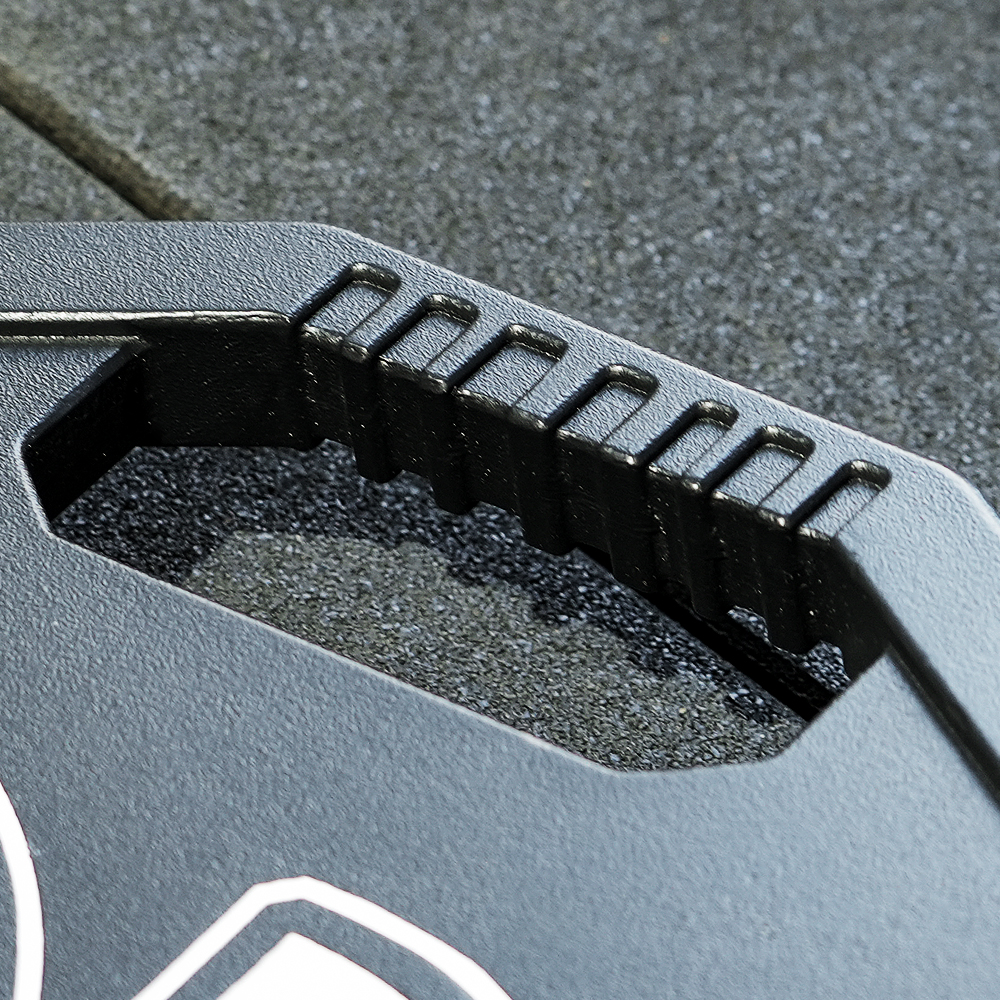
Injury in a gym setting does not only occur during exercise; a significant percentage of staff compensation claims arise from manual handling tasks, specifically moving plates from storage racks to bars. The integrated dual-handle grip design is a proactive risk mitigation feature. The ergonomic contouring allows for a natural, neutral wrist position while lifting, reducing the strain on the lumbar and forearm flexors. The textured anti-slip finish on these grip points ensures that even users with chalked hands or residual sweat maintain positive control. For a strength and conditioning facility, this dual-grip functionality also unlocks programming potential—allowing for unconventional plate-loaded carries, loaded lunges, or rotational drills where the plate acts as a standalone tool.
| Grip Zone Feature | Mechanical Benefit | User Experience Outcome |
|---|---|---|
| Dual symmetrical cutouts | Balanced weight load distribution during two-handed lifts. | Reduced bar collision risk when loading multiple plates. |
| Secondary grip depth | Allows finger knuckle clearance from the plate's outer edge. | Eliminates pinch point hazards common in urethane plates. |
| Texture pattern | Increases coefficient of friction for the gripping surface. | Maintains handling safety in humid or non-climate-controlled gyms. |
The final layer of professional value lies in the plate's acoustic and kinetic properties during use. Unlike urethane-coated plates that can produce a high-pitched ring on contact, or raw iron that chips aggressively, the matte black cast iron composition with a controlled hardness rating offers a predictable, dampened sound profile. For premium facilities located in mixed-use buildings (ground-floor retail or apartment complexes), acoustic management of strength areas is a critical lease compliance issue. These plates provide the auditory feedback experienced lifters rely on without the disruptive volume of cheaper alternatives. The twelve-sided rotation also minimizes the "bounce and shift" when performing deadlift repetitions, keeping the loaded bar stable across multiple reps, which is essential for maintaining proper hip mechanics and reducing lower back fatigue during high-volume training blocks.
From an inventory management perspective, for distributors or multi-location gym chains, the uniformity of the metal logo plate application offers a unique opportunity. Beyond aesthetic value, it serves as a tamper-resistant asset tag location. Facilities can log ownership numbers behind the metal plate, creating a discreet but permanent identification system that deters cross-location equipment migration or loss. This consideration elevates the plate from a simple consumable fitness good to a managed commercial asset.
| Specification Category | Technical Details |
|---|---|
| Primary Construction | High-grade cast iron utilizing resin-coated sand casting technique. |
| Weight Configuration | 5kg\10kg\15kg\20kg\25kg |
| Geometry Type | Functional 12-sided polygon for anti-roll stability. |
| Surface Treatment | Industrial-grade matte black powder coating for corrosion resistance. |
| Grip Engineering | Dual integrated ergonomic cutouts with anti-slip texture patterning. |
| Branding Integration | Secured metal logo plate insert for high durability. |
| Application Setting | Commercial high-frequency zones & premium home gym environments. |