Building a home gym changes how you think about weight plates. Suddenly, every square foot of floor space has a cost. Every pound you move during a workout must also be moved during delivery—up stairs, through doorways, into a basement or garage. And every plate you own needs to fit on a storage solution that doesn't overwhelm the rest of the room. The calculus is different here than in a commercial facility. You aren't optimizing for hundreds of daily users. You're optimizing for one person: yourself.
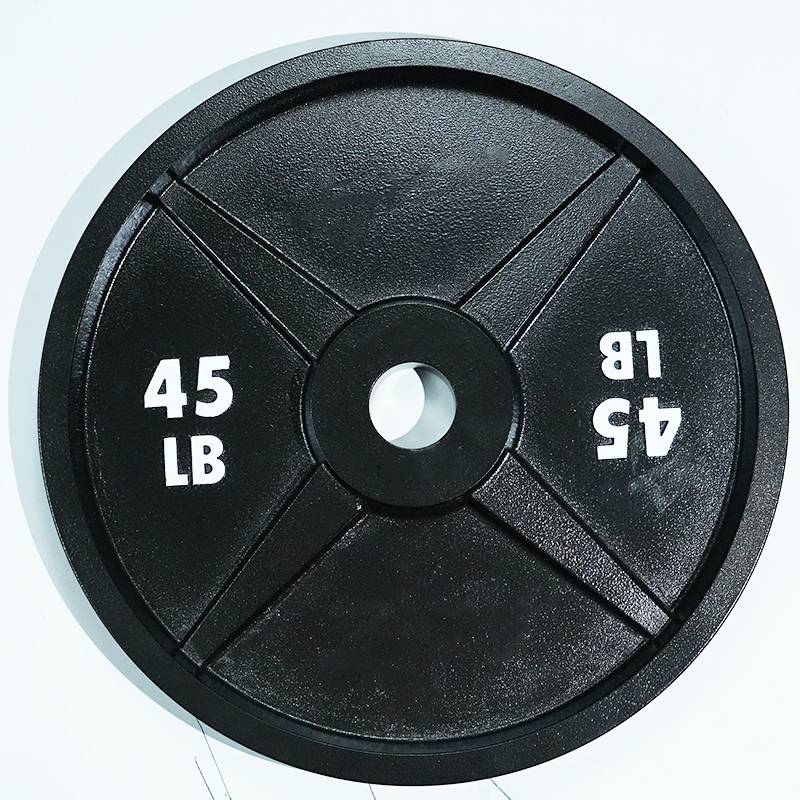
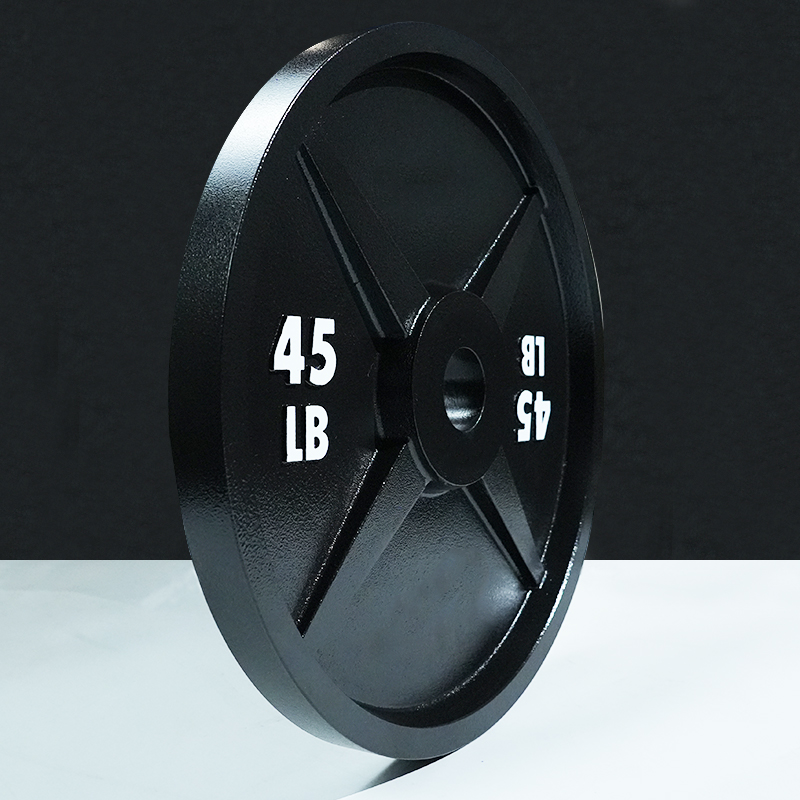
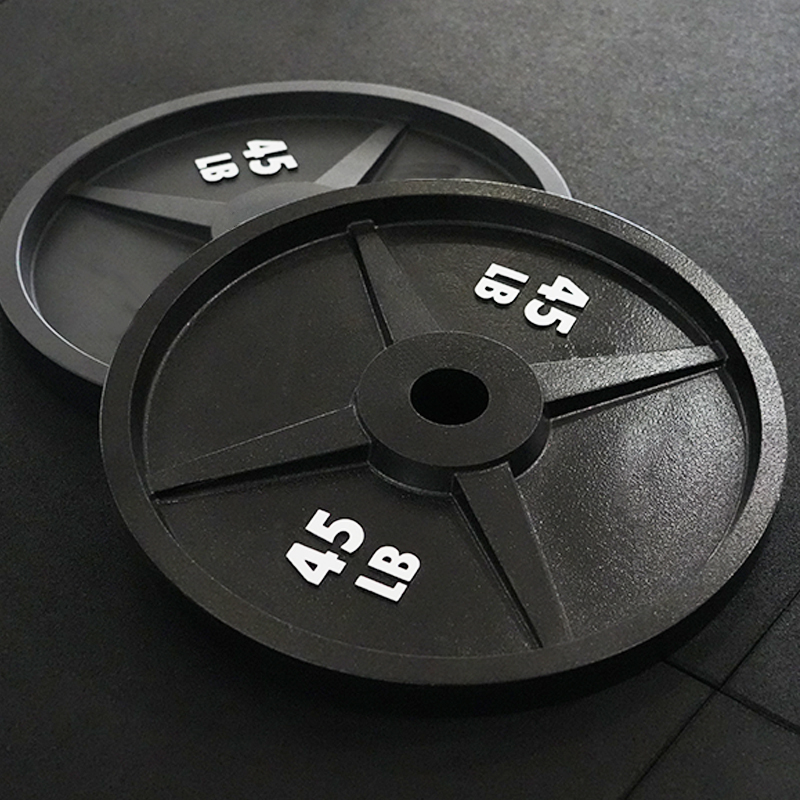
The Precision Cast Iron Barbell Weight – Home Gym Series starts from that premise. Not maximum survivability under abuse, but maximum utility within real-world home constraints. The same high-density pure iron casting appears here, but the engineering emphasis shifts. Tighter weight tolerances matter more when you're tracking personal progress. Consistent outer diameters matter more when you're stacking plates on a compact tree. A smooth, chip-resistant finish matters just as much—but because you want your garage gym to look professional, not because a cleaning crew will wipe it down three times daily.
Home lifters often follow structured programs pulled from apps, spreadsheets, or coaching templates. A typical prescription: "Deadlift 80% of 1RM for 4 sets of 6." If your true 1RM is 315LB, 80% equals 252LB. Loading that bar requires precise combinations of 45LB, 25LB, 10LB, 5LB, and sometimes 2.5LB plates. If any plate in your set drifts significantly from its stated weight, that 252LB becomes 255LB or 249LB—still close, but no longer precise.
The Home Gym Series maintains calibration within tighter informal tolerances than basic economy plates. While not certified to competition ±10g standards, the manufacturing consistency here ensures that a 45LB plate from this series will match another 45LB plate from the same run. No unexpected 1-2LB variances between nominally identical plates. When you load two 45LB plates per side, you can trust the total weight is what the math says it is.
Here's a home gym frustration rarely discussed. Plate trees assume consistent outer diameters within weight classes. But cheap plates often vary. A 25LB plate from one production batch might have a 270mm diameter; a 45LB plate from a different batch might measure 285mm. When you stack them, the smaller-diameter plate sits inside the larger one's shadow—fine for stability. But when you need to grab that 25LB plate without removing the 45LB plate above it, the diameter mismatch forces you to lift the heavier plate first.
This series maintains predictable outer diameters across all weights in the lineup. 45LB plates share one diameter. 35LB and 25LB plates share a stepped diameter that nests appropriately. Smaller plates (10LB, 5LB) use compact diameters that clear the larger plates entirely. You can retrieve any plate from a fully loaded tree without unstacking the ones above it. Small convenience. Big impact on daily workout flow when you're training alone with no one to hand you plates.
Not all home gym barbells use the same sleeve specifications. Budget bars sometimes feature slightly undersized or inconsistently machined sleeves. A plate with an excessively tight bore binds on these bars. A plate with an excessively loose bore wobbles during lifts, creating annoying noise and uneven loading feel.
The Home Gym Series uses a 2-inch (50.8mm) machined bore calibrated to accommodate minor sleeve variations common in home-use barbells. The bore isn't sloppy—it simply provides enough clearance to slide smoothly on bars that might not meet competition tolerances. For home lifters who upgrade their barbell later to a higher-end model, the same plates continue to fit correctly. No need to replace your entire plate fleet because you bought a better bar.
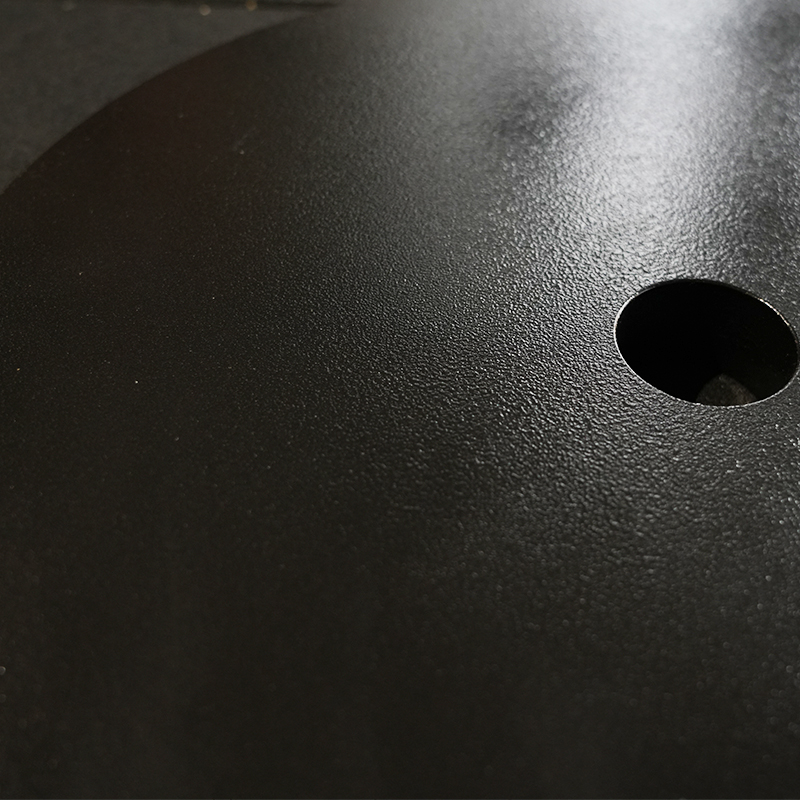
Home gyms live in uncontrolled environments. Basements have humidity. Garages have temperature swings. Attics have dust. A plate finish that survives a climate-controlled commercial gym might fail within months in a damp garage. The Home Gym Series coating prioritizes moisture resistance and corrosion prevention over chemical resistance (since no one is spraying quaternary ammonium on your home plates after each use).
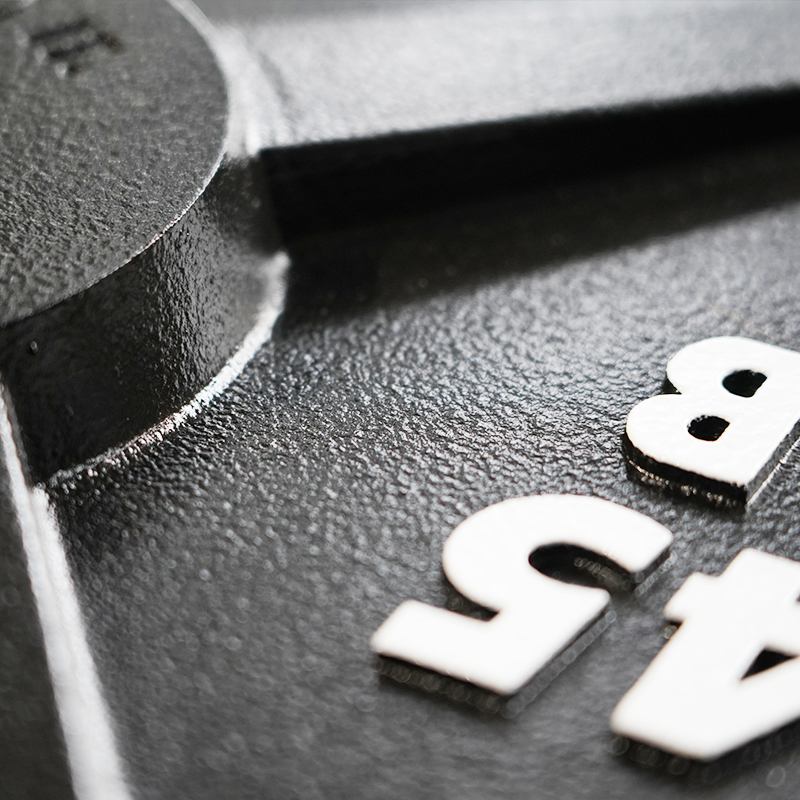
The smooth-touch finish here is also practical for another reason: hand comfort. When you're loading and unloading plates yourself, without a gym partner, your hands contact every plate multiple times per session. A rough or tacky finish becomes annoying. Sharp edges from poor casting become painful. This series features deburred edges and a clean, non-irritating surface that respects your hands across dozens of weekly loading cycles.
Home lifters often stall on linear progression because standard plate increments are too large. Adding 10LB total (two 5LB plates) feels manageable. Adding 20LB total (two 10LB plates) often feels impossible. The Home Gym Series includes thoughtful smaller increments (5LB and 10LB) as standard parts of the lineup, not afterthoughts. But more importantly, the weight jumps between available plate sizes follow a logical progression: 5, 10, 15 (via 10+5), 20, 25 (via 15+10 or 25 single), 35, 45, 50 (two 25s), and so on.
This granularity means you can increase your working weight by 5LB, 10LB, 15LB, or 20LB increments depending on your program's needs. No forced jumps that exceed your recovery capacity. No need to buy expensive micro-plates just to make reasonable progress.
A full set of plates—two each of 45, 35, 25, 10, 5—occupies physical space regardless of how you store them. Vertical trees minimize floor footprint but require ceiling clearance. Horizontal racks spread weight across walls but consume wall space. The Home Gym Series accommodates both storage approaches through its consistent diameter stepping and machined bore that slides easily onto any standard storage peg.
For home gym owners with extremely limited space, consider this: the compact outer diameters of the smaller plates (5LB, 10LB) allow them to be stored separately from the larger plates entirely. A small wall-mounted peg can hold all your 5LB and 10LB plates near your change plate area while the heavy plates live on a floor tree. This two-zone storage approach works specifically because the small plates are physically small, not just light.
The garage lifter training alone at 6 AM before work. The basement gym owner with 8-foot ceilings who can't fit a tall plate tree. The apartment dweller on a second-floor walkup who needs plates that won't destroy the stairs during delivery. The intermediate lifter transitioning from commercial gym membership to home training who wants professional-quality gear without commercial-scale pricing or packaging.
Also: the parent building a home gym to train around family schedules. The CrossFitter buying their first set of personal plates for skill work between classes. The returning lifter starting over after time away who needs a complete set that grows with them as strength returns. For all of these users, the Home Gym Series delivers what matters most: accuracy, space efficiency, and the satisfaction of gear that feels good to use every single session.
| Category | Home Gym Series Specification |
|---|---|
| Target Environment | Residential garages, basements, apartments, home studios |
| Construction Method | High-density pure iron casting (consistent across weight run) |
| Center Hole | 2 inches (50.8mm) with machined bore, calibrated for home bar tolerance |
| Diameter Management | Predictable outer diameters by weight class for nested stacking |
| Surface Coating | Moisture-resistant smooth-touch finish, deburred edges |
| Quality Reference | Consistent manufacturing within series (plate-to-plate match) |
| Available Weights | 5LB, 10LB, 15LB, 25LB, 35LB, 45LB |
| Storage Compatibility | Vertical trees, horizontal racks, and wall pegs |