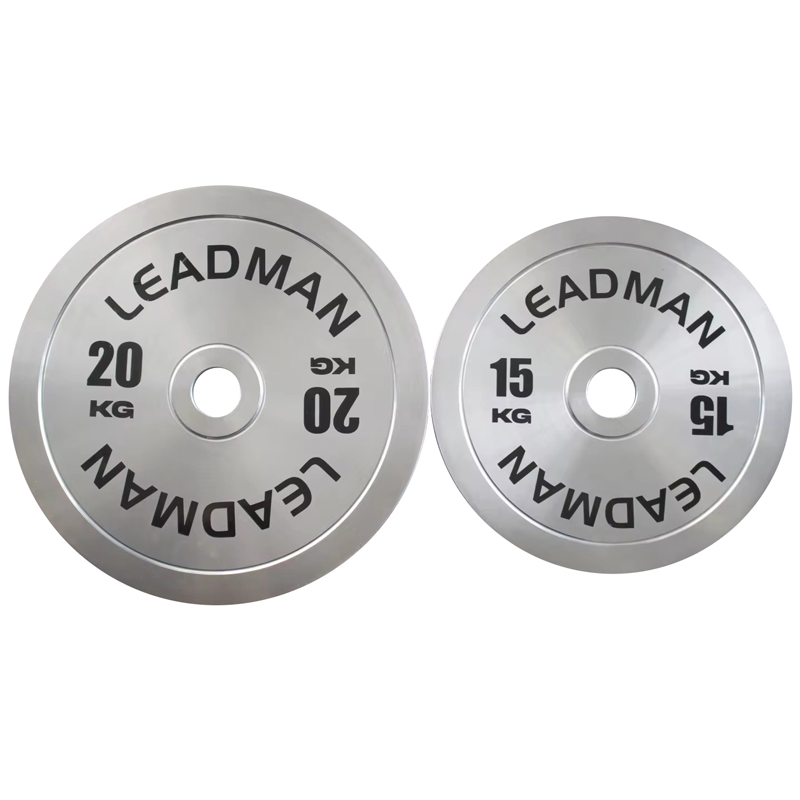
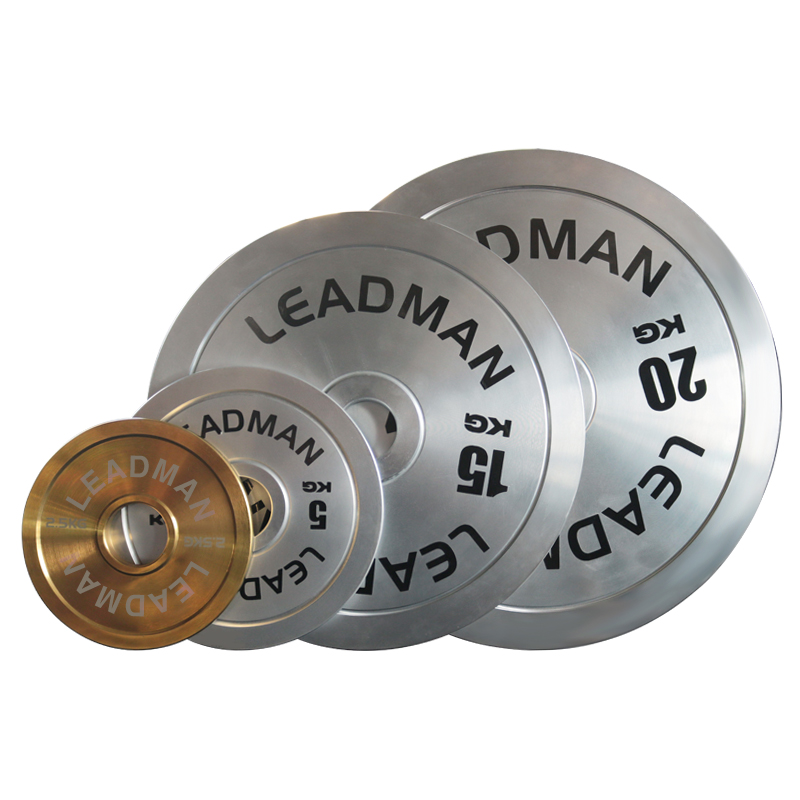
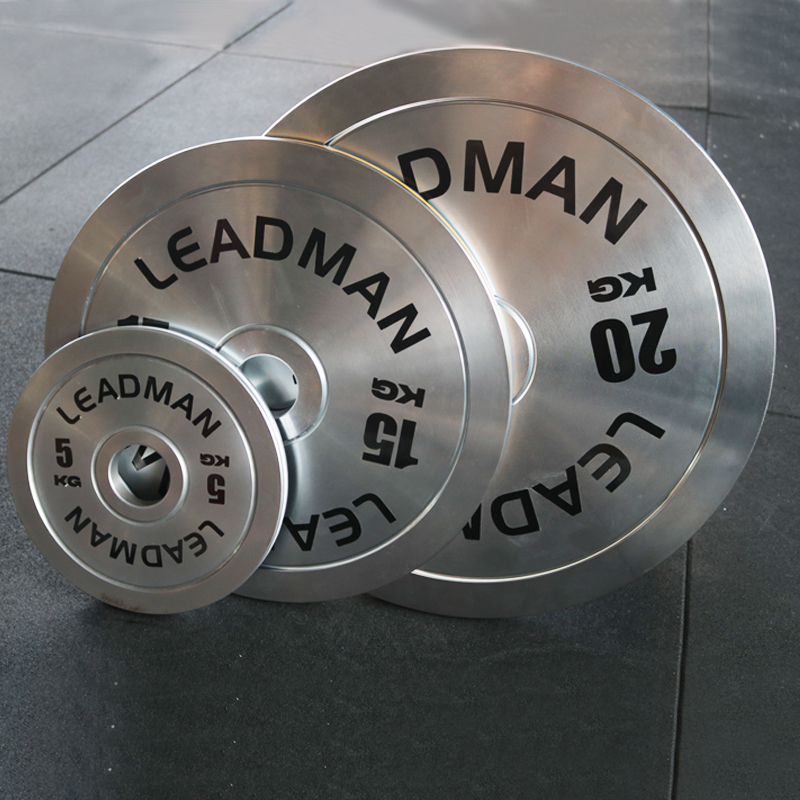
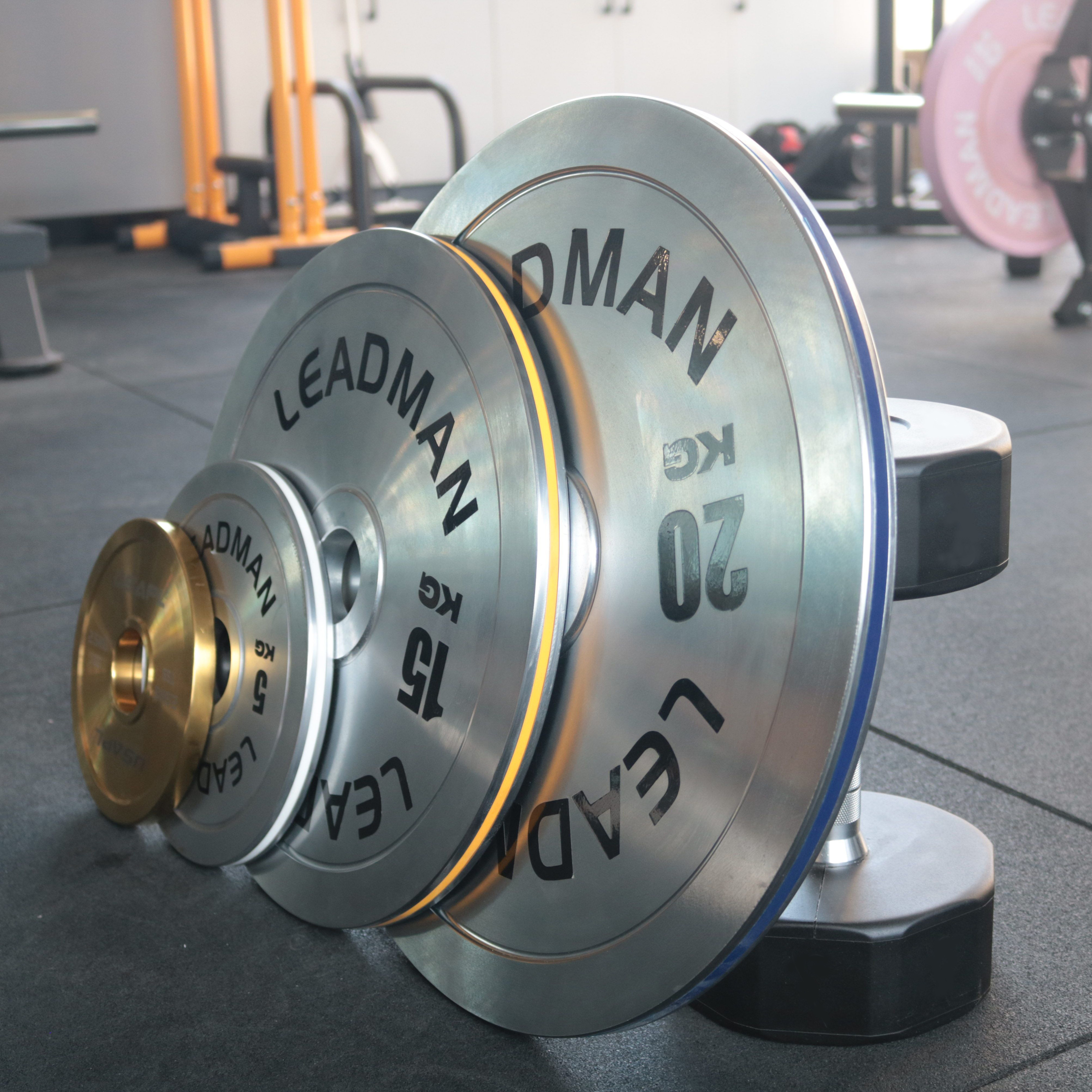
Fifteen kilograms is the orphan weight. Too heavy for technique work with a completely empty bar. Too light to matter much in a max effort deadlift. In most plate assortments, the 15KG plate gets ignored entirely—gyms buy 20KG and 25KG for heavy work, 10KG and 5KG for increments, and the 15KG sits on the bottom of the tree collecting dust. That's a mistake. The 15KG plate solves a specific loading problem that no other increment addresses efficiently: bridging the gap between moderate working sets and true heavy loads without forcing lifters to handle awkward plate combinations.
The yellow 15KG steel bumper plate shown here fills that gap deliberately. At 238MM diameter (identical to the green 10KG) but with different thickness (11MM per the specification table), yellow plates visually match the 10KG diameter while carrying 50% more mass. This diameter consistency matters for storage: yellow and green plates stack concentrically without overhang, creating stable plate trees.
Consider a typical female competitive weightlifter with a 90KG clean and jerk. Working sets often fall between 60KG and 75KG. Loading a bar to 65KG requires bar (20KG) plus 20KG (blue) plus 15KG (yellow) plus 10KG (green). Without yellow, reaching 65KG demands bar + blue + blue (60KG) plus fractional plates—a different loading scheme that changes plate distribution across the sleeves. The yellow plate allows symmetrical loading: one yellow per side adds 30KG total, landing exactly on common intermediate percentages.
For male lifters working in the 120KG–150KG range, yellow plates enable 30KG jumps (two yellows) when 40KG jumps (two blues) are too aggressive for technique-focused sessions. The ability to fine-tune load progression without resorting to multiple small plates speeds up warm-ups and keeps lifters in their working zones longer.
Look closely at the specification table. The yellow 15KG plate shares the 238MM outer diameter with the green 10KG plate. The blue 20KG and red 25KG share the larger 450MM diameter. This two-diameter system is intentional. Lighter plates (10KG, 15KG) have smaller diameters so they nest inside the larger plates on storage trees. A properly designed tree places 450MM plates (reds, blues) on lower pegs and 238MM plates (greens, yellows) on upper pegs, creating a visual taper that makes plate selection intuitive.
If the 15KG plate shared the 450MM diameter, it would interfere with red and blue plates on the same tree, requiring wider peg spacing or dedicated storage. The 238MM diameter keeps yellow plates compact, reducing required storage footprint by approximately 40% compared to full-diameter plates of the same weight in rubber construction.
At 11MM thick, the yellow 15KG steel plate is remarkably thin for its weight class. Compare this to a typical rubber 15KG bumper, which often exceeds 25MM due to material limitations. The 14MM saved per plate translates directly to sleeve capacity. When a lifter loads a warm-up sequence of 60KG, 80KG, 100KG, 110KG, using steel plates instead of rubber reduces the number of times they need to strip plates entirely—they can simply slide additional yellows and greens onto existing sleeves without running out of space.
For facilities running circuit classes where participants load their own bars, thinner plates also reduce loading time. A member fumbling with thick rubber plates that bind on the sleeve costs 10–15 seconds per transition. Across 20 class participants and 10 transitions per session, that's 30–50 minutes of cumulative delay daily. Thin steel plates slide faster. Training efficiency improves measurably.
At 15KG, the plate's mass sits closer to the barbell's centerline than larger-diameter plates. This changes the moment of inertia during rotational movements like the snatch or clean. A bar loaded with yellow 15KG plates (238MM diameter) whips differently than the same weight loaded with blue 20KG plates (450MM diameter). For lifters practicing technique at sub-maximal weights, the smaller-diameter yellow plate provides more realistic bar whip characteristics compared to using full-diameter plates at the same total load.
This nuance matters for competitive weightlifters. Training with 450MM plates at 60KG produces whip patterns that don't translate to 120KG competition lifts because plate diameter influences how the bar oscillates. Using 238MM plates (greens and yellows) at lighter loads more closely mimics the whip dynamics of heavier 450MM plates at competition weights. Smart programming takes advantage of this.
Coaching a large group class from across the floor, distinguishing between a green 10KG and a yellow 15KG on a fast-moving barbell is difficult without color coding. Yellow is the highest-visibility hue in the human visual spectrum under typical gym lighting. A yellow plate registers immediately. Coaches can scan a rack of barbells and identify which athletes have moved from greens to yellows (15KG per side versus 10KG per side) without walking to each station.
For video analysis, yellow plates contrast sharply against black barbell sleeves and dark platform mats. Frame-by-frame review of a missed lift reveals exactly which plates were loaded without needing to zoom and enhance. This accelerates technical feedback loops between attempts.
The yellow 15KG plate sees less extreme impact force than its heavier red and blue counterparts. A 15KG plate dropped from overhead generates approximately 60% of the impact energy of a 25KG plate from the same height. However, yellow plates often get used in higher-rep sets (technique work, warm-ups, conditioning circuits), meaning they experience more frequent but lower-intensity impacts.
The yellow coating must resist abrasion from repeated sliding against adjacent plates. In a typical warm-up sequence, a yellow plate might be loaded and unloaded 15–20 times per session. Each slide event wears the inner bore and face surfaces. Industrial powder coating or equivalent provides the necessary hardness to maintain visual integrity across thousands of loading cycles. Facilities should inspect yellow plates periodically for bore wear, as this is the first failure point.
Because yellow and green share the 238MM diameter, they store efficiently together. A single tree peg can hold alternating greens and yellows without diameter mismatch issues. For facilities organizing plate trees by weight order, the logical sequence from top to bottom is: 5KG (if present), 10KG green, 15KG yellow, 20KG blue, 25KG red. Members grabbing plates intuitively reach for heavier weights lower on the tree, reducing lifting strain from overhead retrieval.
Home gym owners with limited floor space can stack yellow and green plates horizontally on a single weight peg, maximizing storage density. The 11MM thickness of yellow and 17MM thickness of green mean a stack of three greens (51MM) plus three yellows (33MM) totals 84MM—fitting comfortably on standard 100MM weight pegs with room for collars.
Weightlifting coaches programming for intermediate athletes need yellows for the 60KG–80KG training zone where 10KG increments (greens) produce jumps too small and 20KG increments (blues) produce jumps too large. The yellow plate sits exactly in the middle, enabling 15KG jumps (30KG total on the bar).
Commercial gyms with diverse member strength profiles need yellows for the large population of lifters whose working deadlift falls between 60KG and 100KG. For a member pulling 80KG for reps, the loading scheme bar (20KG) plus two yellows (30KG) plus two greens (20KG) plus two 5KG plates (10KG) totals 80KG. Removing yellow from that equation forces either bar + blue + blue + green (70KG) or bar + blue + blue + blue (80KG with asymmetrical loading). Yellows provide an elegant solution.
For facilities that already own greens and blues, adding yellows completes the logical increment sequence: 10KG, 15KG, 20KG, 25KG. No gaps. No forced compromises. Every training weight becomes reachable with three plates per side or fewer.
| Specification | Detail |
|---|---|
| Color Code | Yellow (designates 15KG) |
| Weight Rating | 15 KG |
| Calibration Tolerance | ±10 grams |
| Outer Diameter (DIA) | 238 mm |
| Inner Diameter (Collar) | 50.8 mm (machined finish) |
| Thickness | 11 mm |
| Construction Material | Steel (bumper plate grade) |
| Diameter Family | Small diameter (shared with 10KG green) |