
The 18-Month Failure Cycle—Why Cheap Racks Don‘t Last
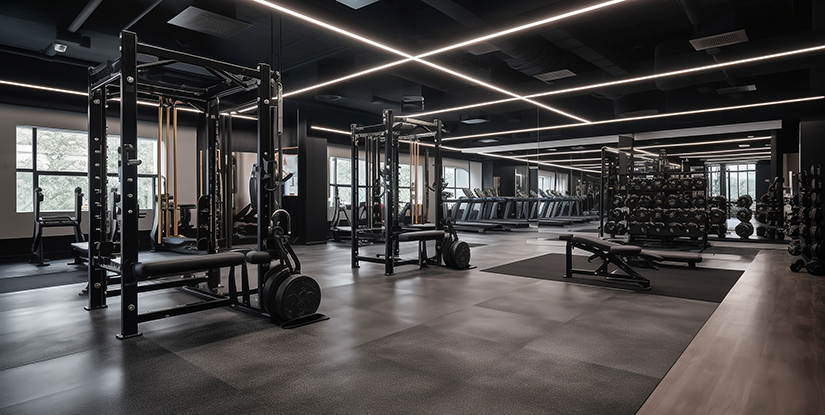
Decoding the 18-Month Failure Cycle: The Hidden Cost of Low-Grade Equipment
In many commercial and high-use environments, a recurring phenomenon occurs where storage or weight racks undergo structural degradation or total failure within approximately 18 months of continuous operation. This is not a coincidence or a stroke of bad luck; it is a predictable outcome of a specific failure cycle inherent in low-cost, low-spec equipment. Operators often mistake these failures for 'heavy usage' or 'unforeseen accidents,' when in reality, the equipment was mathematically destined for decline from the moment of procurement.
The 18-month cycle is typically characterized by three distinct phases: initial stability, creeping deformation, and final structural fatigue. During the first six months, the equipment performs adequately. Between months six and twelve, micro-fractures and minor bends begin to manifest. By month 18, the cumulative stress of repetitive loading exceeds the weakened structural thresholds, leading to catastrophic failure. This guide explores the technical drivers of this cycle and provides the specifications required to bypass it.
The Economics of Premature Replacement
Procuring lower-cost units appears to provide immediate budget relief, but the long-term operational cost (OpEx) often exceeds the initial savings. When a rack fails, the costs are not merely the replacement price, but also downtime, potential liability, and the labor required to decommission unsafe units. Understanding the mechanical causes of these failures allows buyers to shift from a 'lowest bid' mentality to a 'total cost of ownership' strategy.
Related reading:
Steel Gauge and Wall Thickness: The Foundation of Structural Rigidity
The most significant driver of the 18-month failure cycle is the use of under-spec material in the primary uprights and crossmembers. A common tactic used by budget-focused manufacturers is to utilize thinner-walled steel tubing to reduce shipping weight and material costs. While the rack may look substantial, the actual load-bearing capacity is hollowed out by low gauge numbers.
Understanding Steel Gauge Discrepancies
In the world of professional-grade equipment, the difference between 11-gauge and 14-gauge steel is not merely a millimeter of thickness—it is the difference between a permanent structure and a temporary solution. A 14-gauge tube is significantly more susceptible to 'crushing' under lateral loads and buckling under vertical compression over time. The 18-month mark is precisely when the plastic deformation caused by repeated loading becomes permanent in thinner-walled materials.
| Steel Gauge (Approx.) | Wall Thickness (mm) | Typical Use Case | Durability Profile |
|---|---|---|---|
| 11-Gauge | ~3.0 mm | Commercial/High-Impact | Highly resistant to deformation; long lifecycle. |
| 14-Gauge | ~2.0 mm | Semi-Commercial/Light Use | Moderate risk of bending under heavy loads. |
| 16-Gauge | ~1.5 mm | Residential/Home Use | High risk of failure within the 18-month cycle. |
| 18-Gauge+ | < 1.2 mm | Light Storage/Utility | Unsuitable for heavy equipment; imminent failure risk. |
Operator Verification: To verify steel quality, do not rely on visual appearance. Use a digital caliper to measure the wall thickness of the tubing at several points. If the measurements deviate significantly from the advertised specification, the product is non-compliant with professional standards.
Related reading:
Welding Integrity and Joint Stress Distribution
Even with high-grade steel, a rack will fail if the junctions—where the vertical uprights meet the base or crossmembers—are structurally weak. In the 18-month failure cycle, the welds are often the first point of failure. Cheap manufacturers frequently utilize automated, high-speed welding processes that prioritize speed over penetration, resulting in 'surface welds' that lack deep-tissue integration with the base metal.
The Mechanism of Weld Fatigue
Under constant vibration and load shifting, these shallow welds experience fatigue. The stress is not distributed across the joint but is concentrated at the narrow interface of the weld bead. This leads to micro-cracking. Over several months, these cracks propagate through the heat-affected zone (HAZ) of the steel, eventually resulting in a complete separation of the joint. This is why a rack may seem stable one day and collapse the next during a standard operation.
Identifying Defective Welds
A professional inspection should involve looking for the following red flags:
- Undercutting: A visible groove where the weld meets the base metal, indicating insufficient filler.
- Porosity: Small holes or pits in the weld bead, suggesting gas entrapment or poor environmental control during manufacturing.
- Irregularity: Inconsistent bead width or shape, which indicates low-quality welding control.
Related reading:
The Role of Surface Finishes and Corrosion Resistance
The 18-month cycle is often accelerated by environmental factors that interact with poor surface finishes. Many low-cost racks utilize thin electrostatic powder coatings or low-grade paints that lack the necessary adhesion and thickness to protect the underlying steel. Once the coating is breached by mechanical impact or sweat/moisture, oxidation begins.
Oxidation and Structural Decay
Corrosion is not just an aesthetic issue; it is a structural threat. In environments with high humidity or temperature fluctuations, moisture can penetrate thin coatings and begin the oxidation process. As the steel oxidates, it expands and loses its structural integrity. In the 18-month window, a rack that was once robust can become a brittle, oxidized frame, significantly increasing the risk of sudden buckling.
Actionable Fix: Ensure that all equipment features a high-micron powder coating or a finish specifically rated for commercial environments. If you notice any signs of 'bubbling' or rust at the joints, the structural integrity of that unit is already compromised and requires immediate replacement.
Fastener Degradation and Bolt-Grade Vulnerabilities
A frequently overlooked component of the 18-month failure cycle is the hardware. To keep costs low, some manufacturers use low-grade fasteners (such as Grade 2 or Grade 5 bolts) in applications that require high-strength (Grade 8 or Metric 10.9/12.9) components. These fasteners are often the primary failure point in assembly-heavy racks.
The Impact of Vibration on Low-Grade Hardware
Racks are subject to constant micro-vibrations from heavy loads being placed or removed. Low-grade bolts have lower tensile strength and are more prone to 'stretching' or loosening under these vibrational loads. As the bolts lose their tension, the entire rack assembly loses its rigidity, leading to a feedback loop of instability and increased stress on the steel frames.
| Hardware Grade | Typical Tensile Strength | Application Suitability |
|---|---|---|
| Grade 2 | Low | General utility/Non-load bearing |
| Grade 5 | Medium | Automotive/Light structural |
| Grade 8 | High | Heavy mechanical/High-load equipment |
| Metric 10.9/12.9 | Ultra-High | Professional/Heavy-duty industrial |
Verification Step: During assembly and quarterly inspections, use a torque wrench to verify that all structural bolts meet the manufacturer's specified torque requirements. If a bolt feels 'soft' or can be tightened easily without resistance, it is likely a low-grade fastener that is not suitable for the load.
Load Capacity vs. Theoretical Maximums: The Gap of Deception
Many buyers fall victim to 'marketing load capacities.' A manufacturer may claim a rack can hold 1,000 lbs, but this is often a theoretical maximum based on static weight—meaning the weight is perfectly centered and never moves. In real-world operations, loads are dynamic and eccentric. The 18-month failure cycle is often triggered when a user attempts to utilize this 'theoretical' capacity in a dynamic way.
Static vs. Dynamic Load Realities
The inability of cheap racks to handle dynamic loads is a design flaw. A dynamic load (moving weight) creates much higher momentary force than a static load. Cheap racks with thinner gauge steel and weaker welds cannot dissipate the energy from these movements, leading to rapid fatigue. This is where the 18-month threshold becomes critical; the metal's 'memory' is exhausted by the repetitive stress of dynamic movement.
Implementation Advice
When specifying equipment, always ask for the Dynamic Load Capacity or the Safe Working Load (SWL). If a supplier only provides a single number without clarifying whether it is static or dynamic, assume it is a static maximum and apply a 20-30% safety margin for your operational needs.
Pre-Procurement Checklist for High-Durability Racks
To avoid the 18-month failure cycle, procurement officers and facility managers must move beyond the surface. Use the following checklist to vet potential equipment before signing a purchase order.
- Material Verification: Request a technical spec sheet that explicitly states the steel gauge (e.p. 11-gauge or 14-gauge).
- Weld Specification: Ask if the welding is continuous or intermittent and if it is performed by automated or manual high-precision processes.
- Hardware Standards: Confirm that all structural bolts are high-grade (Grade 8 or higher) and that the assembly includes locking mechanisms.
- Finish Standards: Verify the micron thickness of the powder coating and its resistance to oxidation.
- Load Testing Data: Request documentation of load testing, specifically if it includes dynamic loading tests.
Summary: Shifting from Cost-Minimization to Value-Maximization
The 18-month failure cycle is a design outcome, not an accident. By recognizing the technical indicators—such as thin-wall steel, low-grade fasteners, and shallow weld penetration—operators can make informed decisions that prevent the cycle from ever starting. Investing in equipment that meets high-tier industrial specifications may result in a higher upfront cost, but the long-term result is a stable, safe, and reliable facility that avoids the constant cycle of replacement and repair.