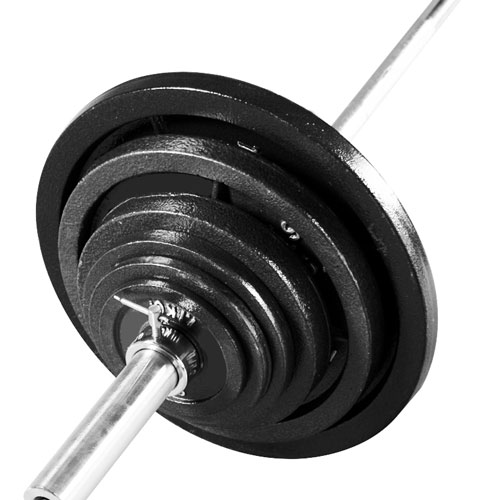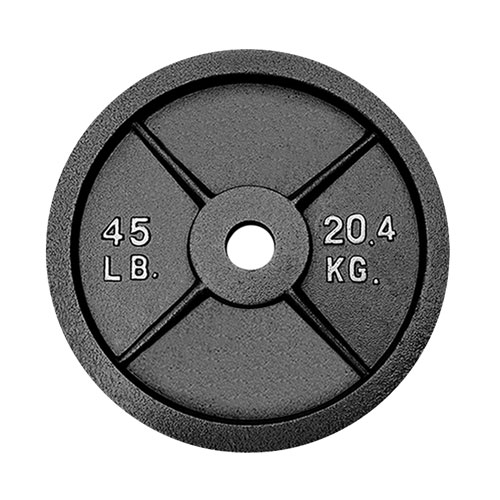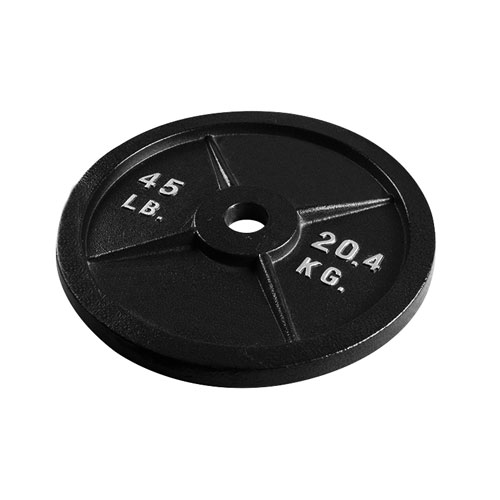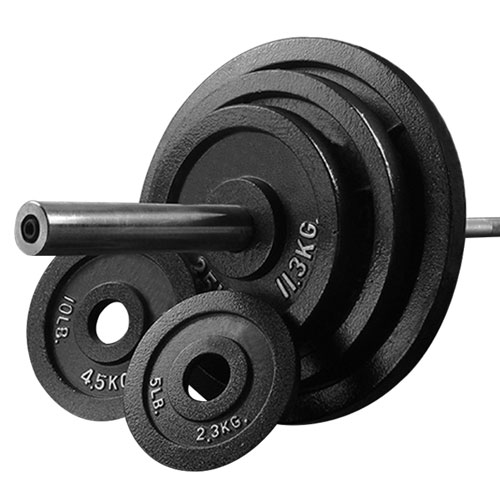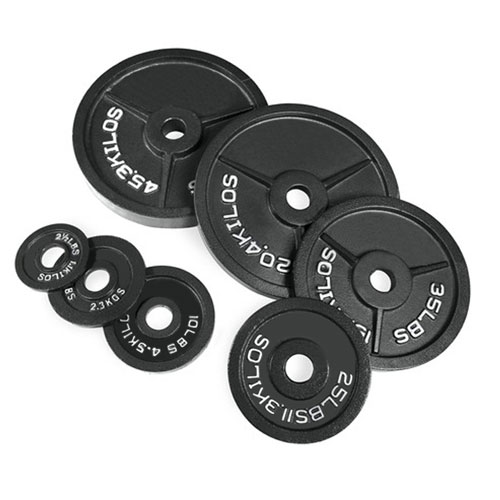
The Four-Rib Cast Iron Weight Plates are designed for facility managers and serious lifters who prioritize durability under repetitive, high-impact loading. Cast iron plates with a 2-inch center hole form the backbone of any commercial barbell fleet. However, not all cast iron is created equal. The core challenge is the plate's resistance to chipping, dimensional accuracy for a smooth slide on the bar, and long-term structural integrity after thousands of drops on platform mats.
The four-rib design is a distinctive feature of these plates. The four ribs cast into the plate surface provide multiple benefits: enhanced structural strength, improved grip for handling, and reduced risk of rolling when placed on the floor. This design also helps distribute impact forces more evenly, reducing the likelihood of edge chipping.
High-density cast iron construction reduces internal porosity and air bubbles, creating a denser, stronger plate that is resistant to chipping and cracking under heavy, repetitive impact. When you inspect a high-quality plate, the visual cues are immediate: a smoother, more refined surface texture that feels dense to the touch, and edges that are uniform without rough flashing from a cheap mold.
The 2-inch center hole (approximately 50mm) is the professional standard for Olympic barbell sleeves. A plate that fails to maintain tight tolerances around this dimension creates a "wobble" effect during explosive movements like the clean and jerk or deadlift. This not only produces distracting noise but also introduces mechanical stress points on the bar sleeve itself. Precision-cast plates ensure a snug yet fluid linear slide, preserving the barbell's knurling and reducing sleeve wear over years of use.
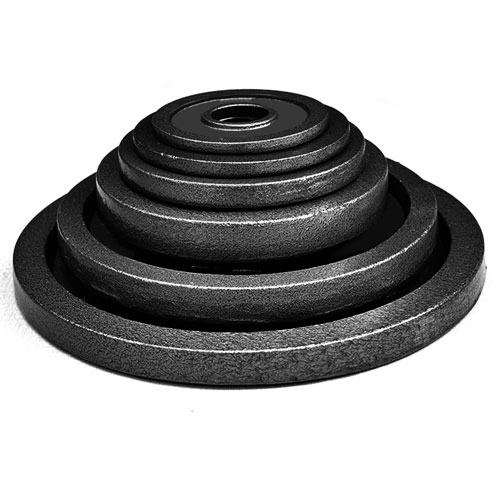
All plates share the same 2-inch center hole diameter, ensuring consistent fit across the entire weight set. Smaller plates (1.25kg, 2.5kg, 5kg) feature smaller outer diameters optimized for incremental loading and technique work.
Visual surface quality is a direct indicator of long-term performance. A durable cast iron plate exhibits a consistent, smooth-touch finish. This is not merely an aesthetic choice; a uniform surface has fewer stress concentration points where cracks can initiate upon impact. A dense, well-adhered coating provides superior moisture resistance, protecting the plates from rust in humid gym environments.
For commercial facilities, storing plates in a climate-controlled environment and wiping them down after use helps maintain the surface coating and extends the life of the equipment.
| Feature | Benefit |
|---|---|
| Four-Rib Surface Design | Enhanced structural integrity and stress distribution |
| Ribbed Grip Surface | Improved handling and reduced risk of slipping during loading |
| Non-Rolling Design | Ribs prevent plates from rolling away when placed on floor |
| 2-Inch Center Hole | Precise fit on all Olympic barbell sleeves |
Choosing the right combination of plates goes beyond simply hitting a target load. Efficiency of loading speed, storage footprint, and the ability to incrementally progress are critical logistical factors. The standard increment set (1.25kg, 2.5kg, 5kg, 10kg, 15kg, 20kg, 25kg) provides a full spectrum for both basic strength training and advanced periodized programs.
From an operational perspective, investing in multiple pairs of 20kg and 25kg plates forms the most space-efficient core of any weight stack. They allow for rapid loading of heavy working sets. Meanwhile, the smaller increment plates (1.25kg, 2.5kg, 5kg) are essential for microloading—a technique for breaking through strength plateaus where adding small increments makes a physiological difference.
For commercial facilities, the physical management of cast iron plates is a daily operational reality. Weight trees must be selected based on the plate's center hole compatibility and the overall weight load. The standard 2-inch center hole fits snugly on most commercial weight pegs.
Strategic storage—placing heavier, larger-diameter plates lower on the tree—enhances safety and reduces the risk of tipping. The smooth-touch finish of high-density cast iron plates reduces friction against storage pegs, preventing the "sticking" that can frustrate users and slow down workouts.
To prevent rust, store plates in a climate-controlled environment when possible, and wipe down the plates after use to remove sweat and moisture.
These four-rib cast iron weight plates are suitable for:
Each plate is individually packed in a polybag, then stacked in a paper carton, and finally secured on a wooden pallet for sea freight. This packaging prevents damage during international shipping and ensures plates arrive in pristine condition.
Type: Four-Rib Cast Iron Weight Plate
Product Name: Four-Rib Cast Iron Plate
Application: Universal
Gender: Unisex
Material: Cast Iron
Color: Black
Center Hole Diameter: 2 inches (Standard Olympic Barbell Sleeve)
Weight Options: 1.25kg, 2.5kg, 5kg, 10kg, 15kg, 20kg, 25kg
Dimensions: 1.25kg(18*18*4cm), 2.5kg(22*22*4.6cm), 5kg(25*25*4cm), 10kg(30*30*5.4cm), 15kg(38*38*5.4cm), 20kg(47*47*5.5cm), 25kg(47*47*6.5cm)
Feature: Four-rib design for enhanced structural strength and easy grip
Logo & OEM: Customized Logo Available
Package: Polybag + Paper Carton + Wooden Pallet
Usage: Weightlifting Exercise