A 20KG plate lives a harder life than any other weight in the gym. It gets loaded for nearly every deadlift working set. It sits on the heaviest end of warm-up pyramids. It gets dropped, stacked, slid, and occasionally tipped over. Most lifters never think about the 20KG plate—they just grab it. That trust needs to be earned by engineering, not by habit.
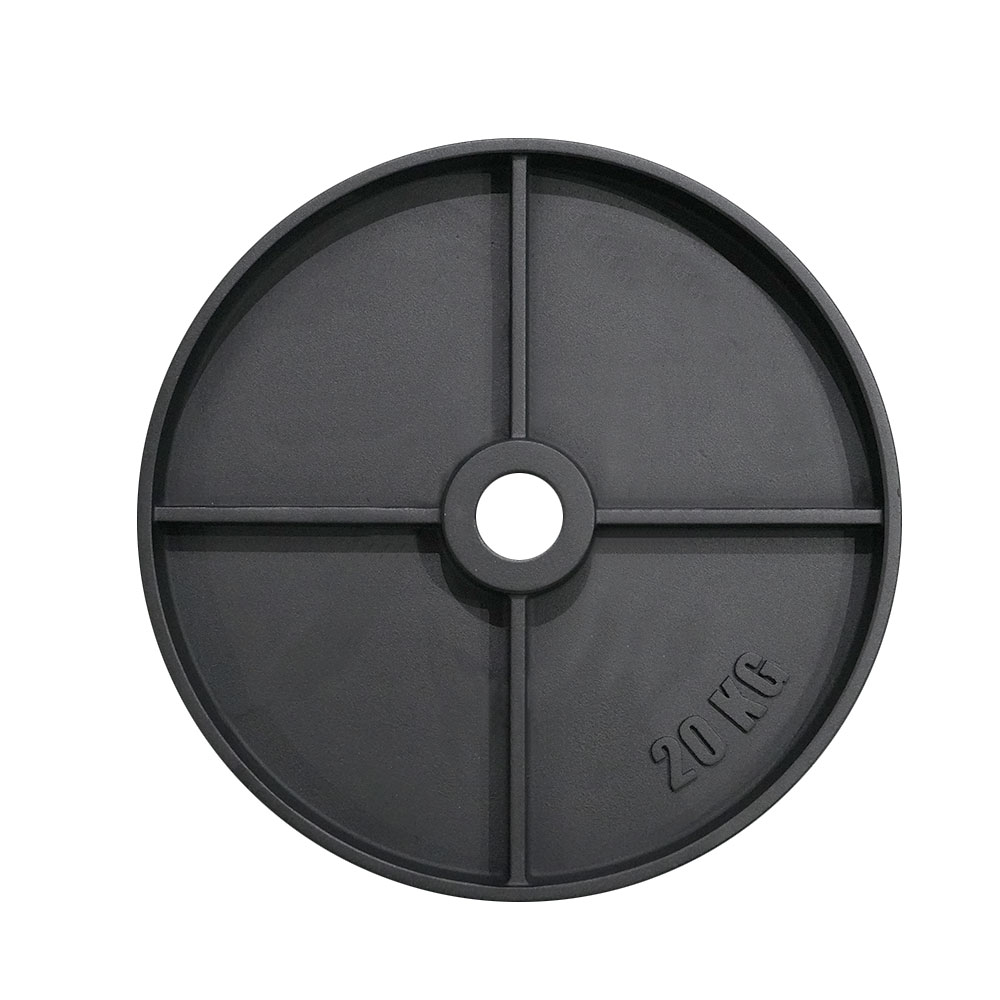
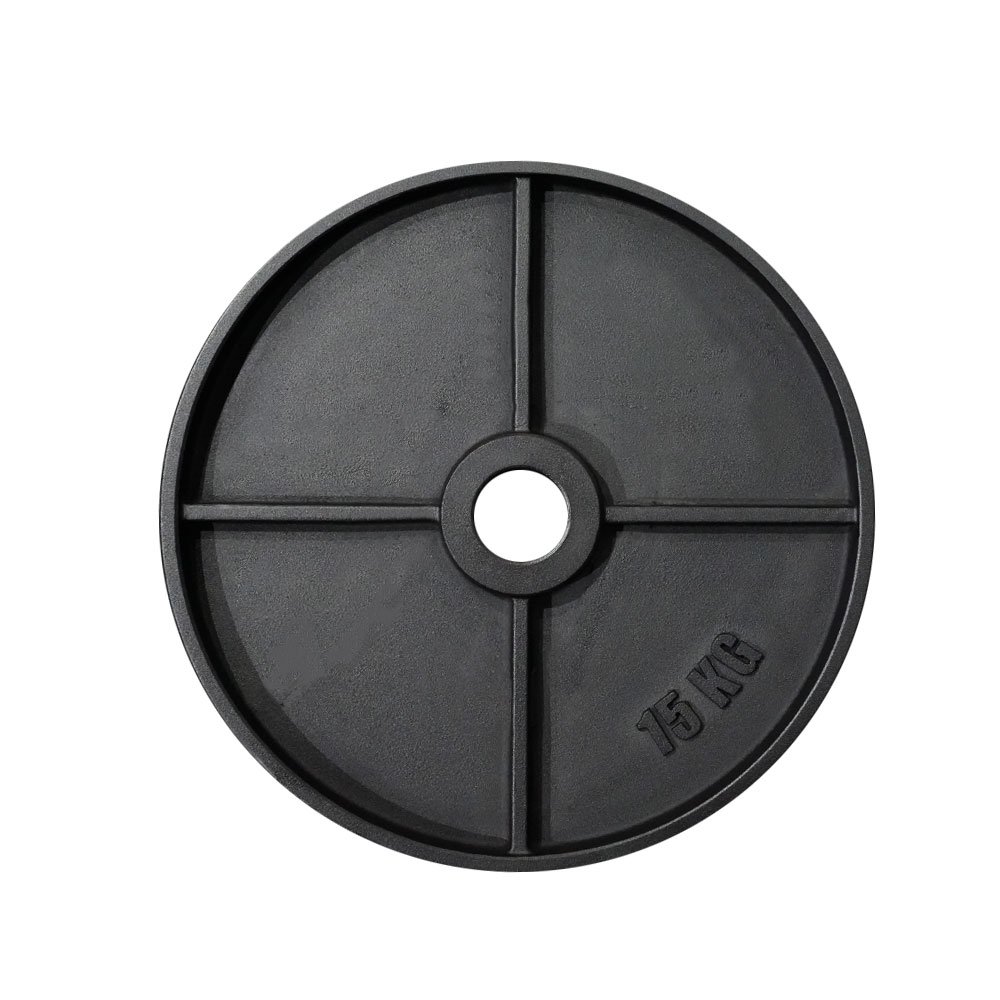
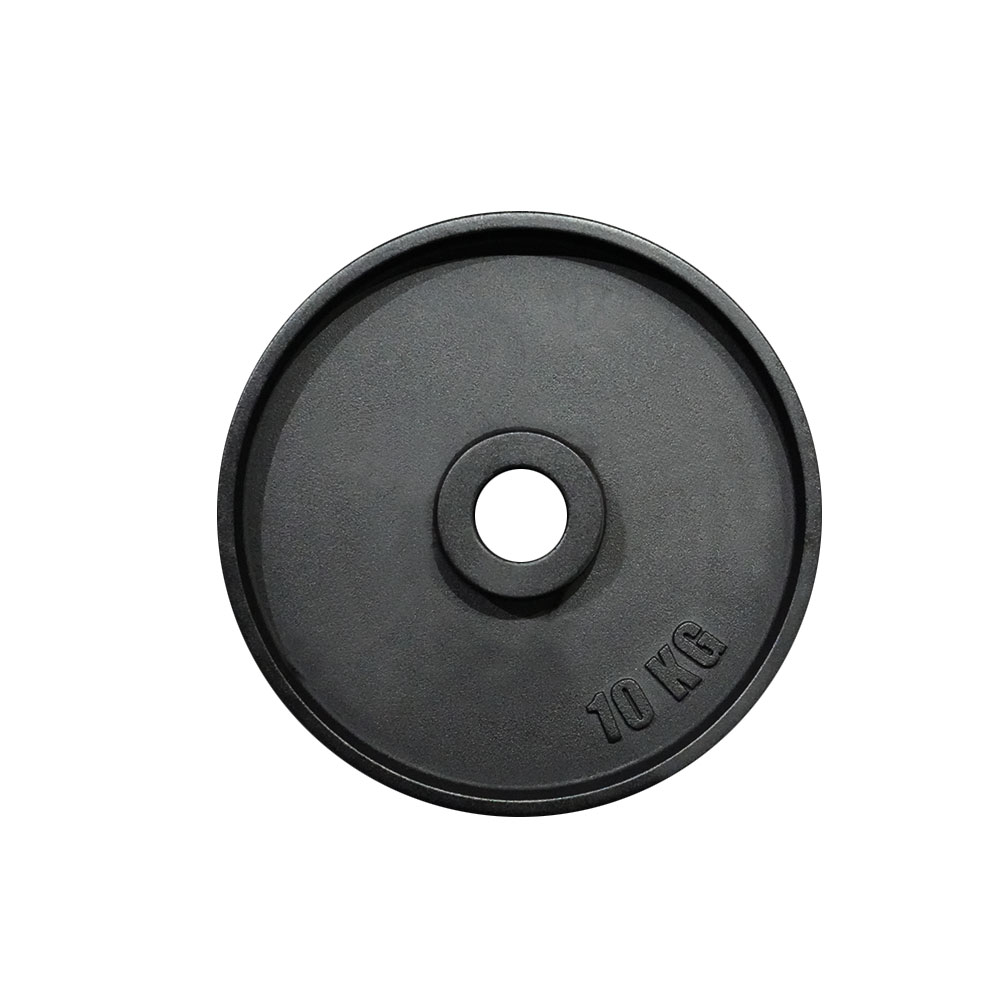
The blue 20KG steel powerlifting disc shown here takes that workload seriously. Steel construction at this weight class offers advantages that rubber bumpers simply cannot match: radically thinner cross-section (18MM, per the specification table) and zero bounce on deadlift lockouts. When a lifter pulls 180KG from the floor, the last thing they want is energy return from the plates compressing. Steel stays rigid. Steel transfers force straight down.
Compare this 20KG steel disc to a typical rubber bumper of the same mass. Rubber bumpers often exceed 30MM in thickness because the material needs volume to achieve durometer targets. At 18MM, the blue 20KG steel plate consumes nearly 40% less sleeve space. For a powerlifter working up to a 300KG deadlift, that space difference determines whether the bar can hold all required plates without using collars as compression tools.
Consider a maximal deadlift attempt: bar (20KG) plus four blue 20KG plates per side totals 180KG per side. At 18MM each, four plates occupy 72MM of sleeve length. A typical Olympic sleeve provides approximately 400MM of usable loading area. Rubber bumpers at 30MM would consume 120MM for the same weight—significantly reducing remaining capacity for additional fractional or small plates. Steel wins the packing efficiency battle decisively.
When a 200KG barbell crashes onto a platform, rubber bumpers compress, store energy, and rebound. That rebound creates a secondary impact wave that travels back up through the lifter's hands and spine during the catch phase of a clean. Steel plates, by contrast, exhibit minimal elastic deformation. The landing is dead. No bounce. No second impact. For lifters with previous back injuries, that lack of rebound reduces cumulative spinal loading over thousands of repetitions.
The trade-off: steel plates are louder on drop. That's not a design flaw—it's physics. High-density metal contacting a platform generates higher-frequency acoustic energy than rubber. Facilities expecting heavy Olympic lifting should install platform mats or crash pads specifically rated for steel bumper plates.
Color coding works because human visual processing prioritizes hue before reading text. At a glance, blue registers as a category. In this four-color system, blue means 20KG—the heaviest increment most commercial gyms will use in daily member workouts (red 25KG plates exist but see less frequent rotation). A member scanning a plate tree from five meters away can locate blues without walking over. That efficiency compounds across hundreds of daily member interactions.
For facility managers, blue plates also serve as an inventory shorthand. During end-of-day walkthroughs, misplaced blues stand out against black or silver pegs. Staff can restore order faster, which means plates are more likely to be available in the correct location for the next day's early morning rush.
The interface between plate and barbell sleeve determines how the barbell feels during unracking and descent. A rough, cast inner bore creates a gritty sliding sensation—annoying during warm-ups, dangerous during max attempts when the lifter needs to focus entirely on the lift, not on wrestling plates into position. The blue 20KG disc features a machined 50.8MM inner diameter, not an as-cast surface. Machining removes high spots and burrs, creating a consistent contact surface that slides smoothly without slop.
What about the extra 0.8MM beyond a standard 50MM sleeve? That clearance is intentional. A true 50.0MM bore would bind on many Olympic bars due to manufacturing tolerances and minor sleeve damage over time. The 50.8MM specification provides reliable fit across bar brands while minimizing lateral play.
The ±10 gram tolerance on this 20KG plate matters more than most lifters realize. Consider a common training scenario: working at 75% of a 200KG deadlift one-rep max, which calculates to 150KG. Loading that bar requires one blue 20KG plate per side (40KG total) plus a combination of smaller plates. If every plate in the stack has acceptable variance at ±10g, the total error remains negligible. If some plates drift toward +20g and others toward -15g, the cumulative error could approach 100g—still small, but no longer negligible for lifters tracking fractional progress over multiple mesocycles.
Competition-grade calibration exists for a reason. The blue 20KG steel disc brings that standard to daily training. Lifters can trust that a 180KG pull today will feel identical to a 180KG pull next month, assuming identical plate configuration. That consistency removes one variable from an already complex performance equation.
The blue finish serves two purposes: visual identification and corrosion protection. Bare steel exposed to gym humidity develops surface oxidation within weeks. The blue coating—applied via powder coating or equivalent industrial process—creates a barrier. But coating durability matters most at contact points: the inner bore (sliding against the barbell) and the outer edges (contacting the platform or adjacent plates).
Inspection of used plates reveals coating failure zones. The blue 20KG disc shown here features reinforced edge coverage, reducing the likelihood of chipping during lateral impacts. A chipped plate still weighs 20KG, but a chipped plate signals neglect to members. Maintaining visual professionalism matters for member retention and perceived equipment quality.
Powerlifting-focused facilities should build their entire plate fleet around multiples of blue 20KG discs. For deadlift-centric training, having four to six pairs of blues enables progressive loading from 60KG (bar + one blue per side) to 260KG (bar + six blues per side) without using smaller plates. That's the entire working range for intermediate male lifters and advanced female lifters, covered by a single plate type.
CrossFit boxes with strength bias programming need blues for barbell cycling workouts where members load and unload quickly between rounds. Color coding accelerates transitions. General population gyms may only need two pairs of blues for their stronger members, supplemented by greens and yellows. But any facility claiming to serve strength athletes cannot skip the 20KG increment. It's the backbone of the plate tree.
| Specification | Detail |
|---|---|
| Color Code | Blue (designates 20KG) |
| Weight Rating | 20 KG |
| Tolerance Class | ±10 grams (calibrated) |
| Outer Diameter | 450 mm |
| Center Hole | 50.8 mm (machined finish) |
| Thickness | 18 mm |
| Material | Steel (powerlifting disc grade) |
| Category | Bumper / powerlifting plate |