In the demanding environment of commercial fitness facilities and serious home gyms, equipment durability is not a luxury—it is a prerequisite for safety, performance, and return on investment. Weight plates, in particular, endure repetitive impact, lateral stress, and constant loading and unloading. Standard cast iron plates often develop cracks, surface spalling, or dimensional deformation after prolonged heavy use. The fundamental limitation lies in the material's internal structure and surface hardness. Resin-coated sand casting represents a significant advancement over conventional casting methods, addressing these failure points through a fundamentally different manufacturing process.
The mechanism behind resin-coated sand casting involves binding high-purity silica sand with a thermosetting resin binder. This mixture is compacted around a precision pattern, then thermally cured to form a rigid, dimensionally accurate mold. Unlike green sand casting, which relies on moisture and clay, resin-coated molds achieve exceptional surface finish and intricate detail reproduction. When molten metal is poured, the resin binder decomposes, creating a thermal barrier that slows solidification and reduces gas porosity. The result is a casting with a naturally dense, fine-grained microstructure and a smooth surface that requires minimal finishing. For weight plates, this translates directly into superior impact resistance and resistance to edge chipping—two critical failure modes observed in lower-quality plates.
Industry data suggests that resin-coated cast iron components exhibit up to 30% higher surface hardness compared to conventional gray iron castings, with significantly reduced internal voids. For a weight plate repeatedly dropped from deadlift height or loaded onto a bar under tension, this structural integrity prevents the progressive micro-cracking that leads to catastrophic failure. Facilities that have transitioned to resin-coated plates report noticeably longer service intervals and reduced replacement frequency, particularly in high-traffic commercial settings where plates are used hundreds of times daily.
While specific Brinell hardness numbers are not universally published across all manufacturers, the observable characteristics of resin-coated sand castings include a uniform, non-porous surface texture and consistent edge density. These features directly correlate with real-world performance metrics: resistance to deformation under clamping force, ability to withstand impact without spalling, and long-term dimensional stability that maintains a precise fit on Olympic sleeves. For facility operators, the practical implication is straightforward: plates that maintain their structural integrity over years of use reduce both capital replacement costs and equipment downtime.
| Property | Resin-Coated Sand Casting | Conventional Gray Iron |
|---|---|---|
| Surface Hardness | High (dense, fine-grained structure) | Moderate (more porous surface) |
| Impact Resistance | Excellent (reduced crack propagation) | Moderate (susceptible to edge chipping) |
| Dimensional Accuracy | High (minimal post-casting finishing) | Variable (requires machining) |
| Porosity / Internal Voids | Minimal (controlled solidification) | Higher (gas entrapment common) |
One of the most frequent user complaints about lower-quality weight plates is an imprecise center hole fit. When a plate's center hole diameter exceeds the standard Olympic bar sleeve dimension (nominally 50mm or 1.96 inches), the plate slides laterally during dynamic movements. This wobble is not merely an annoyance—it changes the resistance profile of an exercise. During a loaded squat or bench press, lateral plate movement shifts the center of mass, creating uneven torque on the lifter's joints and muscles. For competitive athletes and serious trainers, this variability undermines the consistency needed for progressive overload tracking.
The machining tolerance range of 50.4 to 51.2 mm specified for the center hole represents a carefully engineered balance between snug fit and practical usability. A tighter fit (below 50.4 mm) would risk binding on bar sleeves that have minor surface variations or accumulated chalk residue. A looser fit (above 51.2 mm) would permit noticeable lateral displacement. This tolerance window ensures that each plate seats firmly against the bar sleeve while still allowing smooth loading and unloading across multiple plates. High-precision center hole machining combined with consistent wall thickness eliminates the stacked tolerance errors that cause multiple plates to collectively wobble.
From an engineering perspective, the interaction between plate and bar sleeve involves both static friction and dynamic loading. When a plate fits correctly, the friction between the sleeve's surface and the plate's center hole bore helps dampen vibration and maintain alignment. The thickened edge details visible on high-quality plates serve a dual purpose: they reinforce the area around the center hole against stress concentration, and they provide additional material mass that absorbs impact energy when plates are dropped or set down. This geometric optimization prevents the deformation that often begins at the inner bore and propagates outward.
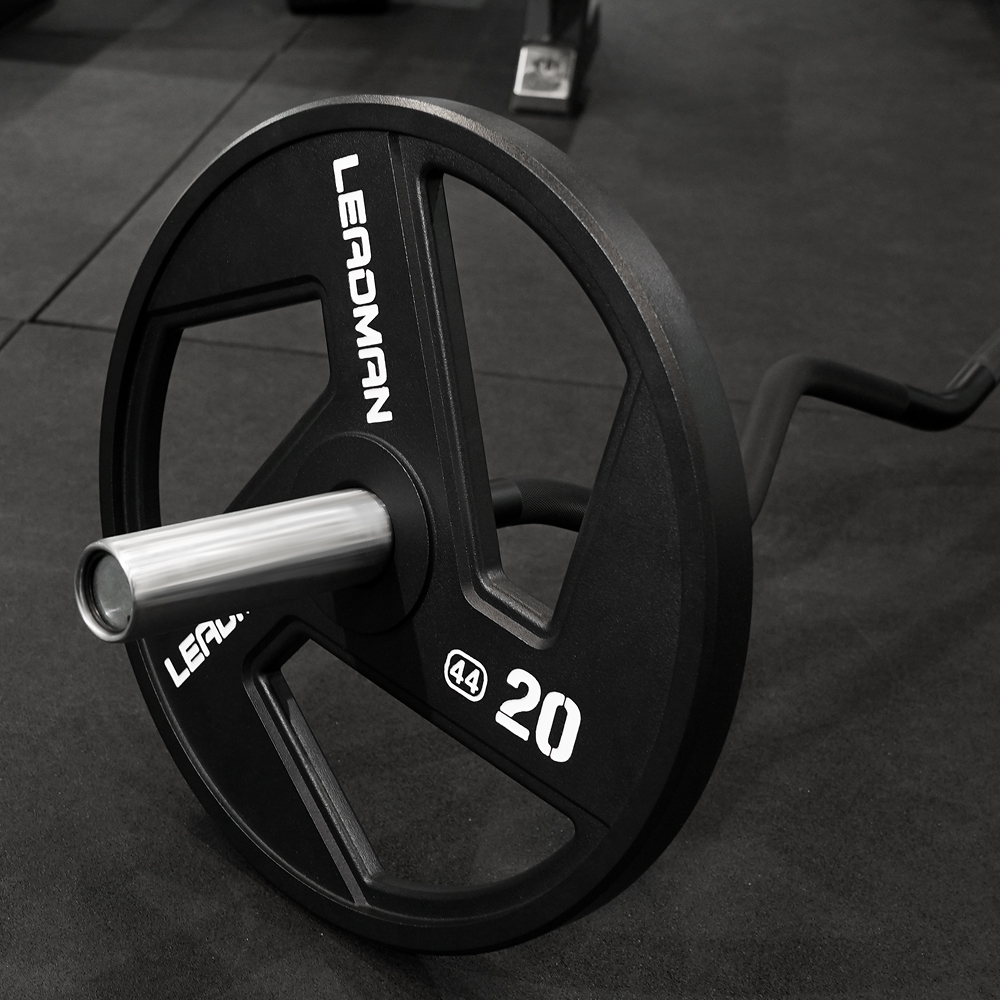
For any weight plate marketed to commercial facilities or serious home gyms, compatibility with standard Olympic barbells is mandatory. The Olympic bar specification—50mm sleeve diameter with 2-inch spacing for competition plates—is a global standard. However, not all plates adhere to this specification with equal precision. Plates manufactured to looser tolerances may fit some bars but bind on others, depending on minor variations in sleeve diameter or surface finish. The compatibility guarantee for properly engineered plates extends across all major barbell brands, ensuring that facilities can mix and match plates from different production batches without performance degradation.
Facility managers should verify that plates are designed with a snug fit that remains consistent across temperature and humidity variations. Metal expands and contracts with temperature changes; a plate that fits perfectly at 20°C (68°F) may become tight at 35°C (95°F) or loose at 0°C (32°F). The specified tolerance range accounts for these thermal variations while maintaining functional fit throughout typical gym operating conditions.
| Fit Category | Diameter Range | Performance Outcome |
|---|---|---|
| Optimal Precision Fit | 50.4 - 51.2 mm | No wobble, smooth loading, consistent resistance |
| Undersized (Binding Risk) | < 50.4 mm | Difficult loading, potential bar sleeve damage |
| Oversized (Wobble) | > 51.2 mm | Lateral movement, uneven resistance profile |
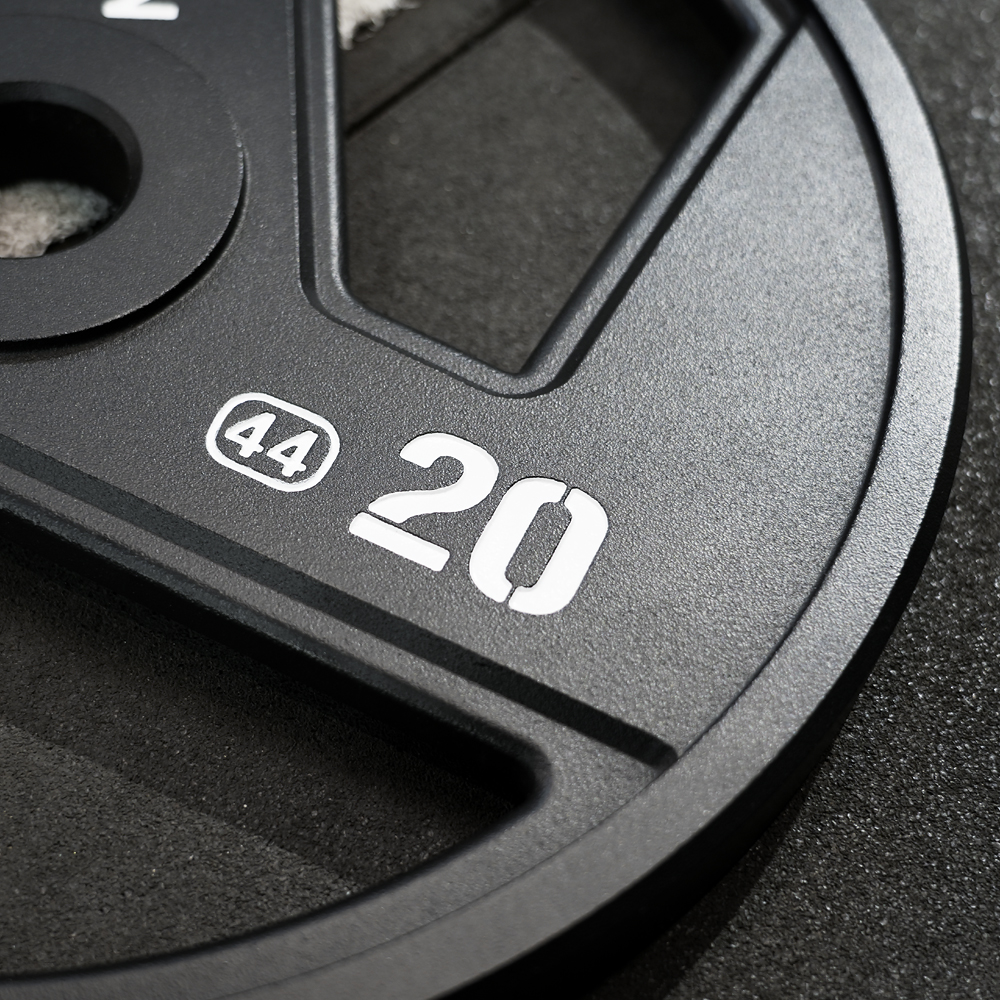
In a busy commercial gym environment, trainers and clients need to quickly identify plate weights without fumbling or guesswork. Clear, legible weight markings are not merely a convenience feature—they directly impact workout efficiency and safety. When plates are misidentified, athletes may load incorrect weights, leading to either insufficient training stimulus or, more critically, unexpected overload that increases injury risk. High-contrast markings that remain readable after years of use, despite chalk accumulation and repeated handling, represent an often-overlooked but essential design element.
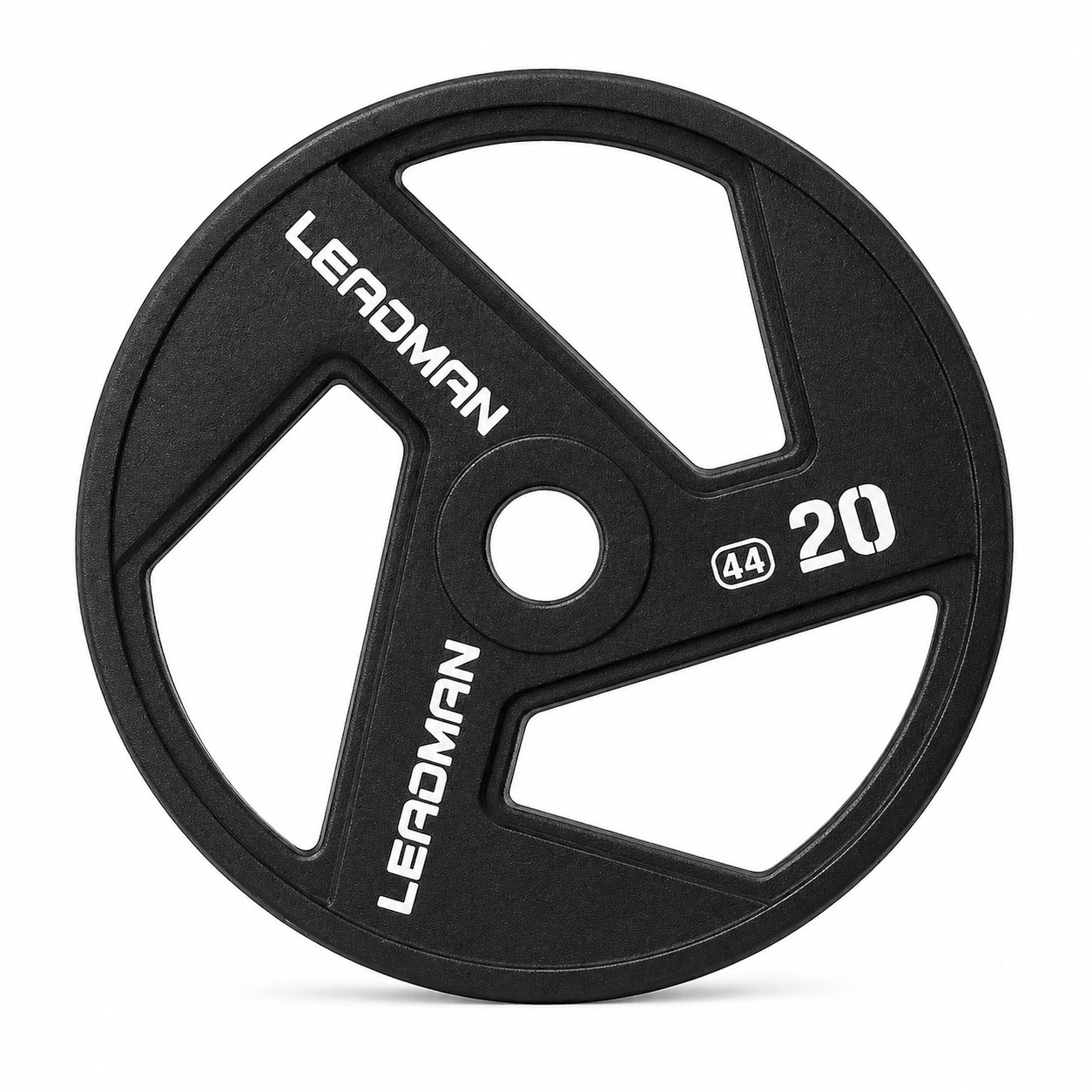
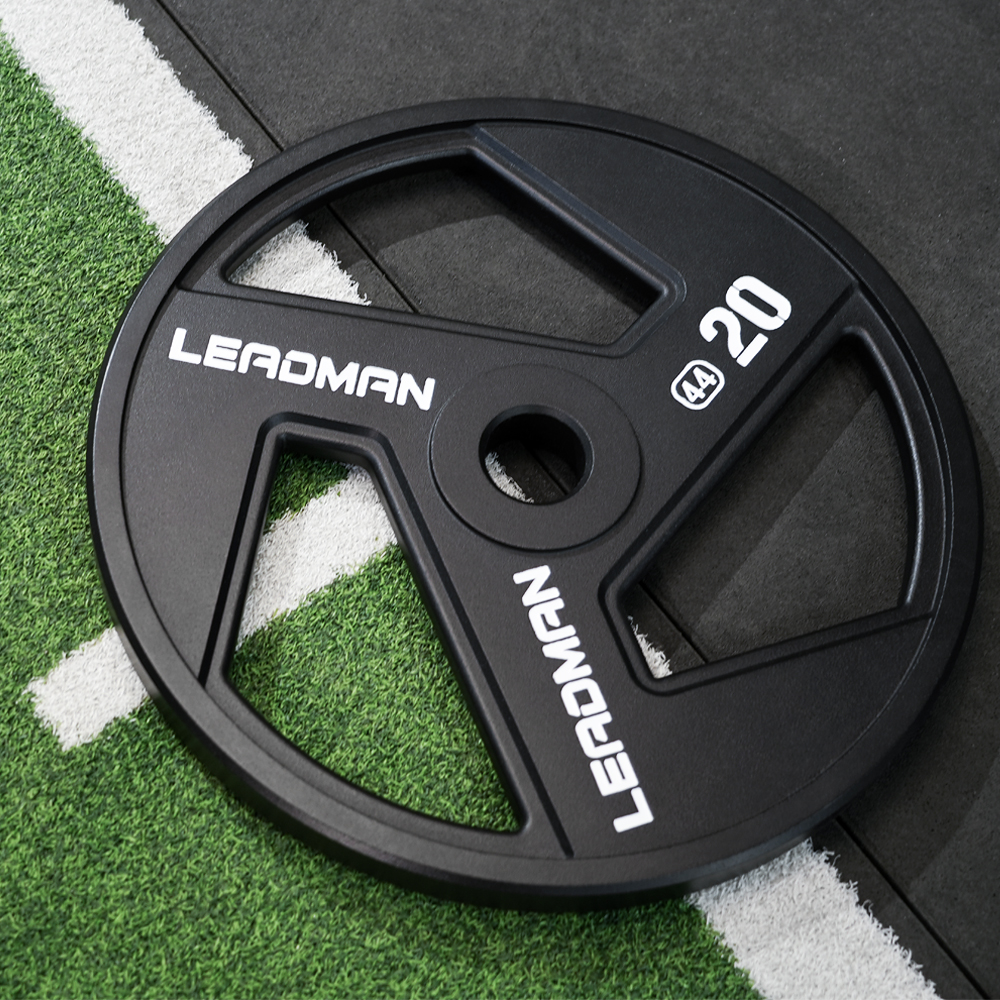
The ideal weight marking system uses large, bold numerals with high contrast against the plate's surface. For plates with a matte black coating, white or bright yellow markings provide maximum visibility under typical gym lighting conditions. These markings should be recessed or raised sufficiently to resist wear from plate-to-plate contact when stacked. Some manufacturers achieve this by casting the numerals directly into the plate surface, then painting or powder-coating the recessed areas. Others use durable decals or inserts, though directly molded markings generally offer superior long-term legibility.
From an operational perspective, facilities that standardize on plates with consistent marking placement and sizing reduce the cognitive load on staff and members. When all plates in a weight tree have markings oriented the same way, visual scanning becomes faster and more accurate. This is particularly valuable during peak hours when equipment turnover is high and multiple users are loading and unloading bars in rapid succession.
The choice of a matte black coating for weight plates serves both functional and aesthetic purposes. From a protective standpoint, any coating applied to cast iron must prevent oxidation (rust) while withstanding repeated impacts and abrasion. Standard painted finishes often chip at edges, exposing bare metal to moisture and leading to corrosion. Powder coating, when properly applied, offers superior adhesion and impact resistance, but even powder coating can fail if the substrate preparation is inadequate. A high-quality matte finish incorporates multiple layers: a corrosion-inhibiting primer, a durable topcoat, and often a clear sealer that protects the color layer from UV degradation and chemical exposure (from cleaning agents or sweat).
The matte surface texture provides additional practical benefits beyond aesthetics. Glossy finishes tend to show fingerprints, scuffs, and chalk residue more visibly, requiring more frequent cleaning to maintain a professional appearance. Matte finishes diffuse light rather than reflecting it, making surface imperfections less noticeable and reducing the perceived need for constant wiping. For facilities open to the public, this translates into lower janitorial labor costs and consistently better visual presentation.
Rustproof and corrosion-resistant properties are not absolute claims—no coating system is impervious to damage under extreme conditions—but multi-layer protection significantly extends service life. Facilities located in humid coastal regions or those without climate control face higher corrosion risks. For these environments, a high-quality matte black coating with proper edge coverage is particularly important, as moisture tends to collect at the interface between plates and bar sleeves or between stacked plates. Regular inspection of coating integrity, combined with prompt touch-up of any damaged areas, preserves the protective function over the plate's operational lifespan.
Traditional weight plates typically feature a single central grip hole or two outer cutouts. While functional, these designs impose limitations on how plates can be lifted, carried, and manipulated onto a bar. The tri-grip plate design with three slotted grip points represents a significant ergonomic advancement, addressing the practical realities of how users actually handle plates during workouts. This design philosophy prioritizes user safety by providing multiple secure gripping options that accommodate different hand sizes, grip strengths, and lifting scenarios.
The biomechanics of lifting a weight plate from a storage peg or the floor involve several factors: wrist angle, shoulder position, and the distribution of load across the hand. A single central hole forces the user to insert fingers into a confined space, which can be uncomfortable for those with larger hands and may strain the finger tendons when lifting heavier plates (e.g., 20kg/45lb plates). Two cutouts improve the situation but still limit grip options. Three slotted grips, arranged radially around the plate, allow the user to choose the grip angle that feels most natural for the specific task. For example, lifting a plate from a low storage peg may be easier using a palm-up grip on the bottom slot, while carrying plates across the gym may favor a pinch grip on the side slots.
The slot geometry itself matters. A properly designed grip slot has rounded internal corners to eliminate stress concentration points that could lead to cracking under repeated loading. The slot width must accommodate gloved hands while remaining narrow enough to prevent fingers from slipping through during a dynamic lift. The depth of the slot—how far it extends into the plate body—affects both grip security and structural integrity. Deeper slots provide more finger clearance but reduce the plate's continuous material cross-section, potentially weakening it. The balance achieved in well-designed tri-grip plates provides ample grip access without compromising the plate's load-bearing capacity.
The versatility of multiple grip points becomes immediately apparent when comparing different handling scenarios. For one-hand grip—the most common method for loading a single plate onto a bar—the user can position their hand at the slot that aligns most naturally with the bar's height and angle. This reduces wrist deviation and the need to rotate the plate awkwardly during placement. For two-hand carry, where plates are transported across the gym floor, users can grip two opposite slots, distributing the weight evenly between both hands and maintaining a balanced posture. This is particularly important when carrying multiple plates simultaneously, as asymmetrical loading increases fall risk.
In commercial settings where staff and members handle plates hundreds of times per day, ergonomic improvements accumulate into meaningful safety outcomes. Facilities that have transitioned from traditional plate designs to tri-grip plates report fewer finger pinch injuries, reduced dropped plate incidents, and higher user satisfaction with the equipment. These benefits are especially pronounced among older users, those with existing hand or wrist conditions, and trainees performing high-volume workouts that involve frequent plate changes (e.g., circuit training or CrossFit-style workouts).
| Handling Scenario | Traditional (2-hole) | Tri-Grip (3-slot) |
|---|---|---|
| Lifting from floor/peg | Limited wrist angle options | Multiple natural hand positions |
| Carrying across gym | Asymmetric grip possible | Balanced two-hand carry standard |
| Loading onto bar | Requires plate rotation often | Slot aligns with bar orientation |
| Hand comfort (heavy plates) | Finger strain possible | Reduced tendon stress |
In any gym environment, moisture is inevitable. Sweaty hands, humidity, and condensation from cold water bottles all create slippery conditions that compromise grip security. A smooth plate surface, regardless of how well-designed the grip holes may be, becomes hazardous when wet or chalky. The non-slip textured surface integrated into high-quality plates addresses this risk by increasing the coefficient of friction between the user's hand and the plate face.
The texture is typically achieved either through the casting process itself—using a mold with a fine stippled or diamond pattern—or through a secondary application such as a textured coating. Cast-in textures are generally more durable because they are integral to the plate material rather than applied on top. As the plate wears over years of use, cast texture remains present, whereas applied textures may abrade away. The optimal texture depth balances friction enhancement with cleanability; too shallow a texture provides insufficient grip improvement, while too deep a texture traps chalk, sweat, and dirt, becoming unhygienic over time.
Coated sand casting contributes to the surface texture as well. The fine grain structure of resin-coated sand molds reproduces minute surface variations that, while not visually obvious, create micro-texture that enhances grip. This is another example of how manufacturing process choices have cascading effects on final product performance. A plate that feels secure during a heavy deadlift warmup set—when hands may be sweating and grip fatigue is accumulating—inspires user confidence and reduces the likelihood of accidental dropping that could cause floor damage or injury.
The distinction between home-use and commercial-grade equipment is not merely marketing—it reflects real differences in design margins, material selection, and quality control. Commercial-grade weight plates must withstand usage patterns far more intense than typical home gyms: hundreds of loading cycles per day, exposure to harsh cleaning chemicals, stacking in weight trees that may stress plates unevenly, and occasional mishandling by inexperienced users. Commercial-grade durability implies that plates have been engineered with safety factors appropriate for this demanding environment.
Key indicators of commercial-grade construction include the use of resin-coated sand casting for structural integrity, a multi-layer corrosion-resistant coating system, and design features (such as reinforced edges and multiple grip points) that anticipate real-world abuse. Additionally, commercial-grade plates typically undergo more rigorous quality control, including dimensional inspection of every plate or statistically significant sampling, hardness testing, and impact testing. While specific test data is proprietary to each manufacturer, the presence of these design and process indicators signals a commitment to longevity.
For facility operators, the total cost of ownership calculation should consider not only the initial purchase price but also the expected replacement frequency. Lower-priced plates that need replacement every 2-3 years in a busy gym may ultimately cost more than higher-quality plates that last 5-10 years. The time and labor costs associated with identifying damaged plates, removing them from service, sourcing replacements, and restocking are often underestimated. Commercial-grade plates, with their enhanced durability features, reduce these operational overheads and ensure that equipment availability remains high.
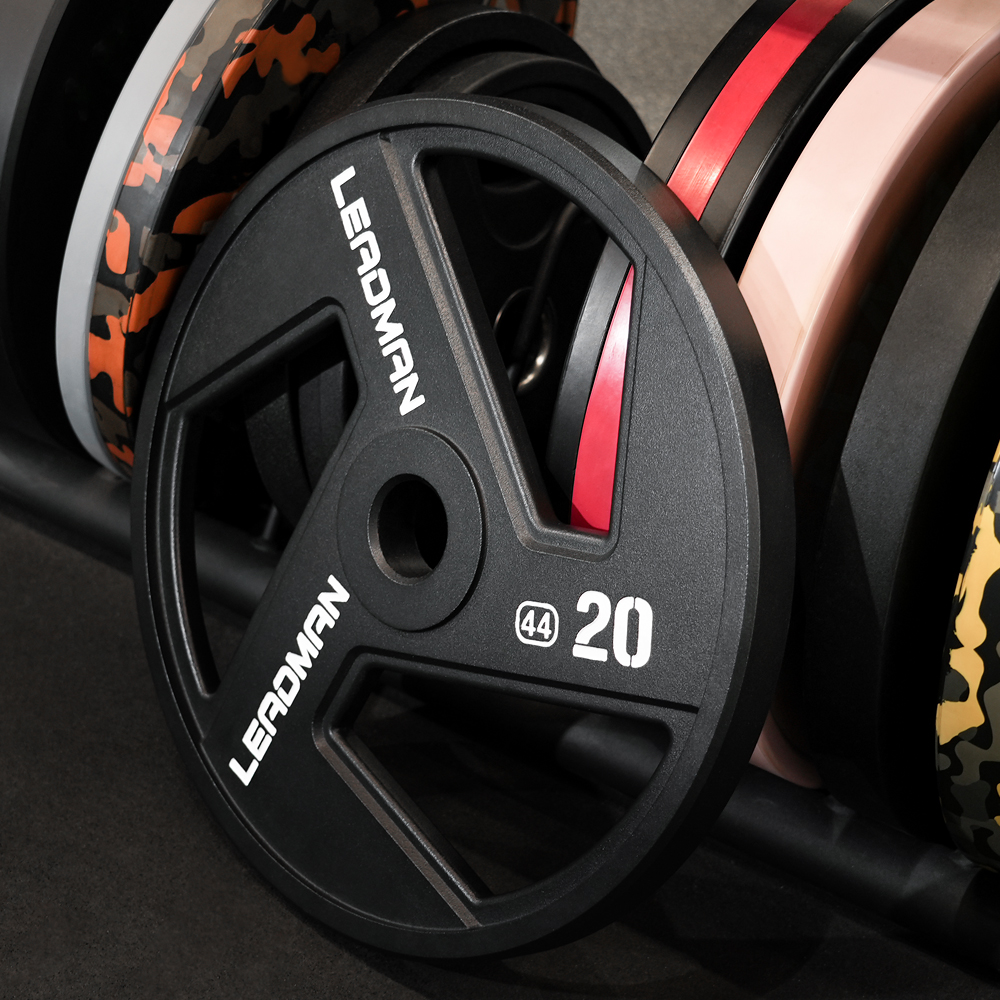
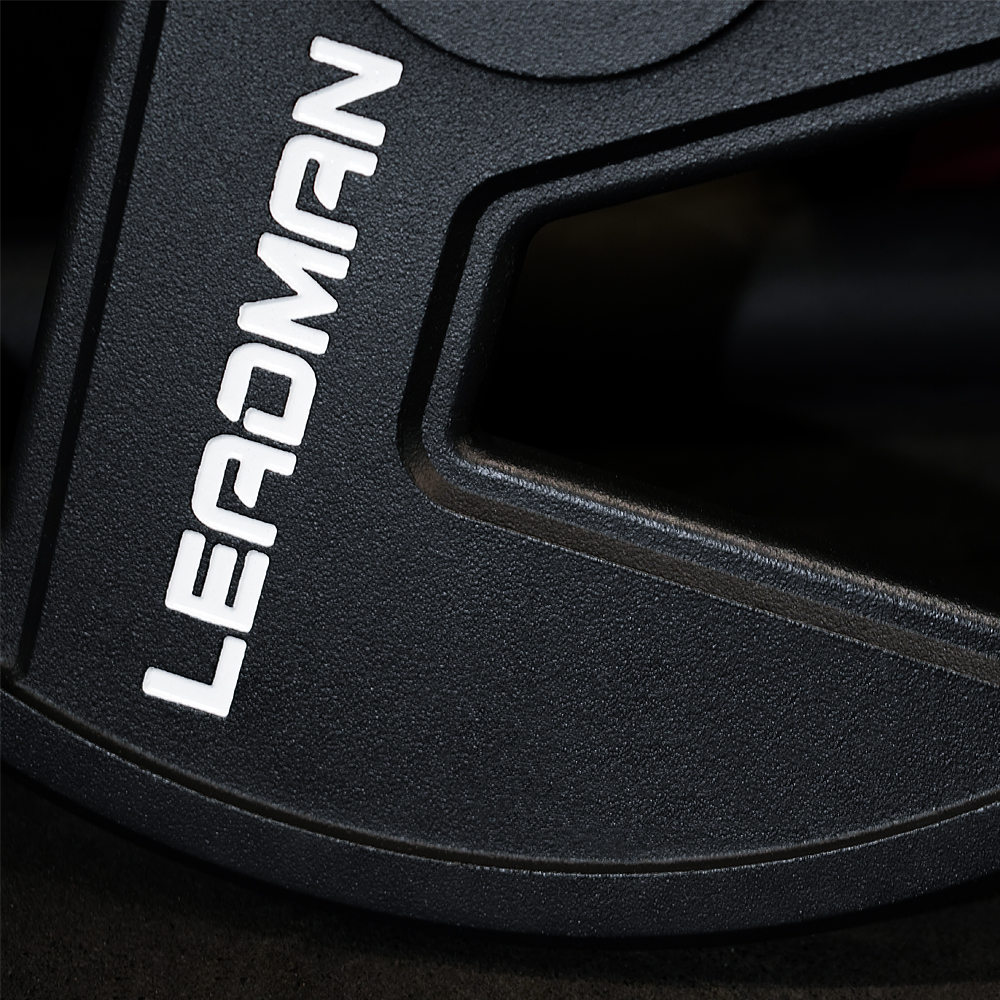
The most successful weight plate designs do not treat individual features as separate add-ons but rather integrate them into a cohesive whole. The prominent brand logo is not merely aesthetic—it serves as a quality signal and, on properly designed plates, is cast into the surface rather than painted on, ensuring it remains visible throughout the product's life. The matte black coating provides corrosion protection while creating the perfect backdrop for high-contrast weight markings and texture visibility. The tri-grip slots are positioned to avoid interfering with the center hole's structural integrity or the logo placement.
This integration extends to the user experience as well. A plate that is easy to grip, read, and handle encourages proper usage. Users are less likely to drop a plate that feels secure in their hand. They are less likely to misload a bar when markings are clear. They are less likely to complain about equipment quality when the plates look professional and perform consistently. These user behaviors, multiplied across thousands of interactions per month in a commercial facility, affect overall member satisfaction and retention.
For serious home gym owners, the same principles apply. Investing in equipment that feels high-quality and operates reliably enhances the training experience. Knowing that plates will not wobble on the bar, that grips will accommodate different hand positions, and that the finish will resist rust for years justifies the higher upfront cost compared to budget alternatives. In both commercial and home contexts, well-designed plates are tools that enable better training outcomes, not merely passive weights.
| Specification Category | Technical Details |
|---|---|
| Manufacturing Process | Resin-coated sand casting – fine-grained, dense structure, high hardness |
| Center Hole Tolerance | 50.4 – 51.2 mm (engineered for snug fit on standard Olympic bars) |
| Surface Finish | Matte black coating – rustproof, corrosion-resistant, non-slip textured surface |
| Grip Design | Tri-grip with three slotted grip points – one-hand and two-hand carry compatible |
| Edge Reinforcement | Thickened edge details for impact resistance and deformation prevention |
| Weight Markings | Clear, legible markings for quick identification |
| Compatibility | Fits standard Olympic barbells (50mm / 2-inch sleeves) |
| Intended Use | Home and commercial gym environments – heavy-duty training |