How to Store Weight Plates Properly: A Professional Guide to Longevity

Selecting Optimal Storage Systems for Weight Plates
Before addressing the nuances of material care, a facility manager or dedicated lifter must first select the appropriate physical storage architecture. The primary failure in many weight rooms is not the quality of the plates themselves, but the failure of the storage solution to support their inherent mass and volume. Improper selection leads to structural fatigue in racks and unsafe weight distribution. When deciding how to store weight plates properly, you must evaluate the capacity of your storage equipment against the total intended weight load.
Evaluating Vertical vs. Horizontal Storage
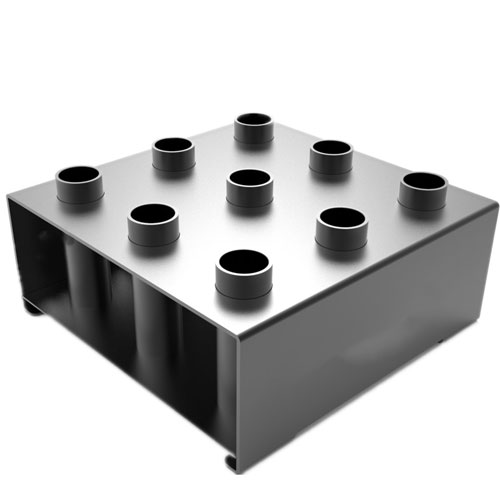
Vertical storage, such as weight trees or plate pegs, is the industry standard for space optimization. However, vertical systems place significant compressive stress on the base and the lower plates in the stack. Horizontal storage, often involving floor-based racks or shelving, distributes weight across a broader surface area but requires more square footage. A professional decision should be based on your floor load-bearing capacity and the frequency of plate transitions during a typical training session.
| Storage Type | Primary Advantage | Common Failure Mode | Ideal Use Case |
|---|---|---|---|
| Vertical Weight Trees | Minimal footprint; high density | Tip-over risk; lower plate compression | High-traffic commercial gyms |
| Horizontal Plate Racks | Stable load distribution | High floor space requirement | Home gyms with limited verticality |
| Wall-Mounted Pegs | Zero floor footprint | Wall mounting failure; weight fatigue | Small studio spaces |
| Floating Shelving | Visual organization | Overloading/Shelf sagging | Lightweight/Bumper plate sets |
Choosing the correct physical structure is the baseline for equipment longevity. Once the structural support is secured, the next critical variable is the specific material composition of your plates, as metal and rubber require fundamentally different environmental safeguards.
Material-Specific Requirements for Plate Longevity
The physical properties of your weight plates dictate the specific storage protocols required to prevent degradation. A common mistake is applying a "one size fits all" approach to a mixed inventory, which leads to premature rusting of iron or the cracking of urethane. Understanding the chemistry and physics of your plates is essential to long-term asset management.
Iron and Cast Steel Plate Management
Iron plates are highly susceptible to oxidation when exposed to humidity. If stored in an unconditioned environment, the moisture in the air reacts with the iron to create iron oxide (rust). To prevent this, iron plates should never be stored directly on a porous surface like concrete without a barrier. A professional approach involves maintaining a low-humidity environment and occasionally applying a thin, non-staining coating of machine oil or a specialized protective spray to the non-striking surfaces.
Bumper Plate and Urethane Care
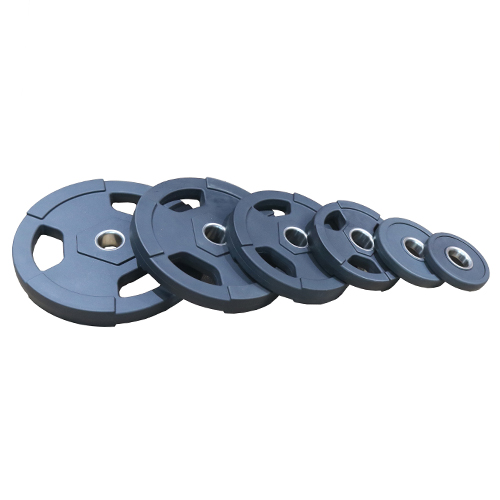
Bumper plates, typically made of high-density rubber or urethane, face different threats. While they do not rust, they are susceptible to thermal expansion and UV degradation. Storing rubber bumper plates in direct sunlight or near high-heat sources can cause the material to harden, crack, or lose its elasticity. This degradation can lead to uneven weight distribution and reduced impact absorption. To preserve these, ensure they are kept in a temperature-controlled environment away from ultraviolet light exposure.
Because different materials react uniquely to their surroundings, the structural storage choice must be paired with a controlled environment. This leads directly to the necessity of environmental monitoring and humidity control.
Related reading:
Controlling Environmental Variables and Humidity
Even the most robust storage system will fail if the ambient environment is poorly managed. The primary enemies of high-quality weight plates are moisture and temperature fluctuation. Managing these variables is a proactive way to extend the service life of your entire strength training inventory.
Mitigating Humidity and Oxidation
In many commercial settings, humidity levels can spike, leading to the rapid oxidation of steel components. Operators should monitor the dew point in the facility. If the relative humidity consistently exceeds 50%, the risk of corrosion increases exponentially. Using industrial-grade dehumidifiers is a standard professional solution to stabilize the atmosphere and protect both the plates and the structural integrity of the metal weight trees.
Temperature Stability and Material Expansion
Significant temperature swings can cause physical changes in both the plates and the storage racks. Metal plates can expand or contract, which might lead to tight tolerances on barbell sleeves if they are stored together in extreme cold or heat. For bumper plates, temperature control is less about the weight and more about the polymer stability. Rapid cooling or heating cycles can induce micro-cracks in the casing of high-end plates. Maintaining a stable room temperature between 60°F and 75°F (15°C to 24°C) is recommended for most professional strength facilities.
Managing the air and temperature ensures the plates remain structurally sound, but the physical act of loading and unloading must also be done with precision to avoid mechanical failure.
Related reading:
Optimizing Loading Patterns for Structural Safety
How you physically load the plates onto the storage device is just as important as the environment they live in. Improper loading causes uneven stress on the storage apparatus, which can lead to catastrophic failure or even tip-overs. A professional operator must follow strict weight distribution protocols.
The Principle of Even Distribution
When using weight trees or horizontal racks, the goal is to maintain a center of gravity that is as stable as possible. This means placing the heaviest plates on the lowest pegs or the bottom of the stack. This practice lowers the center of mass of the entire unit, significantly reducing the risk of the rack tipping over if it is bumped during use. In a commercial setting, unbalanced racks are a major liability and a primary cause of facility accidents.
Avoiding Overloading and Peg Fatigue
Every storage component has a weight limit. It is a common error to assume that because a rack is metal, it can hold an infinite amount of weight. Pegs, in particular, are subject to fatigue over time. Repeatedly sliding heavy plates on and off can cause the metal to slightly deform or the mounting points to loosen. To verify safety, operators should check for any signs of bending or bowing in the weight pegs during every weekly inspection.
| Loading Error | Consequence | Professional Fix/Prevention |
|---|---|---|
| Heaviest plates on top | Top-heavy instability/Tip-over risk | Always load heaviest plates at the bottom |
| Exceeding peg capacity | Structural bending or breakage | Strictly adhere to manufacturer weight limits |
| Imbalanced distribution | Uneven wear on rack base | Distribute weight symmetrically across all pegs |
| Rapid plate dropping | Shock loading/Impact damage | Instruct users to set plates down smoothly |
By mastering loading patterns, you protect both the plates and the racks. This technical discipline then moves into the long-term maintenance and inspection cycle required for professional-grade equipment.
Related reading:
Implementing a Maintenance and Inspection Cadence
Regular inspection is the only way to catch the subtle signs of degradation before they become safety hazards. A professional maintenance program for weight plates is not a one-time event, but a recurring operational task that ensures long-term ROI on your equipment investment.
The Weekly Inspection Checklist
A professional facility manager should implement a weekly walk-through to inspect the status of the plates. This is not a superficial glance, but a technical assessment. The checklist should include the following:
- Oxidation Check: Look for any orange or brown discoloration on iron plates.
- Surface Integrity: Check rubber/urethane plates for cracks, tears, or peeling edges.
- Dimensional Stability: Ensure plates are still circular and not warped from heat or improper stacking.
- Storage Integrity: Inspect weight trees or racks for loose bolts, bent pegs, or signs of structural fatigue.
Corrective Actions for Common Issues
When a problem is identified, the response must be immediate. If oxidation is found on iron plates, it should be cleaned with a non-abrasive material and a light coat of machine oil applied immediately. If a bumper plate shows a surface crack, it should be removed from service to prevent further spreading. Never attempt to "fix" a structural crack in a rubber bumper plate with adhesives, as this can compromise the weight's balance and safety. If the issue is structural on the rack itself, the unit should be taken out of use until a professional repair is completed.
As you maintain the physical integrity of the plates, you must also consider the surface they are resting on, as weight plate storage affects the entire floor ecosystem.
Protecting Floor Surfaces and Load-Bearing Areas
Weight plates are often stored in close proximity to floors that represent a significant investment. Whether it is high-density rubber flooring or polished concrete, the weight of the plates can cause long-term deformation or damage if not managed correctly. A complete storage strategy must address the interface between the equipment and the floor.
Preventing Permanent Floor Deformation
In home or commercial gym settings, even heavy-duty rubber mats can undergo permanent compression if heavy weight plates are left in the same position for months on end. This is especially true for high-density foam or thinner rubber mats. To prevent this, avoid placing heavy weight trees or dense plate stacks on the same spot every single day. If possible, utilize a tiered system where the storage location can be rotated or moved periodically.
Managing Impact and Vibration
While storage is typically a static state, the act of moving plates in and out of storage can create significant vibrations and impact forces. These micro-impacts can lead to the loosening of floor fasteners or the cracking of sub-flooring over time. Using a high-quality, thick sub-floor or a dedicated lifting platform under your storage area can help absorb these forces and protect the building's structural integrity.
By integrating floor protection into your storage habits, you ensure that your training environment remains as professional and well-maintained as your equipment.
Optimizing Facility Workflow Through Organization
Properly storing weight plates is not just about preservation; it is also about operational efficiency. A disorganized storage system increases the time required to set up a lift and increases the risk of accidental injury due to cluttered floor space.
Categorization and Labeling Systems
A professional storage system uses clear categorization. This means grouping plates by material (iron vs. bumper) and then by weight increment. In large facilities, using color-coded plates is an excellent way to allow users to identify weight at a glance without reading small embossed numbers. Ensure that your storage racks are organized in a logical progression—for example, increasing weight from left to right—to streamline the training flow.
Optimizing Footprint and Accessibility
The placement of your storage units should account for the natural flow of the gym. Weight-heavy storage should be placed against walls or in corners where the load can be more easily supported, but it should never obstruct the paths of movement for other users. High-frequency weight plates (the ones used most often, like 45lb/20kg plates) should be stored in the most accessible locations to minimize the time users spend searching for equipment.
When the organization is mastered, the final layer of the strategy involves a long-term outlook on how to preserve these assets for the future.
The Long-Term Outlook for Strength Equipment Assets
Effective storage is a continuous process of observation and adjustment. As a facility grows or as the inventory ages, your storage requirements will inevitably evolve. A successful operator views weight plate storage as a dynamic part of their equipment management lifecycle rather than a static task.
Adapting to Inventory Growth
As you add more weight to your inventory, you cannot simply add more plates to existing racks. You must periodically re-evaluate your storage capacity. A common sign that it is time to upgrade your storage is when you notice the weight trees becoming increasingly difficult to move or when the floor area feels significantly more cramped. Scaling your storage infrastructure in tandem with your inventory growth prevents the chaotic 'pile-up' of weight that often occurs in neglected facilities.
Sustainable Asset Management
The ultimate goal of following these protocols is to maximize the lifespan of your assets. A well-maintained set of iron plates can last decades, and high-quality bumper plates can survive years of intense commercial use if environmental and structural stressors are managed. By treating storage as a technical discipline, you protect your investment, ensure the safety of your users, and maintain a professional-grade training environment.