How to Design Weight Plate Workouts for Strength and Mobility

Establishing Core Selection Criteria for Training Outcomes
Designing an effective regimen requires more than simply adding resistance; it demands a fundamental understanding of how external loads interact with human biomechanics. When attempting to bridge the gap between pure strength and functional mobility, the selection of your weight plate medium becomes the primary variable. A common failure in training design is the assumption that all resistance is equal, ignoring the nuances of weight distribution and center of gravity.
To avoid the plateau often seen in static weight training, one must evaluate the equipment based on its ability to challenge stability. For instance, a standard iron plate offers high density and low volume, which is excellent for traditional strength, but lacks the ergonomic versatility required for dynamic mobility work. Conversely, specialized plates or loaded implements can provide the proprioceptive feedback necessary for advanced movement patterns.
| Equipment Type | Primary Benefit | Mobility Application | Best Use Case |
|---|---|---|---|
| Standard Iron Plates | Durability and Density | Low (Static Load) | Heavy Compound Lifts |
| Rubber Coated Plates | Shock Absorption | Moderate (Impact Control) | Dynamic Floor Work |
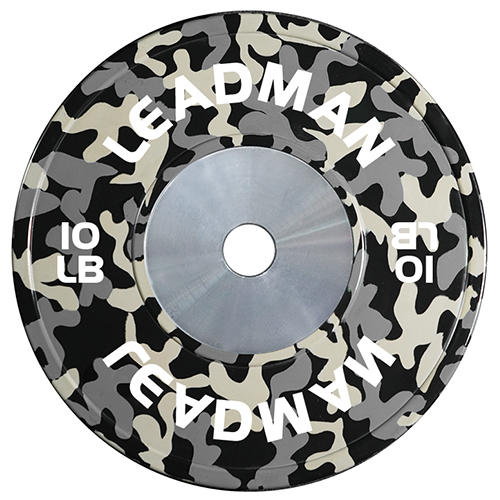
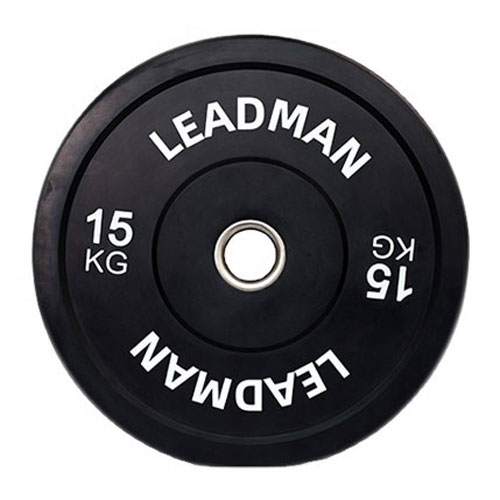
| Bumper Plates | Standardized Diameter | High (Rhythmic Loading) | Olympic-Style Transitions |
| Specialized Grip Plates | Center of Gravity Shift | Very High (Stability) | Unilateral/Rotational Work |
Selecting the correct medium ensures that the load serves the intended physiological stimulus. Once the fundamental equipment characteristics are established, the focus must shift toward the mechanical interplay between load and range of motion.
Mechanical Foundations of Strength and Mobility Integration
Building upon the selection criteria established in the previous section, we must now delve into the actual mechanics of how resistance influences tissue stiffness and joint range. The goal of a hybrid program is to use the weight plate not just as a blunt force to elicit a strength response, but as a tool to navigate through complex planes of motion.
The Tension-Length Relationship
In traditional strength training, the focus is often on maximal tension at short muscle lengths. However, to design for mobility, the load must be applied across a broader spectrum of the length-tension curve. This involves utilizing the weight plate to introduce controlled eccentric loading, which promotes sarcomere addition and enhances functional flexibility. Without this deliberate control, the trainee may gain strength at the expense of usable range, leading to the 'stiff athlete' phenomenon.
Center of Gravity and Proprioceptive Feedback
A critical technical detail involves the manipulation of the center of gravity (CoG). By changing how the weight is held—such as moving from a barbell back squat to a plate-loaded lunge or a single-arm carry—the trainee forces the stabilizer muscles to react to shifting vectors. This instability is the 'secret sauce' of mobility-focused strength. The weight plate acts as a feedback mechanism, signaling the nervous system to adjust posture and alignment in real-time.
By mastering these mechanical principles, a programmer can move from simple lifting to sophisticated kinetic chain development. This leads directly into the technical variables required to structure these movements into a cohesive session.
Related reading:
Optimizing Program Variables for Dual-Purpose Training
Transitioning from the mechanical theory discussed above to actual practice requires a rigorous definition of training variables. If the mechanics are the 'why,' the variables are the 'how.' To avoid the common pitfall of overtraining or injury, a professional must carefully calibrate intensity and volume against the desired mobility outcomes.
Load Intensity vs. Movement Tempo
A major mistake in hybrid programming is applying high-intensity, heavy loads with too much speed, which can bypass the mobility benefits. To ensure the weight plate promotes both strength and range, the implementation of tempo is essential. For mobility-focused segments, a controlled tempo (e.g., 3-0-3-0) ensures the muscle is under tension through the entire range of motion. For pure strength segments, the tempo can shift to a more explosive, traditional pattern.
Volume Modulation and Frequency
The frequency of weight plate-based mobility work should be higher than the frequency of maximal strength attempts. While a heavy squat might occur twice a week, the more dynamic, plate-integrated mobility drills can be performed more frequently to maintain neurological adaptations. The following table illustrates a model for variable distribution:
| Variable | Strength Focus Protocol | Mobility-Strength Hybrid Protocol |
|---|---|---|
| Repetition Range | 3–6 Reps | 8–12 Reps |
| Rest Intervals | 3–5 Minutes | 60–90 Seconds |
| Tempo Control | Explosive Concentric | Controlled Eccentric/Isometric |
| Load Type | High Percentage (1RM) | Moderate Percentage (RPE 7-8) |
This distinction prevents the trainee from becoming 'locked' in a specific range of motion. As the variables are calibrated, the programmer must also prepare for the inevitable logistical challenges of maintaining equipment and verifying results.
Related reading:
Operational Maintenance and Safety Verification
Connecting the calibration of variables to the physical environment, we must recognize that consistent progress is impossible if the equipment is unsafe or poorly maintained. Just as we fine-tuned the training variables, the physical gear itself requires constant oversight to ensure the integrity of the movement patterns being taught.
Inspecting Implement Integrity
When using weight plates for dynamic or unilateral work, the structural integrity of the plate and the grip becomes a safety-critical factor. A common failure point in commercial-grade or home setups is the degradation of the center hole or the loosening of the coating. This can lead to uneven weight distribution or even catastrophic failure during high-intensity intervals. Operators should implement a weekly inspection checklist.
- Visual Check: Look for cracks in the center hub or chipping of the rubber coating.
- Balance Check: Ensure weights are even across a barbell or single-arm implement to prevent torque-induced injury.
- Grip Integrity: For plates designed to be held, verify that the edges are not excessively sharp or causing friction burn.
Verifying Correct Performance via Load Feedback
The final step in the operational cycle is verification. How do you know the weight plate is actually improving mobility rather than just causing fatigue? A professional looks for signs of 'mechanical leakage'—where the body compensates for a lack of range by collapsing into a different joint. If a plate-loaded movement causes a loss of core stability or a change in the intended movement arc, the load is too high or the tempo is too fast. The implement should feel like a guide, not a barrier, to the intended range of motion.
By implementing these rigorous safety and verification protocols, the risk of injury is minimized, allowing the long-term benefits of strength and mobility to manifest. However, even with perfect maintenance, technical errors in programming can occur.
Troubleshooting Common Programming Failures
Building upon the operational safety protocols just described, it is vital to address the mental and technical side of programming. Even with a sound design and safe equipment, several recurring issues can stall progress. These typically stem from an imbalance between the two primary goals: strength and mobility.
Addressing the 'Strength-Mobility Paradox'
The most frequent issue reported by practitioners is the feeling of becoming 'strong but stiff.' This occurs when the programming heavily favors heavy, low-rep sets with minimal emphasis on the eccentric phase or end-range control. If a trainee reaches a plateau where their strength increases but their functional range of motion decreases, the solution is to reintegrate tempo-focused plate work. This might involve adding a pause at the bottom of a movement to force the body to stabilize in a deep range.
Resolving Stability Deficits
Another common problem is a sudden drop in technical proficiency during unilateral or rotational movements. This is often caused by a lack of proprioceptive development. If the weight plate feels 'unpredictable' or 'uncontrollable,' the implement's weight is likely too high for the current level of stabilizer strength. The fix is to reduce the absolute load and increase the complexity of the movement pattern until the stability is regained.
Related reading:
Advanced Implementation: Integrating Unilateral Movements
Following the troubleshooting of general programming, we can look at more advanced, specific applications. To truly master the design of weight plate workouts, one must move beyond bilateral stability and integrate unilateral challenges that force the body to manage offset loads.
Unilateral work with weight plates—such as the offset suitcase carry or the single-arm plate press—forces the core and lateral stabilizers to engage in ways a traditional barbell cannot. This stage of training is where the 'mobility' aspect of your program becomes most visible, as the body must find stability while moving through asymmetrical planes. Integrating these movements ensures that the strength gained is not just impressive in a static lift, but functional in a dynamic environment.