Beginner Plate Workouts—Building Foundational Strength
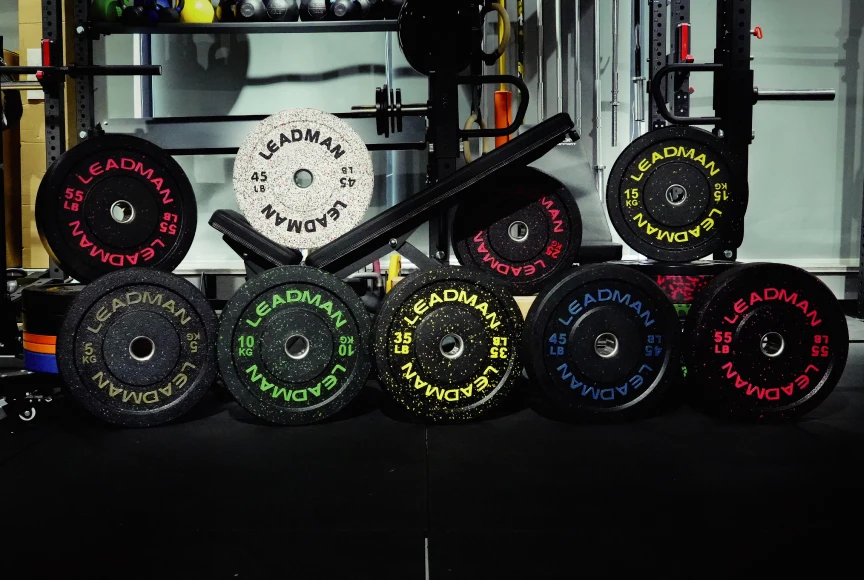
Selecting Appropriate Resistance for Beginner Plate Workouts
Before engaging in any specific movement pattern, a trainee must understand that the effectiveness of weight plate training is dictated by the quality and selection of the resistance used. Many beginners fail because they overlook the ergonomic differences between various plate types, leading to uneven loading or wrist strain. Establishing a baseline with the correct equipment ensures that the focus remains on neuromuscular adaptation rather than struggling with poorly balanced weights.
The first step in any foundational strength program is distinguishing between different resistance formats. While a barbell offers centralized weight, plate-specific training often requires handling the weight directly or using it as a stabilizer. Choosing the right density and grip surface is critical for long-term progression and injury prevention.
| Plate Type | Primary Use Case | Pros for Beginners | Cons for Beginners |
|---|---|---|---|
| Cast Iron | Traditional strength, high durability | Highly compact; consistent weight distribution | Harder on grip; can be noisy/aggressive |
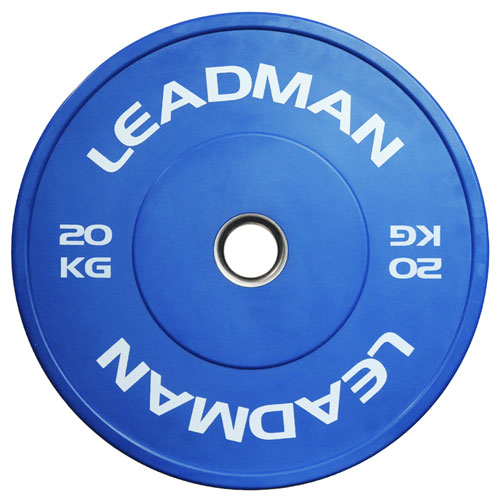
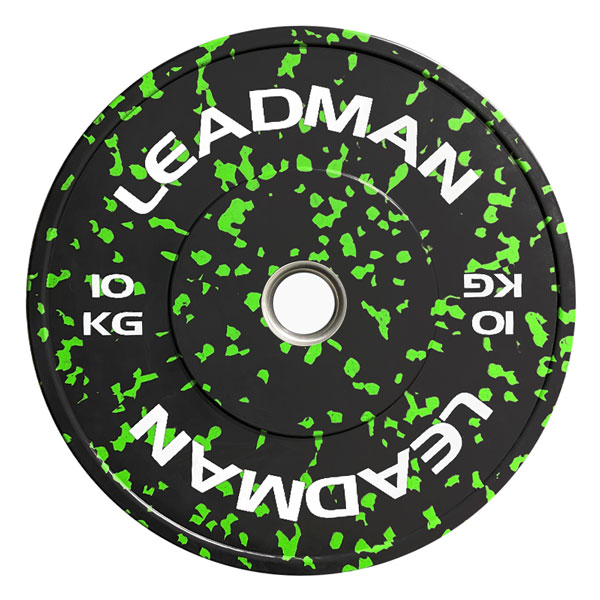
| Rubber Coated | High-volume, high-impact training | Easier to handle; quieter; floor protection | Bulkier diameter; may slightly alter center of gravity |
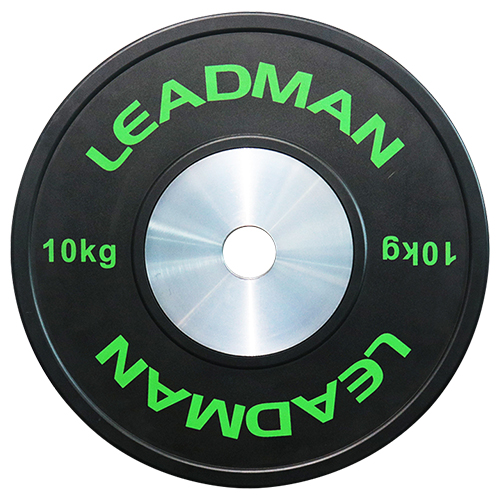
| Bumper Plates | Functional/Dynamic movements | Uniform diameter; safer for dropping | Large diameter can interfere with close-range movements |
Selecting the right plate density and diameter sets the stage for technical execution. Once the equipment is selected, the focus must shift toward the mechanical physics of how that weight interacts with the human body during a lift.
Related reading:
Understanding Loading Mechanics and Center of Gravity
Transitioning from selecting equipment to executing a movement requires a deep understanding of loading mechanics. In beginner plate workouts, the way weight is distributed—whether held in front of the chest, behind the back, or at the sides—drastically alters the torque applied to the spine and joints. A failure to recognize these shifts often results in a 'collapse' of form, where the trainee can no longer maintain a neutral pelvis or braced core.
The Role of Moment Arms in Plate Training
A moment arm is the perpendicular distance from the axis of rotation (your joint) to the line of force (the weight). When performing a plate-loaded goblet squat, for example, holding the plate closer to the chest minimizes the moment arm on the lumbar spine, making the lift more stable. If the plate drifts forward, the lever arm increases, forcing the lower back to work exponentially harder to prevent a fall.
Managing Unilateral Imbalances
Beginners often struggle with unilateral (single-sided) plate exercises. Because plates are discrete units of mass, an imbalance of even a small fraction can cause a significant lateral tilt in the torso. To verify correct performance, the trainee should monitor their midline in a mirror or film a set to ensure the weighted side is not pulling the pelvis out of alignment. Managing this imbalance is a prerequisite for moving toward more complex, bilateral barbell lifts.
Mastering the physics of the weight is only useful if the trainee has the structural integrity to support it. This leads directly to the necessity of core stabilization and bracing protocols.
Core Stabilization and Intra-Abdominal Pressure
The primary bottleneck in foundational strength is rarely the strength of the limbs, but rather the ability of the core to transfer force. Without a rigid torso, the energy generated by the legs is lost through a 'soft' midsection. In plate-based training, the weight often acts as an external force trying to pull the trainee out of alignment, making the bracing technique the most important technical skill to master.
The Bracing Technique vs. Stomach Vacuuming
A common mistake among beginners is 'sucking in' the stomach to look thinner during a lift. This is the opposite of what is required for foundational strength. To build a stable base, one must practice 'bracing'—expanding the abdomen outward against the abdominal wall to create intra-abdominal pressure (IAP). This creates a 360-degree cylinder of tension that protects the spine.
- Step 1: Take a deep diaphragmatic breath into the belly, not the chest.
- Step 2: Contract the abdominal muscles as if preparing for a strike.
- Step 3: Maintain this tension throughout the entire eccentric and concentric phase of the movement.
Verification of Core Rigidity
To verify if a trainee is successfully bracing, have them perform a light plate-loaded carry. If the plate's weight causes the upper body to sway or the lower back to arch excessively, the intra-abdominal pressure is insufficient. A successful brace results in a torso that remains a single, unyielding unit despite the shifting mass.
Once the core is stabilized, the trainee can effectively implement movement patterns that utilize the plates for full-body integration.
Related reading:
Foundational Movement Patterns for Beginners
Rather than focusing on isolated muscle groups, beginner plate workouts should prioritize fundamental patterns: pushing, pulling, squatting, and hinging. These patterns build a baseline of coordination that translates to almost every other form of physical activity. By using plates, trainees can vary the difficulty of these patterns without the need for complex machines.
The Goblet Squat: The Gold Standard for Lower Body Foundation
The goblet squat is perhaps the most effective way to introduce the squatting pattern using a plate. By holding the weight in the anterior position, the trainee is forced to maintain an upright posture. This corrects the common 'forward lean' seen in many beginner back squats. It serves as a diagnostic tool: if the trainee cannot keep the chest up while holding a plate, they are not yet ready for a weighted barbell squat.
Plate Ground-to-Overhead: Total Body Integration
To develop explosive power and full-body coordination, the ground-to-overhead movement is essential. This involves lifting a plate from the floor to a position above the head in one continuous motion. This exercise targets the posterior chain, the legs, and the shoulders simultaneously, requiring a seamless transition of force from the ground through the core and into the arms.
| Movement Pattern | Example Exercise | Target Muscle Groups | Primary Focus |
|---|---|---|---|
| Knee Dominant | Goblet Squat | Quadriceps, Glutes | Upright Torso & Depth |
| Hinge | Plate RDL | Hamstrings, Lower Back | Hip Drive & Spinal Neutrality |
| Push | Plate Press | Chest, Triceps, Shoulders | Controlled Eccentric Phase |
| Pull | Bent-Over Plate Row | Lats, Rhomboids, Rear Delts | Scapular Retraction |
Developing these patterns creates a functional foundation, but the subsequent leap in strength requires a systematic approach to increasing the load.
Implementing Systematic Progressive Overload
Progressive overload is the process of gradually increasing the stress placed upon the body during exercise. In plate workouts, this is often more intuitive than with barbells, but it requires careful monitoring to avoid plateaus or injury. A common pitfall is increasing the weight too quickly, which compromises the technical integrity established in the previous sections.
Micro-Loading and Repetition Schemes
Since plates are discrete units of weight, increasing the load can sometimes feel like a large jump (e.g., moving from a 10kg to a 15kg plate is a 50% increase). To manage this, beginners should utilize two primary methods of progression:
- Repetition Progression: Instead of increasing the weight, increase the number of repetitions within a set (e.g., moving from 8 reps to 12 reps with the same plate).
- Density Progression: Decrease the rest time between sets while maintaining the same weight and reps, forcing the body to recover more efficiently.
Verifying Progress Through Data
A professional approach to strength training requires objective measurement. A trainee should not rely on 'feeling' stronger; they should record the weight, reps, and sets for every session. If the number of controlled repetitions is not trending upward over a 4-week period, it is a signal to either adjust the rest intervals or review the bracing technique to ensure no energy is being leaked through poor form.
With a system for increasing load in place, the final layer of the guide focuses on the long-term viability of the program: safety and maintenance.
Equipment Inspection and Safety Protocols
The physical integrity of the plates and the surface they are used on is a direct factor in trainee safety. In a commercial or home gym environment, neglecting the inspection of weight plates can lead to catastrophic failures, such as a plate slipping from a grip or a surface failing under impact. This is especially important during high-intensity movements like the ground-to-overhead.
Routine Inspection Checklist
Operators and trainees should perform a monthly inspection of all plate-loaded equipment. A broken or poorly maintained plate can lead to uneven weight distribution, which can cause unexpected torque on the joints. Use the following checklist to verify equipment readiness:
- Surface Integrity: Check rubber-coated plates for cracks or peeling. Exposed metal can cause abrasions or uneven weight.
- Diameter Uniformity: Ensure plates are not warped. A warped plate will wobble during movements like the goblet squat.
- Grip Quality: Inspect the edges of the plates for burrs or sharp metal bits that could cause injury during manual handling.
- Storage Stability: Ensure plate trees or racks are stable and can hold the weight without leaning or bowing.
Mitigating Impact and Noise
When performing dynamic movements, the way a plate interacts with the floor is critical. Dropping a cast iron plate on a concrete floor can cause structural damage to the building and the plate itself. To mitigate this, always use high-density rubber mats. This not only protects the equipment but also dampens the sound and reduces the vibration that can disrupt the focus of other trainees.
By adhering to strict inspection and safety protocols, the trainee ensures that the foundational strength built through these workouts is supported by a reliable and predictable training environment.
Related reading:
Long-Term Outlook: From Plates to Barbells
The ultimate goal of a beginner plate-based program is to build the structural capacity necessary for more advanced lifting. The strength, stability, and movement proficiency gained through plate work serve as the 'pre-habilitation' phase for a lifetime of lifting. As the trainee masters the mechanics of the plate, they will find that the transition to barbell training becomes a logical progression rather than a jarring leap.
The durability of the strength built here is not just in the muscles, but in the nervous system's ability to manage load. By respecting the constraints of the plate and the necessity of perfect form, the trainee establishes a standard of excellence that will serve them through every future phase of their physical development.