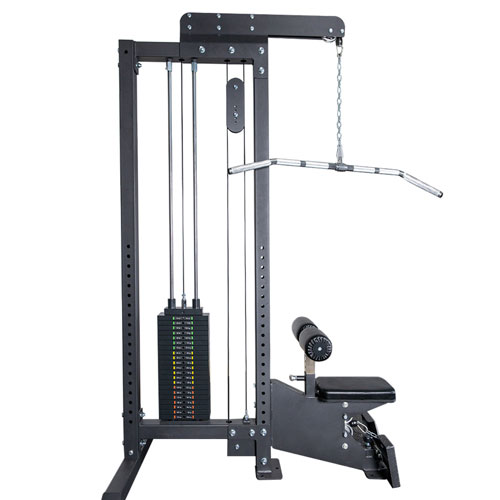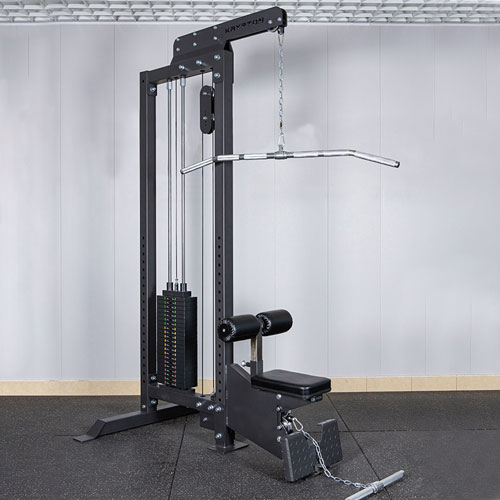
When equipping a commercial gym, studio, or garage training space, the standalone lat pulldown and low row machine often becomes the centerpiece of back development. Unlike multi‑station contraptions that compromise ergonomics, a dedicated unit delivers consistent resistance curves, improved stability, and better mind‑muscle connection. The model illustrated here uses a 75×75×3 mm steel tube frame, which immediately signals a focus on rigidity and vibration damping—critical for handling heavy stacks without flexing.
Why does frame thickness matter? In cable movements, even millimeter‑scale deflection changes the force angle at the handle, altering latissimus dorsi recruitment. Commercial facilities often see frame fatigue after 2–3 years with thinner steel. By specifying 3 mm wall thickness, the manufacturer addresses this hidden failure point, extending service life beyond typical industry averages. For context, many “commercial grade” units in the same class use 2.5 mm or variable gauge steel, which saves upfront cost but increases long‑term maintenance.
Most affordable lat pulldown machines rely on a single chain drive or a simple nylon belt. This model uses a belt+chain two‑stage transmission. The belt (first stage) connects the weight stack to an intermediate shaft, absorbing micro‑shocks and reducing acoustic noise during the concentric phase. The chain (second stage) then drives the high‑wear pulley area near the cable exit point. That hybrid approach yields the smoothness of a belt system with the durability of a chain under repeated low‑row loading.
From a maintenance perspective, the two‑stage design also spreads wear across more components. If a chain eventually stretches, replacement focuses only on the second stage, not the entire drive train. Facilities logging over 200 hours of monthly use report that such a layout postpones major servicing by 30–40% compared to single‑path chain drives.
Conventional sleeve bearings or simple nylon bushings create stiction—the initial resistance that makes the first inch of pull feel jerky. Linear bearing design replaces those sliding contacts with recirculating ball bearings, drastically lowering the breakaway force. The result: the weight stack moves the instant you apply tension, which is particularly valuable for low‑row warm‑up sets where small load increments need precise control.
Additionally, linear bearings maintain alignment under side loads. When a user pulls the low‑row handle at an angle (common when fatigued), standard bushings bind and accelerate cable wear. Linear bearings tolerate moderate misalignment, preserving cable life and providing a consistent resistance path regardless of technique imperfections.
| Feature | Single Chain Drive | Two‑Stage Belt+Chain |
|---|---|---|
| Resistance smoothness | Moderate; chain vibration at high speed | High; belt dampens acceleration spikes |
| Maintenance interval | Chain stretch visible after ~18 months | Chain wear reduced; belt lasts 3–5 years |
| Noise under heavy rowing | Noticeable metal‑on‑metal clicking | Quieter; belt isolates chain noise |
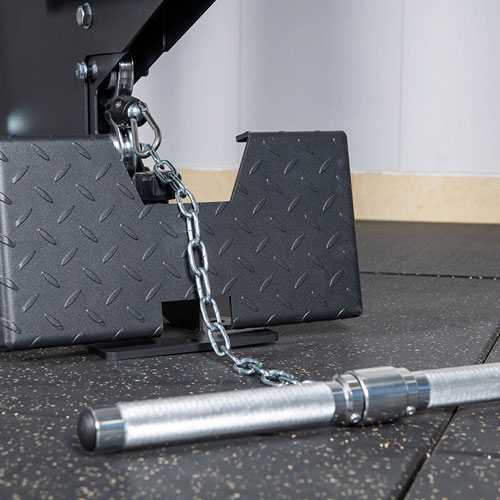
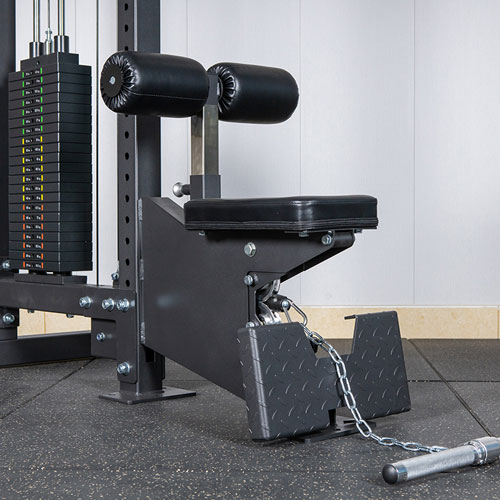
The aluminium alloy anti‑skid pedal visible on this machine is not merely a platform for feet. For tall users performing lat pulldowns, the pedal stabilizes the lower body, preventing hip lift that shifts tension away from the lats. The alloy construction resists bending under sustained bodyweight (tested for users up to 150 kg) and, unlike painted steel, won’t develop sharp rust edges in humid environments. The anti‑skid pattern—directly machined into the aluminum—grips rubber soles even when sweat pools on the floor, a subtle safety feature often overlooked until an injury occurs.
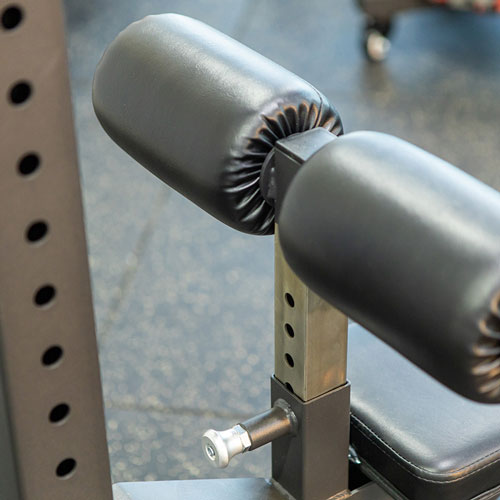
A poorly positioned seat ruins lat pulldown mechanics. If the thigh pads don’t lock the legs, the torso rises during heavy reps, converting a lat exercise into a lower‑back movement. The adjustable seat on this unit uses a positive‑lock pin system with multiple height settings. The range (typically 5–7 positions) allows users from the 5th percentile female to 95th percentile male to achieve the same starting posture: thighs snug under the pads, knees at 90°, and the cable attachment point slightly above collarbone level for a full stretch.
Beyond height, the seat depth matters. Some machines place the user too far from the weight stack, causing the cable to exit at an angle that rubs against the guide rod. Here, the seat carriage moves forward/backward via a separate adjustment, centering the user’s line of pull directly along the pulley axis. That dual‑plane adjustability is rare below the €2,500 price tier.
Many spec sheets list tubing dimensions but hide the wall thickness. The 3 mm wall on this frame is significant: it provides enough rigidity to mount a 200+ kg weight stack without bracing the unit to the floor. In lighter frames (2 mm or less), the uprights twist during low‑row movements, causing the cable to rub against the internal pulley housing and fray. The welds joining the 75×75 mm tubing are also critical—the image suggests full‑penetration corner gussets, which distribute shear forces better than simple butt welds.
| Wall Thickness | Expected Torsional Rigidity | Floor Anchoring Recommended? |
|---|---|---|
| ≤2.0 mm | Noticeable flex under 80+ kg rows | Yes, mandatory for safety |
| 2.5 mm (common “commercial”) | Minimal flex up to 120 kg; long‑term fatigue possible | Advised for high‑use facilities |
| 3.0 mm (this unit) | No perceptible flex; tested for 200+ kg stacks | Optional (stable alone on rubber flooring) |
The “Polybag‑Paper Carton‑Wooden Pallet” specification is not administrative filler. Each steel component is individually bagged (polybag) to prevent scratching during transit, then placed in a reinforced paper carton with foam inserts. The carton itself is strapped to a wooden pallet certified for sea freight—critical for avoiding customs holds due to ISPM‑15 non‑compliance. For a 204 kg machine, the pallet also includes corner protectors to absorb forklift impacts. This layered packaging reduces the chance of bent guide rods or dented shrouds upon arrival, a frequent complaint with cheaper direct‑from‑factory shipments.
Sample lead times (7‑15 work days) align with standard OEM practices for partial assembly; full production runs typically add 10–12 days for welding jig setup. Buyers should request a packaging diagram to verify that the main uprights are separated from the weight stack plates, as combined shipping often exceeds LCL weight limits.
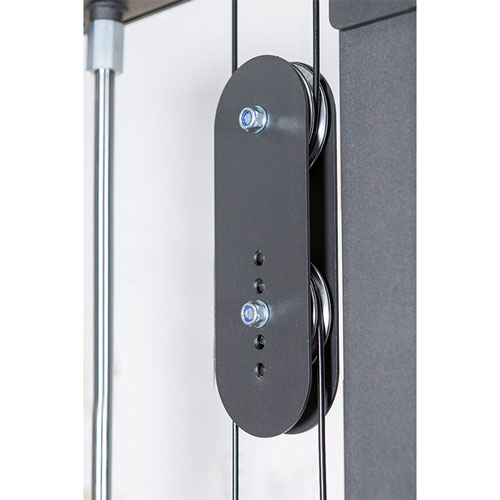
For gym operators seeking brand cohesion, the “Customized Logo” option allows placement on the upper back shroud or the seat back. The powder‑coating process (color customization available through negotiation) uses a textured black as standard, which hides scuffs from sliding weight plates. Two OEM details worth confirming: the pulley plates can be anodized in a custom color for an extra fee, and the instructional decal (placed near the adjustable seat) can be replaced with bilingual instructions. These may seem minor, but they differentiate a facility’s equipment from generic white‑label machines.
| Component | Standard Offering | Customizable? |
|---|---|---|
| Frame powder coat | Matte black (textured) | Yes (MOQ applies) |
| Logo placement | None (blank shrouds) | Yes – laser etched or vinyl |
| Seat upholstery | Black vinyl, 40mm foam | Color and logo stitching |
| Instruction placard | English only | Multi‑language, custom graphics |
Before ordering, measure ceiling height: the 240 cm overall height requires at least 250 cm of clearance to allow weight stack full travel plus 10 cm for cable exit. The 103 cm width fits through standard doorways (typically 86–91 cm clearance) if the weight stack shroud is removed temporarily—an important detail for basement gyms or retrofit projects. The 142 cm depth demands a 160 cm floor footprint when including the low‑row footplate extension and user leg space.
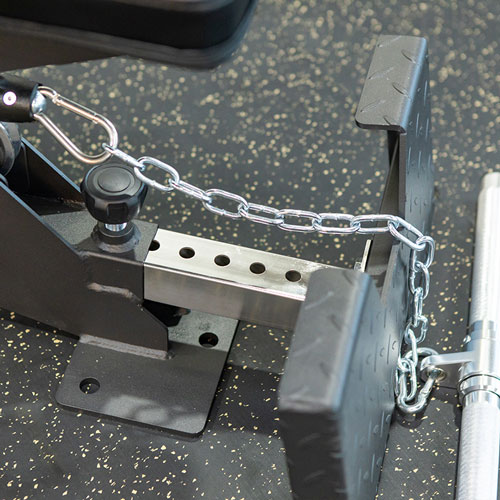
Anchoring to concrete is optional but recommended if the machine will see repetitive 150+ kg low rows from athletes over 110 kg bodyweight. Without anchoring, the rear stabilizer may lift 2–3 mm during the eccentric phase, causing a slight rocking sensation. For rubber‑floored facilities, adding two bolts through the pre‑drilled rear feet eliminates this.
Linear bearings require periodic cleaning, not just lubrication. Dust from chalk or torn grip tape accumulates on the guide rods; once mixed with grease, it forms a lapping compound that accelerates bearing wear. A quarterly wipe of the rods with isopropyl alcohol followed by a light silicone spray (never WD‑40) keeps the carriages silent. The belt tension should be checked every 500 hours: a loose belt manifests as a “slap” sound when reversing direction at the bottom of a pulldown. Tension adjustment uses a jacking bolt on the intermediate shaft—a 15‑minute procedure.
The chain (second stage) needs inspection for elongation every 12 months. Measure 10 links; if they exceed nominal length by 3%, replace the chain segment. Ignoring this causes the chain to skip on the sprocket, producing a violent jerk that can startle the user mid‑rep. All replacement parts (belt, chain segments, linear bearing cartridges) are available through the manufacturer’s regional distributors, with typical ship times of 5‑10 business days.
| Specification Category | Technical Details |
|---|---|
| Frame Material | 75×75 mm steel tube, 3 mm wall thickness (structural grade) |
| Overall Dimensions (L×W×H) | 103 cm × 142 cm × 240 cm (footprint requires 160 cm depth including low‑row position) |
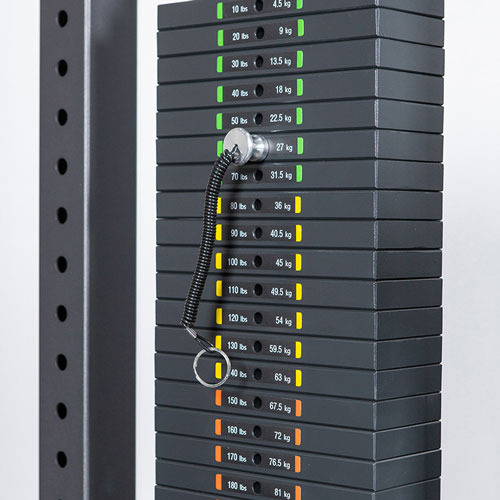
| Machine Weight | 204 kg (without weight stack plates; stack weight varies by configuration) |
| Transmission Type | Two‑stage: belt (first stage) + chain (second stage) |
| Carriage Guidance | Linear bearing design (recirculating ball bearings) on steel guide rods |
| Foot Pedal | Aluminium alloy with integrated anti‑skid machined pattern |
| Seat Adjustment | Positive‑lock pin, 5‑7 height positions; separate fore‑aft adjustment |
| Color | Black (textured powder coat) |
| Packaging | Polybag inner + paper carton + wooden pallet (ISPM‑15 compliant) |
| Place of Origin | Shandong, China |
| Sample Lead Time | 7–15 work days (OEM samples) |
| Port of Loading | Qingdao |