Pre-Natal and Post-Natal Weight Plate Exercises: A Technical Implementation Guide
Understanding Physiological Shifts in Maternal Strength Training
Effective implementation of pre-natal and post-natal weight plate exercises requires a profound understanding of the shifting physiological landscape of the maternal body. The primary challenge for practitioners and athletes is the rapid change in center of gravity, joint laxity, and pelvic floor integrity. Without a structured technical approach, the use of external resistance via weight plates can inadvertently exacerbate issues such as diastasis recti or pelvic girdle pain.
To mitigate these risks, one must view weight plate exercises not merely as strength movements, but as stability-modulating tools. The objective is to maintain muscular tension while respecting the hormonal and structural changes occurring throughout the pregnancy and postpartum cycles. By mastering the technical execution of these movements, individuals can foster a resilient musculoskeletal system that supports both the current physical demands and the long-term recovery process.
Biological Variables and Resistance Integration
During the pre-natal phase, the hormone relaxin increases joint mobility, which can lead to instability in the sacroiliac (SI) joint. When integrating weight plates, the focus must shift from absolute load to controlled stability. In the post-natal phase, the priority shifts toward rebuilding the core's structural integrity and addressing any separation in the abdominal wall. Understanding these variables is the prerequisite for selecting the appropriate resistance-to-stability ratio.
Establishing this biological context allows us to move toward the specific technical requirements of pre-natal stability and load distribution.
Mechanical Stability and Pre-Natal Weight Plate Protocols
Building upon the biological foundations of maternal change, pre-natal weight plate protocols must prioritize the maintenance of a stable pelvic base. The core problem frequently encountered is the loss of intra-abdominal pressure regulation, which, if improperly managed during weighted movements, can put undue stress on the pelvic floor. The solution lies in utilizing weight plates to augment functional stability rather than pursuing maximal hypertrophy.
The goal of pre-natal weight plate exercises is to reinforce the deep stabilizers (transverse abdominis and pelvic floor) while managing the increasing load of the pregnancy. This is achieved through controlled, low-impact movements that do not involve excessive spinal flexion or high-impact jarring.
Optimizing Load Distribution for Gestational Stability
When using a weight plate for exercises like a weighted goblet squat or a seated plate hold, the placement of the weight is critical. For a pre-natal client, holding the weight closer to the midline helps maintain a more upright posture, preventing the forward lean often caused by the changing center of gravity. This technical adjustment reduces the strain on the lumbar spine and the anterior pelvic tilt.
| Exercise Type | Primary Objective | Weight Placement Strategy | Technical Focus |
|---|---|---|---|
| Goblet Squat (Light Load) | Lower body stability | High on chest, near sternum | Pelvic neutral, no breath holding |
| Seated Plate Hold | Core endurance | Mid-torso, level with navel | Diaphragmatic breathing, upright spine |
| Weighted Glute Bridge | Posterior chain strength | Placed on hips (carefully) | Glute activation, minimal lumbar arch |
| Standing Side Lean | Lateral stability | Held at sides or mid-thigh | Controlled side bend, no lateral sway |
By adhering to these placement strategies, the operator ensures that the weight plate serves as a stabilizer rather than a destabilizing force. This level of precision is essential before transitioning into the more complex demands of the post-natal recovery phase.
Post-Natal Recovery and Core Reintegration Mechanisms
Transitioning from the pre-natal phase to post-natal recovery involves a pivot from stability maintenance to structural rebuilding. The primary pain point in the post-natal period is often the management of diastasis recti (abdominal separation) and the gradual reintroduction of load to the pelvic floor. Weight plate exercises in this phase are highly effective for restoring functional strength, provided they are executed with strict adherence to intra-abdominal pressure management.
The mechanism of recovery involves using the weight plate to provide controlled, graduated resistance that stimulates the deep core without causing further separation. A common mistake is rushing into heavy lifting before the transverse abdominis can effectively stabilize the torso under load.
Rebuilding the Midline with Controlled Resistance
Post-natal implementation should focus on 'functional' rather than 'aesthetic' strength. For instance, a weight plate carry (often called a farmer's walk but with specialized grip considerations) can be an excellent tool for re-establishing midline stability. The resistance provided by the plate forces the deep core to work against gravity in a way that mimics daily functional movements.
- Verification Step: Before increasing plate weight, the individual should be able to perform the movement without any visible 'doming' or 'coning' in the abdominal wall.
- Monitoring: If any pelvic heaviness or leaking is felt, the load must be reduced immediately or the movement pattern must be altered.
Understanding the mechanics of midline rebuilding leads us to the common pitfalls and technical errors that often compromise safety in both phases.
Related reading:
Identifying and Avoiding Technical Errors in Resistance Application
Even with the correct exercise selection, improper execution can lead to injury or prolonged recovery times. A frequent failure mode in both pre-natal and post-natal training is the reliance on outdated lifting mechanics that do not account for the current state of the pelvic floor and abdominal wall. Practitioners must be able to identify these errors in real-time to ensure long-term success.
The following table outlines common mistakes observed during the implementation of weight plate exercises and the technical correction required for safe operation.
| Common Error | Resulting Mechanical Failure | Technical Correction/Fix |
|---|---|---|
| Breath Holding (Valsalva Maneuver) | Increased intra-abdominal pressure on the pelvic floor | Emphasize continuous, rhythmic diaphragmatic breathing |
| Excessive Lumbar Arching | Stress on the sacroiliac joint and lower back | Maintain a neutral pelvis and engaged core |
| Improper Plate Grip (Too Far from Center) | Unbalanced torque on the upper thoracic spine | Keep the weight centered and close to the body's midline |
| Rapid Vertical Movement | Jarring of the pelvic floor and core | Slow, controlled tempo (2-3 seconds per phase) |
Successful implementation requires more than just following a list; it requires a constant loop of feedback and adjustment. Once these errors are identified, we must establish the criteria for selecting the appropriate equipment and load.
Equipment Selection and Load Graduation Criteria
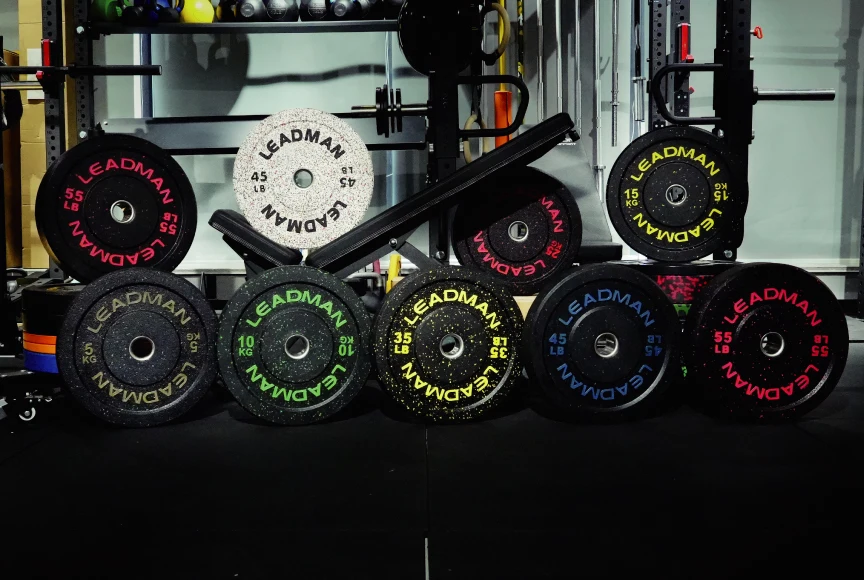
The effectiveness of weight plate exercises is heavily dependent on the quality and type of equipment used. For maternal training, the weight plate is not just a mass; it is a tool for sensory feedback and stability. Selecting the wrong equipment or escalating the load too aggressively can negate the benefits of the training program.
A professional operator should prioritize plates that offer a high degree of grip stability and a predictable weight distribution. In the context of pre-natal and post-natal training, the texture and diameter of the plate can significantly impact the user's ability to maintain control during fatigue.
Parameter Ranges for Load Progression
Progression should be based on biological feedback rather than arbitrary number increments. In the pre-natal phase, the focus is on volume and stability with low-to-moderate weight. In the post-natal phase, the focus moves to increasing load once the structural integrity of the midline is verified. The following parameters serve as a guideline for professional implementation:
- Pre-Natal Target: 25-50% of baseline strength; focus on unilateral stability and isometric holds.
- Early Post-Natal Target: 10-25% of baseline strength; focus on breath control and low-intensity functional carries.
- Late Post-Natal Target: 50-75% of baseline strength; focus on progressive resistance and compound movement patterns.
Selecting the right equipment and following these parameters sets the stage for a structured maintenance and inspection routine to ensure long-term safety.
Related reading:
Maintenance of Training Environment and Equipment Integrity
Maintaining the safety of the training environment is as critical as the exercises themselves. When performing weight plate exercises, the stability of the surface and the condition of the plates are paramount. A minor defect in a weight plate or an uneven floor can lead to a significant loss of balance, which is particularly dangerous for pregnant or postpartum individuals.
The maintenance routine must include regular checks of both the hardware and the space. This ensures that the resistance being applied is consistent and that the environment is optimized for the heightened need for balance and coordination.
Equipment Inspection Checklist
To ensure the highest standard of safety, operators and users should follow this standardized inspection protocol before every training session:
- Plate Integrity: Check for any cracks, chipped edges, or uneven weight distribution in the plates.
- Surface Grip: Ensure the plates are clean and free of any residue (oil, sweat, or dust) that could compromise grip. - Floor Stability: Verify that the training surface is level and non-slip, providing a stable base for any weighted movement.- Center of Gravity Check: For any movement involving a plate, ensure the weight is centered to avoid unexpected torque.
A rigorous inspection cadence guarantees that the technical execution of the exercises is the only variable being managed, rather than unexpected equipment failure.
Related reading:
Establishing Verification Protocols for Progress and Safety
The final stage of a professional implementation involves establishing a feedback loop to verify that the exercises are achieving the desired physiological outcomes without compromising safety. This is not a one-time check but a continuous monitoring process that informs the next steps in the training cycle.
Verification can be achieved through both subjective feedback (how the person feels) and objective measures (how the body responds to the load). This dual-track approach ensures that the training remains both effective and safe throughout the transition from pre-natal to post-natal life.
Verification Metrics for Maternal Strength
To determine if the current weight plate regimen is appropriate, implement the following verification checks:
| Metric Type | What to Measure | Sign of Success | Sign of Failure (Red Flag) |
|---|---|---|---|
| Subjective Feedback | Pelvic floor sensation | Feeling of control and stability | Feelings of heaviness, pressure, or leaking |
| Visual Inspection | Abdominal wall reaction | Stable, controlled core movement | Visible 'doming' or 'coning' during exertion |
| Performance Stability | Balance during weighted carry | Steady gait and upright posture | Excessive wobbling or reliance on compensatory movements |
By integrating these verification protocols, the user can confidently progress through their journey, using weight plate exercises as a cornerstone of long-term maternal health and strength.