Dumbbell Manufacturers: A Technical Guide to Production Standards and Quality Control
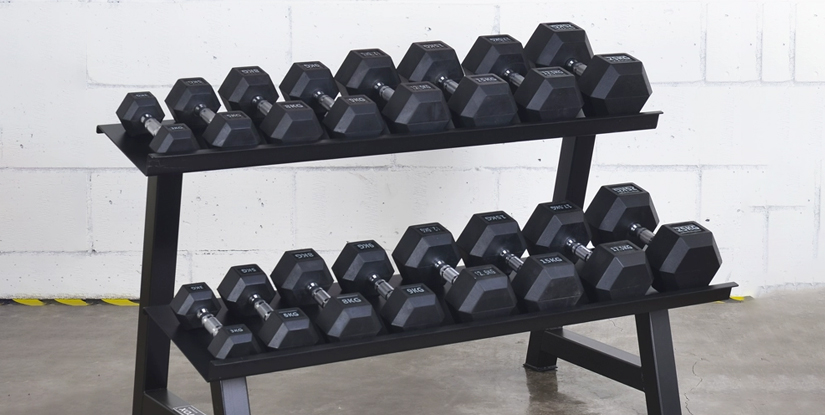
The Fundamental Challenges in Precision Dumbbell Manufacturing
Procuring high-quality strength training equipment often leads to a recurring frustration for gym operators: inconsistent weight distribution and rapid material degradation. When a set of dumbbells lacks uniformity, it is rarely a random occurrence; rather, it is a systemic failure in the production chain. These discrepancies often stem from inadequate control over material density or substandard molding techniques. Understanding the intricacies of how Dumbbell Manufacturers approach the 0→1 process is essential for any buyer looking to avoid the hidden costs of premature equipment replacement.
The core problem lies in the physics of mass production. Achieving a perfect 10kg or 25kg weight across thousands of units requires more than just adding more metal; it requires precise control over the molecular density of the cast, the exact volume of the mold, and the precision of the mechanical assembly. Once these fundamental production pillars are established, the focus shifts to the specific material types that dictate the longevity of the product. This understanding of raw inputs provides the necessary foundation for evaluating more complex manufacturing sub-processes.
Related reading:
Material Selection and the Impact on Weight Consistency
Before a single mold is cast, the engineering phase begins with the selection of raw materials. The choice between cast iron, steel, or specialized polymer composites determines the entire manufacturing roadmap. A common mistake observed in lower-tier production is the use of recycled scrap metal with high impurity levels, which leads to brittle weights and uneven surface textures.
The Role of Iron Purity in Casting
High-grade manufacturers prioritize the purity of the iron melt. If the molten metal contains excessive slag or non-homogeneous alloys, the resulting dumbbell will possess air pockets or 'voids.' These voids cause the weight to be lighter than the labeled specification and create structural weak points. A professional operator must verify that the manufacturer utilizes controlled melting temperatures to ensure a stable chemical composition.
Comparison of Common Dumbbell Materials
| Material Type | Primary Advantage | Typical Manufacturing Defect | Operational Durability |
|---|---|---|---|
| Cast Iron | Cost-effective and highly dense | Surface pitting and oxidation | High (with maintenance) |
| Steel (Machined) | Extreme precision and balance | Handle threading failure | Very High |
| Rubberized/Urethane | Noise reduction and floor protection | Delamination or odor | Medium to High |
| Neoprene Coated | Tactile grip and aesthetic appeal | Coating cracking/peeling | Medium |
As the material base is established, the manufacturer must then decide on the specific fabrication method, as the casting process itself is where the most critical dimensional tolerances are set. This transition from raw material to shaped form is the most technically demanding phase of the entire cycle.
Related reading:
Advanced Casting and Molding Processes
Effective casting is the heart of the manufacturing process. The consistency of the finished product depends heavily on the precision of the mold and the thermal management during the solidification phase. When these steps are handled poorly, the result is a product that fails basic inspection protocols for balance and density.
Sand Casting vs. Die Casting Techniques
Most high-volume manufacturers employ sand casting for heavy weights, whereas precision-oriented manufacturers may use more advanced metal injection molding. In sand casting, the quality of the sand itself is a variable; if the sand is too coarse or the moisture content is incorrect, the metal will not flow into the extremities of the mold, causing 'short pours' or incomplete weights. This leads to the most common buyer complaint: a dumbbell that looks correct but weighs slightly under the target spec.
The Mechanism of Thermal Contraction Control
A critical, often overlooked step is managing thermal contraction. As the molten metal cools, it shrinks. If the manufacturer does not account for this shrinkage coefficient in the mold design, the finished dumbbell will not meet the required dimensional tolerances. Professional-grade manufacturers utilize precision-machined molds that are pre-heated to a specific temperature to ensure a controlled, uniform cooling rate, thereby minimizing internal stress and preventing cracking.
Once the weight is cast and cooled, the structural integrity must be reinforced through the integration of the handle, which requires a different set of engineering-focused manufacturing skills.
Related reading:
Precision Engineering of the Dumbbell Handle
The connection between the weight head and the handle is the most frequent point of failure in substandard equipment. A poorly manufactured handle is not just an ergonomic issue; it is a significant safety hazard. If the threading or the insertion depth is incorrect, the weight head can detach during use, leading to catastrophic equipment failure.
Threading and Grip Texturing Standards
The handle is typically made from solid steel and must undergo a secondary machining process. This includes thread cutting—either through manual tapping or automated CNC threading—and knurling. High-quality manufacturers use precision CNC machines to ensure that the thread pitch is perfectly consistent. If the threads are irregular, the weight head will not sit flush against the handle, creating a wobbling effect that ruins the user experience and stresses the metal.
Ensuring Structural Integrity through Welding and Sealing
For integrated designs where the handle is part of the cast or welded into place, the strength of the weld or the seam is paramount. Any microscopic crack in the weld can propagate under the stress of repetitive lifting. To prevent this, manufacturers must employ rigorous welding protocols, often using high-tensory steel and specialized welding gases to ensure a seamless, airtight connection between the weights and the central axis.
With the structural core of the dumbbell secured, the manufacturing process moves toward the aesthetic and protective outer layers, which serves both functional and durability-driven purposes.
Protective Coatings and Surface Finish Applications
A dumbbell's surface finish is more than just a visual choice; it is a protective barrier against oxidation and a functional element for user grip. Whether it is a thin layer of paint or a thick urethane shell, the method of application determines how long the equipment will remain in professional service.
The Delamination Problem in Encapsulated Weights
One of the most significant failures in the commercial market is the peeling or delamination of rubber or neoprene coatings. This is usually caused by improper bonding between the metal head and the outer layer. If the manufacturer does not use a specialized adhesive or if the surface of the cast iron is not sufficiently cleaned (degreased) before coating, the outer layer will eventually separate, exposing the iron to air and causing rust.
Application Methods: Spray vs. Dip vs. Injection
- Spray Coating: Offers a thin, durable layer; best for maintaining precise dimensions.
- Dip Coating: Provides a thicker, more robust texture; better for noise reduction.
- Injection Molding: The most advanced method, where the shell is molded directly around the weight for maximum adhesion and durability.
Proper application of these coatings ensures that the product survives the high-traffic environment of a commercial gym. However, even the best coating cannot hide an unevenly cast weight, which brings us back to the necessity of rigorous quality control protocols.
Implementing Rigorous Quality Control (QC) Protocols
A professional manufacturer does not rely on visual inspection alone. To ensure that every unit leaving the facility meets the strict tolerances required for commercial use, a multi-stage QC process must be integrated into the production line. This prevents the 'bad batch' scenario where a shipment is discovered to be inconsistent only after it has reached the customer.
Weight Verification and Tolerance Thresholds
The most basic yet critical test is the weighing of every single unit. However, a truly advanced manufacturer uses a statistical sampling method coupled with high-precision scales to verify that the variance stays within an acceptable range—typically within +/- 1% to 3% of the target weight. If a batch exceeds this threshold, the entire production run is halted to investigate the cause, whether it be a temperature fluctuation in the melt or a faulty mold.
Structural and Stress Testing Standards
Beyond weight, the structural integrity of the connection must be verified. This is often done through destructive testing on a sample basis, where a weight is subjected to high-impact drops or extreme torque to ensure the handle and the weight head remain inseparable. This ensures the product can withstand the rigors of daily professional use.
| Inspection Stage | Test Performed | Target Outcome | Failure Indicator |
|---|---|---|---|
| Post-Casting | Dimensional Check | Meets mold specs | Incomplete edges or voids |
| Post-Machining | Thread Inspection | Smooth, consistent threading | Cross-threading or rough surface |
| Post-Coating | Adhesion Test | No peeling or bubbling | Delamination or air pockets |
| Final Stage | Weight Verification | Tolerance within +/- 2% | Significant weight variance |
By adhering to these strict verification steps, manufacturers can drastically reduce the rate of returns and maintain a reputation for reliability. This leads directly into the final stage of the lifecycle: long-term maintenance and the assessment of product longevity.
The Long-Term Outlook: Durability and Lifecycle Management
For the end-user, the goal is not just to buy a product, but to invest in an asset. Understanding the manufacturing origins allows a buyer to predict the total cost of ownership. A dumbbell produced with superior material density and robust welding will have a much longer service life than one produced with cost-cutting shortcuts.
Evaluating Longevity via Manufacturing Data
When evaluating a potential supplier, professionals should ask for data regarding their casting consistency and coating adhesion tests. A manufacturer that can provide these technical specifications is far more reliable than one that only offers general product descriptions. High-quality manufacturing leads to a lower 'total cost per use' over several years, despite a potentially higher initial purchase price.
Common Mistakes to Avoid During Procurement
The most frequent mistake is prioritizing the lowest unit price over the manufacturing process quality. Low-cost manufacturers often achieve their margins by skipping the secondary machining stages or using lower-purity scrap metal. This results in a product that is inherently unstable. Always prioritize manufacturers who can demonstrate a transparent, multi-step process involving both mechanical and manual quality checks.
As the industry evolves, the integration of automated precision casting and advanced polymer coatings continues to set higher benchmarks for what can be expected from professional-grade equipment.